The Lawmatics Blog
Insights on legal marketing, automating the law practice, and legal tech in general


Last month, we walked through how to set up custom matter views. But building views is only half the equation — the real value comes from putting them to work. When intake staff, attorneys, and admins are all looking at the same long list of fields, it's easy to miss what matters, waste time hunting for the right information, or forget to fill out a field before firing off a contract.
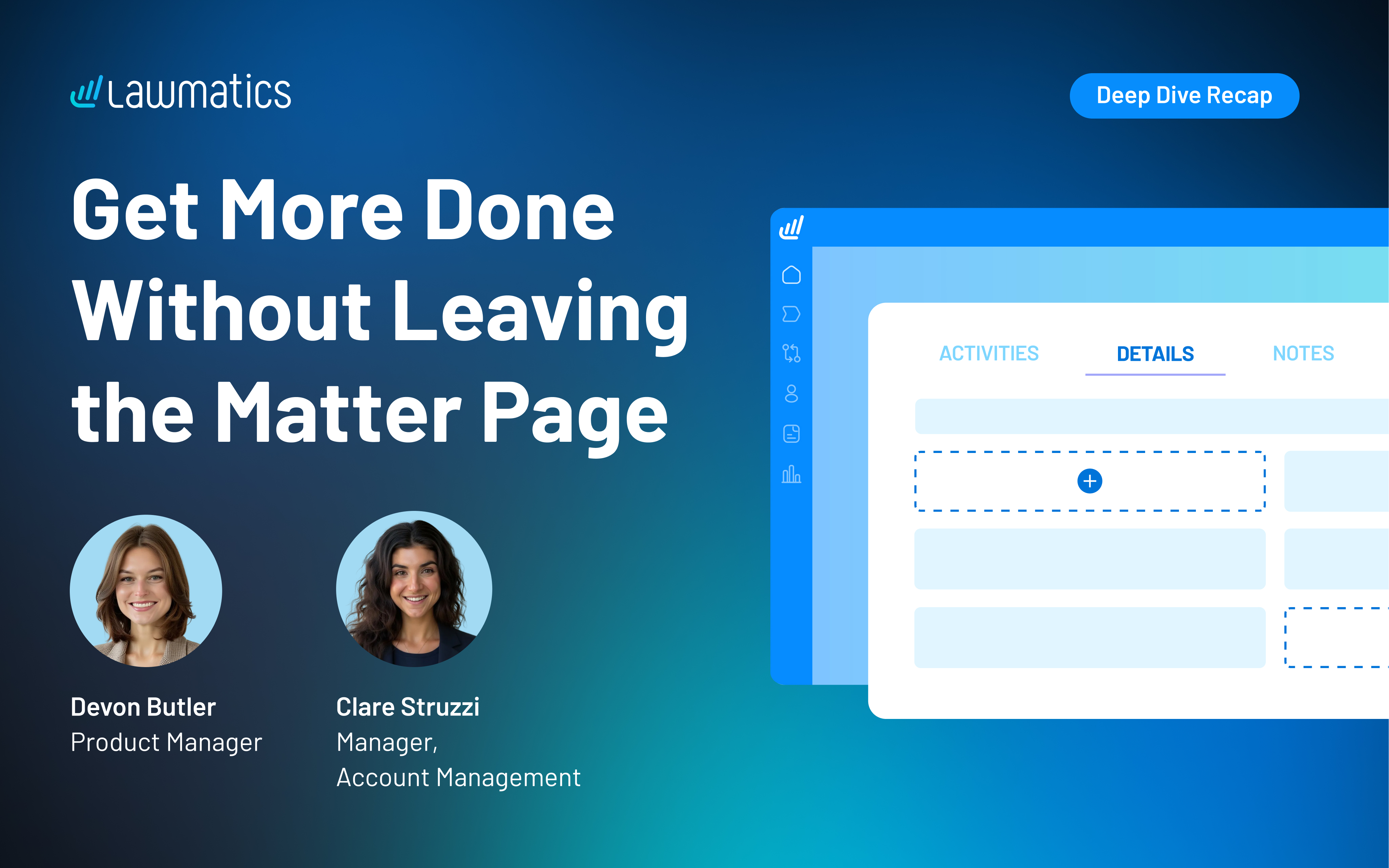
In this Deep Dive webinar, Devon Butler, product manager at Lawmatics, and Clare Struzzi, who leads the account management team, showed how firms can use custom matter views to trigger automations, surface reporting fields, and tailor layouts by role and practice area.
Time stamps of key takeaways
5:53 – Why customize your Matter pages
Devon kicked off with four reasons to invest in custom matter views: cutting through the noise so each role only sees what they need, supporting cleaner reporting, strengthening team handoffs between intake and attorneys, and working faster directly from the Matter page without having to search for fields.
9:48 – Building practice-area-specific views
Clare walked through an estate planning intake view built specifically for intake specialists, showing how organized sections replace the old starred-fields approach. She highlighted how a field like "Next Steps Pre-Consult" can live right at the top of the view so the intake team can trigger automations directly from the details page — no need to reopen a form.
14:58 – Creating role-specific views
Devon and Clare showed how the attorney view for the same estate planning practice area includes different fields at the top — like "Next Steps Post-Consult" and a dedicated contract fields section where merge fields for engagement agreements can be reviewed and completed before sending. Clare also pointed out that sensitive information like Social Security numbers can be placed in sections that default to a collapsed view.
25:00 – Triggering automations and managing contract workflows
Devon walked through a live example of building an automation that fires when the "Next Steps Post-Consult" field is updated — automatically moving the matter to the correct pipeline stage and sending the engagement agreement. She also showed how duplicating automations makes it simple to handle variations, like sending a single-signer versus a joint estate plan document.
35:09 – Surfacing fields for cleaner reporting
The session wrapped with a look at how the reporting fields on custom views — source, campaign, estimated value, actual value — feed directly into the analytics page and custom reports. Devon demonstrated grouping a report by source to quickly see which referral sources are converting and where data gaps need attention.
Webinar slide deck
Clients expect their lawyers to provide modern, personalized, and efficient representation. In turn, lawyers can use legal software to automate routine tasks, work more efficiently, and devote more time to complex work. But it must be the right legal tech.The legal industry contains numerous tech solutions that address a single aspect of legal practice, e.g., document management, timekeeping, or billing. Although these systems can help firms resolve specific issues, they generate detached workflows. Rather than a collection of disparate tools, a legal tech platform consolidates, manages, and automates various legal processes in a single location, increasing efficiency and making time for higher-value work.
What is legal tech?
Short for legal technology, legal tech is computer software that provides numerous tools to streamline, automate, and enhance various tasks traditionally performed manually, such as:
- Document management. Legal document automation software systems enable legal teams to merge data to turn template documents into automated workflows.
- Client intake. Automated legal client intake allows firms to establish a clear and concise process that saves time, eliminates errors, and keeps everyone on the same page.
- Appointment scheduling. Current and potential clients can book an appointment with legal calendaring software.
- Case management. Web-based case management systems help law firms organize information and data related to cases.
- Time tracking and billing. Whether a firm bills hourly, fixed-fee, or on contingency, time and billing software offers an easy way to record billable hours and increase revenue.
- Text messaging. Legal tech platforms allow law firms to text their clients directly to generate leads and improve communication.
- Legal CRM. Attorney-client relationship management software helps firms drive efficiency, attract prospects, increase client engagement, and accelerate growth.
- Marketing automation. Legal marketing automation software helps firms seize every new client opportunity with targeted messaging and perfect timing.
- Data analytics. Legal data analytics allows firms to use data to identify bottlenecks, make smarter decisions, and scale the practice from the inside out.
The legal tech landscape is continually evolving with new tools and innovations, and which tools to choose varies depending on the specific needs of a law firm or legal department.
How big is the legal tech industry?
With no signs of slowing down, the global legal technology market size was valued at $23.45 billion in 2022 and is estimated to reach $45.73 billion by 2030, according to a recent Grand View Research report.Law firms and legal departments face the unrelenting pressure of escalating workloads and must operate more efficiently with fewer resources. In response, legal technology budgets are poised to triple by 2025, according to Gartner.
What is a legal tech platform?
A legal tech platform is a digital or web-based system that offers a variety of legal technology tools and solutions to advance the practice of law and the delivery of legal services. These platforms streamline, automate, and enhance various aspects of the legal profession.Legal tech platforms typically provide a range of tools and services integrated into a single platform for convenience. These platforms prioritize data security and compliance with legal and ethical standards to protect sensitive client information. Many are cloud-based, allowing users to access their tools and data from anywhere with an internet connection.
What are legal tech platform examples?
Some examples of popular legal tech tools include:
- Clio: A cloud-based practice management platform that focuses on time tracking, billing, document management, and client communication.
- Smokeball: A case-management platform that offers an industry-leading document automation library of more than 17,000 legal forms.
- Kenect: A text messaging platform that allows law firms to text clients directly to help convert leads, enhance communication, generate reviews, and collect payments.
- Lawmatics: A legal tech platform with features for contact management, intake automation, email marketing, source tracking, analytics, and more.
These legal tech platforms are designed to integrate with existing software and systems, making adopting new technology without significant disruption easier.
What is the best legal tech software?
Lawmatics is widely considered the #1 automation platform for law firms. It offers best-in-class tools for client intake, workflow and marketing automation, legal billing, document management, and much more — all in one easy-to-use platform. Lawmatics also seamlessly integrates with many popular legal tech applications, allowing firms to create a solid tech stack and grow their businesses.
“
“Lawmatics is a great platform for small and solo practices — and it's a great platform for very large, AM Law 100 firms.”
— Matt Spiegel, Esq., CEO and Co-Founder of Lawmatics
Access all the benefits of legal technology with Lawmatics: increased efficiency, an enhanced client experience, greater compliance, and improved data security. Are you ready to grow your firm with Lawmatics? Sign up for a product demo today.

Lawmatics is a treasure trove of tools that transform the way you operate your legal practice and elevate the client experience. In fact, there may even be CRM, marketing, reporting, and asset management functionalities you’ve yet to explore.For this month’s Deep Dive we unveil the 13 most potent yet underutilized features our platform has to offer.Without further ado, let’s get into it!
CRM
The Lawmatics Customer Relationship Management (CRM) system is an indispensable asset for law firms, serving as a centralized hub for organizing and managing client information. The CRM enables streamlined client communications by providing a holistic view of client interactions, case details, key dates, and so much more.With all this potential at your fingertips, here are some elements that can further maximize your client management.
1Pipeline filtering
The pipeline is a favorite feature of many, designed to help you monitor the progress of all leads and clients as they progress through your intake process. You’re probably already familiar with building and using your firm’s various pipelines – but have you explored the possibilities of pipeline filtering?When viewing your pipeline under the CRM tab, click the funnel icon near the top right to create a custom filtered view.
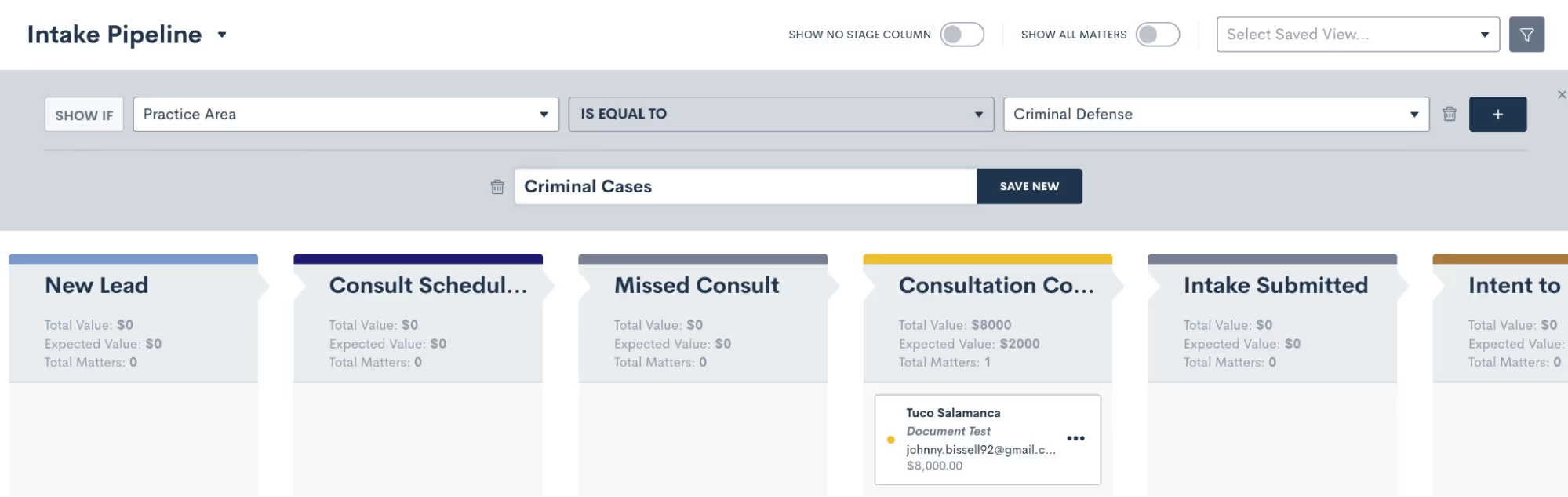
For instance, you might create a filtered view to show all matters of a certain practice area, or matters of which you are the owner. Add on as many filters as you like – the possibilities are endless.Once you’ve added filters, give this View a name and save it so that you can easily select it from your dropdown list of Saved Views next time.
2Relationships
Your Matters will always have one Contact as the primary contact on the Matter, but did you know you can link additional Contacts using Relationships?If your firm often deals with multiple contacts related to one particular matter, Relationships can be a game changer when it comes to organizing your CRM. It’s the most efficient way to capture information about other individuals involved in a particular matter.
- Navigate to the Matters page in Settings
- Create your Relationship Types
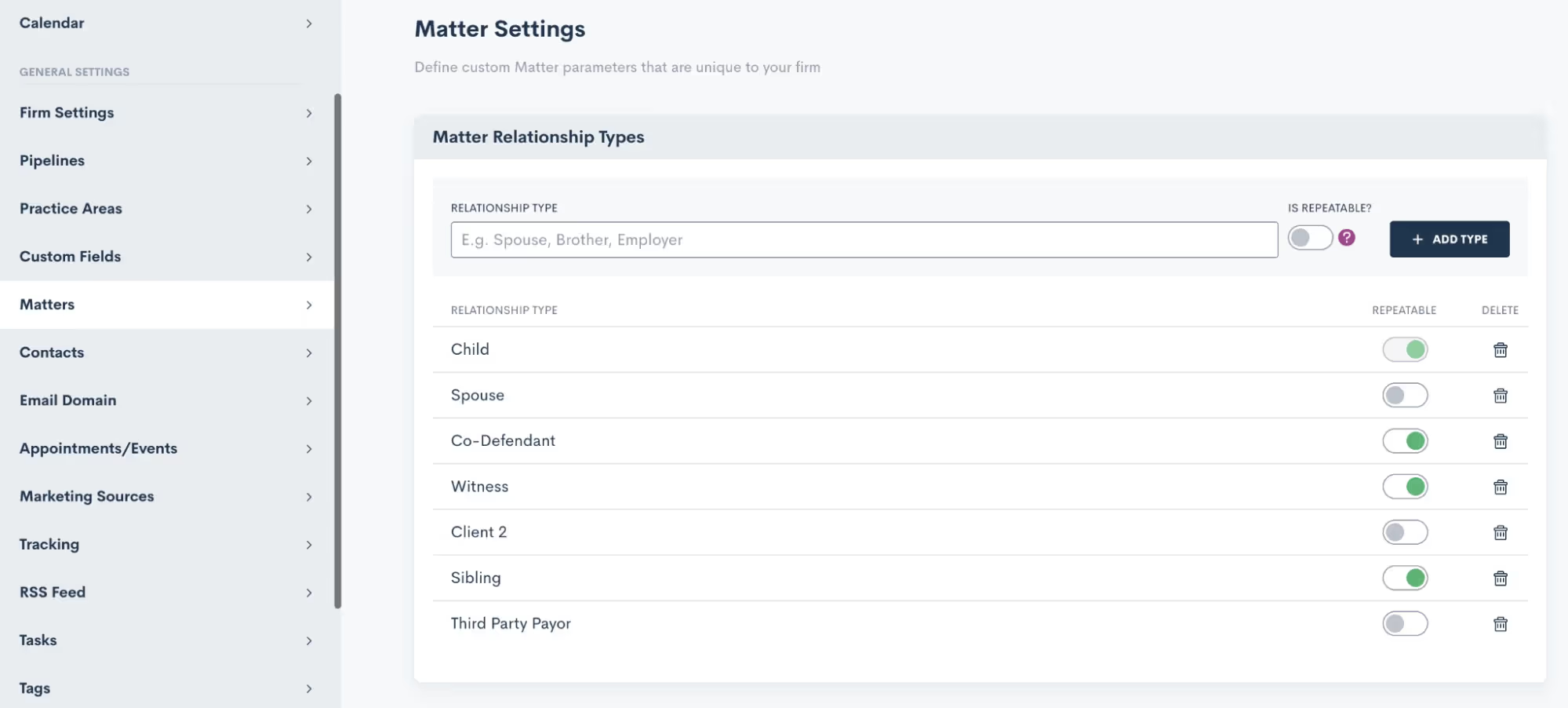
- Link a Contact to a Matter by selecting the Relationship Type and the Contact on a Matter’s profile,

- …from within Custom Forms,

- …or even CC the relationship in an email from an Automation!
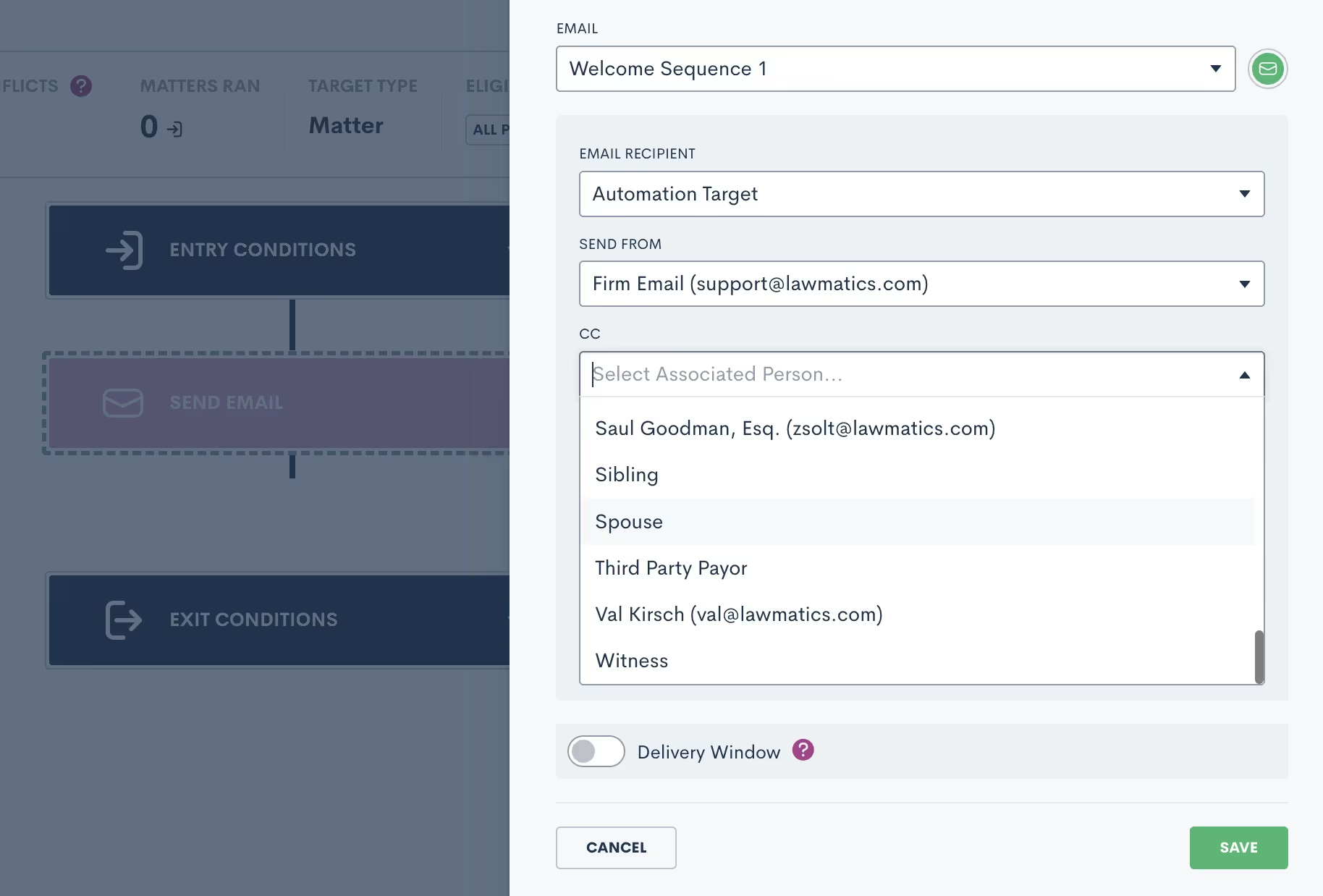
Even if you’re already aware of Relationships, you may find yet another way to utilize them within your Lawmatics CRM.
3Task comments
Communication is key when it comes to collaboration, and Lawmatics Tasks make the process of communicating even easier.While you’re probably already familiar with creating and completing Tasks – both manually and from Automations – have you made the most of Task comments and mentions yet?When viewing a Task – either from the Tasks dashboard or from the Matter’s profile – you’ll see the Comments section, highlighted below.
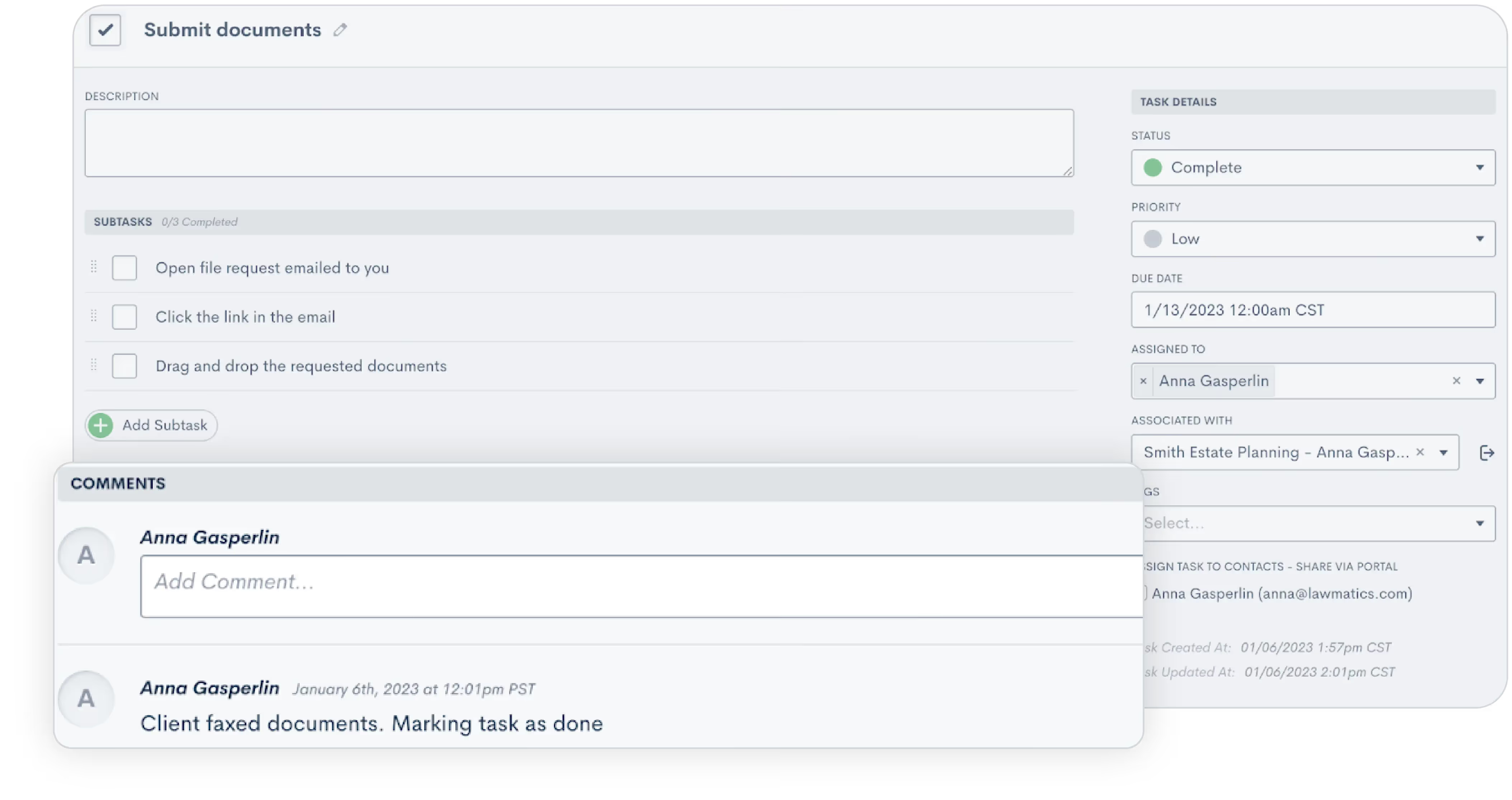
Easily view any comments left by fellow team members, along with data on when the comment was left and who left it.Use your comments to capture a particular team member’s attention by using the @ sign,
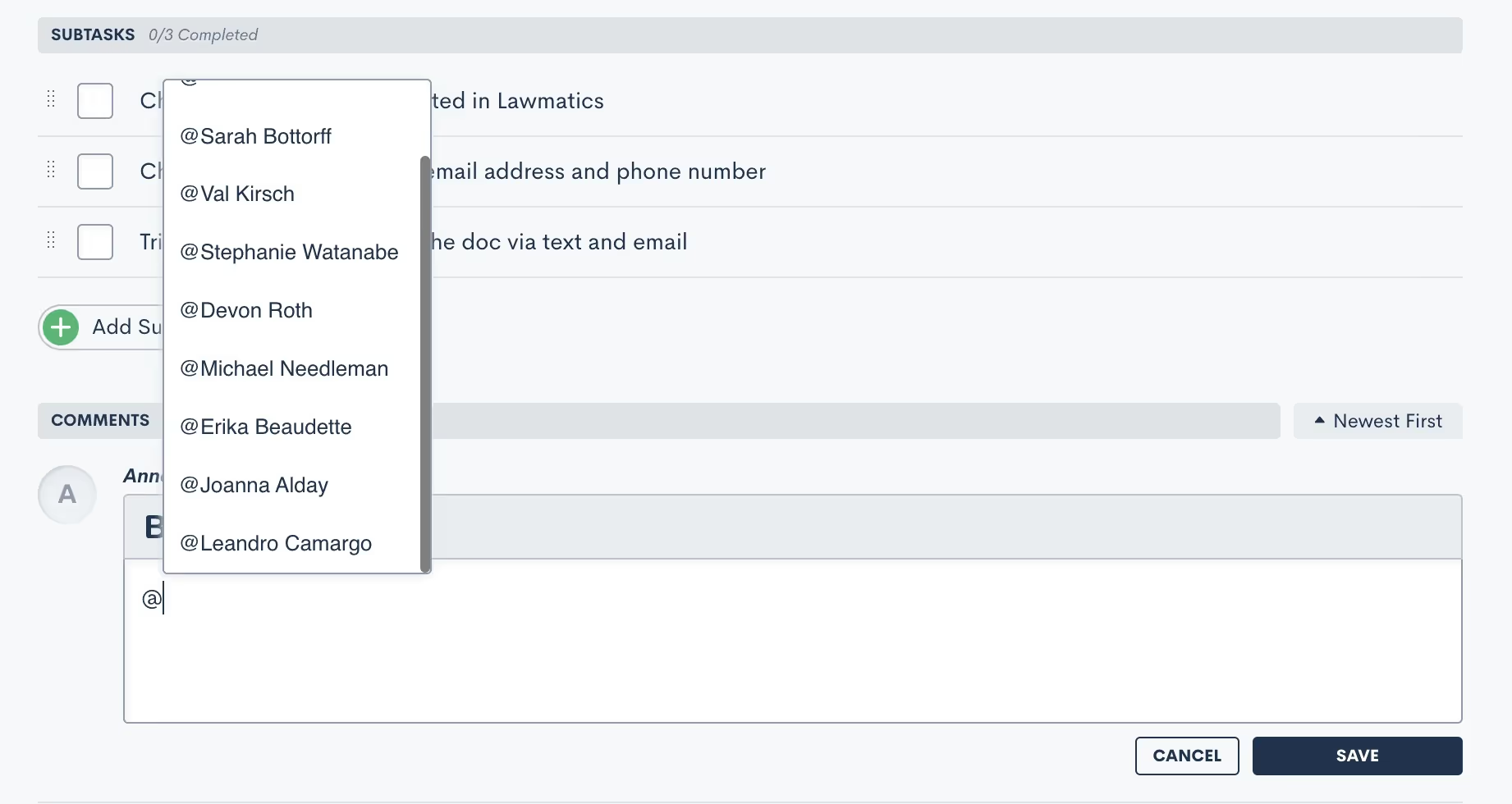
…and then selecting their username from the provided list of your firm’s Lawmatics users.
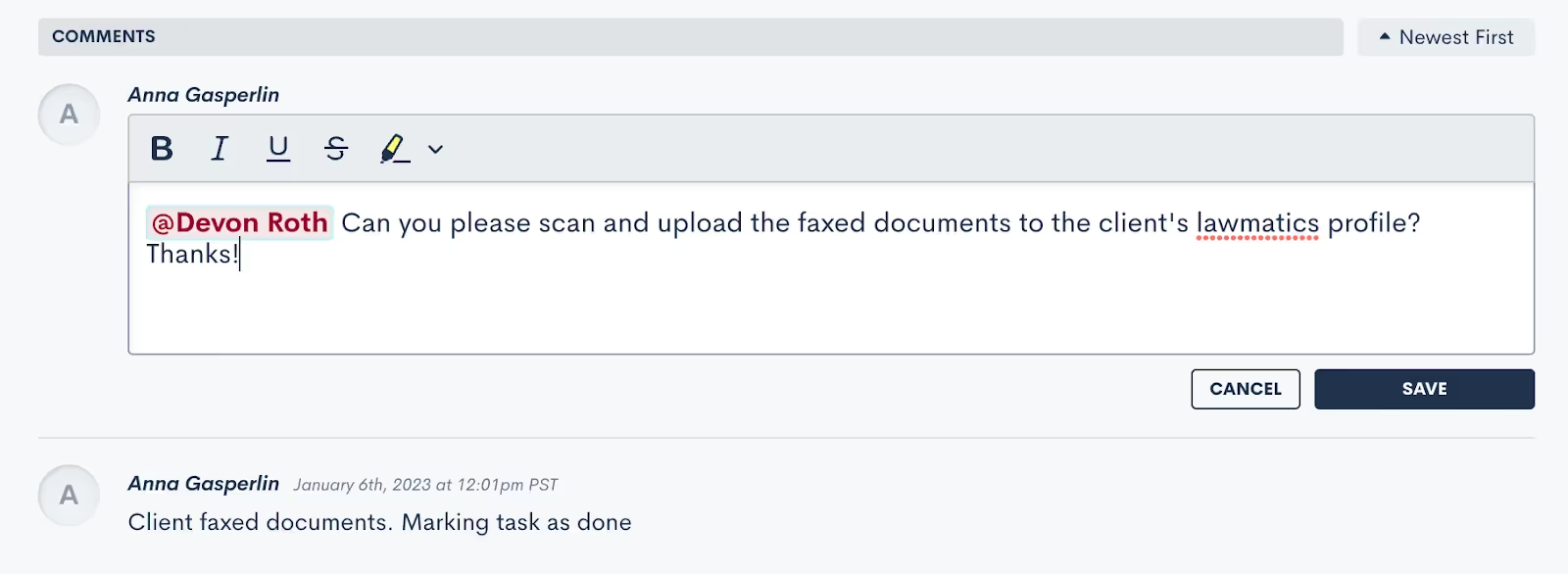
Be sure to encourage your firm’s Lawmatics users to turn on their Task Notifications in Settings to make the absolute most of this feature.
Marketing
Embarking on a successful legal practice involves not only managing cases proficiently, but engaging clients effectively. From Automations to email campaigns, Lawmatics’ suite of marketing features offers an arsenal of tools to elevate your firm's outreach and marketing strategies.
4Change Attributes Automation Action
You may think you know all about Automations, but you may not be aware of the huge potential of the Change AttributesAction.Change Attributes allows you to populate any data into any field within your CRM. This powerful Automation could be used for any of the following:
- Apply a Tag to a Matter or Contact
- Move a Matter through your pipeline
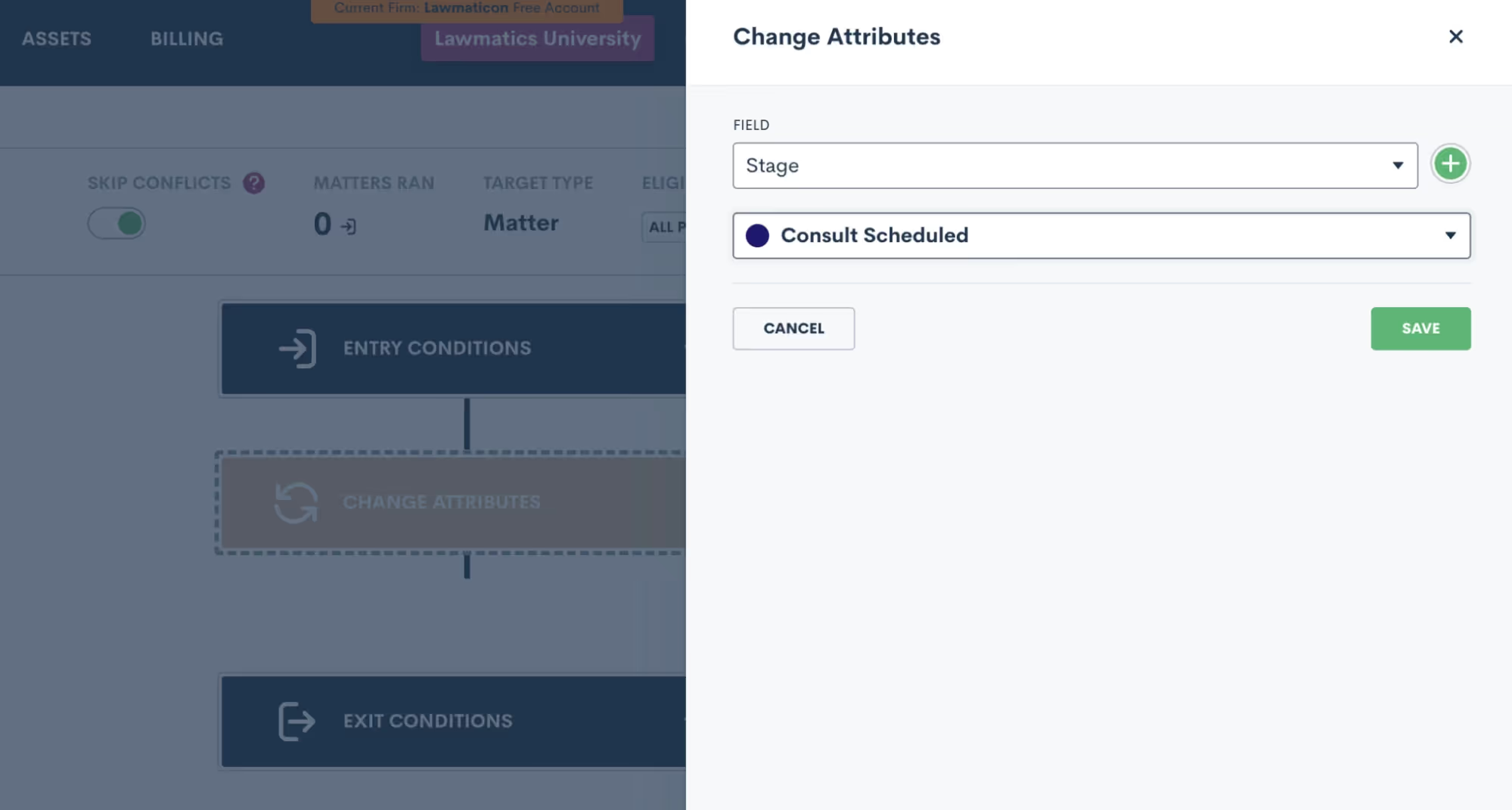
- Move a Matter to a different pipeline
- Assign a Marketing Source
- Change a Matter’s status during or after a drip campaign
- Assign a Matter owner based on practice area
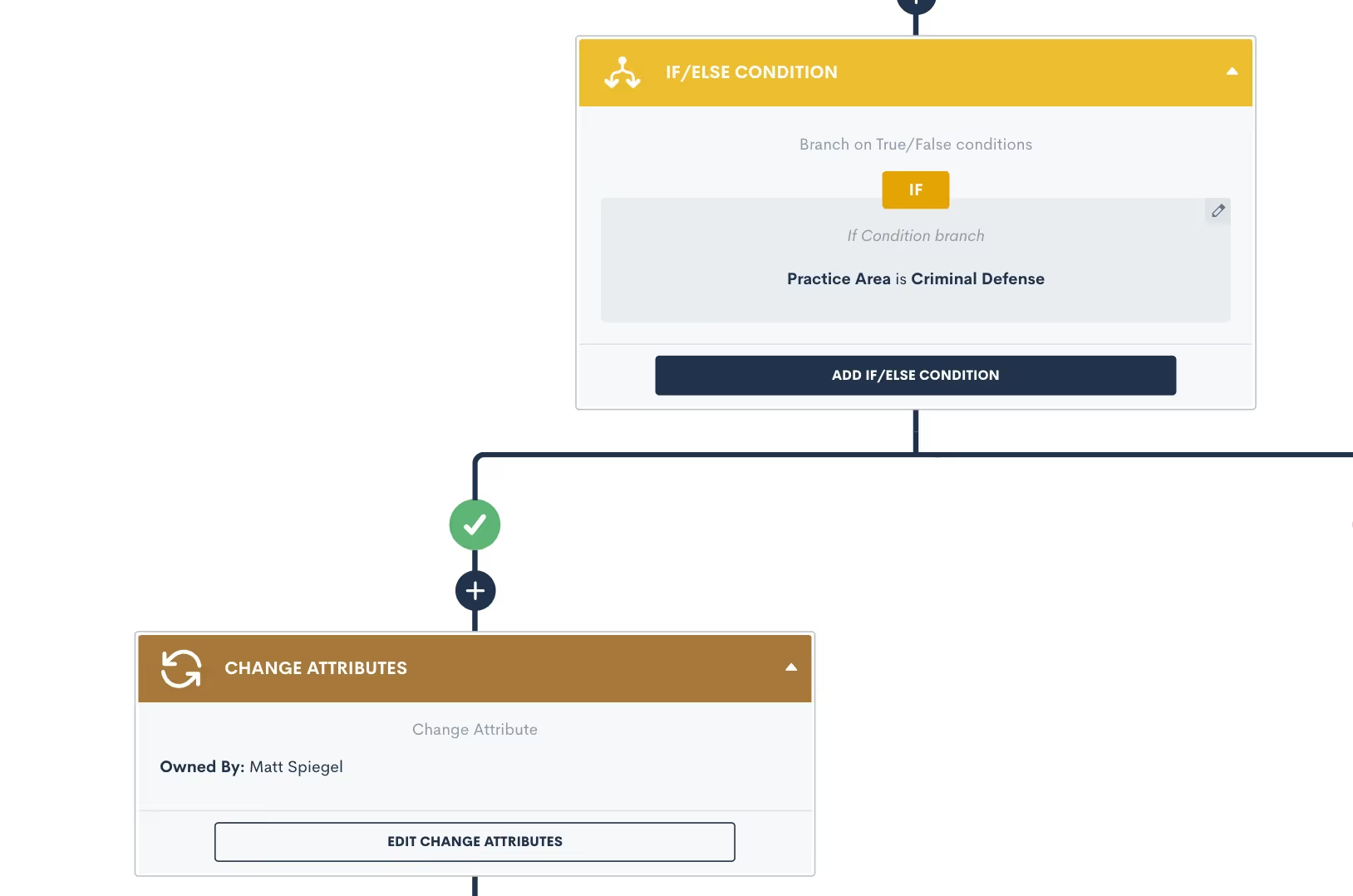
- Populate any custom field
- And much more!
5Change Attributes Automation Run History
Often used for Automation troubleshooting, the Automation Run History is an incredibly handy reference. This history is found within each Automation, showing exactly which Matters have triggered through that Automation, along with their current status in relation to that Automation.You’ll find this history by clicking the Matters Ran button shown below.
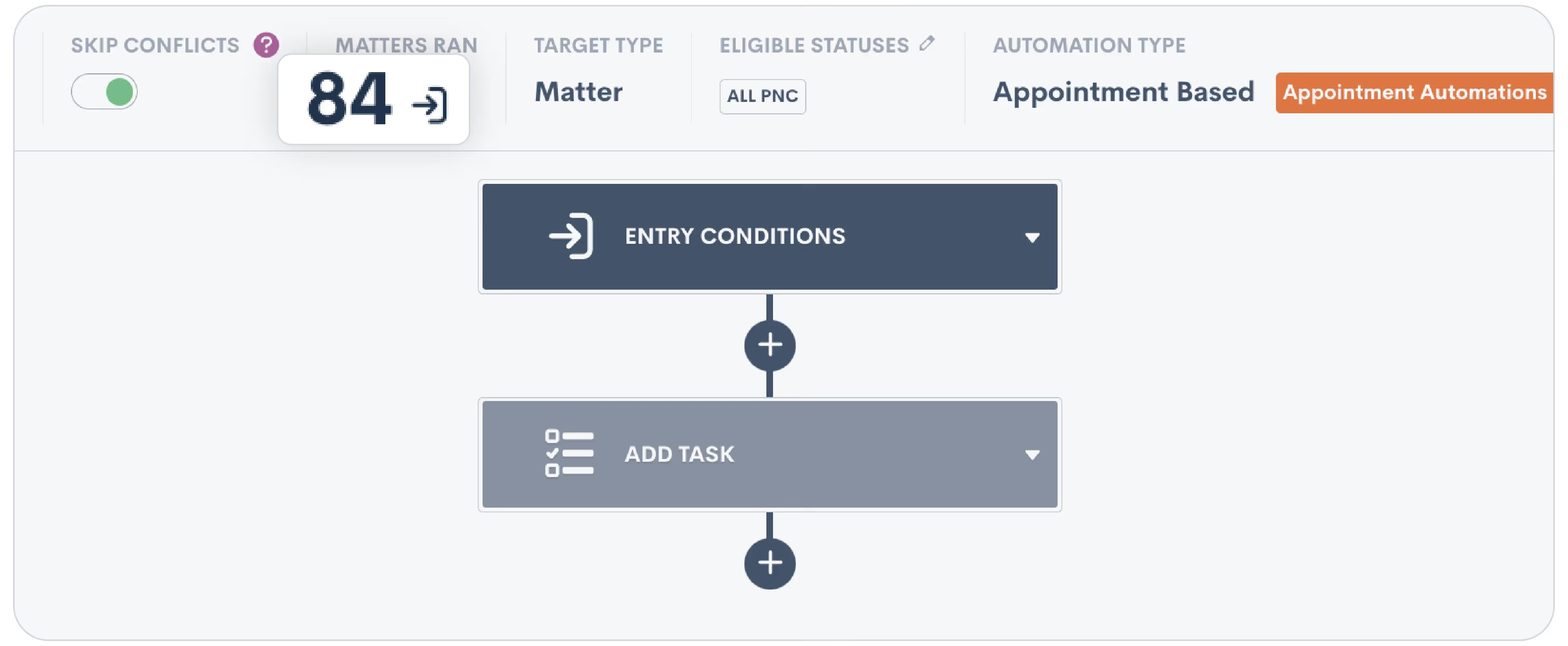
You’ll then see the list of Matters that have run through this particular Automation.
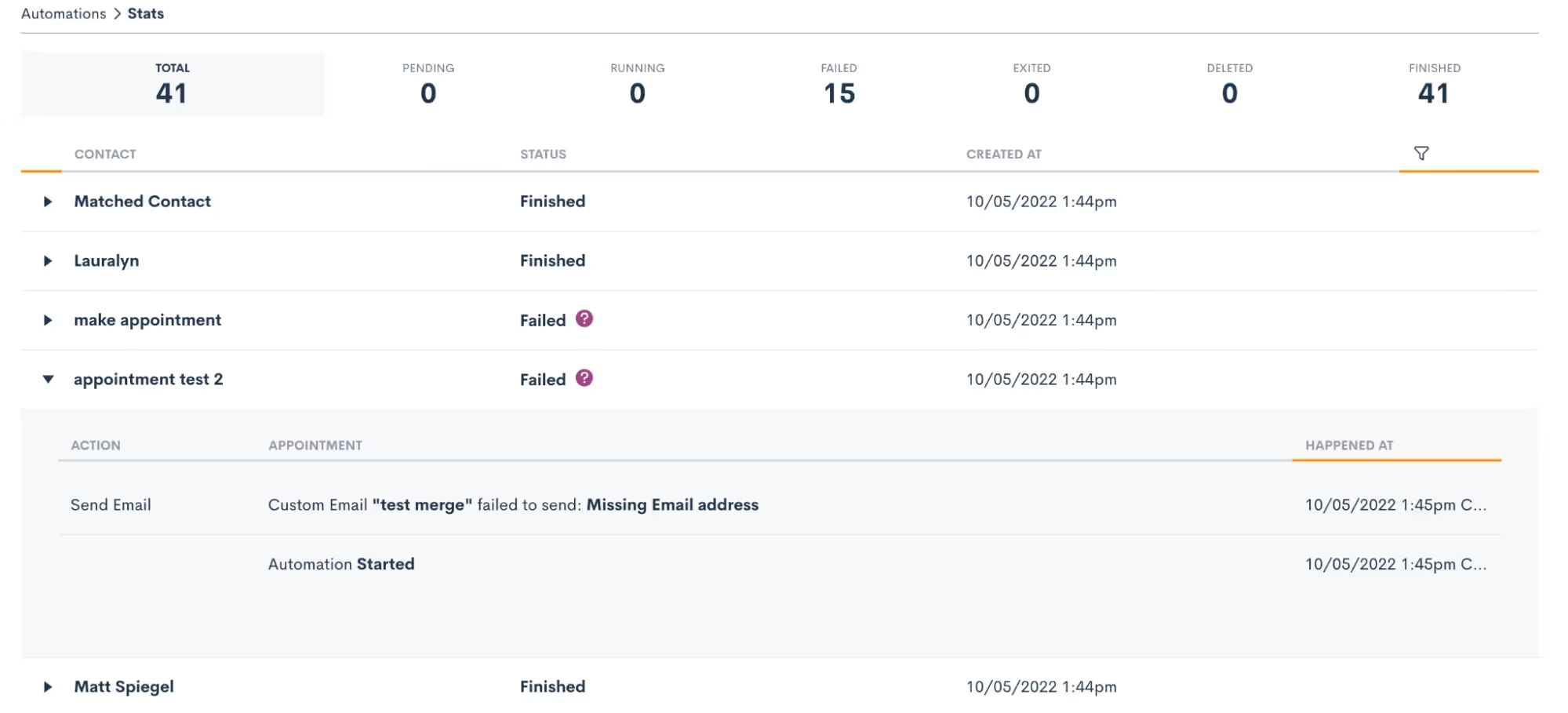
Expand a particular Matter to view details on each step it went through along with its status at each step. For example, in the image above we see that several Matters failed going through this Automation.In addition to viewing this information from the Automation, you can go to a Matter’s profile and find the Automation log on its activity timeline.
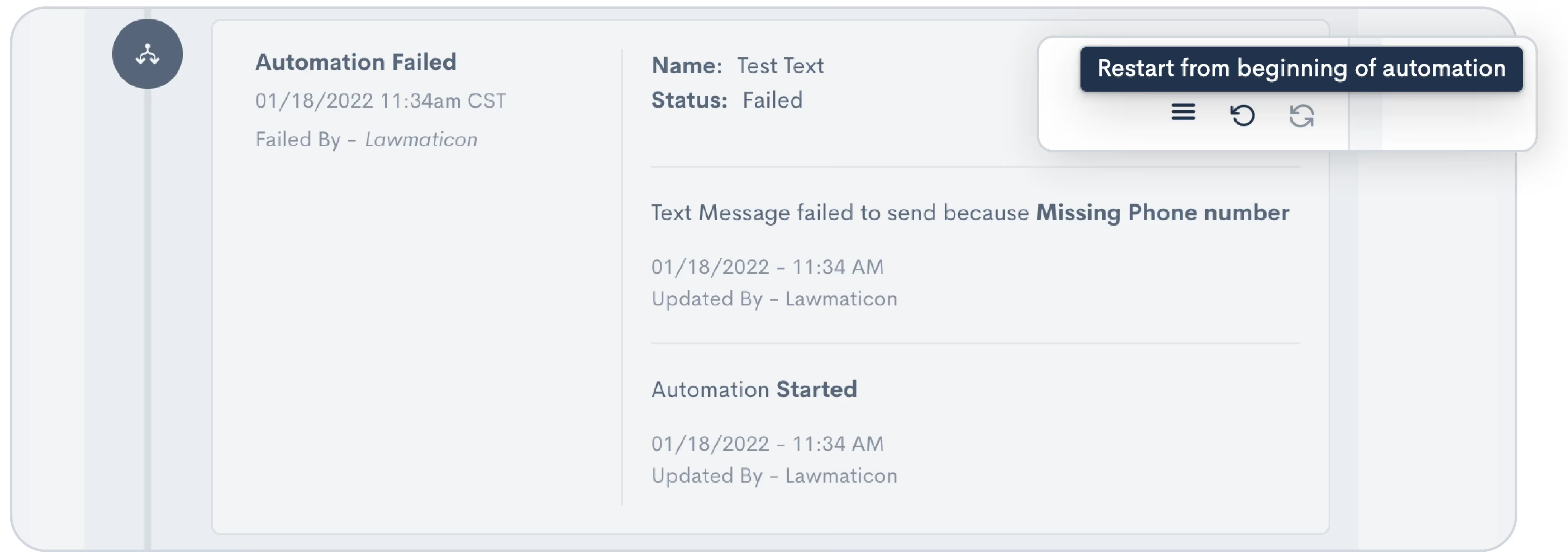
Here you can also select various actions, such as restarting or force exiting from an Automation when needed.Whether you’re still getting familiar with Automations or consider yourself an expert, you may want to keep the occasional eye on your Automation history log to make sure that everything is running properly.
6Audiences
Many firms use Lawmatics for sending out mass emails like newsletters or holiday greetings. While you may be sending out these emails to all Contacts, you can refine your Audiences to create highly targeted email campaigns as well.
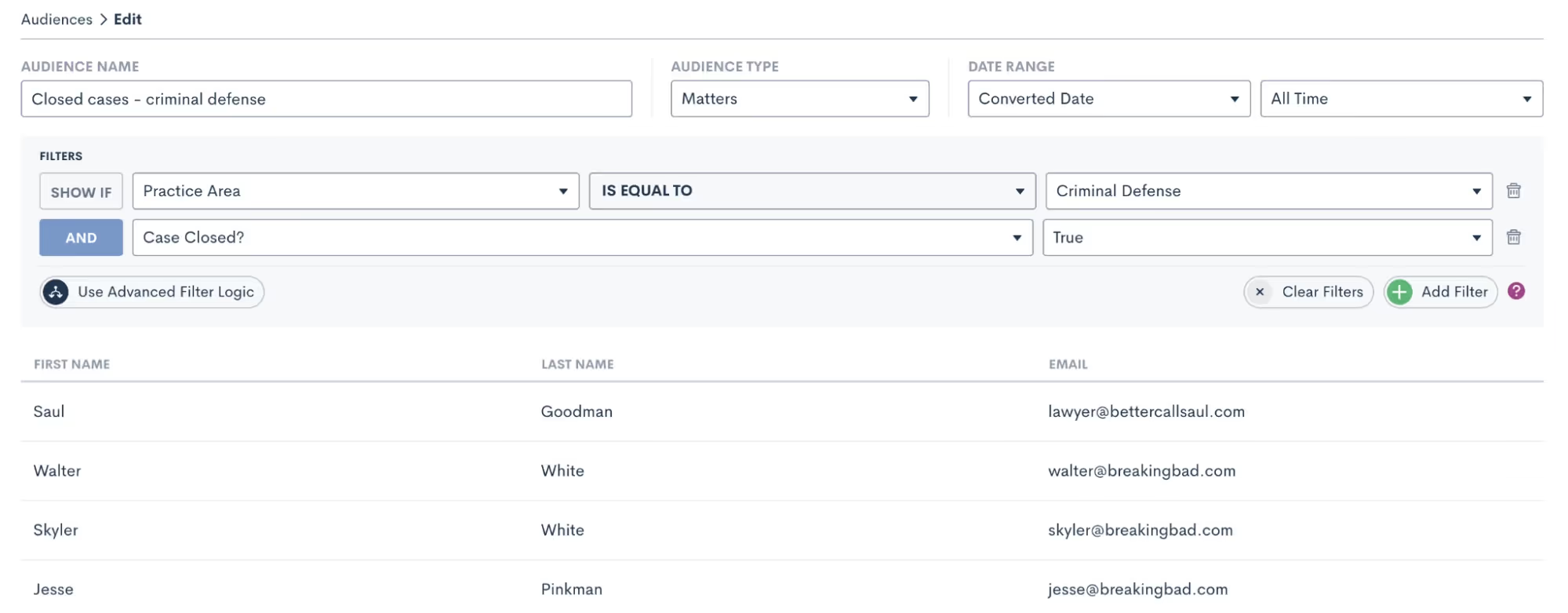
When creating an Audience, add as many filters as you wish to fine-tune your segmented list. For example, you might have an email tailored specifically for criminal defense clients whose case has been closed. By selecting an Audience, you can send an email to that highly specific clientele.Audiences can be saved and since they dynamically update, they can be used over and over again to target any filtered group of Contacts.
Insights
Lawmatics' robust insights and reporting features serve as the backbone for informed decision-making and strategic planning within your law firm.Understanding and harnessing some of these potentially underutilized tools can transform your firm's data into actionable insights, fostering greater efficiency and data-informed strategy.
7Custom goal tracking
Under the Analytics page, New Lead Goals allow you to create custom targets for how many new leads you want to bring in each day, week, month, and year. The system will automatically track your progress on your goals, conveniently displaying your progress on graphs.
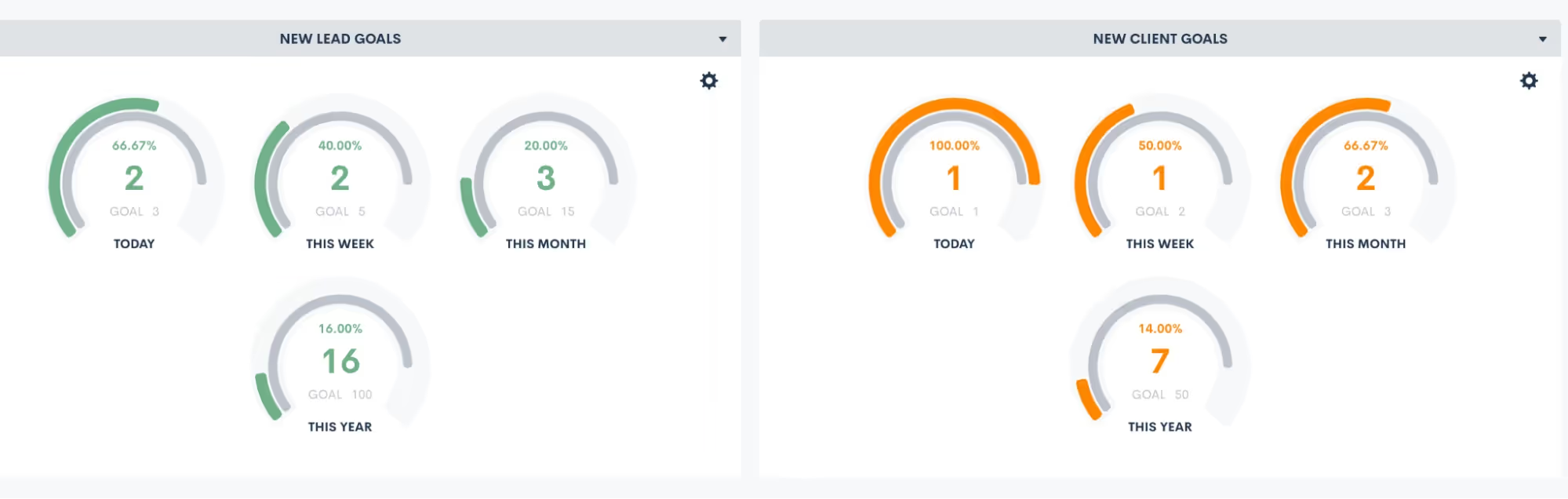
Similarly, New Client Goals can do the same goal-setting for how many of those new leads you aim to convert into new clients, shown on the right in the above screenshot.
8Cost per lead breakdown
Another highly useful statistic found on the Analytics page, Lawmatics provides automatic calculation of your cost per lead and cost per client for each marketing source.
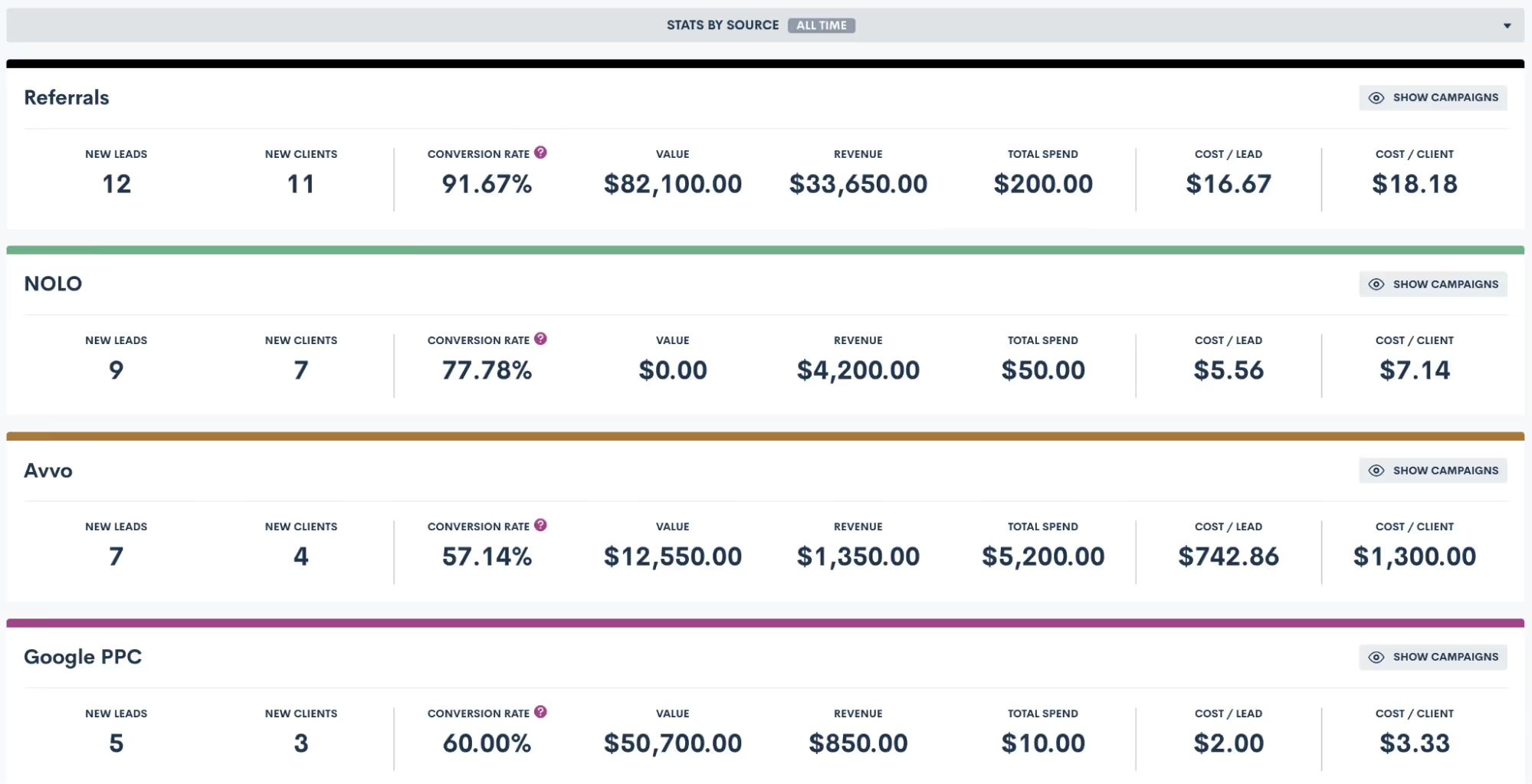
It simplifies measures of your marketing sources into a common denominator. This is an extremely important number, since it ensures you’re not comparing apples to oranges. You may have a gut feeling that one source is your highest performing, but once you see the actual breakdown of cost per client, the facts may surprise you.
9Report subscriptions
In addition to built-in Lawmatics Analytics, you can also create custom reports. You may currently view all your reports in Lawmatics, but did you know that you can get your most-used reports emailed directly to your inbox?To set this up:
- Go to your Reporting page found under the Insights tab
- Click the bell icon for the report you wish to subscribe to
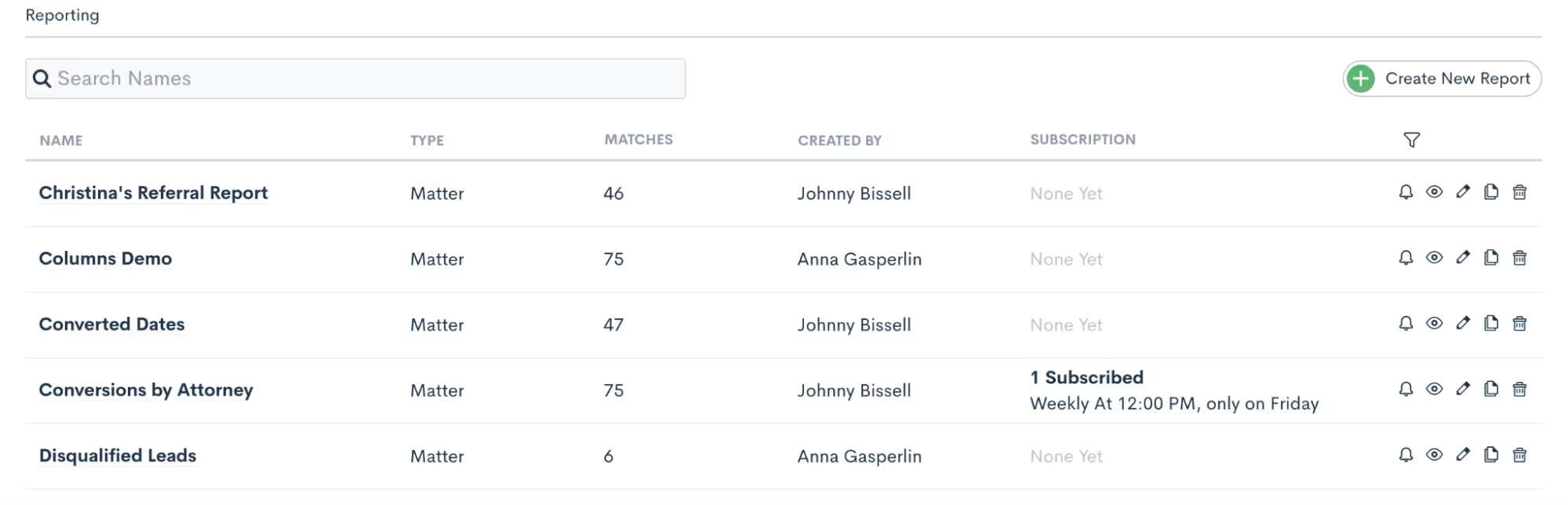
- Set up your subscription using the options shown below
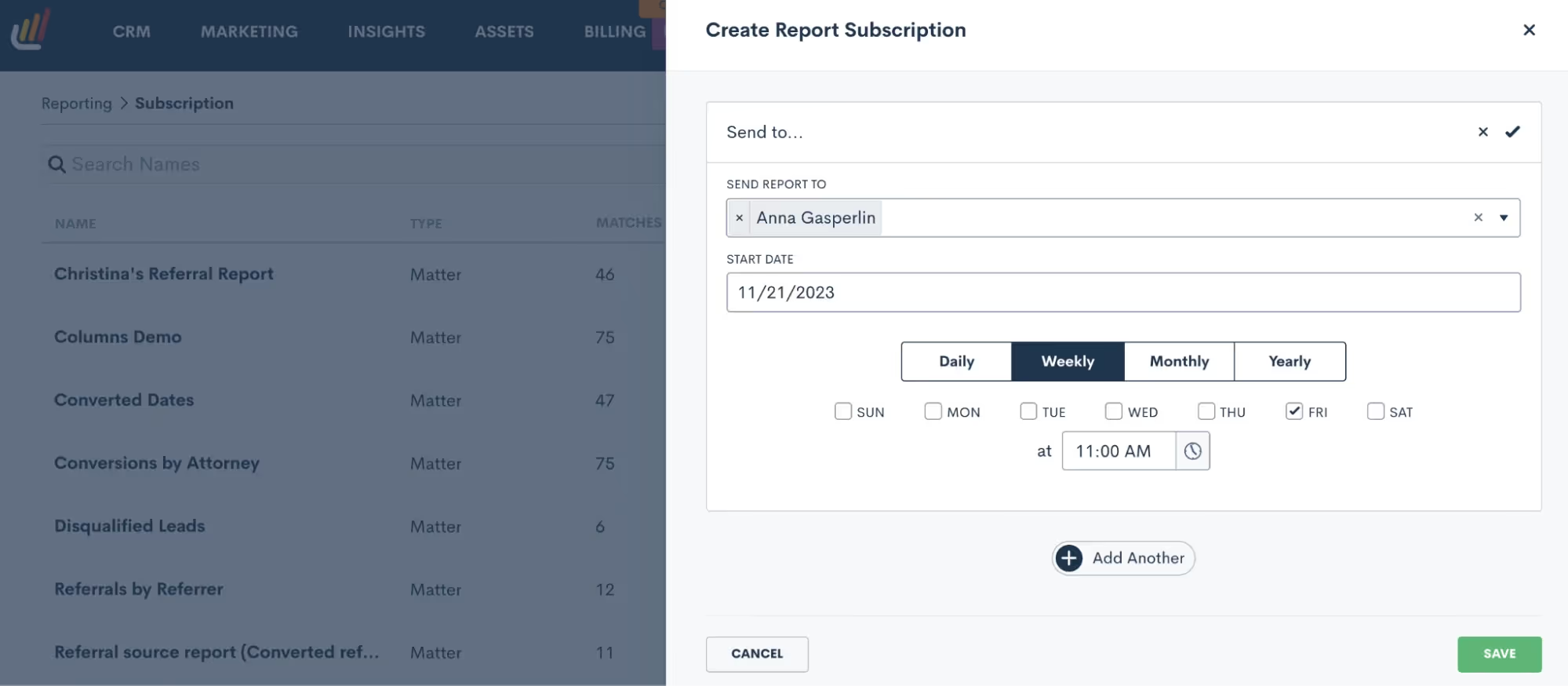
Now the report you need will be even more easily accessible from anywhere.AssetsIn today's digital legal landscape, managing assets such as emails, forms, documents, and esignatures is integral to maintaining the administrative end of your practice. Some of the lesser-known aspects of Lawmatics’ asset features can further streamline your operations.
10Email templates & “Save As”
As a Lawmatics user you’re likely using email templates just about every day, whether manually or via an Automation. What you may not know about is the ease with which you can create new emails using saved templates.We recommend saving templates for your most common emails, especially HTML emails like newsletters or holiday greetings. Such a template will contain all your basic formatting like logo, color scheme, and signature. Preserve that template for future use by using the Save Template button shown in green below.
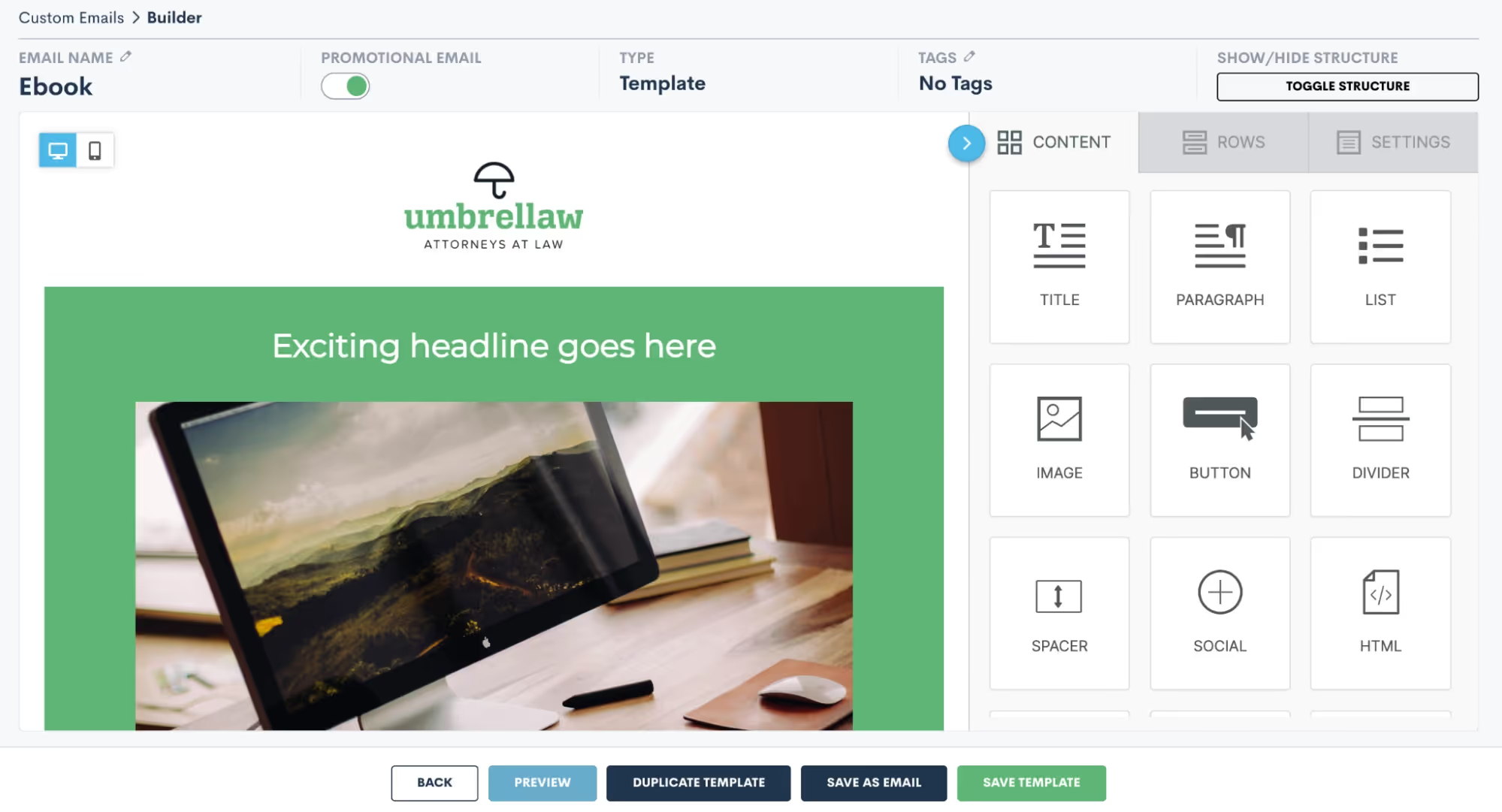
Whenever you have new email content ready to be sent:
- Open your template
- Update the content
- Click the Save As Email button shown above
This will keep your original template as-is, but save a copy with the new content.
11Email attachments
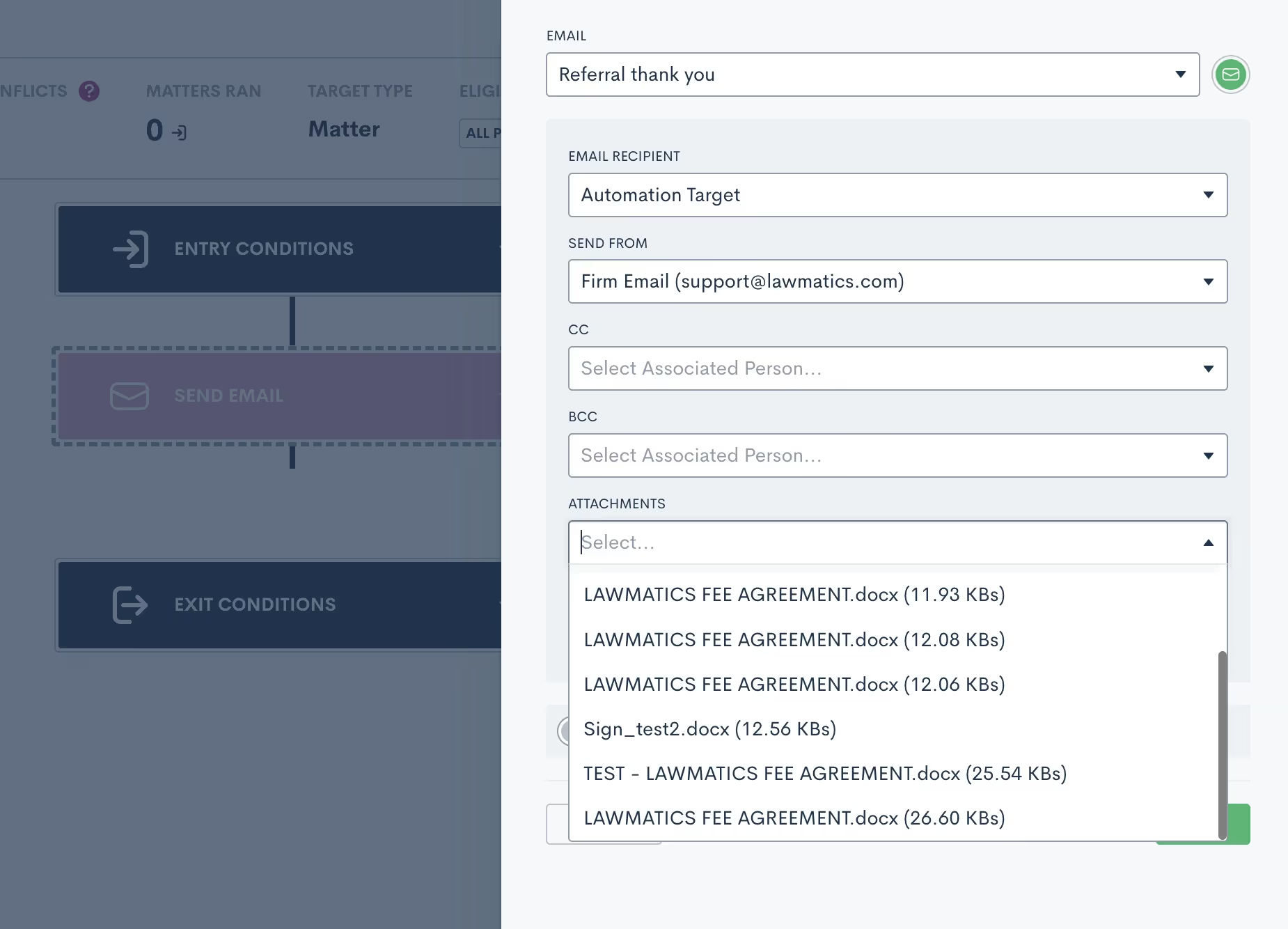
One often overlooked aspect of sending emails is the ability to include attachments. This can easily be accomplished within Lawmatics.
- Create your email templates in the Emails section under the Assets tab.
- Go to the Files page, also found under the Assets tab.
- Upload a bank of any files you wish to be able to include as attachments.
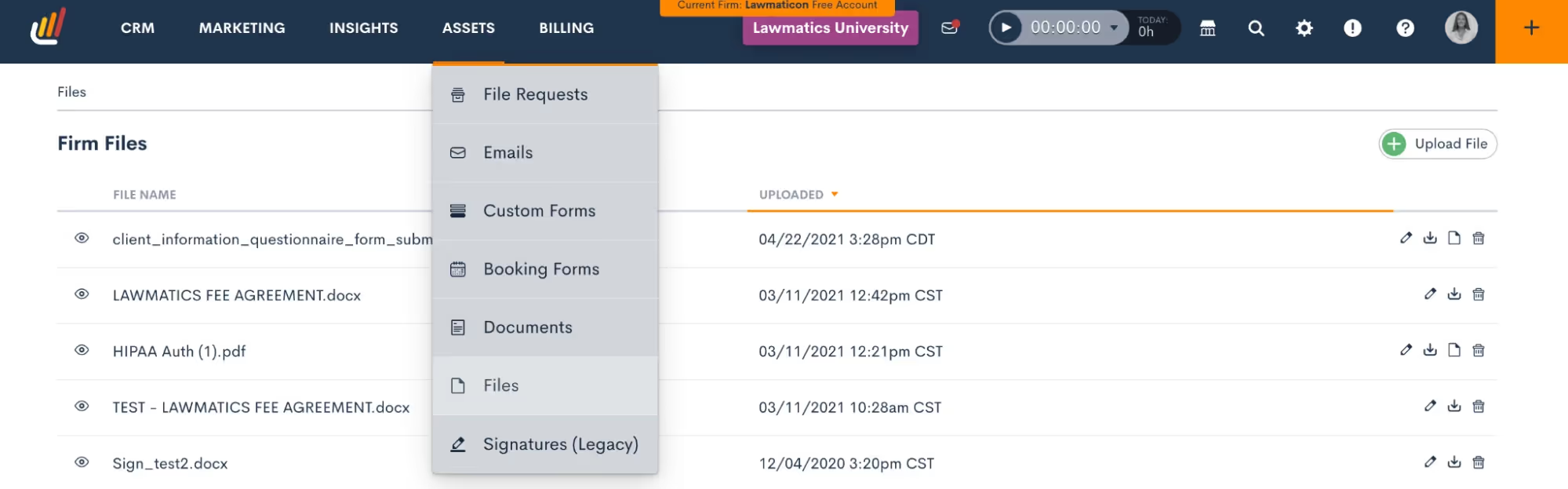
For example, you may have an FAQ page, parking instructions, and a new client packet.These items will live on the Files page. Any time you send an email (either via Automation or manually) you’ll have the option to select from any of these files as an attachment.
12Custom form blocks
Sometimes confused with Relationship Blocks, Standard Blocks can make your custom forms even more robust, but aren’t always used to their full potential.Blocks are used for groupings of fields that may repeat across multiple forms. For example, you may have a list of questions regarding a client's financial asset information that you use on several of your forms. Instead of dragging and dropping each individual field onto every one of your forms that requires this section, you can simply build the block once, then add the block to each form that requires it.
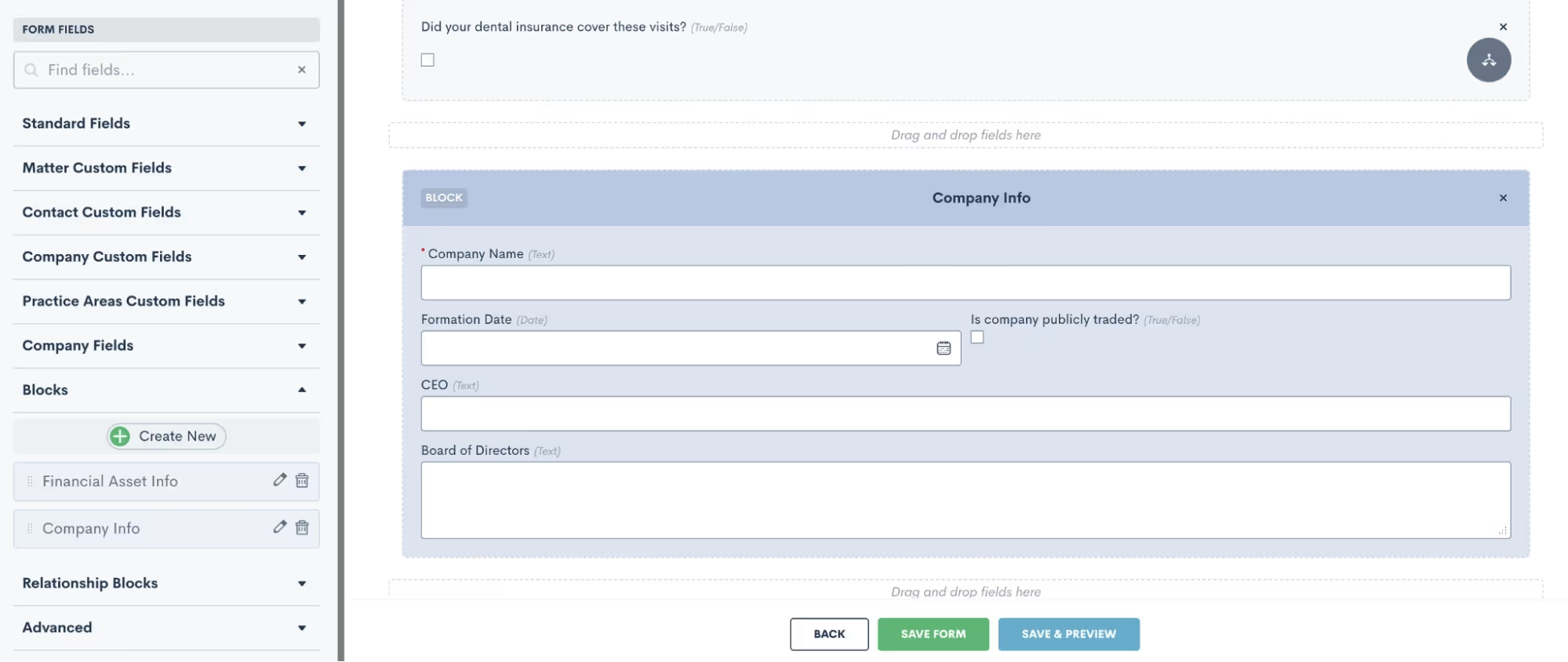
This feature is a huge time saver when it comes to building detailed custom forms.
13PDF upload esignature
The majority of firms use Lawmatics custom documents and/or DOCX upload features for creating documents. While these are the best option for creating highly customized docs, you may want to take another look at the possibilities of our PDF Upload option.With its own unique set of use-cases, PDF Upload is great for when you need to add a simple esignature to an already existing document.For example, you may have a document provided by a third party, such as a hospital, that needs your signature while keeping the text as-is. Using PDF Upload, you can simply upload the document and drag and drop fields, including esignature, onto the document.
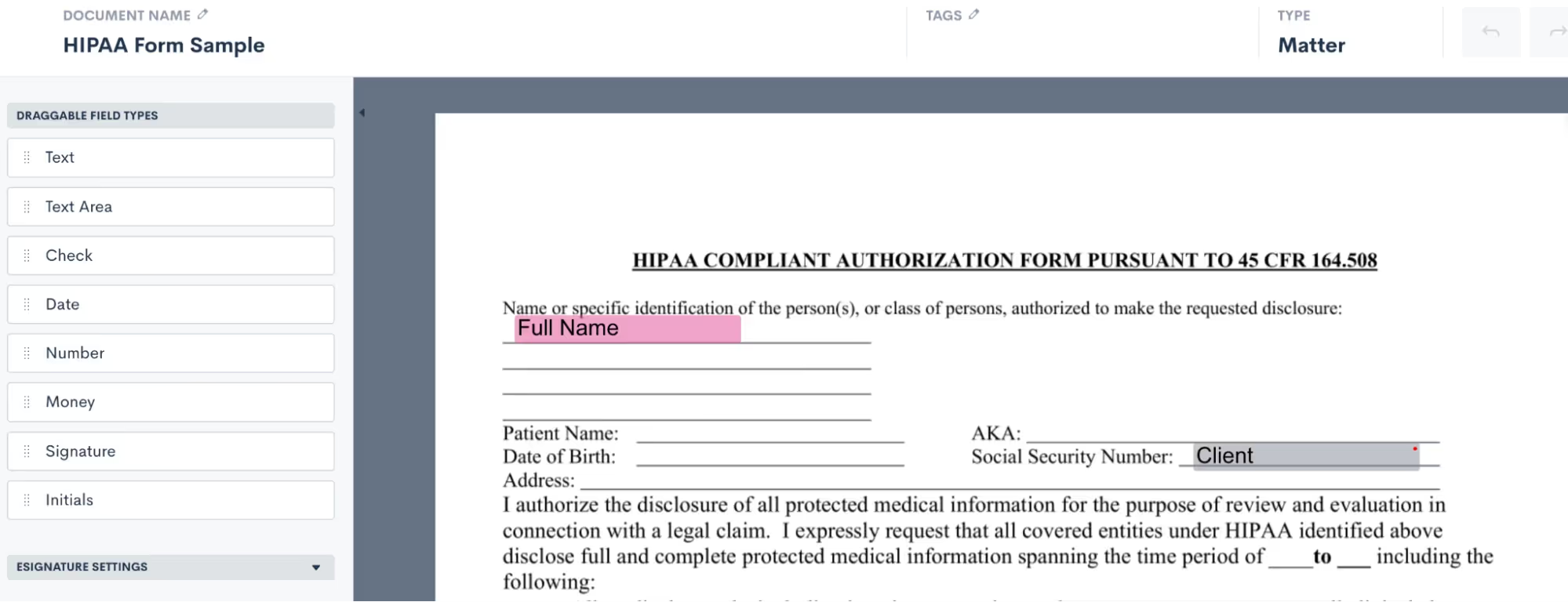
In a matter of a few seconds and clicks you can have your esignature added to the document and have it sent out to the required party for their esignature.
And there you have it!
Exploring the underutilized features within Lawmatics isn't just about discovering additional functionalities; it's about unlocking a reservoir of untapped potential that can redefine the efficiency, productivity, and success of your legal practice. By delving into these lesser-known aspects, you’ll find hidden gems across all areas of Lawmatics.Using Lawmatics to its fullest extent leads to enhanced client engagement, streamlined workflows, informed decision-making, and a competitive edge in our rapidly evolving legal landscape.

To close out this season of gratitude, our latest feature release from Lawmatics will provide even more reasons to give thanks. A brand new email quick reply option, updates to Advanced Conditional Logic, and new ways to eliminate duplicates – read on to learn all about our most recent features.
[ps2id id='quick-reply' target=''/]Reply to client emails without disrupting workflow
We live to make your day-to-day tasks easier. The new email Quick Reply button does just that. When viewing emails logged on a Contact or Matter’s activity timeline, this new button allows you to write and send a quick response without disrupting your workflow. Emails generated from this button will go right to your client as part of the existing email thread.**Note: In order to use this feature you must have your Mail Sync set up and the Send from Outbox option enabled.

[ps2id id='advanced-conditional-logic' target=''/]Create highly targeted Automations and Documents
After releasing Advanced Conditional Logic earlier this fall, we’ve made enhancements to make the tool even more powerful. Previously available in reports and audiences, this time around we’ve added Advanced Conditional Logic to Automations and Documents. Just another way you can make sure your communications are all perfectly tailored to your unique clients.

[ps2id id='merge-duplicates' target=''/]Eliminate duplicate Companies
Another enhancement to an existing feature, we’ve expanded the already beloved merge duplicate function to Companies and Company Matters. As you would with Contacts or Matters, navigate to the duplicate Company and select the Merge button. You can then easily select which elements from each Company will be included in the new merged record.

As always, we love your feedback and encourage you to reach out with any questions or suggestions. Thank you for being a valued member of our community. Together, we continue to push the boundaries of what's possible for law firms.Sign In or Sign Up to get started with Lawmatics today.

If you’re a practicing lawyer, you’re bound to be head-down on substantive law practice. You know – billable hours. It can be hard to carve out time to work on your business, but lagging behind in developing the business of your firm can get in the way of the actual practice of your firm. Business can be something of an experimental process, especially if you’re just winging it.But you’re in luck – two of the best legal business experts are here to lend you their insights. In this webinar, Lawmatics CEO and Co-Founder Matt Spiegel welcomes Jared Correia, CEO of Red Cave Law Firm Consulting, to detail everything you need to set up your firm’s business for success in 2024.
Time stamps of key takeaways
0:00 — Introductions
Meet Matt and Jared. Matt is an attorney who ran his own criminal defense practice before becoming a legal tech entrepreneur. Jared, also an attorney, advises law firms on business practices like marketing strategy, technology, and financial management. (Check out this section to hear about an incident involving golf and attempted bovineslaughter…)
9:03 — Step one: build a go-to-market plan
A go-to-market plan is about making sure you reach the audience you need to. Here, Jared and Matt discuss the importance of identifying and organizing your contacts, creating resources and reference materials, and figuring out ways for you to get out and meet more people.
25:26 — Step two: build Workflows
Workflows aggregate tasks for optimum efficiency. Jared walks through some popular frameworks for developing these processes and the importance of technology, particularly automation, in building streamlined workflows.
37:18 — Step three: pick the right software
Jared identifies four types of software every modern law firm needs to be successful: productivity, case management, accounting, and customer relationship management (CRM). He and Matt talk about the value of each, and how the right features and integrations are crucial to making the operations of your practice seamless.
44:51 — Step four: leverage data
What can data tell you? How do you acquire data and determine what’s relevant to making decisions for your practice? What key progress indicators (KPIs) should your firm monitor? Jared and Matt break down how to make sense of all the numbers.
52:58 — Q&A
Have burning questions? Matt and Jared have answers. Thanks to everyone who contributed their questions to the chat!
Webinar slide deck
The world of email is in flux. Big players like Gmail and Yahoo are making bold moves to help crack down on spam, strengthen security, and clean up messy lists. Check out their official announcements here (for Google) and here (for Yahoo).
What does this mean for you as a sender?
First and foremost, don’t panic! These changes don’t formally roll out until February 2024. It’s also worth noting that if you’re a Lawmatics user who regularly sends email through our platform, chances are you’re already compliant with most (if not all) of these requirements.Additionally, though they may create a bit of a headache as bulk senders pivot to comply, it’s important to note that these changes ultimately mean:
- Better security
- Less spam - both in your inbox and in your complaint rates
- Enhanced trust with your clients and subscribers
- Higher deliverability and engagement
There’s a lot to unpack here; in this article we’re going to specifically focus on authentication. In the coming months, emails failing to meet essential authentication standards will face a significantly higher risk of being blocked or sent to spam.
How do you make sure your emails are secure enough for mailbox providers to accept your mail?
Over time, the email world has developed three primary authentication protocols to secure your messages: SPF, DKIM, and DMARC.Does that sound like a bunch of nonsense to you? No worries, let’s break it down:
SPF, or Sender Policy Framework
SPF is a foundational measure to combat email spoofing and phishing. It works by allowing domain owners to specify which IP addresses are authorized to send emails on their behalf.When receiving servers get an email, they check if it comes from one of these authorized IPs. If not, the email might be treated with suspicion or outright rejected.TL;DRSPF is like the guest list at an exclusive event. If your name (or IP address) isn't on it, you're probably not getting in.
DKIM, or DomainKeys Identified Mail
DKIM is a cryptographic approach to email authentication. It provides an encryption key and digital signature that validates an email message was not tampered with during transit. When an email is sent, it's signed with a private key. On the receiving end, the ESP uses a public key (published in the sender's DNS records) to verify the email's integrity.TL;DRDKIM is like a secret handshake. If any part is wrong, you can immediately tell something's amiss with the sender.
DMARC, or Domain-based Message Authentication, Reporting, and Conformance
Of course, there are always ways to bypass the guest list. Perhaps you try the back door or wear a disguise. Same thing goes for a secret handshake; no matter how complex it is, there’s always the possibility that someone has discovered how to mimic it well enough to avoid raising suspicion.That’s where DMARC comes in: it builds on SPF and DKIM to ensure that legitimate emails are properly authenticated against set policies and any failing emails are blocked or moved elsewhere, instead of the recipient's inbox.TL;DRDMARC is akin to a security protocol at a post office. When a suspicious package comes in, there's a clear procedure to follow. If the name on the package doesn’t make sense or there’s an invalid barcode, that letter won’t be delivered. Similarly, DMARC uses SPF and DKIM to verify an email and decide the next steps for its delivery.
Email authentication and Lawmatics
How does this work with Lawmatics? To give you a more secure email experience, we’ve integrated these protocols wherever possible on your behalf.When you validate a sending domain in your Lawmatics account, we automatically implement SPF and sign emails with DKIM using your domain. As long as the DNS records you’ve added to your domain are correctly in place, your emails are being sent in a secure, authenticated fashion and are likely to safely reach the inbox.Because DMARC functions at the domain level, we’re not able to enact it on your behalf. It can be a complex process, sometimes requiring third-party vendors and a significant resource investment to reach the ultimate goal. The peace of mind and added protection is invaluable but implementation often varies based on business needs or restrictions.
Getting started with DMARC
The benefits of DMARC, especially for those in the legal industry, are substantial. It allows you to take control of the messages sent from your domain and prevent bad actors from sending fraudulent or malicious emails on your behalf. Think of it as a customizable tool in your security toolbox; an apt comparison here would be a surveillance camera.Although it can be tricky to fully implement, I highly recommend setting up at least a rudimentary policy. That might look something like this:
v=DMARC1; p=none;
The “v” value refers to the version of DMARC being used, in this case DMARC1. The “p” value refers to the policy you have set, in this case none. If you were to hire a DMARC consultant or an IT firm to do this on your behalf, a p=none policy is often the first step they’ll have you take.Because it’s set to none in that example, none of your outgoing mail is rejected, but – if you decide to add a reporting address to your DMARC policy – you’re able to gain insight into what mail is being sent from your domain and develop a strategy for managing it. That might look something like this:
v=DMARC1; p=none; rua=mailto:dmarc@insertyourdomainhere;
The “rua” value specifies the email address that these aggregate reports will be sent to. Be aware that if you choose to include reporting in your DMARC policy, it’s a good idea to use a dedicated email address or one that will allow you to easily filter out reports. They can generate high volume and quickly overwhelm your inbox if you’re not careful!Working towards implementing DMARC even with a basic policy like the examples above is a great way to signal to your clients and mailbox providers that you prioritize security and trust. There are a ton of resources that can help you get started and our team is always happy to point you in the right direction or provide support.
Up next
Stay tuned for our next installment where we’ll dive into some of the various threats and vulnerabilities out there that can affect your deliverability – and what steps you can take to mitigate them.Have a question or want to share an experience? We'd love to hear from you! Reach out to us at mail@lawmatics.com.
Yes, legal software typically includes AI tools that legal professionals can use to create legal documents. In fact, legal AI tools can be used in multiple ways in the legal industry – as long as they are leveraged correctly.
How is AI used in legal technology?
Artificial Intelligence (AI) is increasingly used in legal technology to streamline processes, improve efficiency, and enhance decision-making for attorneys. Here are just some of the ways AI is currently in use in the legal industry:
- Client intake. AI makes it easy for firms to create their own intake process and efficiently capture client information with client intake form templates.
- Legal research. AI helps legal professionals find relevant case law, statutes, and precedents by searching and summarizing vast legal databases.
- Workflow automation. AI automates routine tasks with visual pathways, step-by-step templates, time-triggered client action campaigns, and segmented follow-up messages.
- Legal marketing. AI allows law firms to target potential clients with personalized marketing campaigns based on status, matter type, location, and more.
- Email campaigns. AI-generated email campaigns to nurture and follow up with prospects are necessary for growing law firms.
- E-discovery. AI supports the review of large volumes of electronically stored information (ESI) such as documents, emails, social media content, and other digital data.
- Virtual assistants. AI-driven chatbots and virtual assistants handle routine client inquiries, appointment scheduling, and initial case assessments.
- Due diligence. AI automates the review of financial documents and contracts during mergers and acquisitions to identify potential risks and liabilities.
- Data analytics. AI-powered data analytics tools provide insights by tracking and analyzing the results of campaigns with built-in analytics and reporting tools.
- Regulatory compliance. AI automatically monitors and interprets regulatory changes to help firms comply with ever-changing regulations.
AI provides significant benefits to the legal industry; however, it also raises ethical and regulatory challenges, including concerns about data privacy, bias in AI algorithms, and potentially impacts the employment prospects for legal professionals. As AI technology continues to evolve, it will likely play an increasingly important role in reshaping the practice of law.
What is an example of AI in the legal sector?
AI is reshaping the entire legal industry, and many wonder how far its capacities will extend. Besides the uses mentioned above, other potential uses of legal AI being discussed include:
Is there an AI for legal advice?
Yes, AI-powered platforms and applications, often called legal virtual assistants or legal chatbots, provide legal advice and guidance. They are designed to assist individuals with common legal questions, explain various legal terms, and provide basic legal information and advice. However, AI cannot replace the expertise and judgment of a human lawyer.
Is there a legal AI like ChatGPT?
Although legal software platforms don't necessarily replicate the general-purpose conversational abilities of models like ChatGPT, they leverage AI and NLP to solve specific challenges within the legal industry. For example, in March 2023, CaseText launched its OpenAI-based tool CoCounsel, touting it as the “world’s first reliable AI legal assistant.” Some of the tasks CoCounsel can potentially manage include document review, legal research deposition preparation, and contract review.
Can AI predict the outcome of legal cases?
Predicting legal outcomes can be very valuable since it allows an attorney to decide whether to take a case, how much to invest in experts, or whether to advise clients to settle or litigate. AI algorithms can predict case outcomes and provide insights into legal strategies by analyzing historical case data. In addition, AI algorithms can assist judges in determining appropriate sentences by analyzing factors such as prior convictions and offender profiles.
Is there a legal AI tool you should leverage?
When used correctly, the best AI tools for lawyers will allow them to function more effectively and efficiently. For example, Lawmatics has launched its own artificial intelligence (AI) within the platform, becoming the first legal CRM to offer AI.Known as LM[AI], Lawmatics’ generative text tool is an intuitive and easy-to-use option available to all Lawmatics users. LM[AI] saves valuable time and helps lawyers put their best foot forward by automatically drafting suggested email content.
“
“This is the kind of breakthrough I really needed when I first started my own law practice. As attorneys, a lot of us actually like writing. But none of us like writer's block. With LM[AI], you never have to start from scratch.”
— Matt Spiegel, Esq., CEO and Co-Founder of Lawmatics
Ready to learn even more about what Lawmatics LM[AI] can do for your law firm? Watch our LM[AI] Webinar today.
Subscribe to get our best content in your inbox
Law firms love Lawmatics
Our customers give their clients the client-focused experience they deserve. Learn how they do it all with Lawmatics.
.avif)
.avif)

.avif)

Ready to grow your law firm with Lawmatics?
Schedule a demo of legal’s most trusted growth platform.