The Lawmatics Blog
Insights on legal marketing, automating the law practice, and legal tech in general



Last month, we walked through how to set up custom matter views. But building views is only half the equation — the real value comes from putting them to work. When intake staff, attorneys, and admins are all looking at the same long list of fields, it's easy to miss what matters, waste time hunting for the right information, or forget to fill out a field before firing off a contract.
In this Deep Dive webinar, Devon Butler, product manager at Lawmatics, and Clare Struzzi, who leads the account management team, showed how firms can use custom matter views to trigger automations, surface reporting fields, and tailor layouts by role and practice area.
Time stamps of key takeaways
5:53 – Why customize your Matter pages
Devon kicked off with four reasons to invest in custom matter views: cutting through the noise so each role only sees what they need, supporting cleaner reporting, strengthening team handoffs between intake and attorneys, and working faster directly from the Matter page without having to search for fields.
9:48 – Building practice-area-specific views
Clare walked through an estate planning intake view built specifically for intake specialists, showing how organized sections replace the old starred-fields approach. She highlighted how a field like "Next Steps Pre-Consult" can live right at the top of the view so the intake team can trigger automations directly from the details page — no need to reopen a form.
14:58 – Creating role-specific views
Devon and Clare showed how the attorney view for the same estate planning practice area includes different fields at the top — like "Next Steps Post-Consult" and a dedicated contract fields section where merge fields for engagement agreements can be reviewed and completed before sending. Clare also pointed out that sensitive information like Social Security numbers can be placed in sections that default to a collapsed view.
25:00 – Triggering automations and managing contract workflows
Devon walked through a live example of building an automation that fires when the "Next Steps Post-Consult" field is updated — automatically moving the matter to the correct pipeline stage and sending the engagement agreement. She also showed how duplicating automations makes it simple to handle variations, like sending a single-signer versus a joint estate plan document.
35:09 – Surfacing fields for cleaner reporting
The session wrapped with a look at how the reporting fields on custom views — source, campaign, estimated value, actual value — feed directly into the analytics page and custom reports. Devon demonstrated grouping a report by source to quickly see which referral sources are converting and where data gaps need attention.
Webinar slide deck

Where have all the associates gone? Based on numerous annual reports regarding the state of the legal industry, associate turnover has been a top pain point for attorneys in the past few years. Here is a sampling:
- A 2021 McKinsey study found that more than 50 percent of employers face lower-than-average employee retention rates. In November 2021, approximately 4.5 million U.S. workers decided to leave their places of employment.
- Major, Lindsey and Africa and Above the Law recently reported that a third of junior lawyers do not plan to stay with their law firms beyond five years. Moreover, many young lawyers don’t expect to spend their entire career in the same law firm, much less make partner.
- Thomson Reuters 2022 Report on the State of the Legal Market found that associate turnover is approaching 25 percent and predicted that firms could expect more than a 100 percent turnover among associates in the coming five years.
- White-collar jobs take an average of 68 business days to fill, and some take as long as four months, depending upon the level and salary range. A law firm’s lateral hiring process can take three to 12 months.

Source: https://www.attorneyatwork.com/law-firm-hiring-and-retention/
The real cost of associate attrition
According to a Society for Human Resource Management (SHRM) study, the average cost per new hire is almost $4,700. However, many employers estimate the total cost to hire a new employee can be three to four times the position's salary.When an associate quits, things get expensive quickly. Many actual and inopportune costs are absorbed by a business trying to fill an open position, and law firms are no different. Recruitment, posting, interviewing, onboarding, and training all take valuable time. In addition, there are soft costs: lost momentum, hiring replacement workers, and reassigning other employees to cover the responsibilities of the one who quits until you can fill the position.
According to a 2023 report from the New York Law Journal, there are basically seven stages to associate attrition:
- The pre-exit, checked-out stage
- The “they’re gone, nobody’s billing” stage
- The hunt to find a replacement stage
- The contagion of quitters stage
- The “we found someone; let’s hire them!” stage
- The new-hire training stage
- The post-training but not fully productive stage
Best-case scenario: When the replacement process moves quickly, and the outgoing employee doesn’t hang around too long, the cost to the firm is $651,654.12. But more commonly, when the role is slower to fill and the outgoing employee stays longer, the replacement cost could reach $951,093.62, according to the NYLJ.
The retention crisis in the legal industry
The legal industry survived the pandemic, has shown record profits, and most firms have more work than they can handle. Newly-minted attorneys who never dreamed of living in New York City are now netting Manhattan salaries without leaving Philadelphia or Denver. But despite these sunny statistics, associate turnover rates continue to hover near 25 percent.Although law firms frequently respond to staffing shortages by offering higher salaries and more attractive benefit packages, many have found that paying more for a lawyer might help get them in the door, but money alone is not a good retention strategy, nor does it help the firms’ bottom line. Moreover, these financial tactics are often unsustainable and fail to make associates feel appreciated, recognized, or involved in something meaningful to their life and career.A 2022 Thomson Reuters study found that compensation ranked as the fifth most important factor by lawyers who chose not to move to a new firm. The higher favorability factors included:
- Firm environment
- Relationships among co-workers
- Quality of work performed
- Flexible working practices
While more money certainly helps associates dig themselves out of law-school debt, absent an inclusive culture or focus on professional development, big salaries appear to be an ineffective solution to a more significant staffing problem.
How can firms attract and retain top talent?
Law firms must be adaptable and willing to invest in training and education programs for their lawyers, or risk losing them to competitors. To attract and retain talent, a law firm must:
- Provide platforms, support, training opportunities, and an environment where lawyers can meet and work together.
- Offer flexibility for the lawyers to find their own work-life balance. In addition, lawyers must take advantage of these programs and opportunities. Today’s lawyers want more flexibility regarding where they work from and when they get their work done.
- Look inward and decide what they can do to address the many factors progressive lawyers consider when deciding to join a new firm or stay where they are, and help them grow and develop their practice.
- Find and retain talented lawyers who perform high-level work, deliver it on time and on budget, and are engaged in the client-attorney relationship.
Winning the retention fight in a tight economy demands agility and strategic thinking. Firms must plan with deliberation, creativity, and care to create a strategy tailored to fit their organization and its employees.
Strategies to help keep associates in your firm
The Thomson Reuters report found that the loyalty lawyers feel toward their firms and their willingness to work hard “is not simply, or even primarily, driven by compensation.” So, how can a law firm unravel the associate retention quandary and encourage new lawyers to stick around? Here are 9 associate retention strategies:
1Provide professional development opportunities
Investing in professional development is the best way to engage associates and encourage them to stay. Law school does not provide instruction in leadership, client management, or the business of law. Providing workshops, seminars, and coaching programs are relatively inexpensive ways for firms to invest in their people. Becoming a successful lawyer requires developing soft skills like communication, teamwork, and problem-solving, and firms are uniquely positioned to provide associates with the tools to become future leaders.
2Inspire mentoring
Most associates benefit from an internal champion who supports them in their career pursuits. A mentor is a partner who volunteers time to help associates understand, identify, and support their personal and professional goals. A successful relationship will allow the associate to gain added confidence, become more focused, and feel supported within the firm. If younger lawyers feel like they have an advocate at the leadership level, they are more likely to invest in the firm, and the more invested they are, the more likely they will bring clients to the firm and the less likely they will be to leave.
3Develop a positive culture
Law firms shouldn’t underestimate the importance of a positive law firm culture. An organization’s culture is an indicator of its core values – respect, collaboration, and fairness should all be priorities. A positive law firm culture will encourage high-level thinking, which will translate into superior solutions for clients. Prospective clients can tell when a legal team works well together and when working conditions are not optimal. A positive law firm culture is beneficial for a firm, its clients, and its bottom line.
4Create a supportive environment
One way a firm can address high burnout, addiction, and suicide rates that plague the legal profession is to create a supportive and safe environment in which your professional staff can thrive. Everyone (including lawyers) wants to be part of a “tribe” – a group of people united by shared values, traditions, and goals. A sense of belonging accompanies being surrounded by others facing similar challenges, and lawyers need to feel this sense of camaraderie in their firms. For example, hosting regular lunches or sponsoring firm-wide volunteer activities allows lawyers and staff to bond as they give back to the community.
5Proactively address burnout
Research has shown that younger lawyers – millennials in particular – are dissatisfied with their work-life balance. This frustration is why many attorneys become no longer interested in a career with their current firm and plan to leave after three to five years. While attorney burnout can occur for many reasons, firms can and should implement systems to ensure that lawyers and staff aren’t being overworked. One way to accomplish this is to monitor the hours of individual attorneys and distribute workloads accordingly. For example, suppose one associate is billing 12 hours a day for an extended period, particularly over the weekend. In that case, you might need to assign another associate to a matter or reallocate some of their workload. Or, if a paralegal has worked three weekends in a row, it’s probably time to assign another paralegal to assist with the matter. Monitoring workloads and taking some of the burden off of attorneys and staff shows that you care, which employees notice.
6Offer growth opportunities
Helping attorneys and staff grow professionally is another way to boost employee retention. Constructive personalized feedback and positive encouragement are important for junior lawyers and new staff members to hear. Try to provide this feedback during one-on-one meetings (not waiting for often-dreaded end-of-year performance reviews) so that lawyers and staff will feel supported during their growth and believe that there’s a path forward for them in the firm. In addition, by offering structured mentorships between senior and junior lawyers, firm leaders can build a stronger sense of community.
7Encourage formal learning opportunities
Formal learning opportunities are also critical. Incorporate opportunities for continuing legal education (CLE) sessions and conferences in your learning and development budget. To encourage engagement, ask your team what they are most interested in learning about to give junior lawyers and other new employees the ability to shape their careers. If lawyers and staff feel they have a say in what they’re learning, they will be more willing to invest in their growth. More investment in learning leads to better work for your clients, and more happy clients mean more revenue for the firm.
8Boost communication
Open communication is critical for firms to retain their staff. Law firms must prioritize transparency so that lawyers and staff are empowered to communicate with firm management on numerous topics, including compensation, discrimination, workloads, and work-life balance. In addition, a culture of open communication will allow your legal team to share creative ideas for business development or innovative CLEs and conferences. However, communication is a two-way street - ensure that your firm follows through. Open communication without results is just lip service. If an employee is struggling, offer to help them. If an associate has a great idea, listen and help them implement it. If you want to know how your team is doing and what you can do to support them – ask.
9Encourage goal setting
Establishing personal or professional goals and developing plans to reach these objectives may be foreign to many lawyers. Young lawyers are typically accustomed to their firms setting their rates, billing requirements, expectations, and work responsibilities. However, one of the best ways for lawyers to take greater ownership of their roles as instruments of growth within the firm is to outline their own expectations and goals. Encourage associates to put their goals in writing and share them with supervisors and peers. Gathering support for meeting their own expectations – not just those of the law firm – and marking every milestone together can be highly motivating and boost retention.The current state of the legal marketplace supports the professional mobility of associate attorneys. However, earning a reputation as a firm that invests in lawyer and staff development by focusing on giving young attorneys what they need to reach their career goals can vastly improve your firm’s associate retention rate, enhance the health and well-being of your entire staff, and complement your recruiting efforts as well.
How leveraging legal technology helps retain associates
Pixels can’t replace people; however, technology must be integral to every modern law practice. If you and your firm aren’t pursuing ways to leverage cutting-edge legal technology, you’re likely trailing the competition, having difficulty recruiting talent, and experiencing retention issues.According to the 2022 Report on the State of the Legal Market by the Center on Ethics and the Legal Profession at Georgetown University Law Center and the Thomson Reuters Institute, leveraging technology is critical for firms that want to retain the best legal talent. When those surveyed were asked to name the chief benefit of their teams’ technological upgrades, 48 percent said efficiency. Still, many also experienced cost savings, improved data security, reduced risk, increased productivity, and better chances of favorable legal outcomes.In addition, 76 percent of those surveyed said that getting the right mix of talent is the most critical area that firms need to get right to meet growing business demands. Finally, the respondents cited having integrated technology and solution providers as essential next-generation investments their firms need to make, but also said that processes and technology will not improve outcomes without involving the right people.The increasing impact of technology is a trend that has impacted both legal departments and law firms across a wide range of areas. Today, more than ever, technology use factors into how well law firms attract and retain top talent and drive their performance. Technology also influences how associates select firms and, perhaps even more importantly, how long they decide to stay at a particular firm.Technology tops the list of legal trends in 2023 and beyond. According to a recent Wolters Kluwer Future Ready Lawyer Survey:
- Eighty-seven percent of corporate lawyers and 83 percent of law firm lawyers said it’s extremely or very important to work for an organization that fully leverages technology.
- Seventy-nine percent of the legal professionals surveyed said they consider the increasing importance of legal technology a top trend.
- Sixty-four percent of corporate attorneys and 63 percent of law firm lawyers planned to increase their investment in software to support legal work in the next 12 months.
- Just 36 percent of the attorneys surveyed believed their department was ready to recruit or retain technology staff. In law firms, only 33 percent of lawyers believed their firm was adequately prepared for these activities.
The survey indicated a marked increase in the number of firms revisiting who does the work and how it gets done. In addition, while legal departments report they are keeping more work in-house, both legal departments and law firms are maximizing different types of working arrangements – contract workers, alternative legal service providers (ALSPs), non-legal staff, and more self-service options for clients – opportunities that could positively impact work-life balance and associate retention.
Boost associate retention with Lawmatics, the #1 legal software for law firms & attorneys
Associates are demanding flexibility on many fronts, including better benefits, flexible schedules, and fewer hours. Of course, if associates put in fewer hours, they might enjoy their jobs more, perform at a higher level, and stay with a firm longer, but how will legal work be completed as efficiently as possible – while maintaining high quality? For many organizations, the answer is greater reliance on legal technology solutions.
“
“Lawmatics is the best legal technology software I have seen in ten years. When I evaluate software, I question whether our lives would be easier if a program could execute or manage a specific task. The team has gone a long want to make our wants and wishes a reality.”
— Christopher Gaddy, Nice Law Firm
Lawmatics legal practice management software will transform the way you run your practice. Our cloud-based platform will:
- Enable your team to stay organized across workflows
- Enhance real-time communication with secure portals
- Provide the tools necessary to manage tasks more efficiently.
What law firm doesn’t want to earn greater margins, tackle challenging new work, represent more profitable clients, and retain valuable talent? For more information on how the Lawmatics automation platform can help keep your legal team engaged, set up a demo today.

Legal marketing encompasses all the tasks related to driving new business to a law firm, including traditional marketing, digital advertising, relationship building with clients, potential clients, and industry peers, and other methods to grow a law firm’s brand.Because the legal landscape is continually changing and evolving, legal marketing efforts must keep up with the latest trends to remain competitive. To accomplish this, legal marketers must follow best practices and strategies for legal marketing, which include:
- Generating quality website content
- Optimizing the firm’s website for search engine optimization (SEO)
- Engaging with current and potential clients on social media platforms
- Making meaningful contributions to industry associations
- Using analytics to determine the success of marketing efforts
When done right, digital marketing for law firms can boost a practice’s reputation, enhance its customer base, and build new sources of revenue. In addition, utilizing law firm marketing automation will help streamline the process and make it as efficient and straightforward as possible.
What is a legal marketer?
A legal marketer manages and directs a law firm’s advertising and promotion, community involvement, charitable contributions, and sponsorships to improve, maintain, or develop the firm’s reputation. Law firm marketing jobs typically include the following duties:
- Public relations. Legal marketing consultants help project the firm’s image through relationships with clients, staff, vendors, and the media.Firm communications. Legal marketers manage databases to distribute newsletters, announcements, client surveys, and other promotions to past, current, and potential clients.
- Client relationships. Legal marketing specialists develop and evaluate client surveys to identify the strengths and weaknesses of their firms to gauge client satisfaction, concerns, and expectations.
- Referrals. Legal marketers are responsible for tracking referral sources of new business and maintaining positive relations with these sources.
- Firm branding. With the assistance of graphic designers and other marketing professionals, legal marketers maintain the firm’s internet presence through print materials, websites, and online directories.
- Outreach. Legal marketers identify and organize speaking engagements, seminars, conferences, and continuing legal education classes to help the firm’s attorneys market their services in their areas of specialty.
- Compliance. Each state has a different set of professional rules of conduct surrounding attorney advertising, and legal marketing professionals must be familiar with these guidelines to ensure that their law firm’s advertising strategies do not violate any laws or rules of professional conduct.
Legal marketing jobs can vary, depending on the amount of responsibility they have. The greater the marketer’s responsibility, the more they will be able to develop and strategize marketing plans instead of simply managing and implementing them.
What does a marketing paralegal do?
Paralegals who are proficient at client communication and experienced in working with the law typically have a firm grasp of what clients look for when seeking legal advice and can use that knowledge to help guide marketing efforts. A marketing paralegal job description commonly includes the following responsibilities:
- Assist attorneys with the review of marketing and advertising collateral, including press releases, websites, mobile applications, and social media content for compliance with trademarks, rights of privacy/rights of publicity, intellectual property license agreements, and corporate guidelines.
- Review, prepare, and revise (based on attorney feedback) first-draft marketing materials, including contracts, disclosures, scripts, storyboards for social media, radio and television promotions, advertising orders, waivers/releases/indemnity agreements, and other marketing and advertising-related agreements.
- Draft correspondence, track deadlines, and maintain contract files.
- Assist in monitoring compliance with company-wide policies and initiatives related to customer data, privacy, and security.
Marketing paralegals help to enable growth across the entire law firm and support a range of legal issues related to marketing, advertising, e-commerce, and social media.
Why is legal marketing important?
Legal marketing is a potent tool for law firms and attorneys looking to increase visibility and find new clients – making it critical to the success of any law firm. Effective marketing for lawyers, particularly digital marketing for law firms, allows them to engage new clients, strengthen current client relationships, and build a positive reputation within the industry.
How do you market legal services successfully?
Law firm marketing automation software enables firms to connect with new clients and re-engage with their collected database of past clients. With automation, you can keep your firm at arm’s reach when a new opportunity arises. Lawmatics workflow automation for law firms is the simplest way to create a new revenue stream. To learn more about how Lawmatics can streamline your firm’s marketing efforts, get a demo today.


Register for upcoming Monthly Deep Dives here.Marketing can be a tall order for legal professionals to handle in-house, but Lawmatics has everything you need to become a master marketer. Unlike generic CRMs, our platform is specifically designed for legal specific needs, offering customized tools to help promote events, run promotions, and manage any other marketing needs.Lawmatics offers an impressive range of marketing features, and the best part is they are all highly customizable. With Lawmatics, it's easy to use these tools and implement them across your entire firm, and many of them can even be automated. Say goodbye to guessing about your marketing efforts. Lawmatics provides detailed statistics on email campaign performance, including open rates, click rates, and bounce rates. With this information, you can analyze engagement rates and make informed decisions about future marketing strategies.Read on to learn all the tools available to help you become a masterful email marketer.
Email design
To effectively send out a marketing email and track its performance, you need to begin by determining what you're promoting and crafting compelling email content to match. The possibilities for email topics are endless, but some examples include firm announcements, promotional offers, holiday messages, newsletters, and personalized birthday or anniversary greetings.Let’s use a birthday email as our example. For this email (as well as the vast majority of your other marketing-driven emails) you will want to create an HTML template as opposed to a plain text email. HTML emails offer a wide variety of design and content options for creating a beautiful and eye-catching email.
- To get started, navigate to the Emails page under the Assets tab and select Create Template. Here you will see options for a base email to choose from, or create from scratch. Selecting a base is a great way to get started with basic design elements of your email.
- Once in the email builder, you will have the option to add content to the email template of and adjust the structure by dragging and dropping Rows. Below you will see the different Row options on the right side of the screen, and a newly added row at the very bottom.
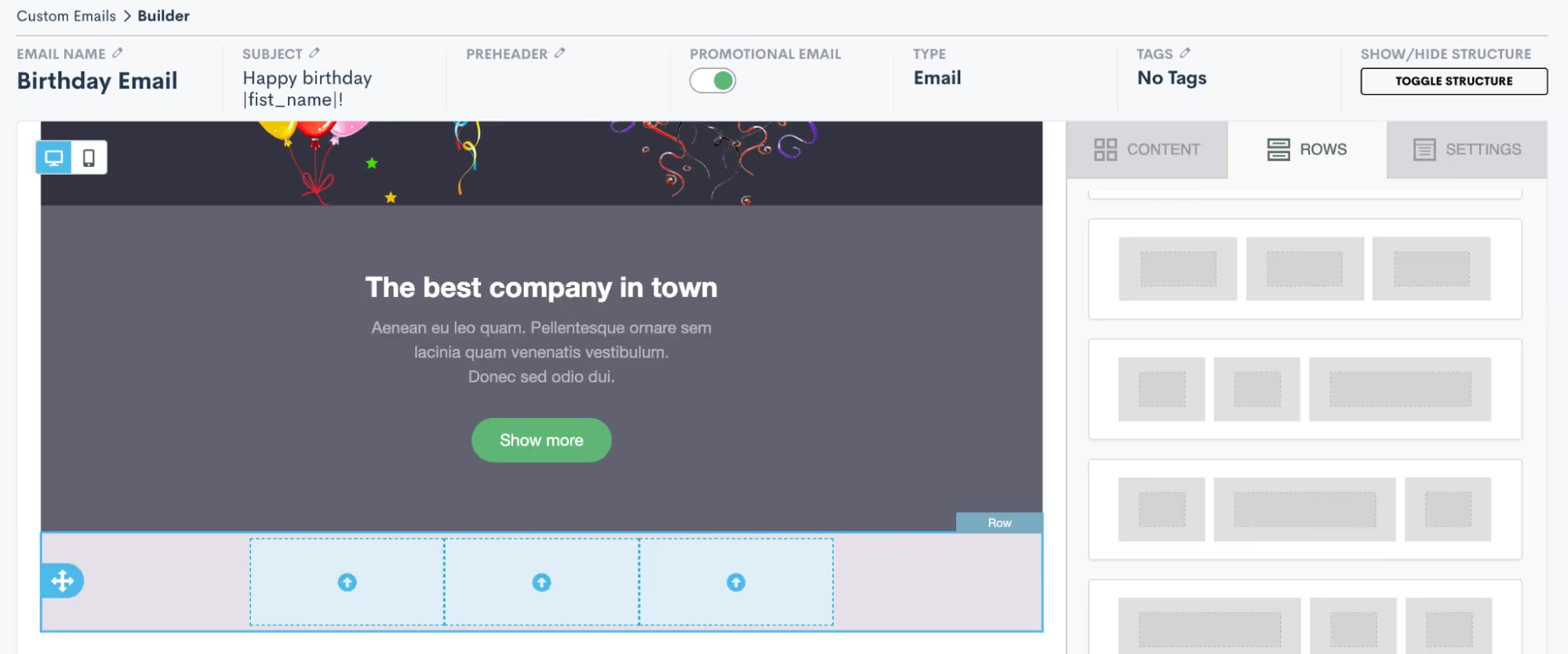
- Once you have added a row – such as the 3-column row added above – your next step is to add content into the row. Content can be anything from images, to videos, to text, to buttons, etc. Click on the Content tab over on the right side of the screen, and then drag and drop any content into your new row.
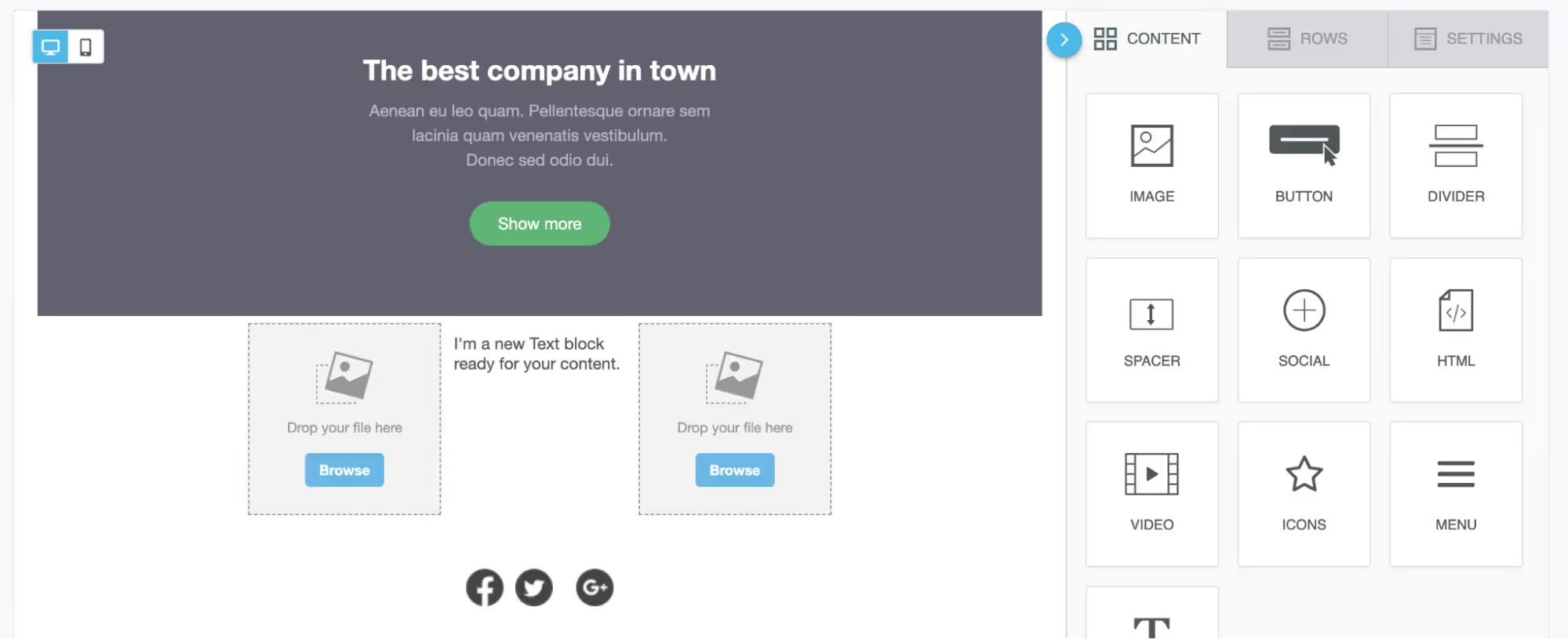
- In the image above, you can see that we have added an image, a text block, and then a second image into our 3-column row. Use the Browse button on the image content to upload your own image file or select from a variety of stock images. Similarly, click into the text box to type or paste in your text content as well as to select formatting options and merge fields as desired.

- Above you see the “first name” field has been added into a text block using the merge tags button, highlighted in red. You will see a full list of all of your fields, including custom fields, when clicking the merge tags button.
- Once you have your rows and content added into the email, you can also make other selections for email settings such as background color, layout width, etc. Click on the Settings tab on the right side of the screen to view these options.
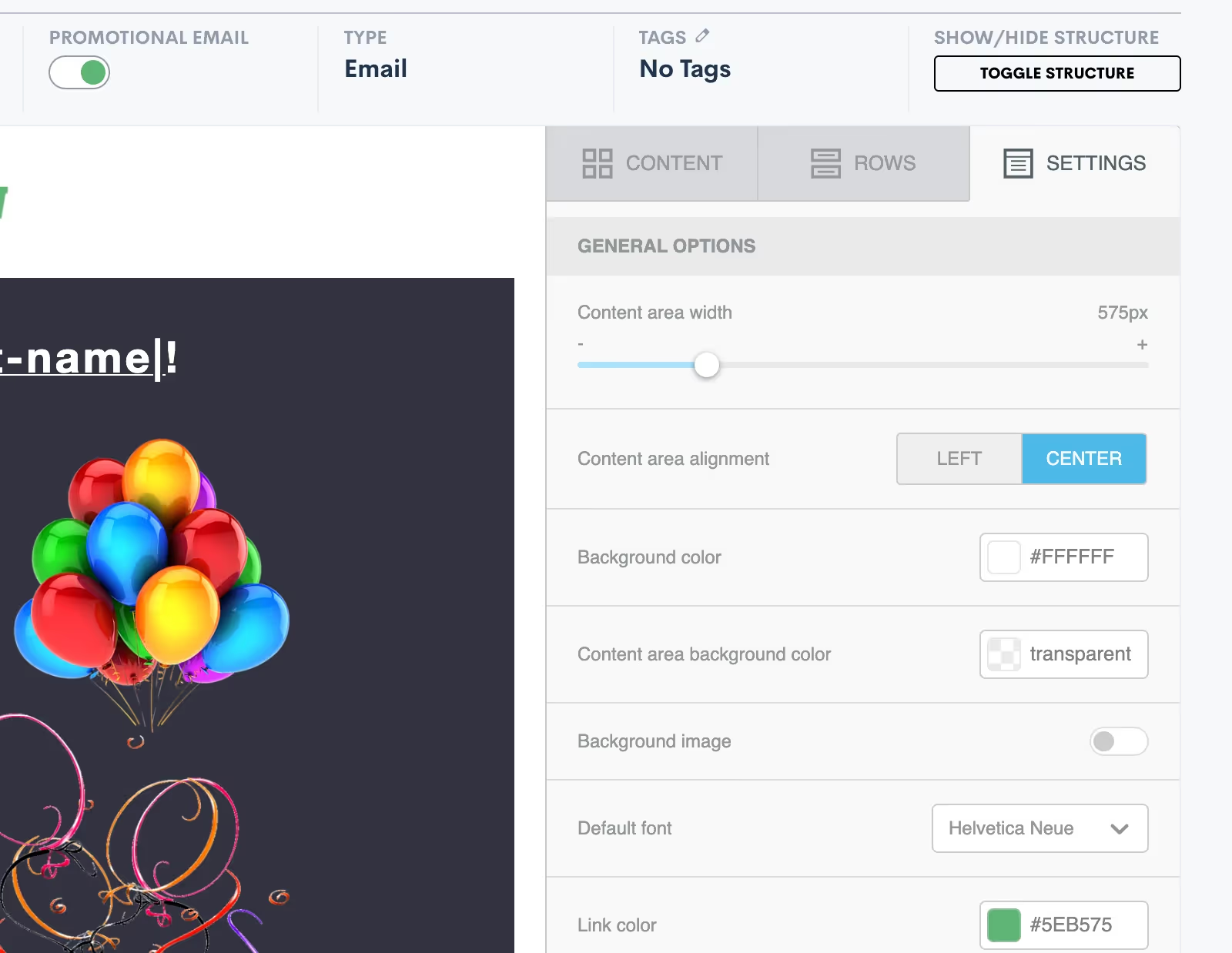
- For any of your marketing/promotional emails it is very important that you select the Promotional Email toggle button shown at the top of the image above. Activating this will add an unsubscribe link at the bottom of your email. This is legally required so that your target audience has the opportunity to opt out of future promotional emails. Anyone who clicks the unsubscribe link will no longer receive bulk (promotional) emails from you, but they still can get your one-off emails sent via Lawmatics.
- Once you are ready to save your email, notice that you have two different options: Save Email or Save As. Click Save As to enter your email title, subject line, and enter a preheader if desired.
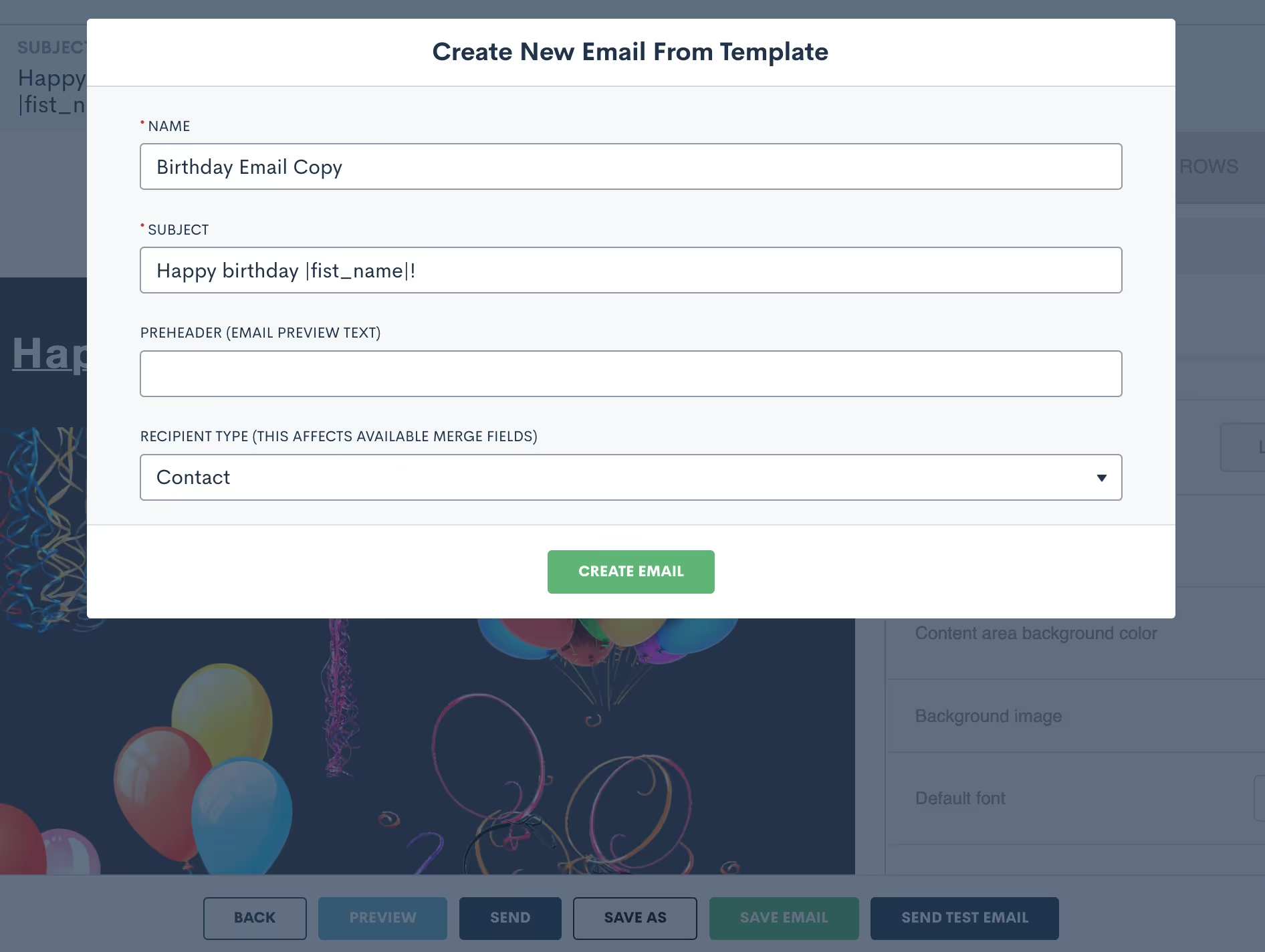
- Be sure to select the recipient type as Contact for any emails that are going to your general marketing audience. Once you have saved the email, you can always come back to make edits, updates, or “save as” to create a copy.
Create filtered target audiences
Now that you have your email content ready, your next step is to select the audience you’ll be sending the email to.
- Begin this process by selecting the Audiences option under the Marketing tab.
- Click Create New Audience and give your audience a name such as “All Contacts” or “Estate Planning Clients”, depending on the group you are targeting. For any broad marketing audiences used for sending a birthday email, holiday emails, firm newsletters, etc you will generally want to create an audience of Contacts as opposed to Matters.
- Once your audience is created, it’s time to select filters. For a broad audience of all contacts you will not add any filters, you simply want the audience to include your full list of contacts.

- For other instances, you may wish to create a more targeted audience. For example, let’s say you have an email targeted specifically for closed criminal defense cases. In this instance, you would add a filter for practice area as well as the case closed status, as shown below.
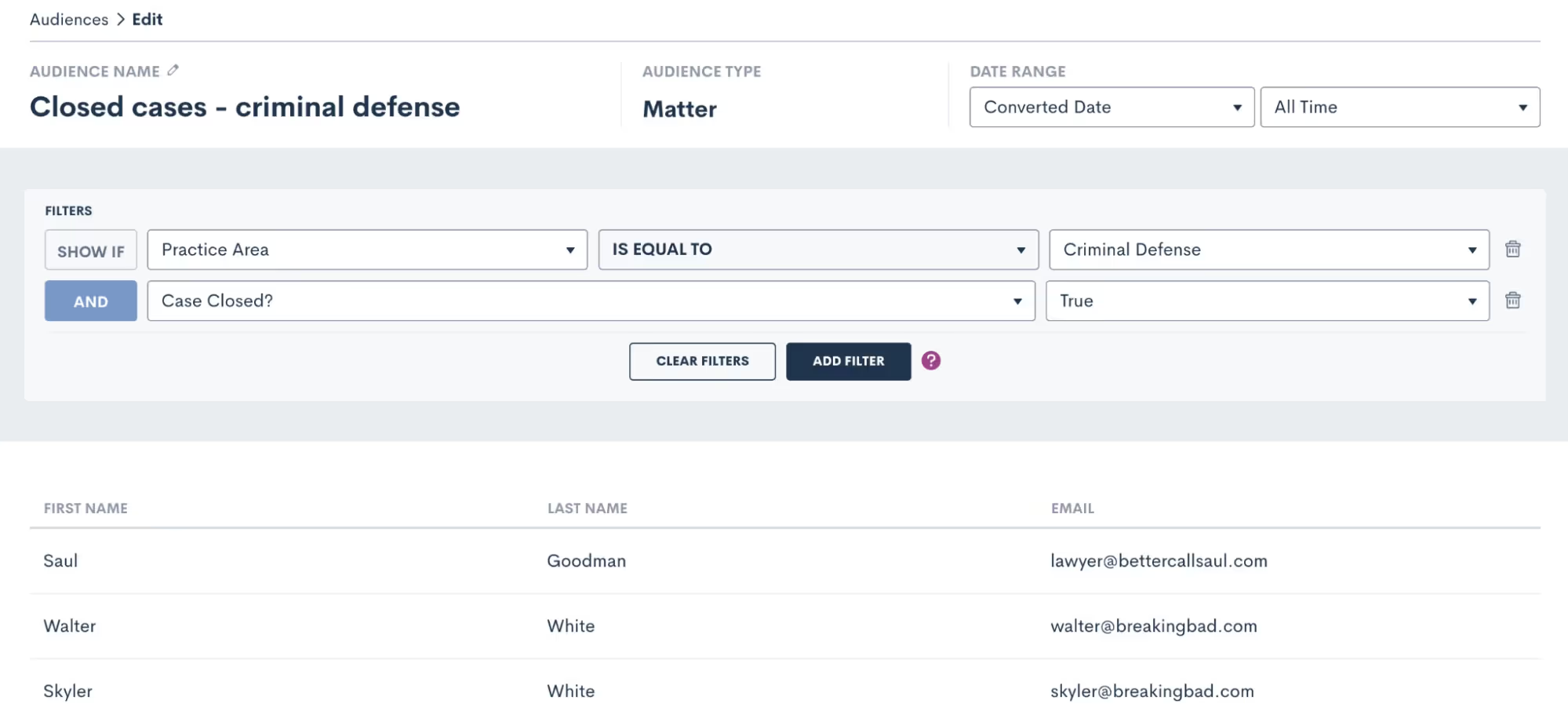
The system will filter out any contacts that don’t meet your specifications, so that you are targeting only those who do meet them in this particular audience.
Send emails with campaigns
You now have your email content created as well as the audience you wish to send the email to, it’s time to send the email! Select Campaigns under the Marketing tab and then click Add New Campaign. There are three different kinds of email campaigns you can create, you’ll see those options at the bottom of the pop up. Let’s run through each of them.
Run once
Run Once will likely be your most commonly used campaign type since you will use it for holiday emails, newsletters, and general one-off announcements or promotions. Think of this campaign as your option for “email blasts”.
- For any campaign type you select, you will first need to enter a campaign name, select your email template, audience list, and select which of your firm users (or the firm email) the email should send from.
- Once you select Run Once as the type, you will be prompted to select when to run the campaign. When Manual Activation is selected, it will be up to you to activate the campaign whenever you would like to actually send the email.
- If you wish to add more automation to this campaign, you can opt to run the campaign on a specific date.
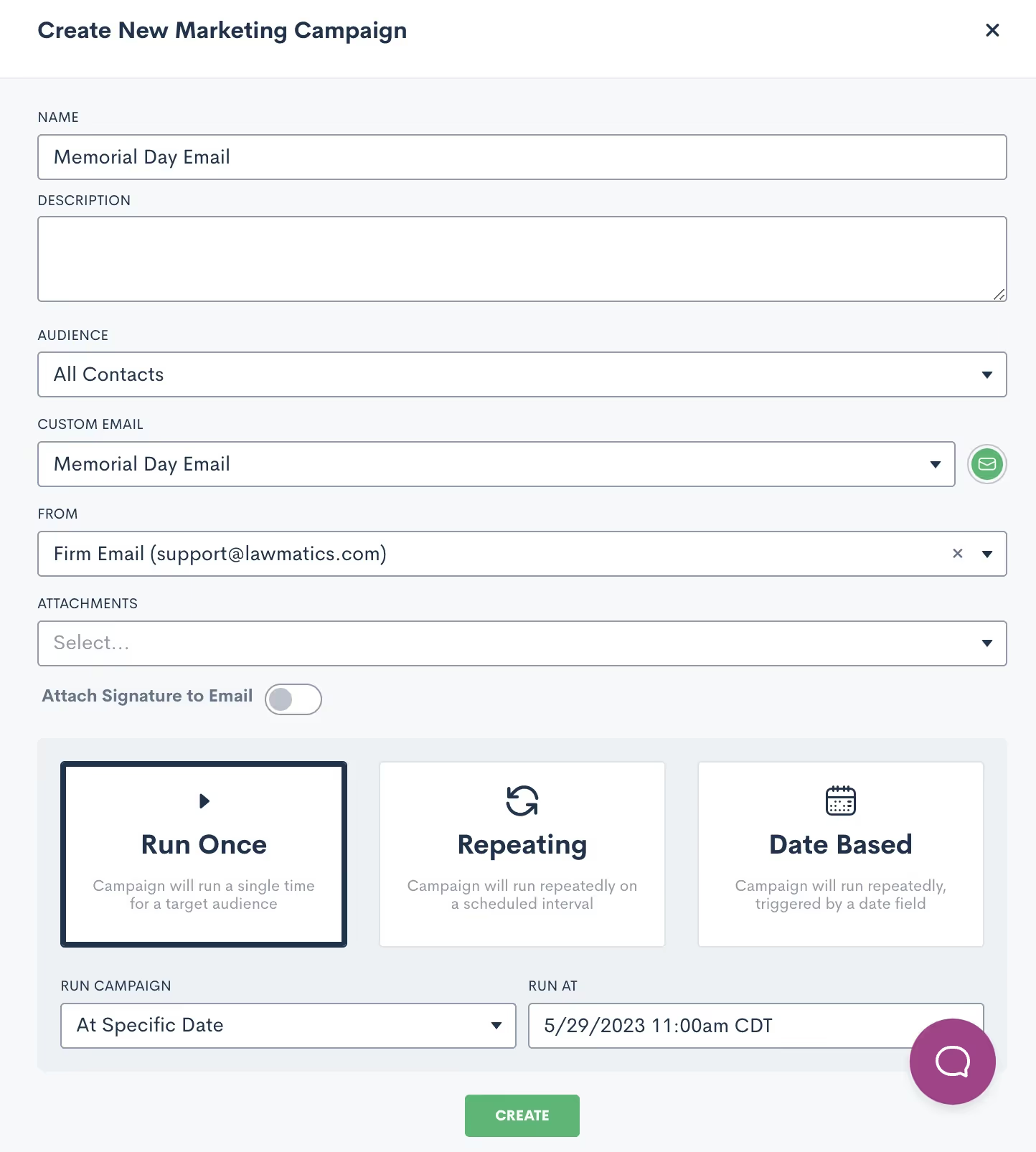
- When this option is selected, you will not need to manually activate the campaign to send the email. Rather, the email will be sent automatically at the date and time that you have selected on the calendar. All you need to do is hit the Create button, and then the email sends automatically on the correct day.
Repeating
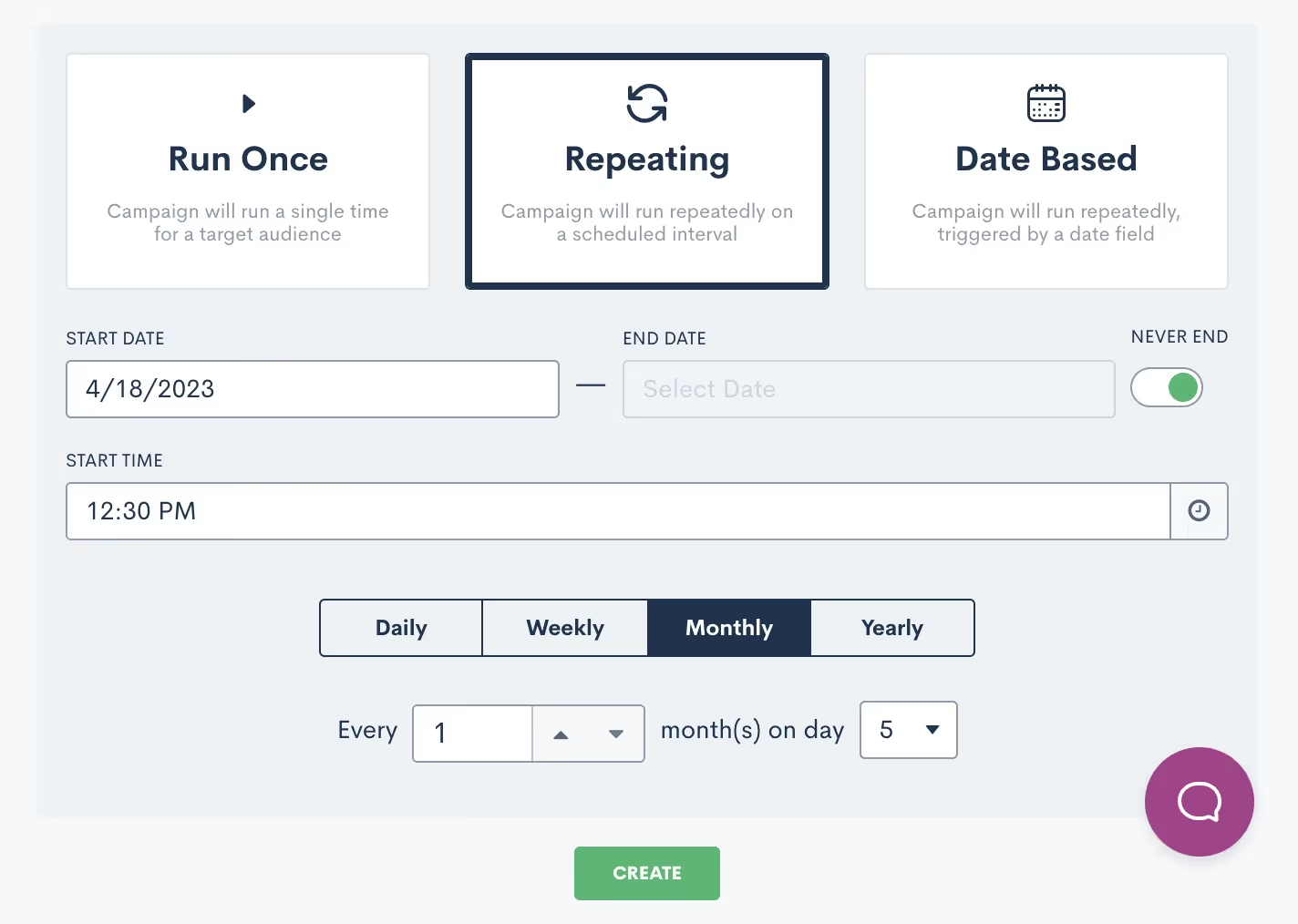
The key thing to remember when creating a Repeating email campaign is that the same email template will be sent on a repeating interval. With that being said, this does not work for newsletters or holidays, since those emails will be different each time.Repeating campaigns allow you to create a custom schedule for sending a particular email on a recurring basis. When you select Repeating, you will be able to set the custom schedule for the campaign.
Date based
Finally, Date Based campaigns are your method for sending out birthday or anniversary emails on a particular date that is unique to each contact.
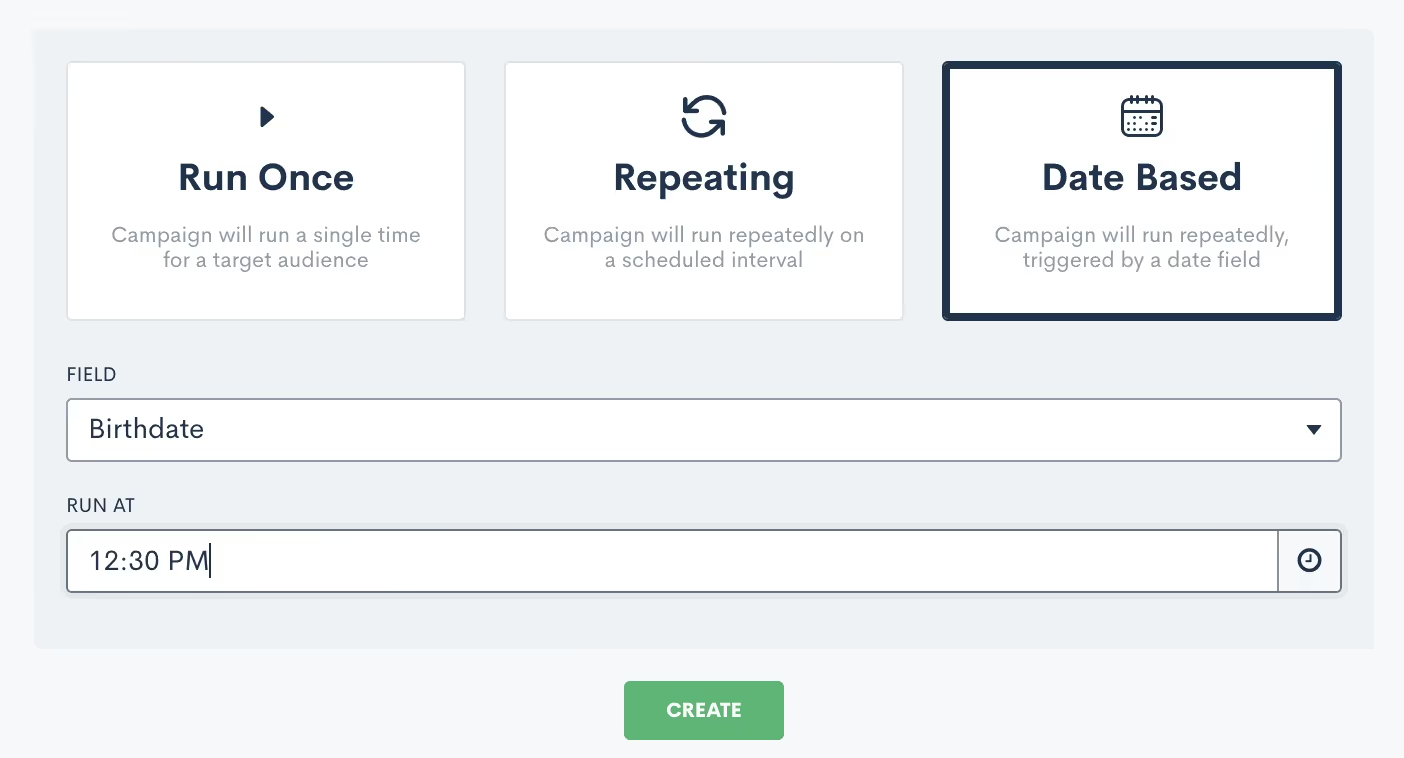
After you select Date Based, you will need to select which field should be used for the date for this campaign, I’ve selected Birthdate above. You will be able to select from any date type fields in your CRM, including custom fields. Note that if you have selected an audience of contacts, as opposed to matters, you will not be able to select a matter field as the date field for this campaign.Once the campaign is active, it will start sending the email on the appropriate date for each individual at the specific time you have selected.
Track campaign performance
One of the main reasons to use an email campaign to send out your firm's marketing emails is to track the performance of each campaign. This includes bounces, opens, and clicks. To view the stats for an email campaign simply click on the name of the campaign to open up the campaign details. You will then see a page similar to the one shown below.

For run once email campaigns you will be able to view your stats as soon as the campaign has been activated and the email has been sent. This could be from manual activation or from a scheduled send. If you check the stats immediately after the email is sent, you will get a good indication of the delivery/bounce rate, but keep in mind that the additional stats like opens and clicks will be logged over time as the recipients open or click on any links in the email. With repeating campaigns, keep in mind that your stats will not necessarily appear as soon as you activate the campaign, since these campaigns will be running on a specific interval over a period of time. Also remember that with this type of campaign, you may see the same contacts listed several times in the stats, since they are receiving the email repeatedly.With date based campaigns, you will generally see the stats slowly tick up after you have activated the campaign. By definition, your recipients in this type of campaign will only receive the email once a year on the appropriate date for them, so as time passes more recipients will have received their email. When it comes to emails bouncing, you may choose to be notified of email bounces in the platform so that you can be sure to correct an invalid email when possible. To enable this notification go to the Notifications page in settings, then choose either the Email Bounced option to be notified of all bounces, or the only mine option to only be notified of bounces on an email sent from you.
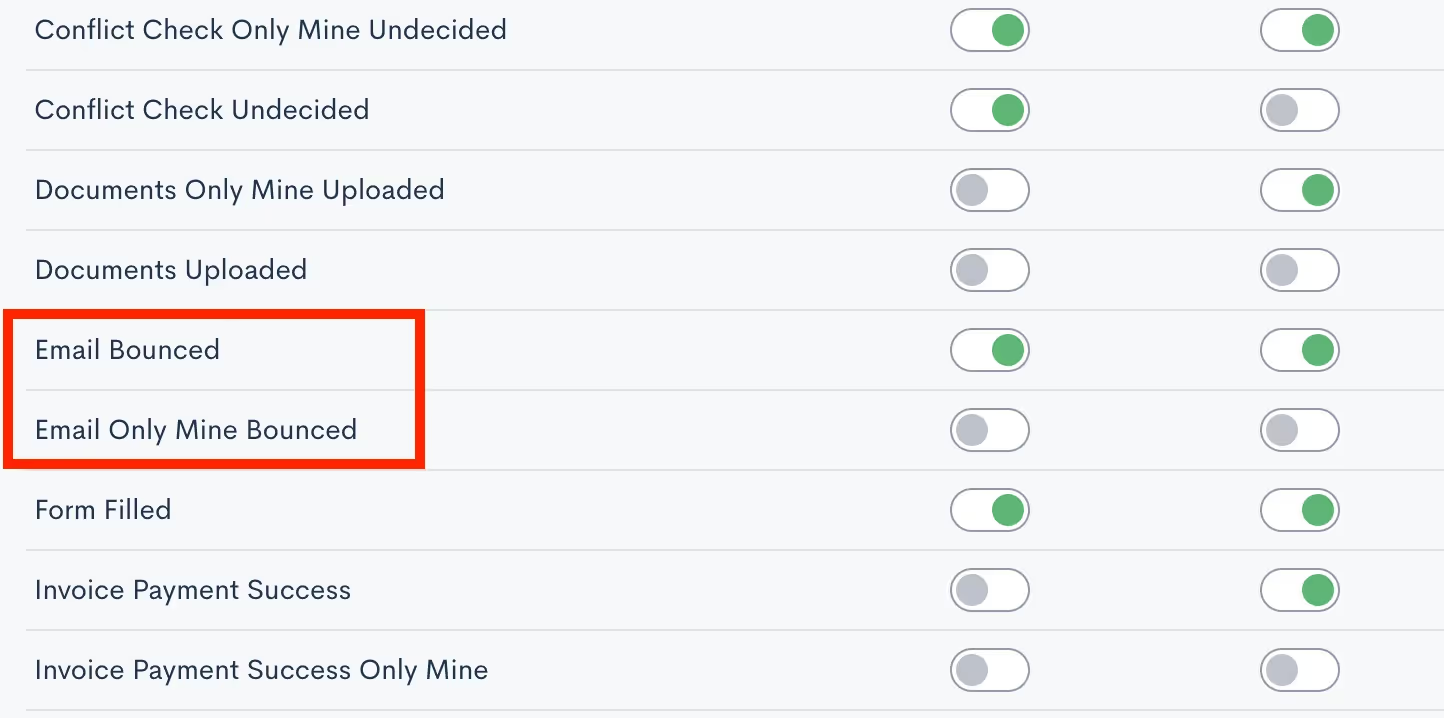
Now that you know how to access your campaign stats, it’s important to take the next step of analyzing and interpreting these metrics to make informed decisions for future campaigns. Pay attention to the time of day the email was sent, the specific filters on your audience list, and the type of content in the email to see what generates the highest engagement rate.As you discover what works and what doesn’t, feel free to incorporate those findings into your future email campaigns for improved engagement and overall results!
Conclusion
Promotional email marketing is a great way to keep your firm top of mind among your target audience. With Lawmatics, you’ll find that you can implement professional-seeming email campaigns with no additional financial investment and very extra little time investment.Lawmatics has also taken things a step further and provided you with the ability to monitor and track all of your email campaigns. Without the ability to track your marketing efforts, you’ll never know which ones to invest further in or which ones to ease off of. This feature alone is one of the many things that distinguishes Lawmatics from many of your other options.Say goodbye to piecemealing multiple marketing softwares and setting up complicated zaps and integrations. Lawmatics has everything you need to master promotional marketing all in one platform.

Search engine optimization (SEO) is a process intended to drive more leads to a website by boosting the site’s position in search engine pages like Google or Safari. Digital marketing for law firms should include SEO to help ensure that their firm appears near the top of search engine results (preferably on the first page). In turn, more potential clients will visit their website. Law firm marketing automation can help put this process on autopilot.
Why do law firms need SEO?
According to Clio, 57 percent of legal clients find a lawyer through online search results. In other words, if a law firm appears on the first page of search engine results and a visitor clicks on the link within the results, if the site gives them basic information they are looking for, they’re more likely to reach out to learn more about the firm’s services. So although there are no guarantees that your law firm will reach the top of organic search results, SEO can help improve your chances – if it is done correctly.
How to do SEO for lawyers
Law firm SEO performance depends on several factors:
- Content. The words used, along with the images on the pages of a website. To improve user experience and improve SEO, ensure that your site features high-quality, informative content.
- Backlinks. The credibility a firm has online as compared with other firms. The number of external websites and pages directing traffic to a firm’s website determines its authority.
- User experience. When Google ranks websites, it considers page speed, title tags, and site structure, all considerations lawyers should make when evaluating their website.
SEO keywords for lawyers
When Google evaluates websites, it sends an automated bot to read the content to understand what each page is about. To help rank your website, your content must be keyword optimized, meaning your content contains the best keywords to target qualified traffic.Many people will search by the most common keyword, but others looking for a lawyer will ask questions in natural language or enter variations of the same keyword. The goal is to create as much content as possible that addresses search inquiries related to your primary keyword. Primary keywords describe your firm’s services and areas of practice, e.g., “personal injury lawyer,” or “immigration attorney.”
Local SEO for lawyers
Local SEO focuses on what people type into search engines like Google when looking for answers to their questions. Local people use these searches to look for local products, services, or information. For example, local searches for a lawyer can range from “lawyers Chicago” to divorce attorneys near me” and unlimited alternatives in between. Local searchers can also trigger specific local results, such as local maps, which is why local SEO is important for law firms and lawyers that serve a particular geographical area.
Google Ads for lawyers
Google ads for lawyers, commonly known as “Pay Per Click or PPC,” utilize advertising paid for only when someone clicks on it to view a website. With PPC advertising, the search engine wins because they get paid a fee for that click, the client wins because they just discovered a potential lawyer to reach out to, and the law firm wins because they just found a targeted potential customer – for a price. Although the cost of PPC for lawyers depends on the extent to which the firm needs new clients, how competitive the target market is, and what kind of budget the firm has to work with, a typical PPC budget for a law firm can exceed $1,000 per month.
What is an algorithm in SEO?
Algorithms are used in SEO to provide the most helpful answers to a potential client’s query (what users type into a search engine). While search engines often keep the details of their algorithms to themselves, information can often be determined by how the results have changed. Algorithms used in SEO are constantly evolving to become more sophisticated, and to rank higher in search results, attorneys must build content that is more than just topically relevant. Research indicates that longer, in-depth content that is more authoritative and comprehensive than other content in the same niche tends to rank higher overall in Google search results.
How to promote a law firm?
Lawmatics law firm marketing automation software allows law firms to see where each lead stands at a glance, ensuring that your SEO efforts do not go to waste. To learn more about how the Lawmatics platform will boost your firm’s SEO strategy, request a free demo today.

A strategic law firm marketing plan will provide a blueprint for the firm’s future growth. It will identify which areas the firm wants to grow and address how to streamline the process, including law firm marketing automation. After all, if you embark on a journey without a map (or GPS), you may not get anywhere, much less to your desired destination. Digital marketing for law firms can help define the direction you need to take. But before we explain what the 6 components of a marketing plan are, let’s get back to the basics – why is law firm marketing so important?
Why do law firms need marketing?
Marketing your law firm is essential to the success of your practice and an efficient way to consistently find and retain clients. A law firm marketing plan should include a combination of digital marketing, SEO, blogging, social media messaging, and digital ads. In addition, to save time, increase efficiency, and help ensure success, a firm should leverage law firm marketing technology to automate various tasks.
What are the 6 elements of a marketing plan?
Law firms interested in growth need a personalized legal marketing strategy that includes marketing strategies for individual lawyers and law firms, and typically includes websites, branding, social media, blogging, emailing, and more. You can use these elements to create a marketing plan template unique to your firm:
1 A detailed description of your goals
Your marketing goals need to align with your firm’s quantifiable business goals. The ultimate goal of law firm marketing strategy is to acquire and maintain clients. Achieving this goal requires building brand awareness with your target market, generating leads through marketing efforts, converting leads into clients, and promoting repeat business and referrals. Ensure that your goals are measurable to track their progress as you reach milestones.
2 A definition of your target market
Creating targeted messages is much easier once you know who you are marketing to. Your target audience will typically include past clients, current clients, industry contacts, other attorneys and law firms, professional groups, referral sources, and the media. Your messages must express what makes your law firm (or you as a lawyer) unique, so develop messages that will communicate the value you bring to your clients to differentiate you from the competition.
3 A realistic marketing budget
A carefully planned marketing budget is critical to any law firm’s marketing efforts. To decide on a number, you’ll need to determine your goals and how much revenue you will need to reach them. Then, to figure out your overall marketing budget, examine how many cases per year you will have to manage to meet that goal, factoring in potential costs such as the marketing technology you will need to produce social media scheduling and email marketing campaigns.
4 Knowledge of current trends
When developing a marketing plan, it is essential that you familiarize yourself with the current marketing trends present in the legal industry. One of these trends is video marketing, which is very effective for personal injury advertising that uses emotional marketing as a strategy to obtain clients. Another is to create a legal podcast – marketing experts predict that there will be 504.9 million people listening to podcasts by the end of 2024. Legal podcasts typically discuss various topics, including current legal cases, significant legal developments, and explanations of legal concepts and terms.
5 A focused brand identity
A law firm’s brand is how potential, current, and former clients, referral sources, and others perceive the company. Law firm branding incorporates your logo, website, and marketing materials. It should include both written words and a visual presentation of who you are and how you want people to feel when interacting with you and your law firm.
6 A plan of action
Marketing activities include content development, advertising, social media, email marketing, and more. Although you might decide to roll out different tactics on a scheduled basis or launch everything all at once, either way, the successful execution of your plan depends on the utilization of law firm marketing software.
Measure the effectiveness of your law firm's marketing with Lawmatics
Lawmatics law firm marketing automation technology enables firms to automate the leg work of their marketing efforts to drive business growth while staying focused on clients. To learn more about how Lawmatics can help you seize every new client opportunity with targeted messaging and impeccable timing, request a demo today.

Spring has sprung at the Lawmatics office and we’ve got another round of new features in bloom! Last month we announced our new Create From Within user experience; we are thrilled to share more developments to this project as well as other new additions and improvements all throughout the platform.
New display options for true/false Custom Fields
Custom Fields have always been a staple of the Lawmatics CRM, so why not introduce further customization options? With this new feature you can now select from three different display options for your true/false fields: toggle (previously the only option), a checkbox, or a picklist displaying options of “Yes” and “No”. Select the option that is best suited for each Custom Field to give your clients the best possible experience when filling out your intake forms.
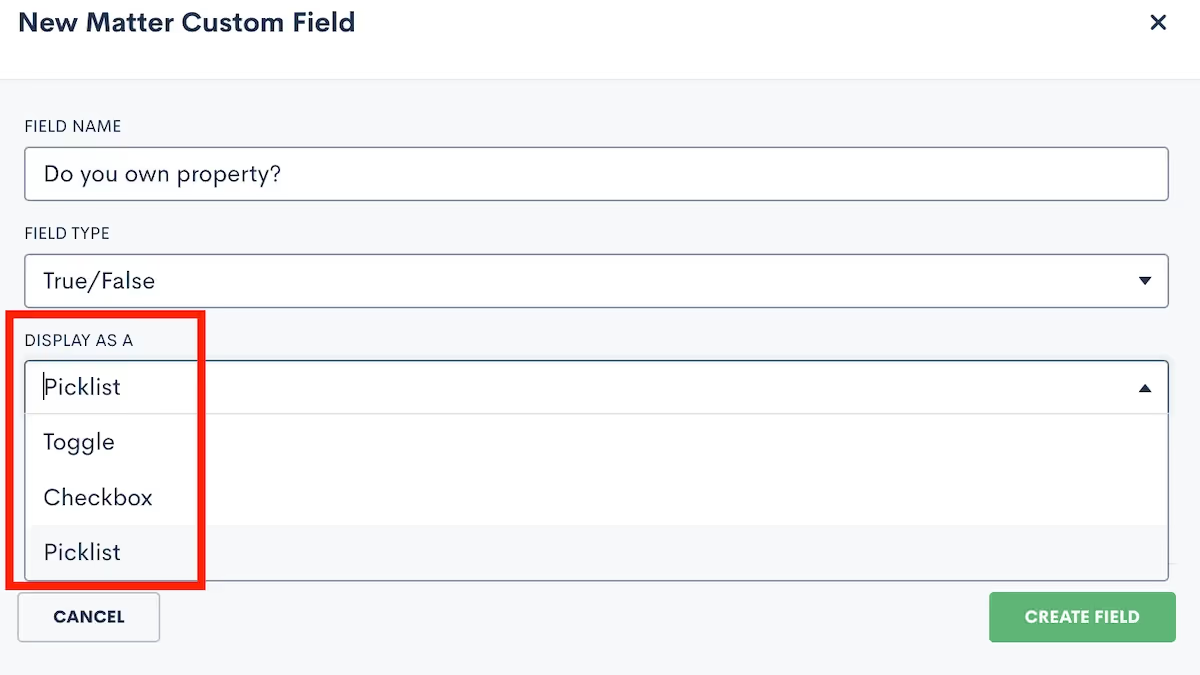
We’ve also introduced the option for true/false fields to be designated as either "Required" or "Required To Be True".This gives you the flexibility to enforce the selection of a "true" or “false” answer - particularly when a "false" response would result in disqualifying a potential lead.
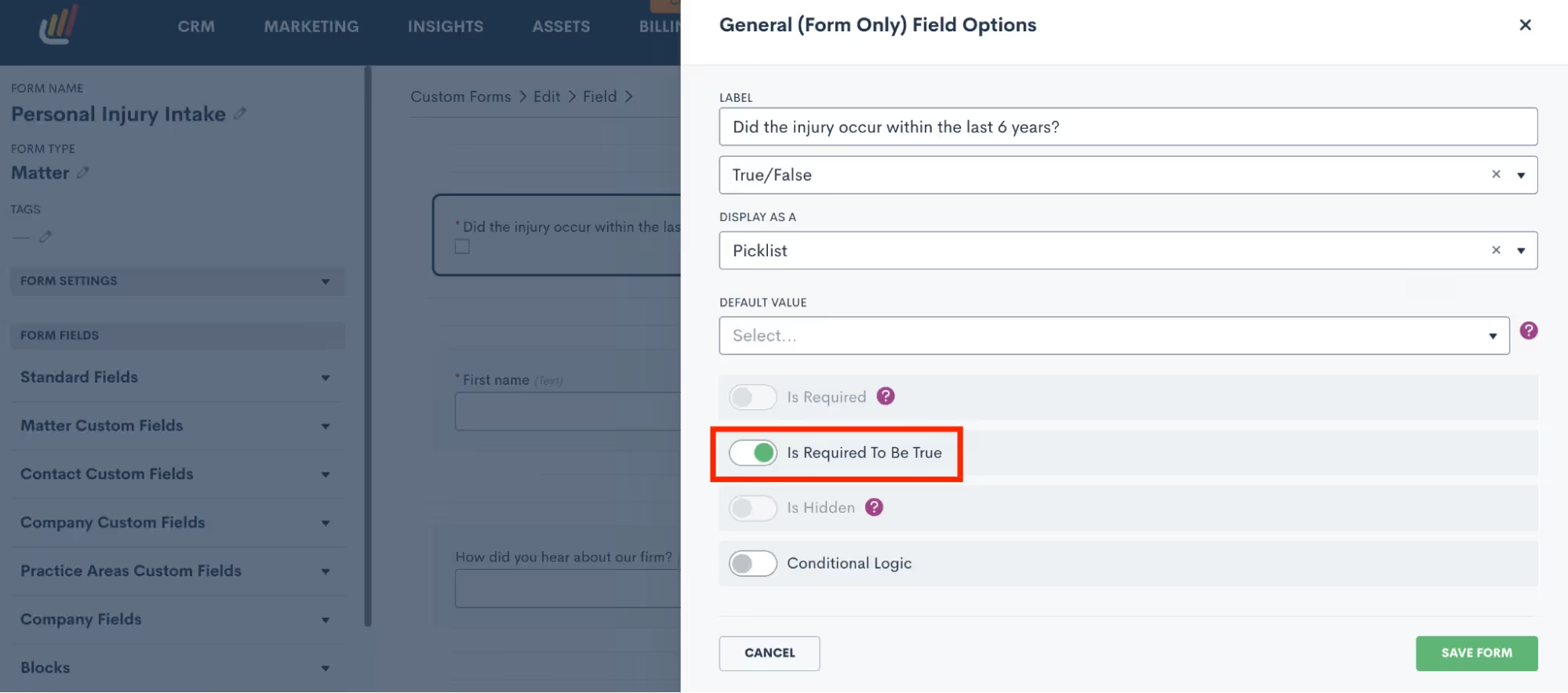
Click here to learn more about custom fields.
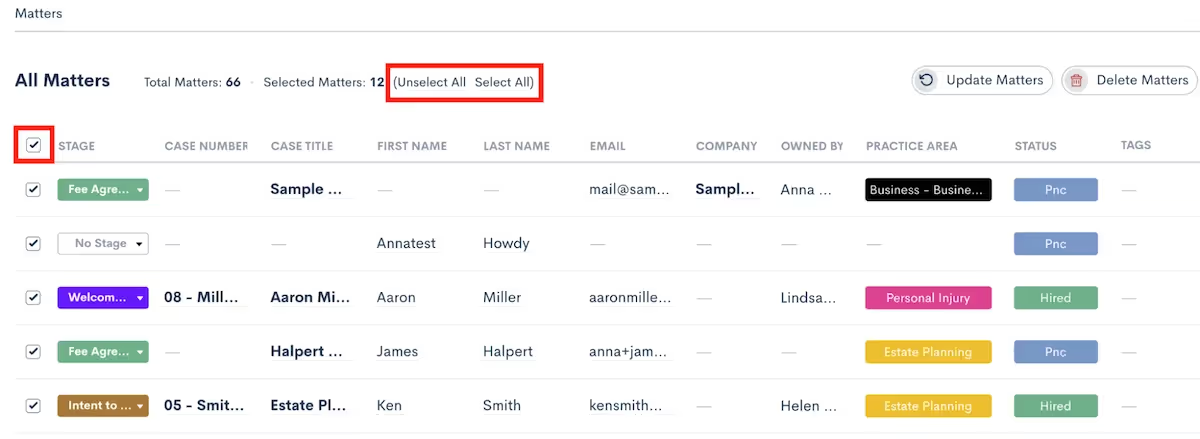
Select All option on Matter Page
You already love the ability to bulk update or delete matters in bulk, but we’ve now enhanced this capability by allowing you to select ALL matters without needing to go from page to page. Simply click the checkbox at the top left, highlighted below, then click the Select All option to check all of your total matters. Any updates made will now apply to all matters selected. This new improvement makes it much easier for you to bulk edit a large selection of matters all at once.
New Create From Within updates
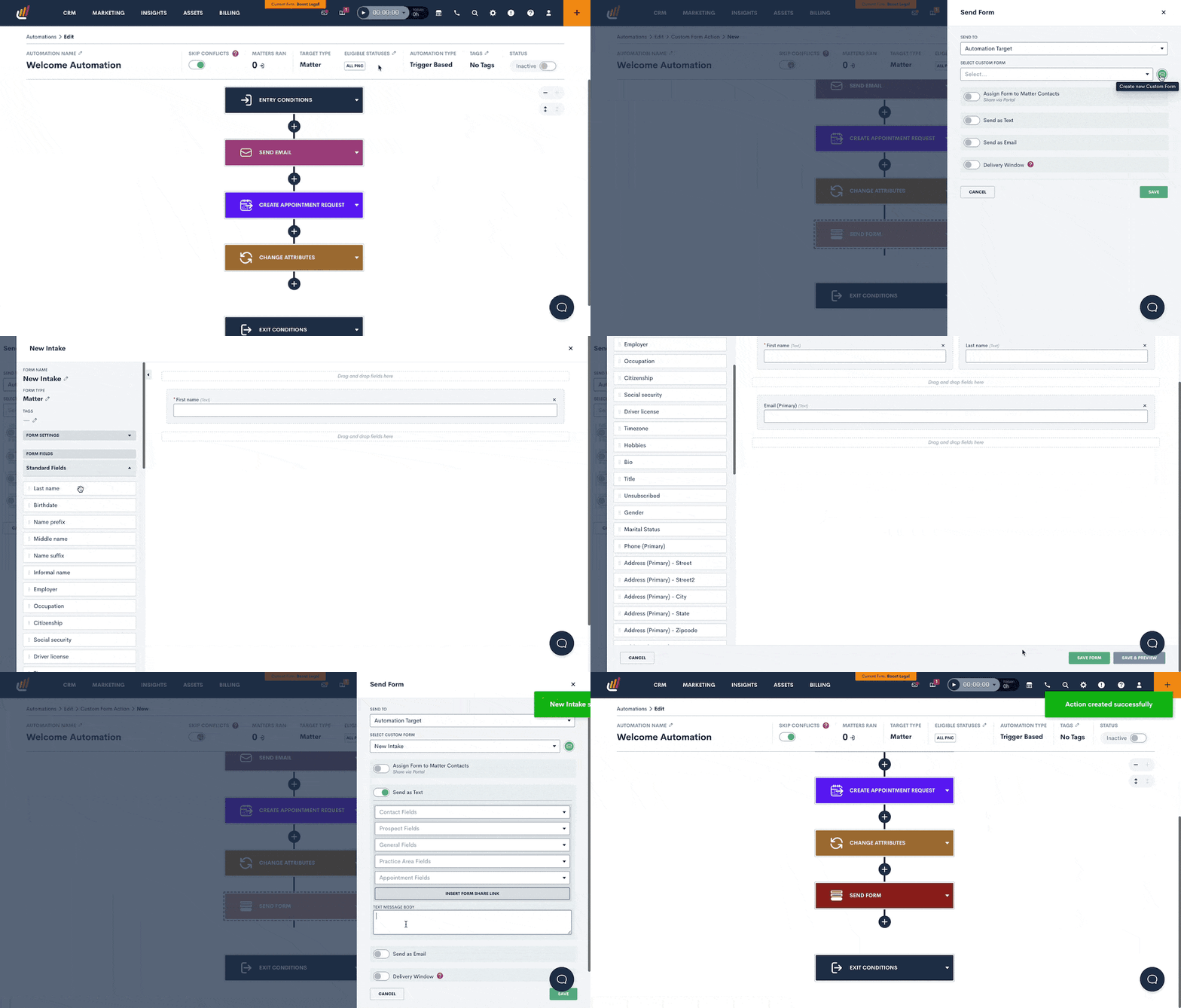
Build a New Custom Form Within Automations and Matter Profile
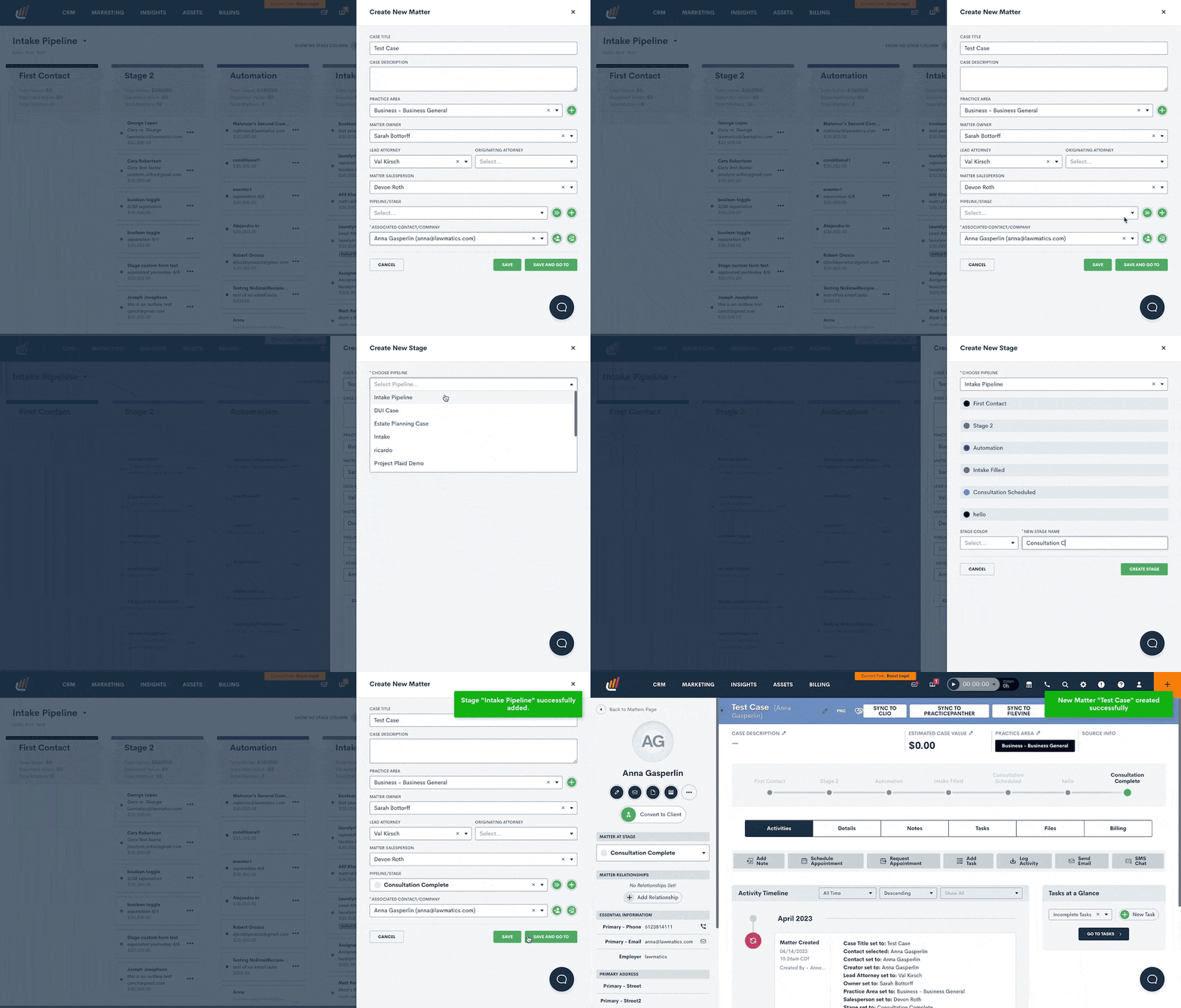
Create New Pipeline and/or Stage When Adding New Matter
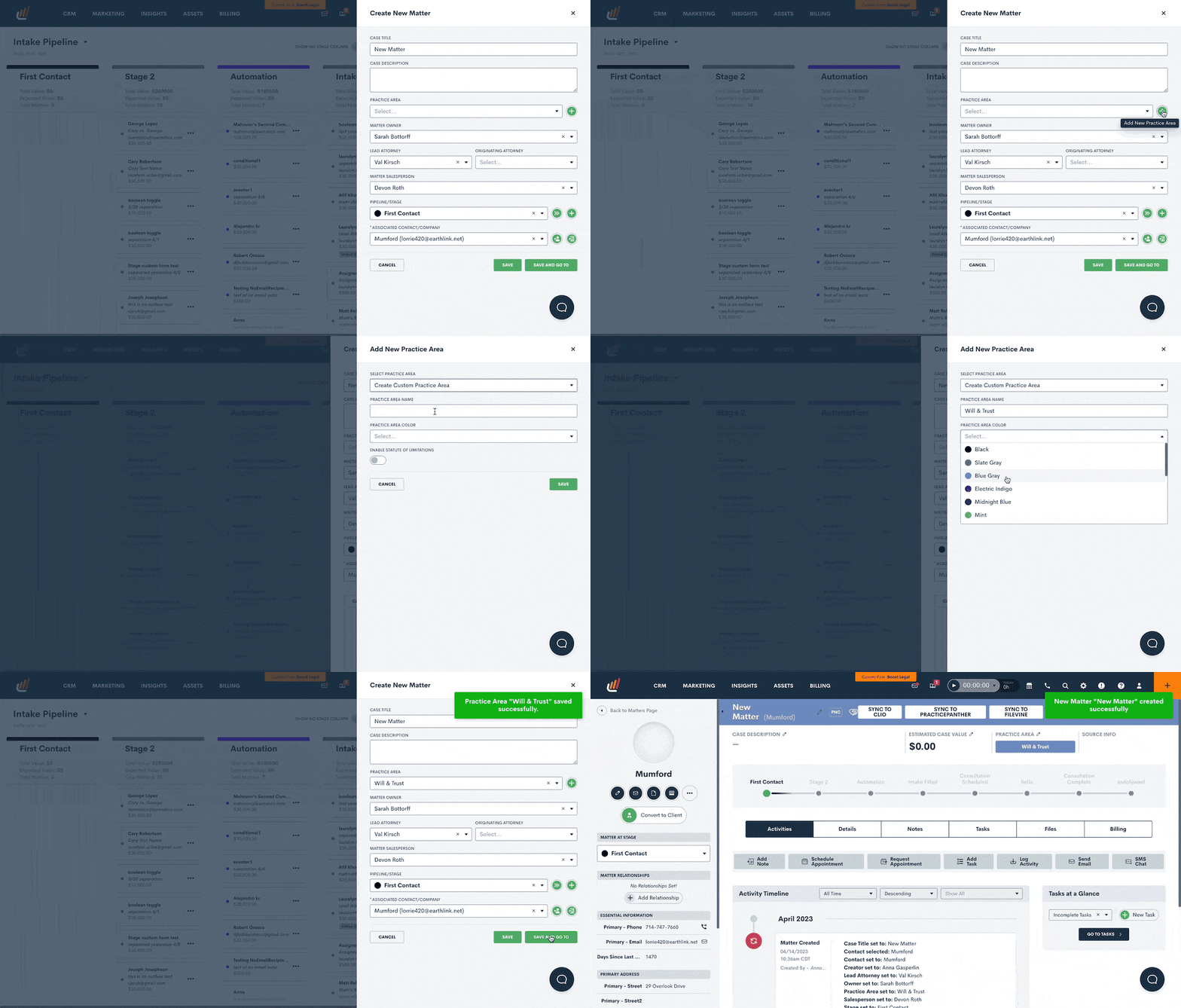
Add New Practice Areas from Practice Area Field Selection
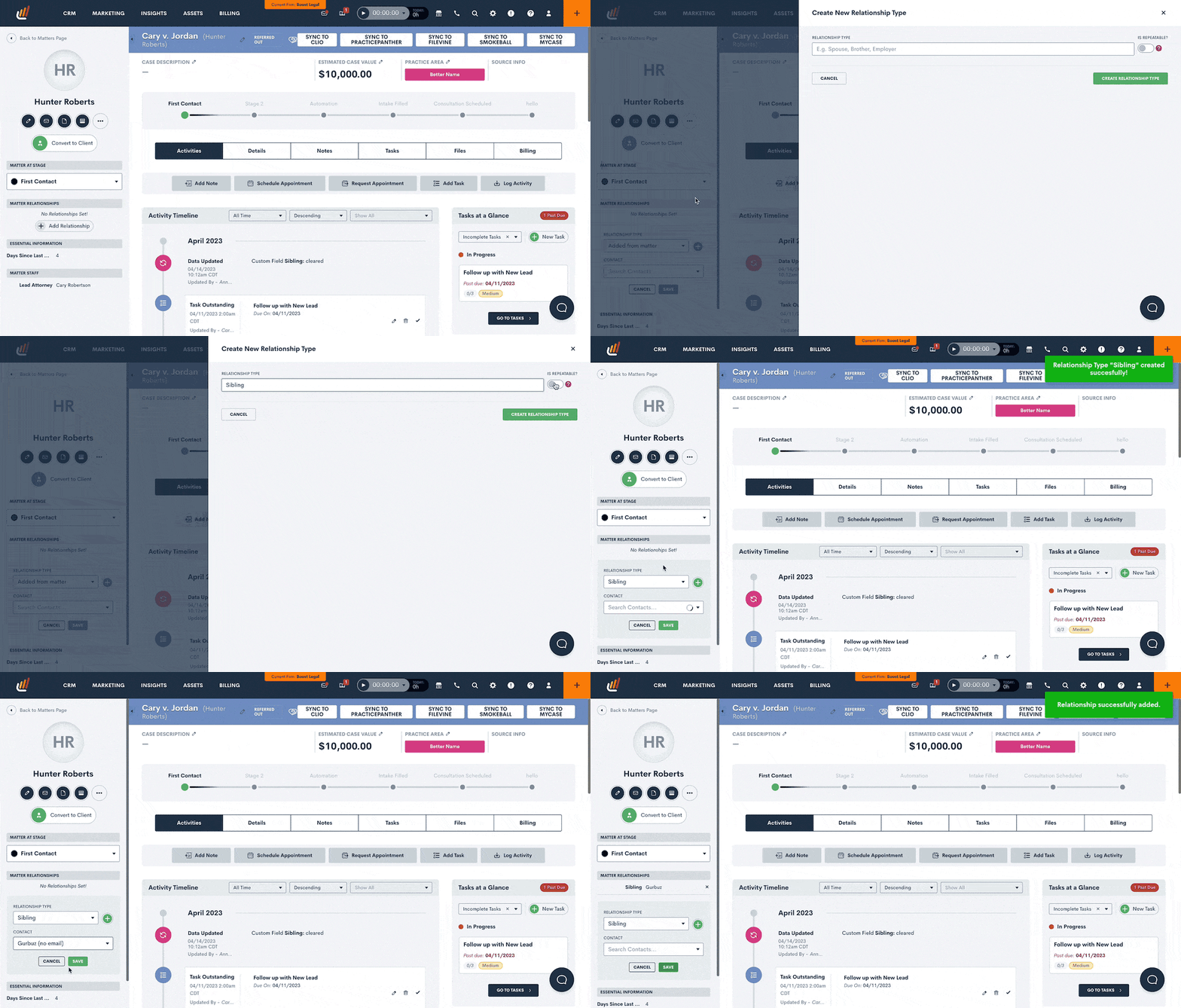
New Relationship Types Directly From Matter Profile
Also In This Release
Relative Time Filtering Option for Date Fields
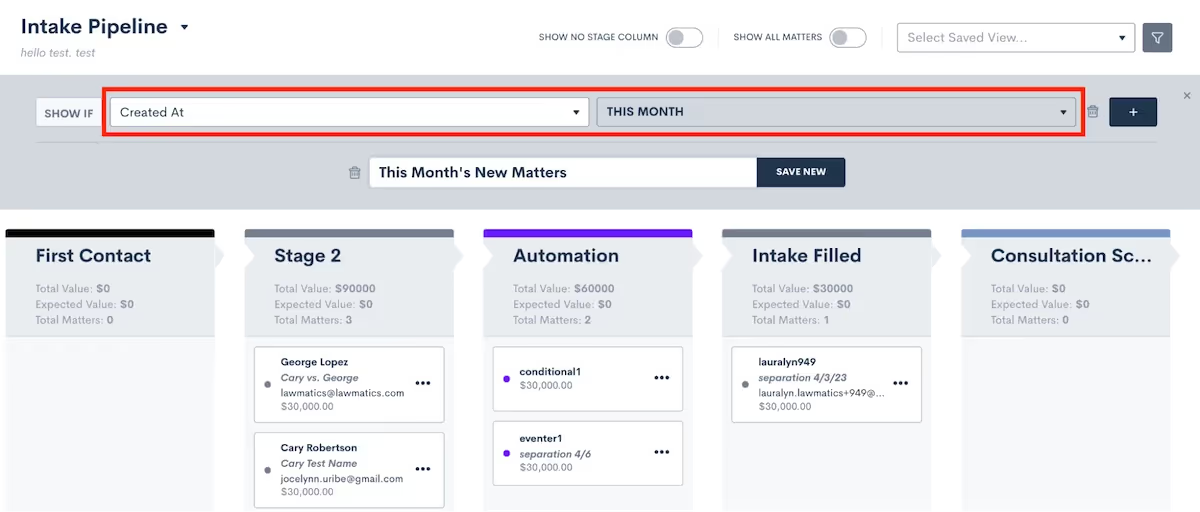
Particularly useful for honing in on particular matters within specific time windows, you can now select from relative date options such as “this month” or “last week” any time you are using a Date Field as a filter in the platform. This is also available in Reports and Audiences.
New Layout in Custom Form and Custom Document Builders
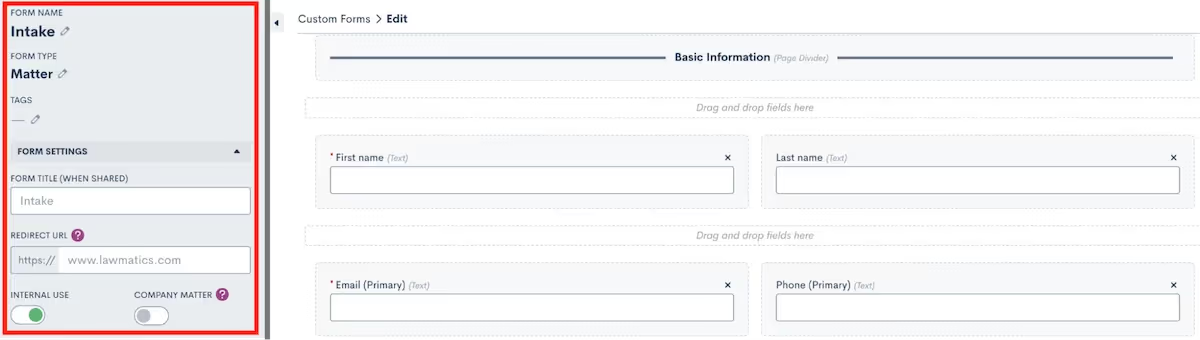
In alignment with our other user experience improvements, we have also reorganized both the Custom Form and Custom Document editor for improved usability when editing selection options such as Internal Use and Form/Doc Recipient Type.– We hope these new features are just what you need to dust off winter and hop into the new season! As always, feel free to share your thoughts or questions with us by emailing support@lawmatics.com.
Subscribe to get our best content in your inbox
Law firms love Lawmatics
Our customers give their clients the client-focused experience they deserve. Learn how they do it all with Lawmatics.
.avif)
.avif)

.avif)

Ready to grow your law firm with Lawmatics?
Schedule a demo of legal’s most trusted growth platform.