The Lawmatics Blog
Insights on legal marketing, automating the law practice, and legal tech in general


Last month, we walked through how to set up custom matter views. But building views is only half the equation — the real value comes from putting them to work. When intake staff, attorneys, and admins are all looking at the same long list of fields, it's easy to miss what matters, waste time hunting for the right information, or forget to fill out a field before firing off a contract.
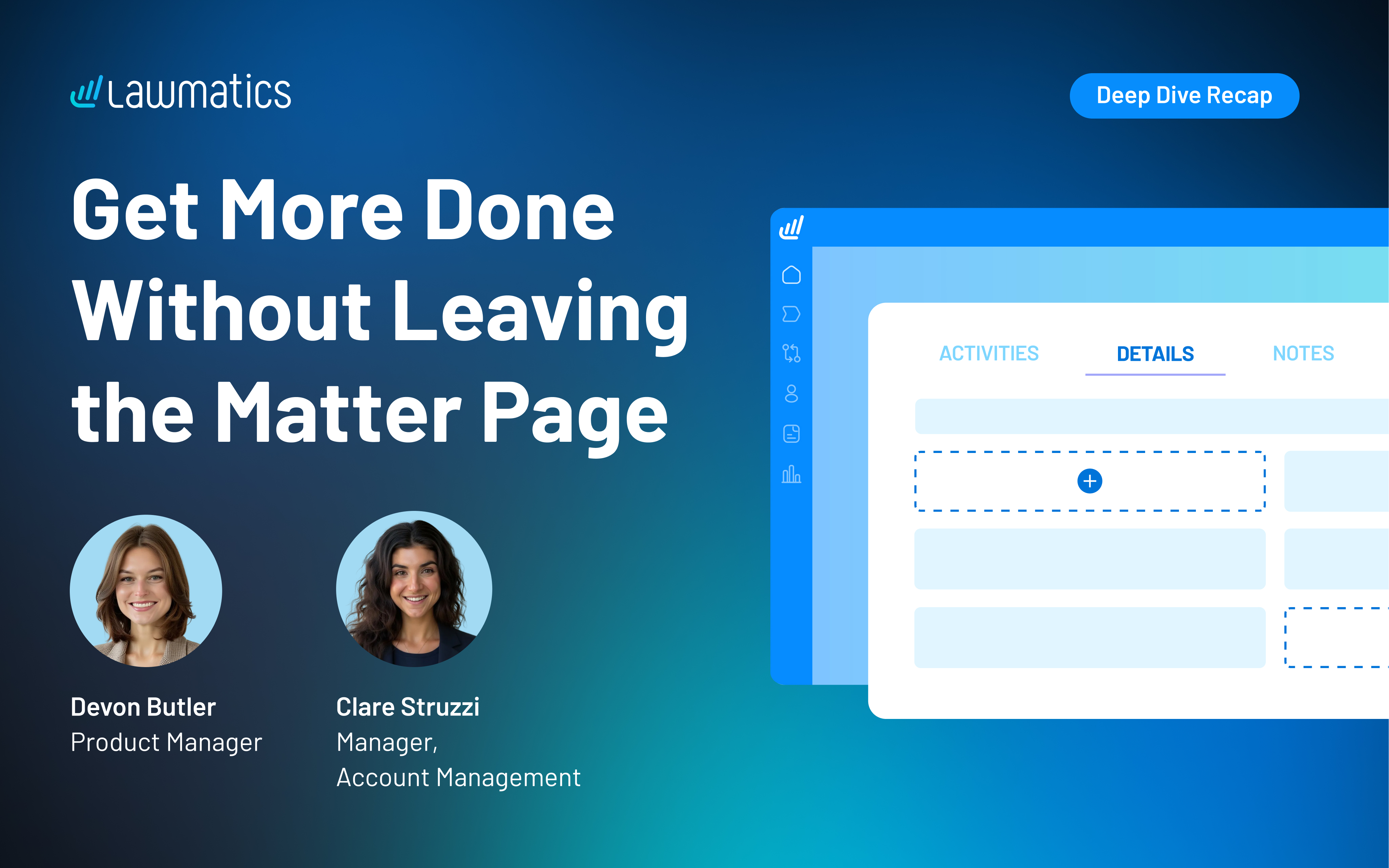
In this Deep Dive webinar, Devon Butler, product manager at Lawmatics, and Clare Struzzi, who leads the account management team, showed how firms can use custom matter views to trigger automations, surface reporting fields, and tailor layouts by role and practice area.
Time stamps of key takeaways
5:53 – Why customize your Matter pages
Devon kicked off with four reasons to invest in custom matter views: cutting through the noise so each role only sees what they need, supporting cleaner reporting, strengthening team handoffs between intake and attorneys, and working faster directly from the Matter page without having to search for fields.
9:48 – Building practice-area-specific views
Clare walked through an estate planning intake view built specifically for intake specialists, showing how organized sections replace the old starred-fields approach. She highlighted how a field like "Next Steps Pre-Consult" can live right at the top of the view so the intake team can trigger automations directly from the details page — no need to reopen a form.
14:58 – Creating role-specific views
Devon and Clare showed how the attorney view for the same estate planning practice area includes different fields at the top — like "Next Steps Post-Consult" and a dedicated contract fields section where merge fields for engagement agreements can be reviewed and completed before sending. Clare also pointed out that sensitive information like Social Security numbers can be placed in sections that default to a collapsed view.
25:00 – Triggering automations and managing contract workflows
Devon walked through a live example of building an automation that fires when the "Next Steps Post-Consult" field is updated — automatically moving the matter to the correct pipeline stage and sending the engagement agreement. She also showed how duplicating automations makes it simple to handle variations, like sending a single-signer versus a joint estate plan document.
35:09 – Surfacing fields for cleaner reporting
The session wrapped with a look at how the reporting fields on custom views — source, campaign, estimated value, actual value — feed directly into the analytics page and custom reports. Devon demonstrated grouping a report by source to quickly see which referral sources are converting and where data gaps need attention.
Webinar slide deck

The law firms that respond to leads first typically turn them into clients. Unfortunately, lawyers tend to be slow when responding to incoming leads. A recent lawyer response study found that of the 967 participating law firms, 33 percent did not respond to the researchers’ lead form submissions at all. As a result, these prospective clients often go elsewhere. However, law firm marketing automation can change all that.
What is marketing automation in CRM?
An attorney-client relationship management (CRM) platform is a tool that handles contact and sales management, productivity, and customer relationships, from marketing to customer service interactions. While a standalone CRM system is ideal for building relationships with current customers, it may not be enough to generate and convert new leads – that is why CRM and marketing automation need each other. When marketing automation is integrated into a CRM platform, firms can track, monitor, and engage with prospective customers.Research has shown that today’s consumers crave personalized services. According to a study conducted by Infosys, 86 percent of those surveyed said personalization significantly affects their purchasing choices. Most CRM automation platforms also offer tools for personalizing your messaging to customers – a technique proven to help increase lead conversion. In addition, marketing automation tools can help you segment your leads into groups based on demographics, enabling your firm to send personalized emails, targeted ads, and timely messages to the right audience.
What are the benefits of marketing automation?
Automation can help virtually any organization achieve its marketing goals. Some marketing automation benefits for law firms include:
- Automate workflows. Marketing automation services can help firms boost digital marketing efforts by controlling costs, improving efficiency, and enhancing communication.
- Streamline the marketing process. When each step of the process is assigned to a particular team member, this helps ensure all the work gets done and nothing slips through the cracks.
- Cut costs. Digital marketing automation tools complete repetitive tasks, avoid costly errors, streamline processes, and help team members perform more efficiently to cut labor costs.
- Improve efficiency. Marketing automation software simplifies assigning roles, parsing out tasks, and granting responsibilities to the appropriate team members to streamline processes that typically require manager involvement.
- Boost productivity. Marketing automation allows legal teams to devote their time to higher-value responsibilities, enabling attorneys to serve more clients in a shorter period and boost profit margins.
- Convert more leads. When marketing tasks are handled by automation software, lawyers have more time for the critical work they were hired for while seizing every new client opportunity with targeted messaging and impeccable timing.
Marketing automation technology helps law firms improve communication, control costs, enhance efficiency, and empower team members to focus on what matters – serving clients.
What are examples of marketing automation?
Automation can handle routine marketing tasks with little to no human input. Here are some examples of how b2b automation can transform your marketing efforts:
- Welcome emails. Welcome emails are a firm’s chance to make a positive first impression on a potential client. With marketing automation, you can create a stellar experience for your leads with a personalized welcome email or a series of emails to help engage them.
- Reminders. Sending a reminder email via automated marketing software delivers a timely message to a potential or current client to remind them of case updates and upcoming events.
- Newsletters. Marketing automation allows firms to quickly build custom newsletters via custom triggers, logic, and actions to guide leads through a seamless journey from prospect to client.
- Analytics and reporting. Marketing automation includes analytics and reporting capabilities to give your firm a comprehensive view of your overall email marketing program's performance, your acquisition and engagement per campaign, and actionable insights on improving your firm’s marketing strategy.
Marketing automation helps law firms stay connected to potential, current, and past clients via a suite of customizable and responsive email templates that can be tailored to meet your communication needs.
Set your marketing efforts on autopilot with Lawmatics
Lawmatics marketing automation ensures that you and your staff can account for every detail about a lead or client’s journey, from client intake to case settlement. Our agile platform will enable your firm to connect and streamline multiple marketing tactics to create dynamic workflows. Plus, you can use your CRM data to trigger the next marketing step. To learn more, request a demo today.
Custom Forms play a pivotal role within the Lawmatics platform, but are you making the most of their capabilities? While you might have a grasp of the fundamentals, there's a world of advanced features waiting to be explored. Let's harness the full potential of Custom Forms by ensuring you collect precisely the information you need, and nothing more.Our journey into these advanced elements covers a range of powerful tools, including conditional logic, repeatable relationship blocks, and file uploads. Some of these components may still be hidden gems in your toolkit. In this exploration, we'll dive into the strategies of seasoned Lawmatics users who maximize the benefits of form creation at every turn.
Form settings
When you create a new form in Lawmatics, you'll notice the option menu in the upper left corner. You can access this menu by hovering over the "Assets" tab at the top of the screen and selecting "Custom Forms."
Form name and form type
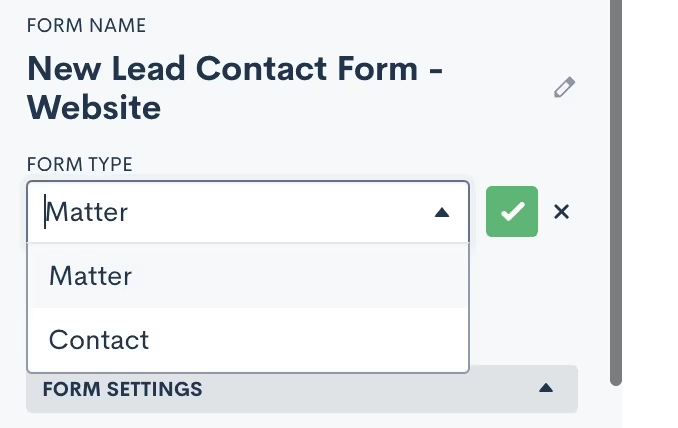
Start by giving your form a name. This name can be for internal use or client-facing, as we'll discuss further shortly. Next, select one of two form types:
- A "matter type" form will create a matter when submitted.
- A "contact type" form will create a contact when submitted.
Form tags
If you so choose, you can also assign a Tag to your form. This can be particularly helpful for organizing and locating forms, especially if you have numerous forms. For example, you might label all your intake forms as "Intake" or categorize forms related to specific practice areas accordingly.When viewing all your forms on the Custom Forms page, you can easily filter and sort them by tag.

Form share title & redirect URL
Once you've set the Form Name, Type, and tags, you can move on to the Form Settings section. Here, you have some additional options:
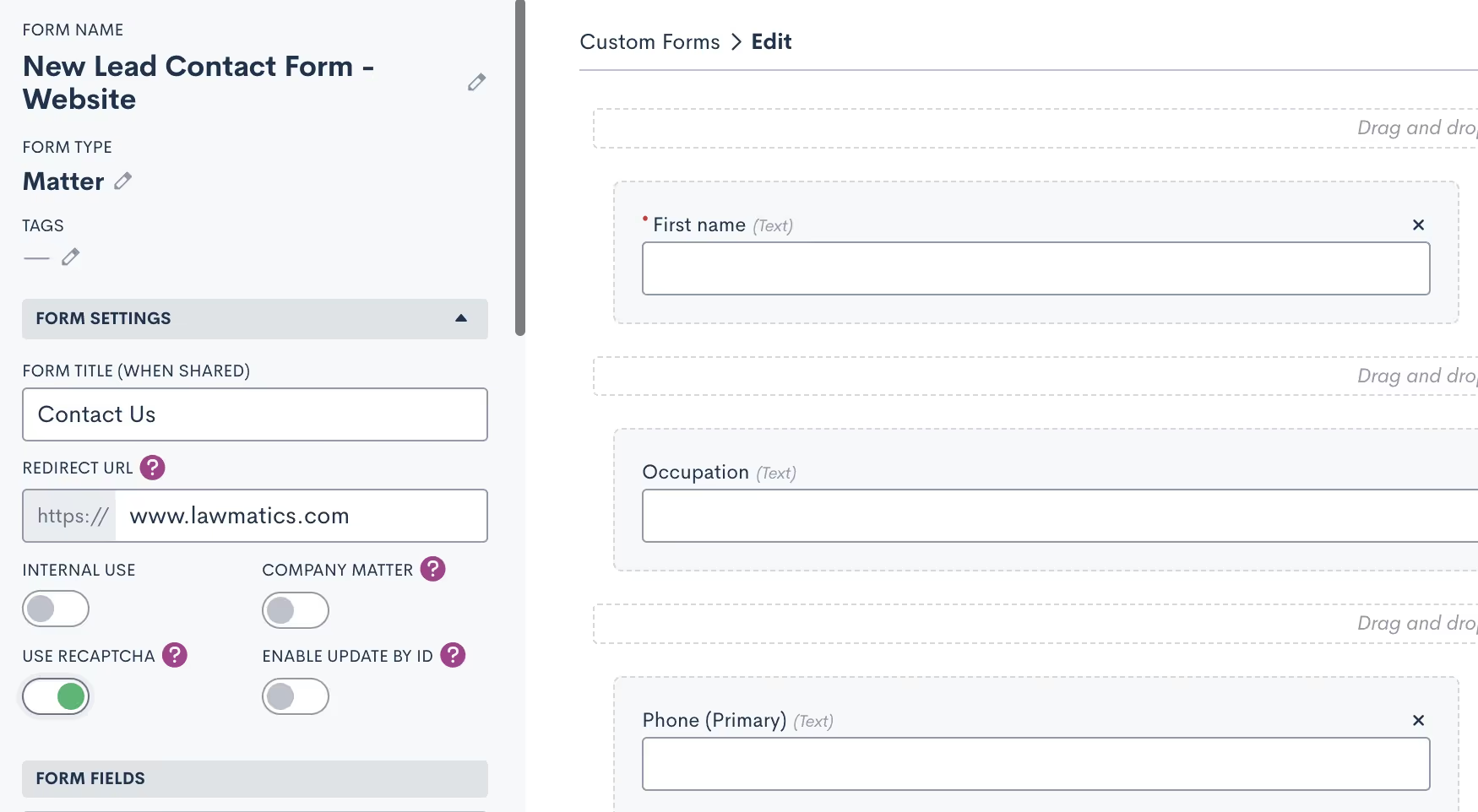
- You can give your form a Share Title that's different from the Form Name. This is useful when you want an internal name but something more client-friendly to appear as the form title.
- The Redirect URL is a valuable feature that allows you to redirect the person filling out the form to a different webpage after they submit it. For instance, you might want to direct them to an FAQ page on your website or a relevant article.
reCAPTCHA & additional settings
In the Form Settings section, you'll find several toggles for additional settings:
- You can make the form internal, which means it can only be accessed by a Lawmatics user signed in to the platform. Internal forms grant access to certain internal-only fields. This option is suitable for forms intended for internal staff, such as a phone intake form.

- Enabling reCAPTCHA helps prevent spam entries for forms embedded on your site or elsewhere. When enabled, you'll see the reCAPTCHA logo on your embedded forms.

- The Company Matter toggle, when enabled, will create each submission as a company matter by default. Ensure that the Company Name field is present on the form when selecting this option.
- You'll also find the option to enable Update by ID, a feature that's less commonly used but can be handy if you need matters to access their form from a static link, perhaps on your website or another source outside of Lawmatics. When this setting is enabled, a unique ID is required before accessing and filling out the form.
- Lastly, navigate to your Main Settings page (accessible via the gear icon near the top right) and select Firm Settings to make one additional selection. It's typically a good practice to enable the setting to Match Form Fills by Email to help prevent duplicates.

Data fields
Adding fields is a fundamental aspect of form creation. Although this isn't categorized as an "advanced component" of forms, it's still essential to grasp the various types of fields you can incorporate into a Custom Form.
Standard & custom fields
Standard fields are pre-built components within your Lawmatics CRM that capture basic information such as name, email, phone, address, and more. You shouldn't create Custom Fields for this standard data. Custom Fields, on the other hand, enable you to track unique data in your CRM.Creating and adding custom fields to your Custom Forms is a critical step. It allows you to later analyze or merge data collected from forms. When constructing your custom form, explore the Matter Custom Fields section to access existing fields and create new ones for inclusion in the form.

Drag and drop these fields onto the form canvas to add them to your form.
General Fields
General fields are intended only for questions where the answers don’t need to be stored on the CRM record itself. These fields are only used within the constraints of the form itself, and cannot be merged into a document, used in a report, synced to case management, etc.

Drag a general field onto your form, and then click on it to set the label and field type.These types of fields are typically only used for questions that require no further action on your part; you may only need to reference them within the form itself.
Conditional logic & required fields
Whenever you add a field to your form, whether it's a custom, standard, or general field, clicking on it reveals advanced options. These options encompass making the field required, hidden, and applying conditional logic.

Within your firm's intake forms, certain questions may be relevant based on the response to a previous question. Conditional logic ensures that the appropriate follow-up questions appear in your form only when necessary.Conditional logic enhances the experience for your leads and clients because they encounter only questions that pertain to them in your intake form. This approach reduces the likelihood of them feeling overwhelmed by a lengthy form with questions that may not apply to their situation.
Blocks
In the custom forms editor you will see options for two types of blocks: Standard Blocks and Relationship Blocks.
- Relationship Blocks are designed for creating separate contacts associated with a matter, such as a spouse, co-client, child, co-defendant, and so forth.
- Standard Blocks do not create contacts like relationship blocks do. Instead, they allow you to group a selection of fields into a single block that can easily be added to any of your forms with a single drag and drop.
Standard Blocks
Blocks are employed to group fields that may repeat across multiple forms. For instance, you might have a set of standard questions about a client's financial assets that's relevant to several of your forms. Rather than manually adding each individual field to every applicable form, you can create the block once and then include it in any form that requires it.

To use blocks start by expanding the Blocks section on the left sidebar of the form editor. Here, you'll find existing blocks and the option to create a new one. Drag and drop a block onto the form canvas to include it in your custom form.It's important to note that standard blocks do not offer the option to "add another" for collecting multiples of a specific type of data point.
Relationship Blocks
Enter relationship blocks. These blocks are invaluable for gathering information about other contacts connected to a particular matter. While every matter has a primary contact, you can link additional contacts using relationship blocks. Here’s how to use relationship blocks:
- First, you'll need to create your relationship types by going into your Settings (gear icon near the top right corner), and selecting Matter Settings from the left sidebar.

- Within Matter Settings, you can create relationship types by specifying a title, indicating if it's repeatable or not, and then clicking "Add Type."
- With your types in place, you can create relationship blocks for each of these types as needed. The process is similar to creating a standard block. Simply drag and drop it onto your form, and then click on it to access additional options.

- When you designate a relationship block as "Repeatable," you gain the ability to "Add Another" on the form. This feature is particularly useful for collecting data on children, siblings, and so on.
Advanced options
Working our way down the side panel of your Form Builder, you’ll see a section labeled “Advanced”. You might already be familiar with some of these features, but there are likely a few that you haven't had the chance to explore yet.
Instructions
You can add a text block by dragging an instructions block into your form. This text can serve as headings, notes, or guidance for the next section of your form.

Importantly, Instructions Blocks don't require the person filling out the form to input any information; they simply provide information or direction.After placing an instructions block, click on it to input your text. You can also merge fields, apply basic formatting, and incorporate conditional logic. Additionally, you have the option to include or exclude the instructions in your form submissions.
File upload
The File Upload object allows individuals completing the form to seamlessly upload files while filling it out. This is a convenient way to gather all necessary information and documents in a single step.

After adding the File Upload object to your form, click on it to access further options. When someone is filling out the form, they can easily drag and drop files or browse their local files to upload. Any uploaded files will be saved directly in the Files tab of their matter profile.

Event registration
**Note: The event management feature is available for our Pro Tier users and above**Lawmatics provides comprehensive tools to manage major events like webinars, luncheons, networking events, and more. Event management differs from appointments in that it can accommodate anywhere from one to thousands of registrants.Most commonly, you'll promote events and collect registrants using a Custom Form. Simply drag the Event Registration field from the Advanced section on the left side panel.Click on the field to make customizations, and people can easily register for the event when filling out the form.

Signature
Use the signature object to collect a hand-drawn signature from the person filing out the form.

It's important to note that this option isn't compliant with e-signature regulations, so it isn't considered a legally binding e-signature.Learn about our compliant e-signature features here.
Page dividers
For longer intake forms or questionnaires, you may want to use pagination to improve form organization. Drag a page divider onto the form to add pagination, and then use additional dividers to separate different sections or pages.This creates a well-organized and user-friendly form, enhancing the overall client experience.

Note
The Note feature saves a note directly to the notes section on the matter's profile.

While it resembles a field in the form, it's distinct from populating a field. You can access these notes in the notes tab of the matter.
Booking request
The Booking Request tool is ideal for scheduling appointments directly from a custom form, taking the host's availability into account and preventing double booking. After adding a booking request to the form, click on it to specify appointment details.

When clients complete this form, they'll encounter a calendar module where they can view the host's available time slots, select their preferred day and time, and confirm their appointment.

If appointment booking is the primary purpose of your form, consider using a booking form for a more streamlined experience.
Final settings
Once you’ve constructed your form, incorporating all these advanced components and features, there are a few final settings that can enhance the overall experience when sending and submitting this form.To access these additional options, navigate to the main Custom Forms page, displaying all your firm's forms, and click on the ellipsis icon (…) on the far right for the specific form.

Custom email template
While optional, the custom email template is a valuable tool for ensuring all firm communications are personalized and aligned with your brand.After clicking "Email Template" (as shown above), you can create a plain text email template for sharing this specific form, document, and more. You can seamlessly incorporate fields using the dropdown menus. Don't forget to input the custom link for the form.Whether you're sharing the form manually or through automation, you'll have the option to send it with your custom email template.

Embedding & styling
If you don't already have a "Contact Us" form on your website, it's highly recommended to add one, and Lawmatics makes this process straightforward.First, create the form by adding the fields you want to capture. Then, copy the Embed Snippet from the ellipsis menu, as shown in the images above, and paste it into your webpage.Once the form is embedded, you can further customize its appearance in Lawmatics. Click on "Embed Editor," also accessible from the ellipsis menu, to make styling selections.

You can adjust background and text colors, submit button text, success messages, and more to ensure the form seamlessly integrates with your website's aesthetics.
API Details
Utilizing the Lawmatics open API is considered an advanced feature and typically requires web developer expertise. However, it's a powerful tool to connect your existing web form to Lawmatics.You can access the API Details once again by clicking the ellipsis button.

Your developer will use this information to establish a connection between your existing form and Lawmatics.
Conclusion
Custom forms represent a cornerstone of the Lawmatics platform, and unlocking their full potential can significantly benefit your operations. While you may already have a strong grasp of the basics, delving into the more sophisticated aspects of custom forms can open up new possibilities.These advanced tools enable you to collect client information with precision, ensuring you capture everything essential. Whether it's conditional logic, repeatable relationship blocks, or file uploads, there may still be hidden features waiting for you to discover.As we conclude, remember that custom forms offer a wealth of potential. By embracing the insights of the Lawmaticians and the strategies of seasoned Lawmatics users, you can harness the full power of form creation to elevate your practice to new heights.

“Armies of Expensive Lawyers, Replaced by Cheaper Software.”This 2011 New York Times headline boldly claimed that expensive lawyers could be replaced by cheaper software. Fast forward to 2023, and we see a more complex picture. Recent studies suggest that nearly 44% of legal work could be automated, yet the demand for human expertise remains strong. The firms that blend automation with human skills are set to dominate the future.In this webinar Lawmatics CEO and Co-Founder Matt Spiegel is joined by Gyi Tsakalakis, President and Co-Founder of AttorneySync. Both Matt and Gyi bring legal backgrounds and entrepreneurial mindsets to discussing the intersection of cutting-edge technology and the legal client experience.
Time stamps of key takeaways
0:00 — Introductions
Both Matt and Gyi are licensed attorneys who have dedicated their careers to helping legal professionals identify and implement technology to streamline their operations while elevating the client experience. Here you can get to know a bit more about their backgrounds.
6:21 — Technological integration
Do your systems talk to each other? How can you make holistic decisions about your business if your data is isolated in different channels? In this section, Gyi and Matt discuss why integrations should be table-stakes for legal technologies.
11:16 — Data-driven decision making
Law firms that grow don’t base their plans on gut instinct. They employ statistically significant data to inform their choices. Here, Gyi provides some helpful questions to reflect on your current decision-making process.
23:10 — Efficient processes
Automations free up valuable time to do the things that can’t be done by automations. But automations aren’t the only aspect of efficient processes. Gyi recommends some tools he uses for his business, while Matt offers some use-cases based on his experience as an attorney.
33:24 — Client-centric approach
When building your firm’s processes, consider the client experience at every stage of their journey. What’s a new client’s experience like when they call your firm for the first time, or when it’s time to pay their bill? Matt and Gyi discuss why legal client experiences, and not just legal outcomes, matter.
41:50 — Continuous learning and innovation
If you’re checking out this webinar, you probably already have a mindset of continuous improvement. This isn’t just about re-evaluating your tech stack every 5 years. This section is about identifying opportunities to further your learning year-round.
46:45 — Cybersecurity and data privacy
You have to keep your client data secure. You’re also probably bound to ethical standards and privacy regulations, like the European Union’s General Data Protection Regulation (GDPR). Navigating these security and privacy infrastructures can feel discouraging, especially if you don’t have the technical expertise. But, as Gyi mentions, you really only have to ask a few questions to know how secure your systems are.
52:22 — Q&A
Matt and Gyi round out the session by fielding as many of the live questions as they could. Thanks to everyone who contributed their questions to the chat!
Webinar slide deck
Legal podcasts are a great way to expand your knowledge, get industry insight, and even just commiserate about *those* moments in the day-to-day life of a legal professional.This month we asked Lawmatics customers to share their favorite legal podcasts to help their fellow legal professionals expand their podcasting horizons.Without further ado, here are some of the podcasts our users recommend to their colleagues.

Lunch Hour Legal Marketing
Hosted by digital marketers Gyi Tsakalakis and Conrad Saam, Lunch Hour Legal Marketing is jam packed with tips and tricks for attracting more clients and business to your legal practice. Catch LHLM twice a month for expert advice to turbocharge your firm’s ability to generate cash money.
What our community said: “Super informative about marketing your law practice or law firm.” – Anonymous

#SistersInLaw
Politicon brings the brilliant team of political and legal masterminds together for Politicon's #SistersInLaw.
Joyce Vance, Jill Wine-Banks, Barb McQuade, and Kimberly Atkins Stohr will pull back the curtain on how our government actually works, take on the corrupt, share their wisdom and give us their rulings on the latest in politics, law, and culture.
What our community said: “Great legal commentary about current issues in law.” – Taylor E. Darcy, Attorney, ThinkLegal, P.C.

Accountants Law Pod
Accountants Law Pod is a podcast for legal accountants and financial professionals who want to stay up-to-date on the latest trends, best practices, and entrepreneurship in accounting and finance for law firms.
What our community said: “Very concise and relevant information.” – Dave Owens, Planner, Maia Wealth

Settlement Nation
Conversations with leading trial lawyers and settlement professionals on topics ranging from advice and strategies from top trial lawyers, settlement planning for plaintiffs, tax planning for attorneys, and future innovations in the legal and insurance industries.
What our community said: “This is a very insightful podcast that focuses on best practices, personal development, and listener engagement. There is such a wide variety of guests ranging from national power attorneys to startup solo practitioners, some guests are from outside the legal community that share leadership and storytelling strategies. This is truly a podcast that I count down waiting for new episodes to enjoy on my commute. I recommend it to all of my clients and colleagues.” – Mikel Taft, President, Delta Settlements

Maximum Lawyer
Maximum Lawyer is a podcast created by law firm owners, for law firm owners. Whether you’re starting your firm or years into law firm ownership, you’ll hear the latest news, game-changing tips, and business strategies to give you support, grow your confidence, grow your team, and grow your bank account.
What our community said: “Good perspective on how to run a law firm so that it doesn't run you.” – Curtis Kleem, Attorney, Kleem Law, LLC

Lawyer 2 Lawyer
Lawyer 2 Lawyer is an award-winning podcast covering relevant, contemporary news from a legal perspective. Host J. Craig Williams invites industry professionals to examine current events and recent rulings in discussions that raise contemplative questions for those involved in the legal industry. Launched in 2005, Lawyer 2 Lawyer is one of the longest-running podcasts on the Internet.
What our community said: “Lawyer 2 Lawyer is always such a thoughtful conversation about the legal industry, from how attorneys can strike that work-life balance to major legal developments in the news.” – Anonymous

Advisory Opinions
Advisory Opinions is a new podcast from The Dispatch. Hosts David French and Sarah Isgur have a weekly conversation about the law, culture, and why it matters.
What our community said: “The podcast does a good job of providing neutral analysis rather than just commentary.” – Josh Swafford, Associate, Meridian Law

Lawyerist
The Lawyerist Podcast is a legal podcast about the future of lawyering and law practice hosted by the Lawyerist team. Every week they feature conversations with successful lawyers, innovative thought leaders, and other creative people helping to shape the future of legal practice.You’ll find business and leadership author interviews, strategy and coaching calls with Lawyerist Lab members, and discussions about the trends and tactics pushing the legal industry forward.
What our community said: “Great podcast to get interesting conversations about taking your firm to the next level. It covers marketing, management, technology - you name it!” – Karol Brown, Managing Attorney, World One Law Group

Non-Eventcast
This weekly podcast from Above the Law is focused on how technology can benefit your bottom line and geared for an audience of luddite-leaning lawyers. “Fun” may even ensue — within reason, of course.
What our community said: “Focuses on technology in the legal field and how it impacts our business. Host is witty and able to keep the attention of listeners.” – Kerri Koen, Founding Attorney, Koen Law

The Law Firm Owner Podcast
Host and founder Melissa Shanahan shares insights and practical advice on how to organize your numbers, grow your team, increase your revenue, and achieve a better work-life balance. Through quarterly strategic planning, accountability, and coaching, Melissa shows listeners how to create sustainable success for both their firms and their personal lives.
What our community said: “Very helpful for focusing on the business side of running a law practice. Melissa is very positive and encouraging while at the same time stresses accountability and accepting reality, the good and the bad.” – Brian Waller, Principal Attorney, Sequel Law LLC

They Don’t Teach This in Law School
Host Charley Mann hears it all the time from the law firm owners he coaches: "They didn't teach us this in law school!" With this show, Charley brings outside business ideas and advice into the world of entrepreneurial law firm owners.
What our community said: “Great information about marketing that is specific to the legal industry.” – John Hicks, Owner, The Hicks Law Firm
Final thoughts
Thanks to everyone in our community who took the time to share their thoughts!The legal industry is experiencing rapid technological and operational changes, and resources like these podcasts are invaluable in staying up to date with all things legal.Do these podcasts have you thinking about how to keep your firm growing while staying on the cutting-edge? Schedule a personalized live demo of Lawmatics today to experience how the #1 legal CRM can drive your firm’s growth.

We're excited to shine a spotlight on the latest additions to Lawmatics! In an ever-evolving digital landscape, these new features are here to empower you to stay at the forefront of innovation. Get ready to discover what's fresh and game-changing from the Lawmaticians!
Redefine your Reports and Audiences with Advanced Conditional Logic

Take your data analysis to the next level by combining multiple criteria with Advanced Conditional Logic. Filter your Reports and Audiences by layering both “and” and “or” conditions to uncover hidden insights, track trends, and make data-driven decisions. Whether you're running campaigns or segmenting clients, this feature gives you unparalleled control. Stay tuned to see where Advanced Conditional Logic is incorporated into the platform next!Learn more here
Clean up your CRM by Merging Matters
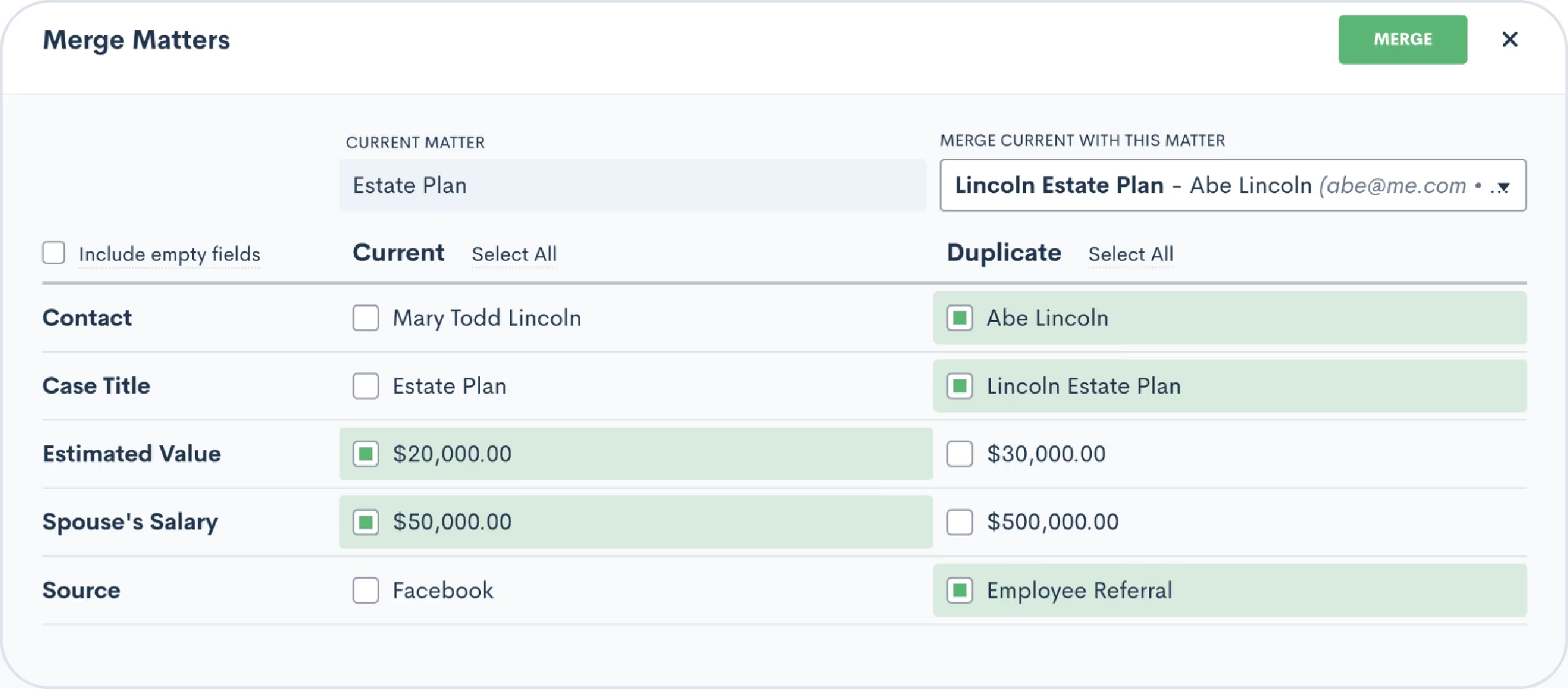
On the heels of our recent Contact Merging feature, you can now easily merge two Matters. If you end up with a duplicate Matter, you can simply click the Merge button on the duplicate Matter to combine the duplicate and original Matter. If there are any conflicting fields, you’ll be able to select which Matter’s data should persist.Driven by user requests, this new feature keeps your pipeline accurate and tidy.Learn more here
Tailor your texts with multiple SMS numbers
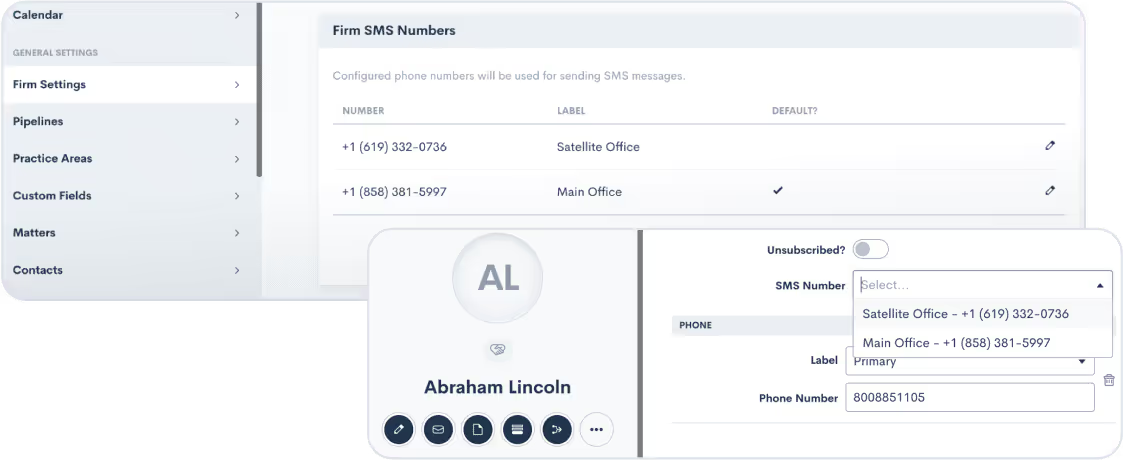
Your firm can now send text messages using multiple phone numbers via Lawmatics. If your firm has a presence in multiple geographical areas, this feature ensures you can reach out to clients with an area code that feels local, trustworthy, and familiar. To activate this feature, simply email us at support@lawmatics.com and let us know what area code(s) you would like to add.* Once enabled, you can start connecting with each client a bit closer to home.*Note: Additional fees apply.Learn more here
And more!
- Leave notes on Contact and Company profiles with the new Notes tab
- Customize your built-in appointment confirmation and reminder emails even further by selecting a user for the emails to send from
- See which user deleted a Matter in your Recovery Bin with new “Deleted By” column
- Rearrange the options in a custom picklist field by dragging and dropping in your Custom Fields settings
Thanks for taking the time to explore our latest feature release! We admire your commitment to staying at the forefront of legal innovation. Rest assured, there's much more in store – and we can't wait to share it with you.
Picture this: A client is anxiously awaiting an email containing documents they need to sign before a fast-approaching legal deadline. The clock is ticking but that crucial email is lost somewhere in cyberspace or trapped in a spam folder and the window of opportunity is getting smaller with each passing minute. What do you do?
What is email deliverability?
The scenario above is a classic email deliverability nightmare. To better understand what’s going on, let’s back it up a step. You may have heard the term ‘deliverability’ thrown about, but how much do you know about it?At its core, email deliverability is the successful delivery of an email to the intended inbox.But there's a lot that goes on behind the scenes to make this possible. Achieving good deliverability means navigating the intricate dance between technical aspects, such as server configurations and domain reputation, and the nuances of content quality and data cleanliness. Achieving high deliverability is both an art and a science that often requires wearing a lot of different hats.Because of this, we have a dedicated team that is constantly working to make our platform better and support you through resolving tricky deliverability problems. If you’ve ever run into a high bounce rate issue or needed to solve a last-minute missing document mystery, you’ve likely spoken to myself or one of our amazing support specialists.We’re heavily focused on making sure we deliver emails as consistently and reliably as possible for you and your firm. We know that it's not just about sending messages; it's about ensuring they're received and received well.
Why does it matter?
1Essential communication and trust building
Email is a crucial communication channel between your firm and its clients. When important updates or time-sensitive documents don't reach their intended recipient, it's not just a missed connection. It's a lost chance to build trust, display your expertise, and nurture invaluable client relationships.
2Business impact and reputation
A tarnished email reputation can have lasting consequences. In my experience, it can take up to a month (in some cases, even longer) to mend the damage caused by sending emails to an outdated or purchased list. Even accidental missteps can tarnish your firm's overall reputation, diminishing client confidence in the long run and creating logistical headaches.
3Efficiency and productivity
The need to constantly follow up or resend emails isn't merely an inconvenience. It's a drain on your team's productivity, diverting time and resources away from essential tasks, direct client engagement, and achieving a better work-life balance.
4Revenue and engagement
Marketing emails continue to be a major revenue driver for all sorts of businesses and the legal industry is no different. A well-timed email campaign, even a minor one, can significantly boost your firm's ROI. But for maximum impact, it's vital that your emails reach their intended inboxes. Every email that doesn’t reach its intended inbox represents a missed business opportunity.
Guiding principles
There are some key factors that heavily influence how your emails land and your reputation as a sender:
Permission
How do you collect your lists? Having explicit, up-to-date, and verifiable permission from your subscribers is the foundation of good deliverability. It helps build trust while also ensuring that you’re compliant with email regulations and standards. Consider using a double opt-in mechanism whenever possible to reinforce permission and reduce risk, as sending to recipients who haven’t opted in can result in significant consequences for your firm.
List hygiene
How do you make sure that your lists are up-to-date? Email lists naturally decay over time. On average, you should expect around 25% of your email database to degrade each year as people change jobs, abandon old email accounts, or unsubscribe. Maintaining a clean and current email audience helps you avoid problems like high bounce and spam complaint rates.
Engagement
Are you sending to subscribers who are engaged with your content? Engagement rules all in the deliverability world. Different metrics can help provide some insight into who is engaged with your content and lets you know who you should be targeting with your campaigns.We’ll dig deeper into what this means in our next installment, but it’s a good idea to start thinking about these questions if you’re not already.
What’s next?
This series will break down deliverability terms, strategies, and best practices, aiming to help law firms and anyone else interested in effective email communication. Some topics on the horizon include: domain and IP reputation, a deep dive on authentication methods like SPF and DKIM, and how to avoid accidentally spamming your clients. Whether you're a law professional, a marketer, or just someone looking to elevate your email game, stay tuned.Have a question or want to share an experience? We'd love to hear from you! Reach out to us at mail@lawmatics.com.
Subscribe to get our best content in your inbox
Law firms love Lawmatics
Our customers give their clients the client-focused experience they deserve. Learn how they do it all with Lawmatics.
.avif)
.avif)

.avif)

Ready to grow your law firm with Lawmatics?
Schedule a demo of legal’s most trusted growth platform.