

Automation



Lawmatics, the leading intake and growth platform for law firms, today introduced Merlin, a new family of AI features built natively in Lawmatics to help law firms grow. The suite, which includes a just-released conversational interface called Merlin Copilot, takes on the repetitive work that moves prospects toward signing, freeing staff to focus on client service, legal work, and strategy, while giving firms the speed and responsiveness that competitive consumer law markets demand.
For most law firms, growth happens at the front of the business — the speed from inquiry to first contact, how consistently leads are evaluated, and how clearly firms can see what's working across their pipeline. These are the points where revenue is won or lost, and they're the points that most legal AI hasn't reached. Today's legal AI tools tend to focus on case work or general productivity. The cost of that technology gap is felt in law firms every day: leads that go unanswered too long, qualified prospects lost to faster competitors, and skilled staff spending hours on repetitive work instead of on clients.
Merlin is designed for the part of a firm that comes before the case: lead intake, prospect engagement, and the operations that convert potential clients into retained clients.
"CRMs were built to track opportunities. Lawmatics goes further, because growth doesn't come from tracking opportunities. It comes from acting on them," said Matt Spiegel, founder and CEO of Lawmatics. "Merlin is how we put AI to work in Lawmatics for law firms, helping with everyday tasks that move a prospect toward signing, so that law firms can maximize every opportunity without having to ask their people to do more.”
The Merlin suite currently includes three features, each available as an add-on to the Lawmatics platform:
- Merlin Copilot, a conversational user interface that creates automations, generates reports, and surfaces insights from firm data through plain-language prompts.
- Merlin Qualify, an AI agent that evaluates and prioritizes incoming leads based on fit, urgency, and engagement signals defined by the firm. Released earlier this year, Merlin Qualify has been recognized with an Excellence in AI Award from Business Intelligence Group, which honors innovation across technology sectors.
- Merlin Engage, the agentic AI for dynamically engaging with prospects through SMS, email, website chat, and phone calls. Currently in beta.
"Our firm saw a higher closing percentage within the first week of using Merlin Engage," said Glenn Gilmour, Director of Operations at Sawyer & Associates, LLC. "Engage makes our intake team so much more efficient and helps 24/7. It even handled a lead that came in over the weekend that resulted in a $12,000 sale."
Merlin represents how Lawmatics sees the future of legal practice: more law firms reaching their full potential, with the time and capacity to pursue the work they set out to do, on their own terms. Merlin is Lawmatics' commitment to that future, and it is only the beginning.
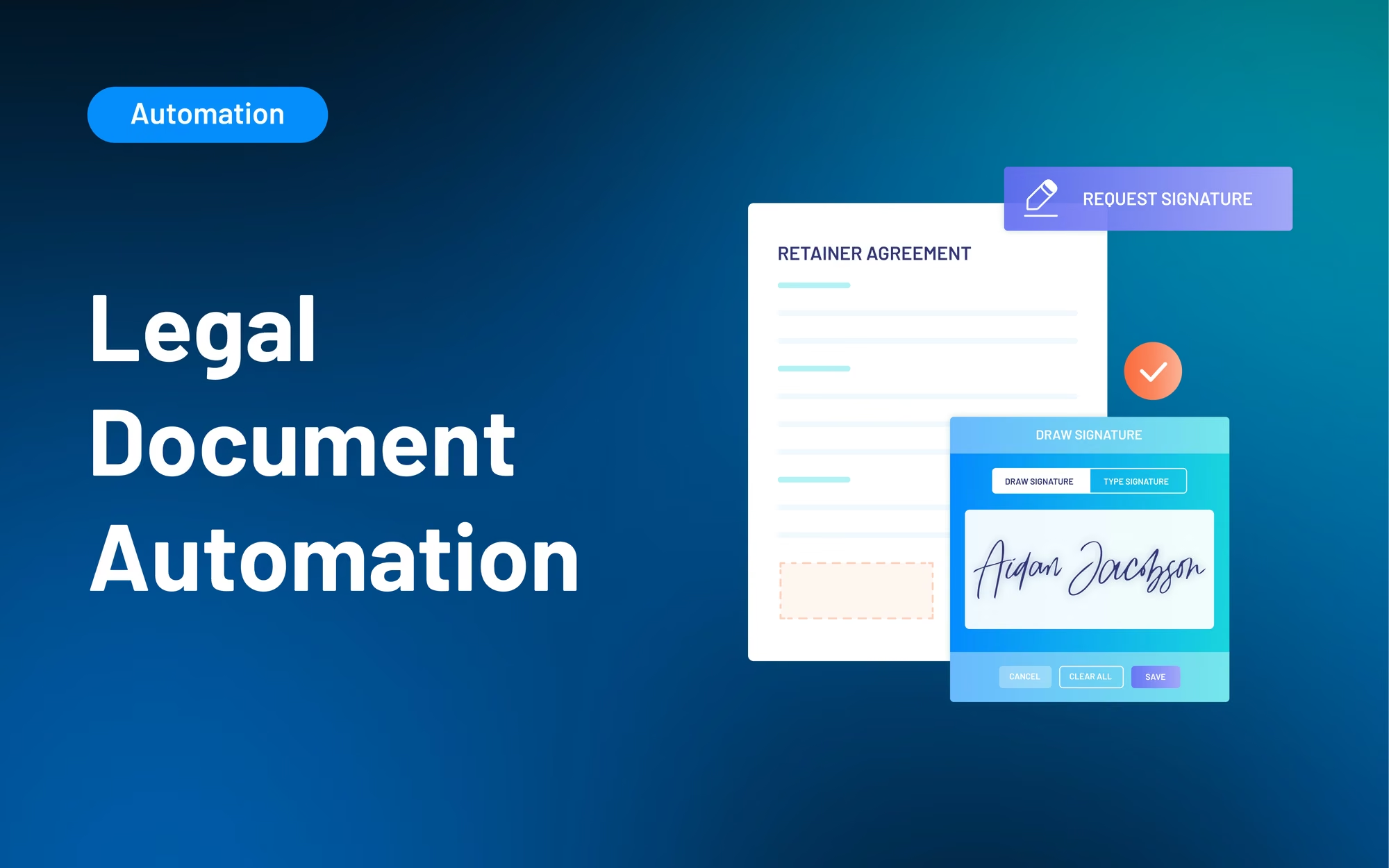
Legal document automation is the process of generating legal documents using structured templates, client data, and workflow-based rules. It helps law firms eliminate repetitive drafting, reduce errors, and deliver documents consistently across attorneys and practice areas. Automation is especially valuable for high-volume document types such as engagement letters, fee agreements, disclosures, discovery requests, and standardized pleadings.
From client intakes to contracts and court filings, creating detailed legal documents is a key component of a successful law practice. Often, effective document production and management is the difference between winning and losing cases and clients.
But if you're spending hours on repetitive drafting, managing inconsistent templates, and still encountering errors, it's time for a change.
Legal document automation frees up hours for your team by replacing manual find-and-replace processes with smart workflows that populate documents with client data instantly.
This guide covers the benefits, use cases, implementation steps, and return on investment (ROI) of automating your legal documents. It includes how Lawmatics' comprehensive legal customer relationship management (CRM) and document automation platform makes it possible.
What Is Legal Document Automation for Law Firms?
Legal document automation generates documents automatically using rules you set for different clients, practice areas, and case types. It goes beyond simple mail merge, using conditional logic to produce documents based on specific triggers, client data, or matter details.
Imagine a personal injury firm creating and sending an engagement agreement to a client's inbox the moment they complete their initial consultation. Automated legal document software pulls client data, matter notes, and case specifics to build documents with minimal manual input.
Beyond saving drafting time, automation creates consistency. Standardized naming, filing locations, and formatting can enhance your professional image and make information easier to find.
It’s also the glue that connects your legal workflow ecosystem. By pulling high-quality data from your legal CRM system and intake forms, you automate document workflows during matter management. This can reduce administrative work and free up time to win cases.
Why Law Firms Struggle With Document Drafting Today
Some of the main reasons you may struggle with legal document drafting include inconsistent templates, reliance on manual drafting, and disorganized processes.
Inconsistent templates across attorneys
Attorneys often use their own templates saved in different locations with varying formats and wording. This problem compounds over time as new and old documents pile up, creating confusion.
Multiple versions of the same document increase the risk of errors and outdated language. Attorneys may be forced to spend most of their time reviewing drafts rather than practicing law.
Heavy reliance on manual drafting
While you might use some automated document functions, such as mail merge, Microsoft Word’s Quick Parts, or Google Docs’ Building Blocks, most attorneys still manually retype or copy-paste clauses.
Searching for and editing language increases turnaround times and limits how many matters you can handle.
Disorganized or incomplete client data
Without structured legal workflow automation, you're more likely to miss follow-ups or encounter incomplete information. This can lead to onboarding delays from repeated client contact.
Bottlenecks that slow engagement
Manual document production creates bottlenecks because it relies on attorneys to notify reviewers. This prolongs client intakes and reduces conversion rates when follow-ups fall through the cracks.
How Legal Document Automation Works in a Law Firm Workflow
Legal document automation starts with predefined templates, such as contracts, agreements, and pleadings, containing placeholders, smart fields, and conditional logic that determines which clauses to include based on client data, jurisdiction, and case details.
Legal document generation software then pulls information directly from your CRM or matter management system to produce documents in seconds, versus the hours it typically takes for manual drafting.
Let’s walk through how document automation works from client intake to finalization.
Intake captures structured client data
Well-developed client intake forms collect key data points that serve as the basis for your documents. Typically, they gather:
- Client name and contact information
- Matter specifics
- Important dates
- Financial details
- Jurisdiction particulars
Once clients enter this information, you have clean, structured data ready to use.
Data syncs into templates
Intake data then syncs to your legal CRM or practice management system. Your law firm document automation platform will then pull this data from your CRM or intake applications into predefined templates. This often eliminates double entry and improves accuracy.
Templates generate drafts automatically
Beyond filling in template placeholders, the software uses conditional logic to automatically choose the right sections and clauses based on practice area, governing laws, and case scope. It even handles multi-page packages for faster client onboarding.
Workflows trigger document creation
Advanced automation creates documents based on specific triggers like matter status changes, completed tasks, or received approvals. For example, when you agree to take on a matter and update its status, you automatically generate an engagement letter for review.
Attorney review and finalization
Once generated, you and your team review documents for accuracy. You can adjust how much the system automates based on the results you see.
A great way to monitor the ROI of legal automation is to validate your efficiency gains with legal time tracking software. This can include monitoring your utilization rate over time.
Legal Document Automation vs Document Assembly vs Document Management
Although similar, legal document assembly, document automation, and document management refer to slightly different processes.
Document assembly
Document assembly is the most basic form of legal document processing. It takes client data and inserts it into basic merge or fillable fields in a static template, like adding a client’s name to a contract.
Automated legal document assembly is faster than manual entry. But, its limited flexibility and lack of conditional logic rules mean you’re still spending some time drafting and reviewing every document.
Legal document automation
Legal document automation adds logic, conditional text, data mapping, and workflow triggers to create highly specific documents with minimal involvement.
It enables dynamic form building, which allows it to add language, clauses, sections, and even entire document packages based on case needs.
Most automation tools also offer advanced document workflow management features. These can automatically draft documents when a trigger occurs, such as completing a client consultation.
Document management
Document management focuses on the naming, storage, and versioning of your legal documents. Think of it like an electronic filing cabinet that organizes documents using consistent conventions to make document retrieval easy, safe, and secure.
Document management, by itself, doesn't involve automated creation or workflows, though most automation software does offer some document management features.
Benefits of Legal Document Automation for Law Firms
Legal document automation provides significant benefits for law firms of any size, from time savings to increased revenue and improved client experience.
Reduces drafting time significantly
Lawyers spend 40-60% of their time on legal drafting, according to a survey from Thomson Reuters. Automation cuts this process from hours to minutes, increasing attorney capacity without additional staff.
Improves accuracy and reduces risk
Automation eliminates repeated data entry and copying and pasting. Enter information once, and it flows seamlessly into templates, which can drastically reduce errors.
Plus, it pulls clauses from the most current versions each time, so you avoid outdated language and ensure compliance with applicable laws.
Accelerates intake and onboarding
Document automation produces complete client onboarding packages triggered by a predetermined condition or a single click. Faster engagement letter delivery means shorter follow-up delays, less client confusion, and better conversion rates.
Increases profitability and realization
Automating document drafting allows you to reclaim more effective hours in your workday. While attorneys may bill fewer hours on drafting, your firm handles more matters with the same staff. Lawyers focus on substantive work that wins cases and retains clients.
Enhances attorney and staff experience
Manual document production is tedious and stressful under tight deadlines. Automation drastically reduces this stress by lightening the administrative load.
Standardizes output across the firm
Multi-attorney teams benefit from firm-wide standardization, such as consistent document language, formatting, and processes. These can improve work quality, impress clients, and centralize knowledge for faster new-attorney onboarding.
Document Automation for Small vs Large Law Firms
All-sized firms benefit from document automation. For small law firms, the goal is to leverage form automation to scale their services with fewer resources. Meanwhile, large law firms aim for consistent quality across their services.
Document Automation for Small Law Firms
Small firms struggle to manage accounting, marketing, intake, and case management with limited resources. Attorneys often juggle everything themselves.
Document automation for small law firms delivers immediate gains by reducing time spent on repetitive document processes and simplifying intake workflows to scale without hiring.
Document Automation for Midsize Firms
Midsize practices leverage automation to balance efficiency with team collaboration.
With access to more specialized staff, including paralegals, law clerks, and researchers, midsize firms need features that reduce friction between document stakeholders. This includes task management, status monitoring, and follow-up capabilities.
Document Automation for Large Firms
Large firms want efficiency and collaboration, plus consistency tools such as document governance protocols, approval workflows, and version control. These help to standardize and centralize documents.
The goal is to make templates auditable and searchable to improve quality and track changes for regulatory compliance.
Legal Documents That Can Be Automated
You can automate virtually every legal document. Here are just a few.
Client intake and engagement documents
Client intake and engagement documents include the initial paperwork required for client onboarding. Examples include:
- Engagement letters
- Retainer agreements
- Fee agreements
- Conflict waivers
Ongoing case documents
Ongoing case documents refer to the specific documents involved in matter management. While many ongoing case documents are practice area specific, typical examples include:
- Standard pleadings
- Discovery requests
- Settlement packets
- Status updates
Administrative and compliance documents
Administrative and compliance documents include the forms required in the backend to manage your firm's business operations and ensure compliance with applicable regulatory requirements. Examples include:
- Consent forms
- Authorization letters
- Financial agreements
- Compliance disclosures
Document Automation Use Cases by Practice Area
Most of the documents you can automate are practice-area-specific. The examples below are not all-inclusive, but they will give you an idea of the documents that can benefit from practice automation tools.
Personal injury
Personal injury documents you can automate usually involve the quick, compliant collection of necessary medical records for evaluation. Examples include:
- Medical record requests
- Health Insurance Portability and Accountability Act (HIPAA) authorization agreements.
- Representation agreements
- Settlements
Estate planning
You can automate a vast number of estate planning documents. In fact, for many clients, you can have them enter their own information and circumstances. This can give you a jumpstart on drafting each unique and complex estate plan. Examples include:
- Wills
- Trusts
- Funding letters
- Client questionnaires
- Power of attorney agreements
- Beneficiary designations
- Probate petitions
Family law
Family law is concerned with automating the most frequent documents in child custody, marriage, divorce, child support, domestic violence, and adoption or foster cases. Examples include:
- Disclosures
- Free agreements
- Stipulated orders
- Communications
- Answers to requests for information
- Prenuptial/postnuptial agreements
- Restraining orders
Criminal defense
Accurate criminal defense documents help expedite court proceedings and lead to more favorable outcomes for clients. Examples include:
- Rights advisories
- Representation agreements
- Discovery requests
- Plea agreements
- Trial briefs
- Appeals
Business and corporate
Business and corporate law focuses on the documentation required to support business formation, dissolution, operations, mergers, and acquisitions. Examples include:
- Operating agreements
- Nondisclosure agreements (NDAs)
- Contract templates
- Governance packets
- Shareholder agreements
- Corporate resolutions
How to Evaluate Legal Document Automation Software
The features you need for your legal document automation software depend on your size, practice area, and internal staff and client needs.
Template logic and conditional complexity
Look for document automation software for lawyers that supports advanced conditional and branching logic.
Most business word processing programs include placeholders and standard form-field features for basic database text insertion. The ability to create complex rules means documents essentially produce themselves with little oversight.
For example, Lawmatics’ document automation software lets you add conditional logic to sections and even paragraphs of a document template for highly specific documents.
Questionnaire and data capture capabilities
Your automated legal documents platform should also include data capture, questionnaire, and e-signature functionality. This will allow staff and clients to enter data via questionnaires and securely store it.
Lawmatics, for instance, offers a digital legal form builder with smart logic that tailors questions based on client answers.
Integration with intake, CRM, and case management
Your platform should integrate with tools you use daily, including legal CRM, time-tracking, and practice management systems. Seamless data flow reduces repetitive entry and enables accurate document generation.
Some platforms come with native legal CRM and client intake features already, including Lawmatics. Be sure to look at each platform’s legal software integrations and whether it provides open-API access.
Usability for attorneys and staff
Demo each platform to assess ease-of-use. You want software that balances approachability with advanced customization to encourage adoption while providing powerful controls.
Pro tip: Ask software vendors what kind of staff training they provide on their software during onboarding. The more support they offer, the more likely your firm will reap cost and time savings from automation.
Governance and template control
Research legal document automation applications that offer strong governance and template controls. This includes approval workflows, role-based permissions, access controls, and document version management.
These features maintain audit trails of template changes and the users who made them. Permission and access controls also protect templates, so staff always use the correct version.
Reporting and time savings visibility
Your platform should track time spent on drafting and provide historical reports. Alternatively, it should integrate with systems that offer robust analytics to demonstrate how automation affects realization rates, utilization rates, client satisfaction, intake volumes, and profitability.
How to Implement Legal Document Automation Software
Implementation is simpler than it seems. The key is planning ahead and making small changes over time.
Step 1: Identify high-volume documents
Start with the documents your team uses most frequently, like engagement letters, service agreements, NDAs, and contracts. These provide the most immediate time savings.
Step 2: Standardize templates and clauses
Gather your current templates, and agree on the language, formatting, and branding. You should also identify sections and clauses where information should change depending on the client's circumstances.
Step 3: Map required fields to intake and CRM data
Determine smart fields and placeholders in each template where structured client data from your intake or CRM tools should appear. These can include client names, addresses, and case details.
Step 4: Build templates with conditional logic
Apply conditional logic rules to clauses and sections that change per matter. These use simple if-then statements to determine what to include based on data pulled from your intake or CRM systems.
Step 5: Configure workflow triggers
Add workflow triggers so the software creates high-volume documents when conditions are met. For example, a personal injury attorney might auto-generate medical records request forms upon completion of intake.
Lawmatics’ custom automations, for example, extend beyond automated document workflows to follow-ups, scheduling, and client requests.
Step 6: Pilot the automation and fix gaps
Test each automation and adjust triggers, logic rules, and placeholders before wide-scale rollout. A small pilot program among a few attorneys is a great way to determine viability in real-world scenarios and gather feedback.
Step 7: Train staff and roll out firm-wide
Use a phased rollout to slowly introduce the software across your firm. Provide plenty of training courses and resources so staff feel comfortable integrating document automation into their processes.
Costs, ROI, and Time Savings Expectations
Legal document automation does more than fast-track document generation. It provides a real, positive impact on your law firm’s bottom line.
Typical time savings range
Lawyers report up to 82% time savings from legal document automation. The Creator’s Law Firm, for example, saw up to 10 hours saved per week per team member from using Lawmatics’ automations, like email drafting.
Cost drivers to expect
Once implemented and adopted firm-wide, ongoing costs are minimal. Budget for higher initial costs as your team adjusts.
Cost drivers such as template building, staff training, data migration, and workflow development temporarily increase time spent on drafting, reducing short-term efficiency.
When automation pays for itself
Automation generally pays for itself quickly. The more workflows you automate (marketing, intake, follow-ups), the more time attorneys spend on value-added work over administrative tasks.
How time tracking validates ROI
Use time-tracking tools to compare manual versus automated drafting. If you’re already using a legal time-tracking system, such as Lawmatics’ legal time-tracking software, run historical reports. These can reveal the automation's impact over time and validate ROI.
KPIs Improved by Legal Document Automation
Legal document automation improves your firm’s intake, conversion, work quality, time, and billing key performance indicators (KPIs).
Efficiency KPIs
Efficiency KPIs measure the time savings you achieve after automation implementation. Examples include:
- Utilization rate
- Drafting time reduction
- Hours saved per attorney
- Speed of engagement letter delivery
Financial KPIs
Financial KPIs address the profitability impact of automation on the firm. Generally, faster drafting means attorneys accurately report billable work and handle more matters, increasing revenue. Examples include:
- Realization rate
- Effective hourly rate
- Matter throughput
Intake and conversion KPIs
Intake and conversion KPIs show gains in client onboarding and turnaround communications from document automation. All improve dramatically with auto-generated documents and faster client responses. Examples include:
- Intake-to-engagement conversion
- Lead response speed
- Onboarding time
Quality KPIs
Quality KPIs reflect the accuracy and consistency of documents after implementing document automation processes. Standardized templates and pre-approved clauses reduce errors, improve compliance, and enhance your firm’s professional appearance. Examples include:
- Error rate
- Revision time
- Document consistency
Turning Automated Documents Into Measurable Time Savings
Document automation does more than save time. It provides attorneys with much-needed peace of mind during matter management.
Standalone solutions offer sophisticated workflows and preloaded templates. But, you'll benefit most from a comprehensive intake, CRM, and time-tracking suite that pulls in structured client data across matter lifecycles, automates more processes, and scales document workflows as your firm grows.
Lawmatics document automation software integrates with its entire legal CRM and intake platform. It enables attorneys to reduce drafting time during the most document-heavy phase of cases: client onboarding.
Ready to try it out? See the exact workflows, time savings, and automation opportunities your firm could unlock. Request a demo of Lawmatics to review your intake data and drafting processes in one connected platform.
Frequently Asked Questions About Legal Document Automation
What is legal document automation?
Legal document automation uses smart fields, conditional logic, and workflow triggers to generate legal documents from client and case data.
From retainer letters to settlement agreements, legal document automation speeds up drafting across practice areas and throughout a case’s lifecycle.
Which firms benefit most?
All firms benefit from legal document automation software.
Small firms appreciate managing larger caseloads by reducing onboarding time. Large firms value consistency and accuracy in their paperwork processes, which improves client perception and ensures compliance with evolving legal standards.
How much time can automation save?
Most lawyers cut their document-drafting time by more than half through automation, with some reporting up to 82% time savings, according to Thomson Reuters.
Does automation replace attorneys?
No, automation does not replace attorneys. You still need attorneys to handle the most important aspects of a matter. This includes building client rapport, case investigation, argument and strategy development, and trial appearances.
Attorneys will also still review documents for finalization. Automation simply fast-tracks drafting, allowing attorneys to focus on these critical functions.
What is required to implement automation?
You need well-structured data from an organized client database, legal CRM, or intake solution. Then, you need a document automation solution with template and workflow builders to insert and manipulate that data into the legal documents you want automated.
Does automation improve profitability?
Yes, automation improves profitability by increasing the efficiency of your document processes. It gives your associates and partners more time to handle more cases without hiring additional staff.
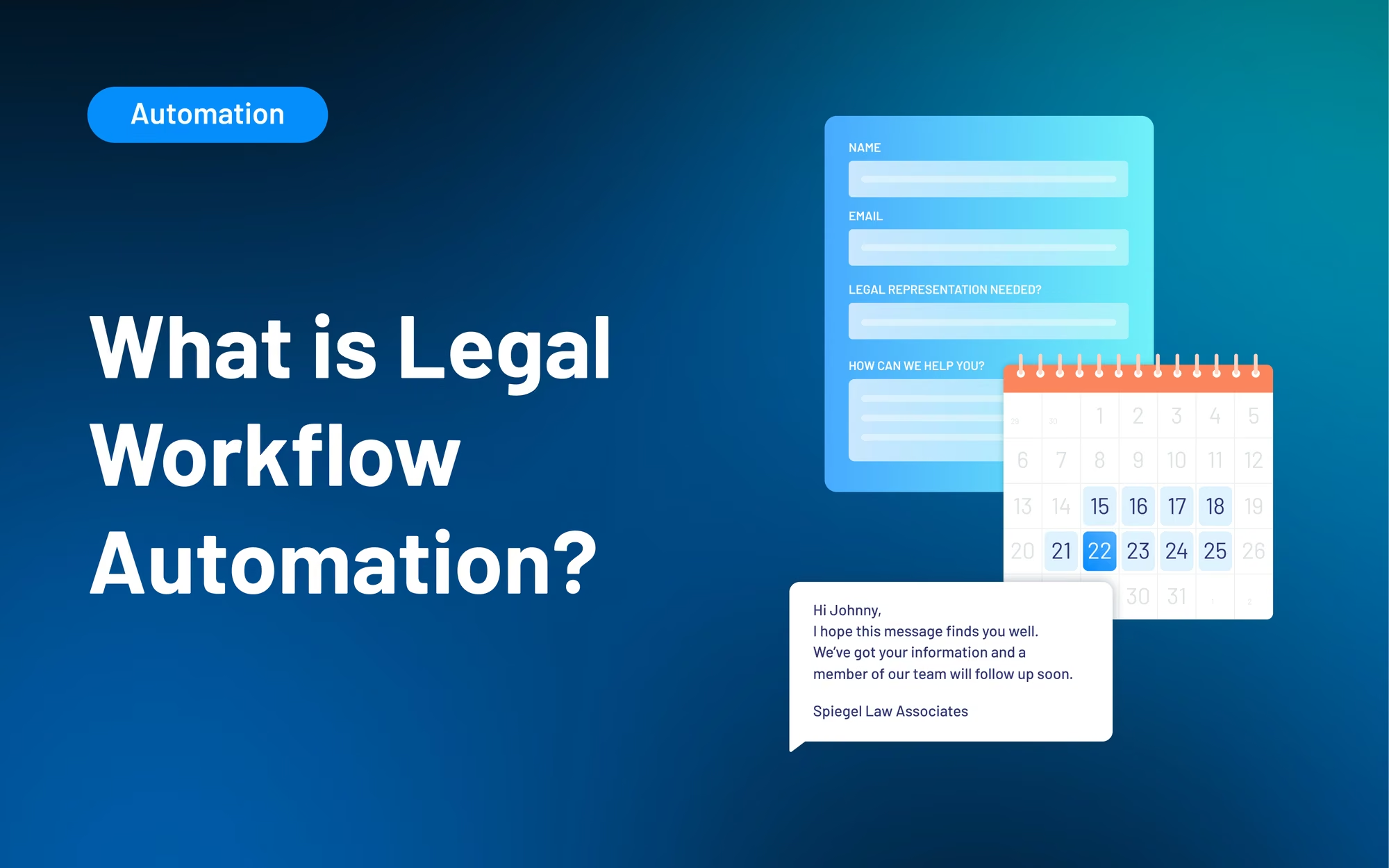
Law firm automation is the practice of centralizing and deploying repetitive, everyday administrative tasks at scale. It achieves this by linking every step of the client journey in one system to automate task triggers, emails, population forms, and reminders.
Legal workflow automation software like Lawmatics doesn’t replace attorneys but enhances them. It integrates with tools like Clio, MyCase, and PracticePanther for full workflow visibility.
Benefits of Legal Workflow Automation for Attorneys
Improved client intake speed and accuracy
Lawyer automation (or attorney automation) tools eliminate manual data entry and automate repetitive tasks at every step of intake, from confirming form submissions to client relationship management (CRM) data entry.
By automating processes like follow-up messaging and scheduling, teams can ensure faster responses and fewer client drop-offs.
As just one example, Lawmatics’ new QualifyAI tool automatically scores and prioritizes incoming leads based on engagement and case fit. This empowers teams to achieve an instant response time.
QualifyAI (and all other Lawmatics tools) is built on trusted internal workflows that help standardize processes and capture complete client information every time.
Reduced human error
Humans are, of course, essential to the operations of any legal practice, and that’s not changing any time soon. But law firms are busy environments, and in all the hustle and bustle, even the most skilled workers can make mistakes.
Legal workflow management software replaces manual document handling and repetitive data entry with automated templates and workflows. This prevents costly miscommunications and prevents tasks from falling through the cracks.
Automated task assignments and reminders also help prevent missed deadlines. For example, Lawmatics enables data sync across multiple systems, including Clio and MyCase, which further reduces inconsistencies.
Centralized data and transparent reporting
Legal practices should keep client data, communications, and metrics in one dashboard to prevent silos. Such centralization also gives managing partners visibility into firm performance and pipeline health in real time. Team members can make big strategic decisions with clarity.
Lawmatics comes with custom reporting tools that make it easy to tie marketing and intake directly to demo requests and revenue.
Streamlined follow-up and client communication
Strong client communication is at the heart of any successful legal team.
Legal workflow automation software allows teams to maintain consistent client contact through automated follow-up emails, reminders, and nurture sequences. With this set up, prospects remain engaged from first inquiry through signed retainer without laborious manual interview.
Lawmatics’ comes with built-in features, like text messaging for law firms, that allow teams to talk to clients and ensure no lead goes untouched.
Increased capacity without adding headcount
Labor costs are among the biggest concerns for a law firm. By automating tasks, law firms can scale their operations efficiently, handling more matters without expanding staff.
QualifyAI from Lawmatics empowers teams to convert more clients with less effort by routing qualified leads directly into workflows.
Lawmatics connects intake, CRM, and drip email marketing software for lawyers. This allows small firms to operate like large ones, using predictive insights that drive faster growth.
Core Legal Workflows Lawyers Can Automate
Legal document automation software has the potential to transform every essential task.
Client intake
Thanks to the large amounts of paperwork that it demands, the client intake process is the most lengthy part of any client lifecycle. Teams who use software can save time with automated intake forms, e-signatures, and data that syncs directly within the CRM.
Lawmatics’ built-in intake automation capabilities connect to follow-up workflows. Teams can save the effort involved in tracking down every client, sending reminders about pending documents like retainer agreements, and manually scheduling next steps.
Through QualifyAI, Lawmatics uses AI-powered lead scoring for law firms to accelerate intake by prioritizing the highest-value prospects first.
Marketing & follow-up
Firms that want to move beyond word-of-mouth client acquisition often spend a significant budget on marketing. Automation software can help reduce these costs by increasing conversation rates and decreasing acquisition costs through triggered drip campaigns, SMS updates, and personalized nurture sequences.
Lawmatics automates all of these processes within one unified dashboard. It makes it easy for teams to assess their marketing return on investment (ROI) at a glance. In turn, they save time and effort on reporting as well as on managing campaigns.
Case Management & communication
Clients who receive an exceptional experience are more likely to turn into promoters. However, firms chasing this exceptional experience can’t afford to miss deadlines or go radio silent during a retainer.
Lawmatics offers task reminders, automated deadlines, and document workflows to make sure every client feels cared for and prioritized. It can even sync with Clio and MyCase to ensure firm-wide synchronization.
Time tracking & billing
Billing and time tracking is an essential part of any law firm’s practice. If invoices are inaccurate, it can have implications on overall company margins,revenue, and reputation.
Lawmatics’ time-tracking tools link directly to invoicing systems, giving firms visibility into productivity and client value per matter. It empowers teams to make strategic, data-driven decisions about internal staffing needs and how to allocate capacity across clients.
5 Steps to Legal Workflow Automation
Law firm automation doesn’t happen overnight, but the process itself is generally straightforward and easy. Here’s how to make it happen.
Step One: Map your current legal workflows
To identify whether your team is a good fit for attorney automation, begin by mapping your legal workflows as they currently exist.
Then, either individually or together as a team, try to identify bottlenecks in intake, communication or billing. Based on the gaps you’ve identified, start writing possible solutions to those gaps. This will give you a list of which features to look for in a tool.
Step Two: Select the right legal workflow automation software
There are many automated legal platforms available on the market. While you’ll want to look for ones that provide the features you’ve indicated in Step One, there is another important factor to consider.
Look for a solution that integrates with your current tech stack. This ensures you can maintain the current operations that are working for you and discard those that aren’t.
Step Three: Start small with high-impact automation
Automation is powerful and, as a result, should be used carefully. It can be tempting to automate everything at once, but this can be quite overwhelming for a team.
Start with one process. Client intake automation is a great place to start. Then, measure results. If you see a positive change, you can move on to the next automation.
Step Four: Train your team for adoption and success
Law firm success depends on the output of the whole team. You need everyone on board in order for your automation efforts to be successful.
The best way to set your team up for success is by providing clarity and templates where possible. Most automation software is easy to learn. But, it can be helpful to go with a system that offers dedicated support in the first few months.
Step Five: Monitor and optimize your automated workflows
There are a few important reasons to monitor and optimize your automated workflows:
- To make sure everything you’ve implemented is serving both the team and the client.
- To make sure you’re receiving a great ROI from your software.
Lawmatics comes with a built-in reporting dashboard that makes it easy to track efficiency gains. Request a demo to see how Lawmatics can help you automate your specific legal workflows.
Common Legal Workflow Automation Challenges and How to Overcome Them
Lawyer automation software is generally simple to implement with amazing returns. However, it’s best to be aware of the possible challenges before you start an engagement. Here are some of the most common issues that law firms run up against:
- Fear of disruption: Fear of change is normal, and if change is associated with disruption and discomfort, the fear can be even worse. It can be hard to sell change-resistant teams on a new tool, especially if they think it’s going to make their job harder.
- Integration fatigue: Most teams have been through countless tools, which means multiple logins and multiple opportunities for headaches. It can be hard to sell a team on a new tool if they don’t truly believe it will make their lives easier.
- Inconsistent workflows: If a team is working on a shaky workflow foundation, it can be hard to know where to begin with automation.
Lawmatics answers all of the above concerns by unifying legal CRM software, automation, intake, and analytics in one easy-to-use platform. Plus, Lawmatics integrations connect with the software your team already uses every day, reducing the time your team spends juggling different systems.
The Future of Legal Workflow Automation: AI-Driven Efficiency
The next wave of legal workflow automation isn’t just about triggering tasks. It’s about software that can anticipate what needs to happen next.
With modern AI workflow automation, your systems can spot patterns in client behavior, score new inquiries, and trigger the proper follow-ups automatically—without adding more work to your team.
That’s where Lawmatics’ QualifyAI comes in. Built directly into Lawmatics' legal CRM, QualifyAI is a sophisticated lead-scoring automation engine designed specifically for law firms. Instead of treating every inquiry the same, it:
- Analyzes client behavior (form submissions, email engagement, response times).
- Reviews communication history and intake answers.
- Interprets engagement signals across your marketing and intake touchpoints.
From there, QualifyAI automatically ranks leads based on fit and intent, so your team knows exactly who to call first.
The benefits are immediate:
- Saves time qualifying leads by replacing manual gut checks with consistent, data-driven scoring.
- Prioritizes high-value clients, ensuring your best opportunities get a faster, more focused response.
- Improves marketing ROI by connecting campaigns and channels to the leads that actually convert.
By pairing AI-driven lead scoring with automation across intake, communication, and reporting, Lawmatics is helping firms move from reactive to truly proactive operations. It’s a clear example of how AI doesn’t replace attorneys—it gives them better information, faster, so they can make stronger decisions.
As AI continues to advance, firms that embrace data-driven workflows will gain a lasting edge: fewer bottlenecks, more predictable growth, and a practice that runs as intelligently behind the scenes as the lawyers who lead it.
Transform Your Firm’s Legal Workflow with Lawmatics
Automation isn’t just about convenience for staff. It’s one of the most reliable ways for law firms to increase profitability and deliver a stronger client experience.
By removing repetitive manual tasks, firms can operate with more consistency, more speed, and far fewer administrative bottlenecks.
Lawmatics makes this possible by streamlining every workflow from initial intake through engaging repeat clients. Its unified system gives firms complete transparency into what’s happening at each stage of the client journey.
Backed by real-time legal analytics and reporting tools, it helps teams make confident, data-driven decisions. QualifyAI pushes these gains even further, giving firms predictive insight into their best opportunities. This way, they can prioritize the right clients at the right moment.
Request a demo to see how Lawmatics transforms legal operations.
Frequently Asked Questions
How can automation help my law firm?
Automation increases efficiency, reduces human error, and helps firms scale without hiring more staff. It frees attorneys from administrative work so they can focus on strategic, billable client work.
What legal tasks can be automated?
Tasks like client intake, document generation, follow-ups, billing, scheduling, and marketing outreach are all strong candidates for automation.
Is legal workflow automation only for large firms?
Not at all. In fact, small and midsize firms often stand to gain the most from automation.
Large firms may use enterprise systems to streamline complex, multi-department workflows. Meanwhile, smaller firms may rely on automation to offset limited staff, improve consistency, and scale client intake without adding headcount.
How does Lawmatics support automation?
Lawmatics combines CRM, client intake, and a legal marketing automation platform into one. The whole platform is supported by QualifyAI, which automatically scores and prioritizes leads for faster response times.
Will automation replace lawyers?
No. Automation handles repetitive tasks so attorneys can focus on legal strategy, client relationships, and work that requires human judgment.
Why automate legal workflow processes?
Automation saves time, reduces errors, and creates consistent, streamlined workflows. It helps firms boost productivity, enhance client satisfaction, and scale without expanding staff.