



News & Updates


Will AI replace lawyers? Artificial intelligence (AI) will not replace lawyers, but it is fundamentally changing how they get legal work done. As AI becomes more embedded in research, document review, and client intake, firms are increasingly automating many traditional legal tasks. This article examines whether AI can truly replace lawyers, which legal functions are most affected, how law firms are using AI today, and what these trends mean for associate attorneys navigating an AI-driven legal industry.
AI is already reshaping how your firm gets work done. It’s changing how you handle research, drafting, intake, billing pressure, and the future of associate work.
For many firms, the real question is how to use AI without disrupting the way they already work. Firms are figuring out where AI adds value and where attorneys still need to stay hands-on, while navigating how these tools change the work without changing who’s ultimately responsible.
In this guide, we’ll examine where AI affects legal tasks, why associate attorneys feel the most pressure, how firms are using AI today, and what the next 12-24 months are likely to bring.
Will AI Replace Lawyers or Just Change the Job?
The short answer is no: AI will not replace lawyers. What it can do is automate or accelerate certain tasks lawyers have traditionally handled manually, and that distinction matters.
When people ask, "Will lawyers be replaced by AI?" or "Can AI replace lawyers?" they are usually reacting to how quickly these tools have improved at summarizing information, reviewing documents, and generating draft language.
But those capabilities are not the same as practicing law. Lawyers are still responsible for legal judgment, ethical obligations, advocacy, and client outcomes. And courts, clients, and regulators continue to hold licensed attorneys accountable.
A better question is: “Which parts of your work is AI already automating, and what does that mean for you?”
Why Associate Attorneys Feel Most at Risk
If any group in the profession feels exposed by AI, it is associate attorneys. Associates often spend a large share of their time on high-volume, repeatable work:
- Document review
- Contract comparison
- Drafting from templates
- Follow-up tied to matters in progress
Those are also the kinds of tasks AI is taking on.
It’s no surprise that many associates feel pressure as these tasks shift. Many associates are already under pressure to be faster, more accurate, and easier to justify to cost-conscious clients.
But "most exposed" does not mean associates are the most likely to be replaced. It means the tasks that make up their role are among the first to be reshaped by AI, while expectations for more substantive work rise earlier.
Legal Tasks AI Can Replace or Automate
AI is most effective at handling structured, repetitive, text-heavy, and rules-based work that slows your team down.
Legal research and case summarization
AI is already changing the first layer of legal research. Attorneys can use it for a faster first pass to:
- Scan cases, statutes, and regulations quickly
- Summarize large volumes of text
- Highlight recurring themes
- Spot potential issues faster
That means less time gathering information and more time testing whether the output is accurate, relevant, and persuasive. These are the kinds of outputs that actually move cases forward.
Contract review and document analysis
Contract review is another area where AI can help. AI can be useful in due diligence, compliance review, procurement workflows, and any matter involving large volumes of contracts or standard language, including:
- Identifying clauses
- Comparing language across document sets
- Flagging deviations from standard terms
- Surfacing inconsistencies that manual review might otherwise miss
Many firms are also exploring legal document automation software to streamline repetitive drafting and review tasks while keeping attorneys in control of the final output.
Intake, qualification, and administrative work
Some of the fastest wins come from automating intake and follow-up with predefined criteria, so no potential client gets lost. These are areas where automation and AI can reduce a major administrative burden:
- Client intake
- Lead qualification and routing
- Follow-up
- Automated scheduling and reminders
Legal Tasks AI Cannot Replace
For all the attention on automation, there are still core parts of legal practice that AI cannot replace.
AI cannot replace certain legal tasks
Legal work often involves high-stakes decisions where the details matter, and the right call isn’t always obvious. Many matters require attorneys to navigate uncertainty, emotional dynamics, and practical risk in ways that go beyond pattern recognition.
Lawyers do more than surface information. They interpret ambiguity, weigh tradeoffs, and make recommendations when the answer is not obvious. AI can help organize information and support analysis, but legal judgment still depends on attorneys.
Advocacy and negotiation
Legal advocacy is deeply human. Whether in court, at a mediation table, or in a negotiation, persuasion depends on judgment, timing, credibility, listening, and adaptation.
Strong advocates read tone, pressure, resistance, leverage, and opportunity. AI can assist with preparation, but it cannot respond to the human dynamics that shape negotiation and advocacy in the moment.
Ethical responsibility and accountability
The biggest boundary in legal practice around AI use is accountability. Lawyers have ethical duties to clients, courts, and the profession, including competence, confidentiality, candor, supervision, and professional judgment.
Those duties still rest with attorneys. They must verify the work, protect client information, exercise judgment, and stand behind the advice they give.
How Law Firms Are Using AI Today
Law firms are using AI in several practical ways today. It supports legal work by improving intake and connecting workflows inside a legal client relationship management (CRM) system.
AI as an assistant, not a replacement
In many firms, AI is being used to accelerate research, support drafting, improve consistency, and reduce time spent on routine tasks. It helps attorneys work more efficiently, but they still have to review outputs, make decisions, and stand behind the final work product.
AI in client intake, lead qualification, and routing
One of the clearest applications of AI for law firms is in client intake. AI can help firms improve the quality of information they collect, apply qualification criteria more consistently, and move leads through the right next steps with less manual effort.
For example, AI can:
- Evaluate urgency: Identify inquiries that may need faster attention based on timing, case type, or stated circumstances.
- Screen for practice fit: Help determine whether a matter aligns with the firm’s services before teams spend time reviewing it.
- Assess lead quality: Apply defined qualification standards consistently to help teams focus on stronger opportunities. Tools like QualifyAI support this process by helping firms automate intake screening and matter qualification without crossing into the realm of legal advice.
- Collect intake information: Use custom forms and structured workflows to gather client details and create more complete records from the start.
- Route inquiries intelligently: Sort leads by priority, stage, or next step and direct them to the right person or process.
- Automate follow-up: Trigger responses, reminders, and outreach to ensure promising leads do not stall due to delayed communication.
- Support scheduling: Move qualified leads into consultations with less back-and-forth and fewer manual touchpoints.
- Reduce administrative drag: Improve upstream intake so attorneys spend less time on triage and more time on billable work.
AI paired with legal CRM workflows
AI becomes more useful when it works inside a broader system. That works best when legal CRM software and legal software integrations connect intake, follow-up, and client information into a single centralized system.
When intake data flows directly into a centralized CRM, follow-up can happen automatically, and attorneys can work from more complete, organized information.
What Will Actually Change for Associate Attorneys in the Next 12-24 Months
The table below illustrates which legal tasks firms are already automating, which are likely to change in the next 12-24 months, and which still depend on human judgment.
| Legal task category | Examples of tasks | Level of AI impact | Timeline |
|---|---|---|---|
| Intake and administrative work | Intake data collection, lead qualification, follow-up, and scheduling | High | Already happening |
| Legal research and summarization | First-pass case law research, statute summaries, issue spotting | High | Already happening |
| Contract review and analysis | Clause identification, risk flagging, document comparison | High | Already happening |
| Drafting standard legal documents | Routine motions, template-based agreements with attorney review | Medium | 12-24 months |
| Litigation prep and discovery support | Document organization, evidence tagging, timeline creation | Medium | 12-24 months |
| Intake decision support | Applying firm-defined qualification rules without legal advice | Medium | Already happening |
| Legal judgment and strategy | Case strategy, risk assessment, application of law to facts | Low | Unlikely to be replaced |
| Client counseling and advocacy | Client advice, negotiation, courtroom advocacy | Low | Unlikely to be replaced |
| Ethical and professional accountability | Malpractice liability, ethical judgment, licensing responsibility | None | Not replaceable |
Fewer low-value tasks, higher expectations
Associates will likely spend less time on intake administration, document work, and other repetitive tasks that can be standardized. As a result, firms may expect associates to handle more substantive work earlier.
As routine work takes up less of the role, firms may place greater value on analytical skills, precision, and the ability to take on client-facing responsibility.
Faster feedback loops
AI-assisted systems can make performance more visible. When workflows are digitized and standardized, firms can see turnaround times, follow-up completion, response rates, matter progression, and other indicators sooner.
Faster feedback loops help strong associates stand out while also making expectations around consistency and execution clearer across the board.
Increased leverage for AI-literate associates
The associates who benefit most from AI will be the ones who adopt it quickly and use it responsibly. That starts with understanding how to prompt, review, verify, and refine outputs. It also involves knowing where automation adds value and where it introduces risk.
The real advantage comes from turning saved time into stronger work, not just faster work.
The real risks of AI in legal practice
AI can create leverage, but only if you understand the risks that come with it. Key concerns include:
- Hallucinations and inaccurate outputs: AI can produce confident-sounding errors, including fabricated citations, misread authority, or oversimplified legal distinctions. In legal work, every output requires attorney verification.
- Confidentiality and data privacy: Firms must handle client information carefully, and not every AI tool is appropriate for legal workflows. Tools can create risk when firms do not understand how data is processed, stored, or reused. That is why firms need clear policies, controlled workflows, and tools built for legal use cases.
- Unauthorized practice of law: AI cannot independently provide legal advice. Firms can use AI to support intake, qualification, and internal workflows, but if implementation crosses into unsupervised legal advice, the risk becomes regulatory exposure.
- Over-reliance and skill atrophy: Attorneys still need to build judgment, pattern recognition, and analytical strength. If AI is responsible for too much thinking, it can result in weaker legal reasoning over time.
How Associate Attorneys Can Future-Proof Their Careers
The strongest position is knowing where AI supports your legal work and where your judgment still matters most.
Focus on high-judgment legal work
The more your value depends on strategy, counseling, nuanced analysis, negotiation, and client communication, the harder you are to replace. Look for opportunities to build skills in asking better questions, improving communication, and taking ownership of recommendations.
Become AI-literate, not AI-dependent
Lawyers do not need to become AI experts. They need to understand how AI fits into their day-to-day workflows.
Learning how to evaluate outputs, identify weak reasoning, spot missing context, and supervise automated processes will better equip you to leverage AI without becoming dependent on it.
Use AI to protect billable work
AI should protect time for more meaningful work. When firms automate low-value administrative steps, intake bottlenecks, or repetitive drafting processes, you can focus your time where it adds the most value: analysis, advocacy, and client service.
The Future of Law in an AI-Driven Legal Profession
AI isn’t changing who’s responsible for legal work. It’s changing how efficiently you can get that work done.
For attorneys, AI is most useful when it automates administrative tasks and streamlines intake, follow-up, and qualification, allowing them to spend more time on substantive legal work.
As a legal CRM, Lawmatics helps firms automate intake, follow-up, and qualification through custom automations. You receive better information and fewer administrative bottlenecks, so you can spend more time practicing law.
To see how AI-supported intake fits into a modern Legal CRM, request a demo.
FAQ
Will AI replace lawyers entirely?
No. AI can automate parts of legal work, but it cannot replace legal judgment, ethical accountability, or advocacy. Lawyers are still responsible for advising clients, applying the law to specific facts, and standing behind the decisions and filings.
Are associate attorneys more vulnerable to AI?
Associate attorneys are more affected by AI-driven task automation because early-career roles often include more routine, document-heavy, and process-driven work. With AI, the structure of their work is changing, with more emphasis on analysis, judgment, and client-facing readiness.
Can AI practice law on its own?
No. AI cannot practice law independently or provide legal advice without attorney oversight. It can support research, intake, and administrative workflows, but licensed attorneys are still responsible for verifying outputs, protecting client information, and exercising professional judgment.
What legal work is safest from AI?
Legal work that depends on strategy, advocacy, negotiation, and client counseling is the least likely to be automated. These responsibilities require judgment, persuasion, relationship management, and the ability to respond to nuanced facts and human dynamics.
Should lawyers be worried about AI?
Lawyers should prepare for change, but not assume AI is replacing the profession. Firms and attorneys who learn how to use AI responsibly will be in a stronger position than those who ignore it.
Put down your brackets and check out the Lawmatics version of March Madness with this roster of exciting new features!
Create From Within
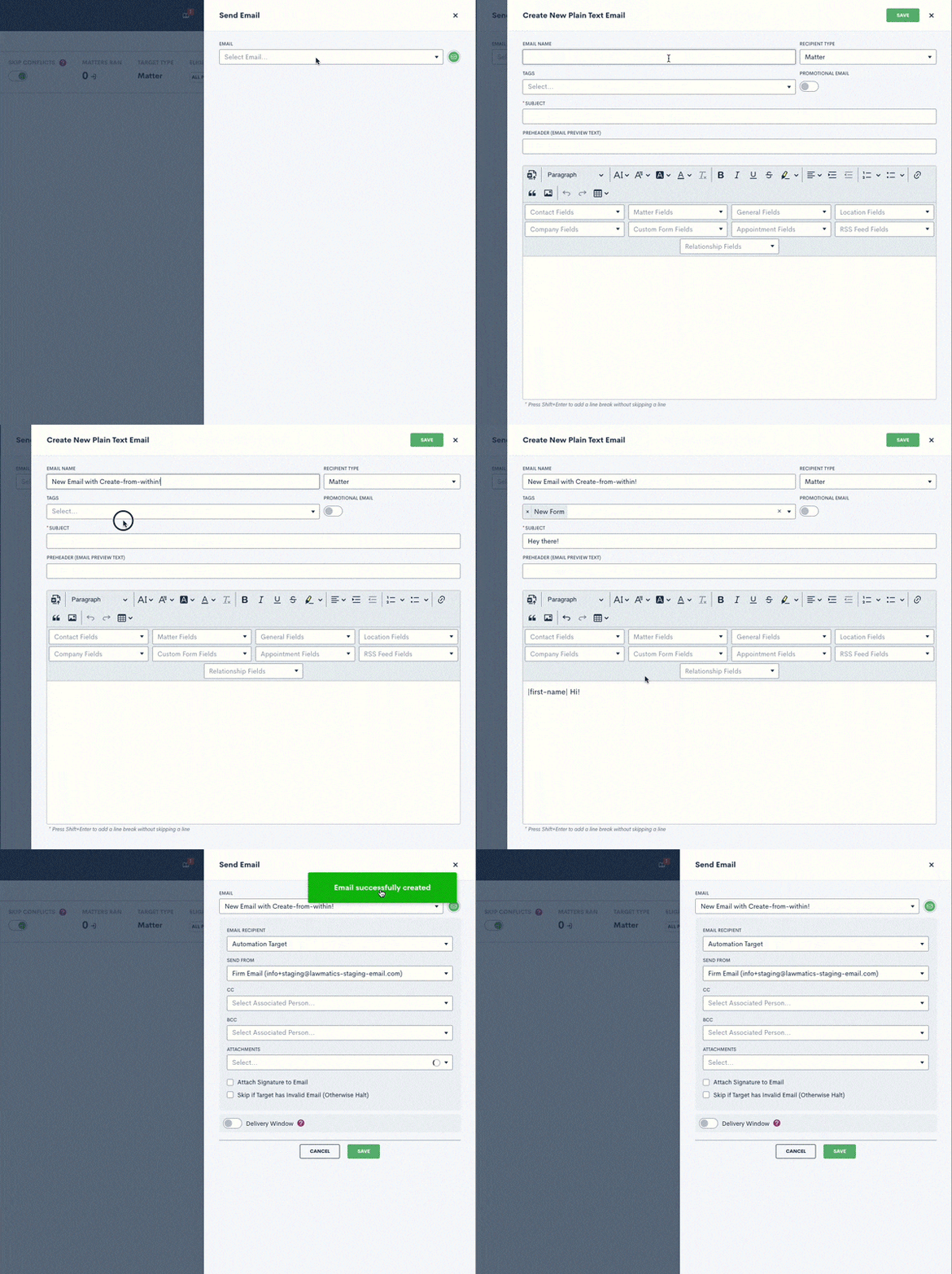
Create From Within is a complete reinvention of our UX (user experience). This revolutionary feature will change the way you interact with Lawmatics, giving you the ability to create any asset or object in Lawmatics from the very place that you need to use it. Need to send a new email to contacts? Now you can create the email right from wherever you typically select the email to use. Have a new contact that needs to be added as a relationship to a matter? No problem! Now you’ll be able to create that contact right from the add new relationship section of a matter. Anything and everything that you build and add to Lawmatics can be created without navigating to another screen!Our new user experience will be rolled out over the next couple of months. This release introduces you to the new right side slide-out experience which replaces our pop-up modal screens and also gives you the Create From Within capability for new emails from everywhere that emails are sent.We have spent countless hours talking to you, our passionate customer, and listening to your feedback. We are committed to making Lawmatics easier to get started with AND use in the day-to-day. This new UX is a direct response to the feedback we have received and we are extremely excited to save you even more time in your day.Stay tuned as we roll this feature out throughout the platform over the course of the next several releases.
Merge Duplicate Contacts
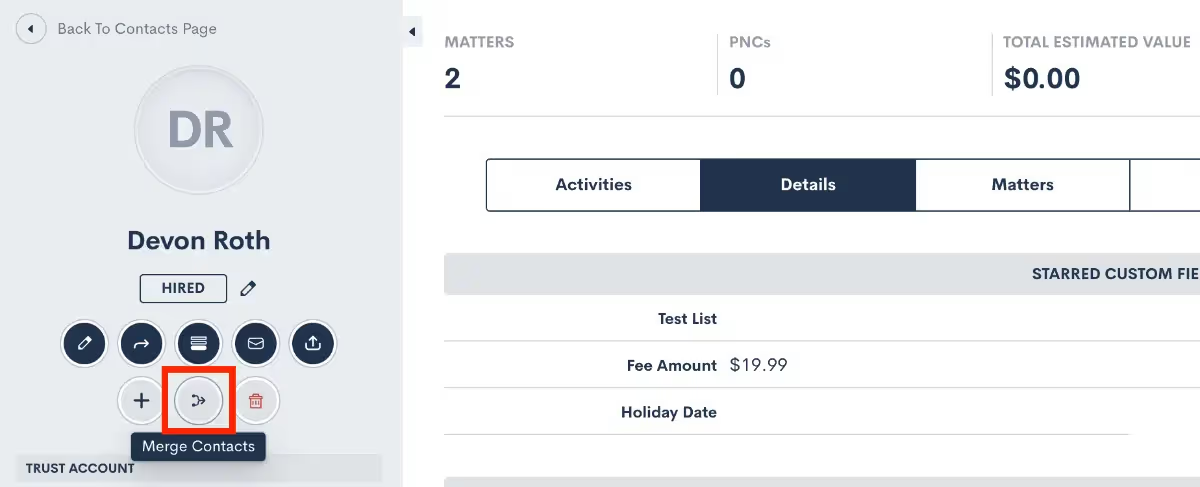
A highly requested feature, you now have the ability to easily merge any duplicate contacts that find their way into your CRM. While Lawmatics will continue to de-duplicate your contacts automatically based on email address, you can now manually merge any pesky duplicate contacts that don’t have an associated email address. Simply navigate to a duplicate contact, select the Merge Contacts button (as highlighted below), then select the other contact you wish to merge records with. The interface will then show you any discrepancies in data between the two contacts and allow you to select which data should remain on a merged contact on a field-by-field basis. No more manual duplicate checking and data transfer!For a simple breakdown of Contacts vs. Matters in Lawmatics, click here.
Built-In Appointment Confirmation

Scheduling and confirming consultations is an essential part of your intake process. While you may be accustomed to using an Automation to confirm/remind clients of their appointments, we’ve made this even easier by adding Confirmations messages as a default function — no need to build a dedicated Automation. When you navigate to the Appointments section of the Settings menu, you now have the option to create a Custom Email and/or SMS template for confirming each of your various appointment types. This confirmation will be sent automatically at the time the appointment is scheduled.Want to learn more about appointments in Lawmatics? Tune in to this month’s Deep Dive webinar.
Use Merge Fields in Custom Form Instruction Blocks

We’re introduced yet another way to add a personal yet automated touch to your client correspondence. As with your email templates and documents, you can now add Merge Fields to instructions blocks on your Custom Forms. This allows you to address your client by name or include any other personalized information within the Custom Form. When creating a Custom Form, simply drag and drop the Instructions Field into your Form and click on it to add your content.Click here for a crash course on Custom Forms and their advanced functionality.
Share File Folders to Client Portal
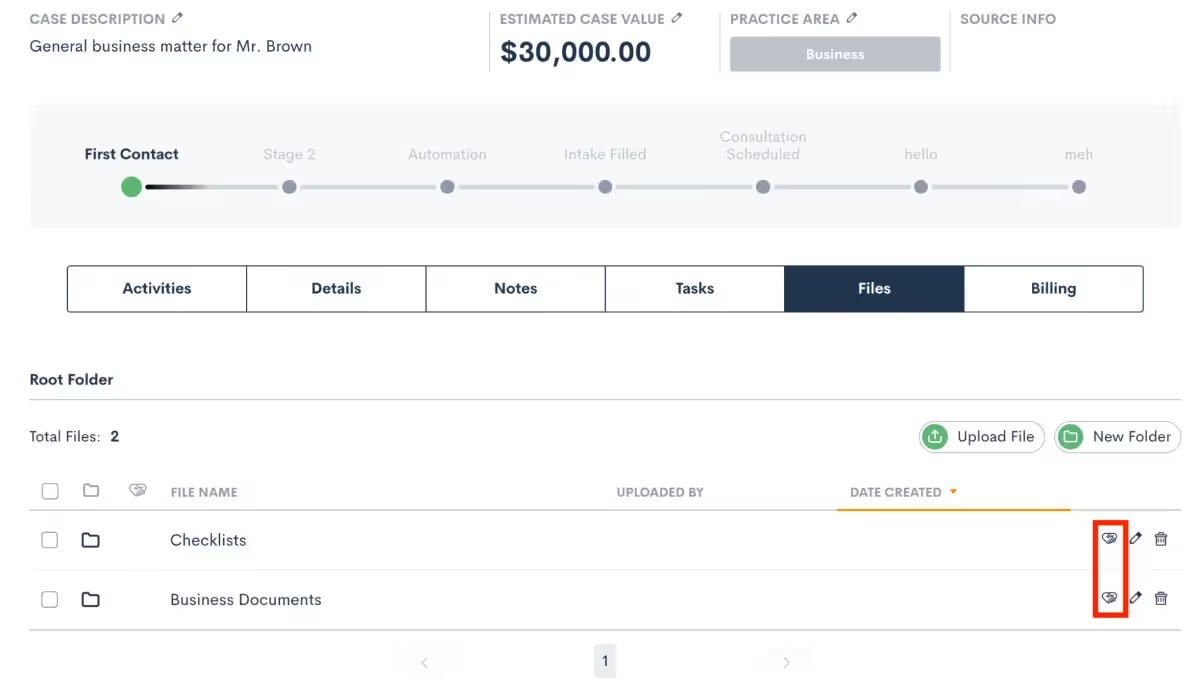
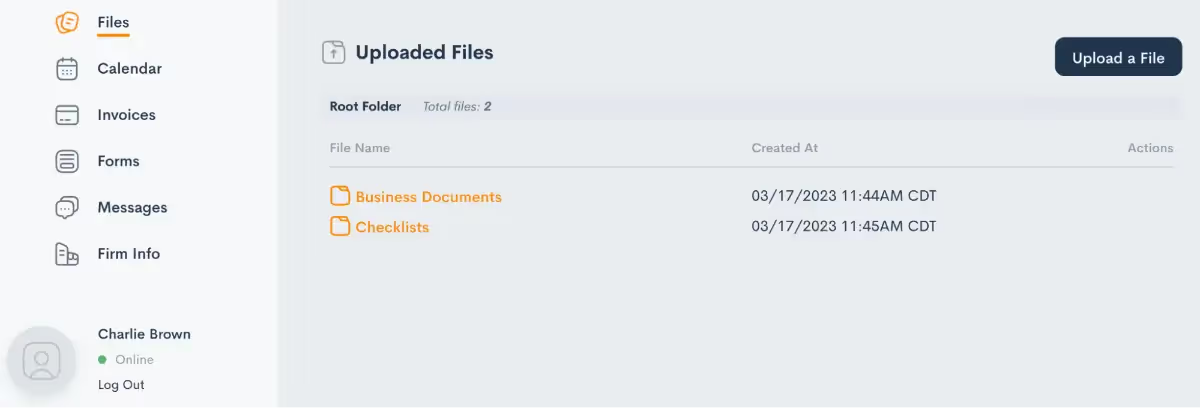
We recently released the ability to create a default set of File Folders within a Matter Profile to store documents and critical case files. Now we’ve taken this new feature a step further by enabling users to share these folders in the Client Portal of a matter contact outside of your organization. This makes it easy for any desired contact to gain instant access to said folders, along with their contents, with organization in mind. To use this feature, click the Portal Button on any Matter Folder (highlighted below).Not familiar with the Lawmatics Client Portal? Learn more about it here!—We sure think these new features are a slam dunk, and we hope you do too! As always, feel free to share any questions or comments on this latest release with us by emailing support@lawmatics.com.

Lawmatics CEO Matt Spiegel recently joined the Legal MastermindPodcast, hosted by Ryan Klein and Chase Williams. They discussed the history and culture of Lawmatics, and the everyday legal problems that led to its founding.
The founder's journey
Matt’s arc from practicing criminal defense attorney to serial legal tech entrepreneur is an unusual one. He dives into how his experiences have led him to founding the #1 CRM and automation platform for law firms, including:
- How a bar complaint led to Matt becoming an entrepreneur
- His path from MyCase, to venturing outside legal tech, to Lawmatics
Inside Lawmatics
Ryan and Chase ask about the things that make Lawmatics stand out from the pack.
- The values and culture that make Lawmatics one of the best places to work
- Growth goals for Lawmatics this year
Stay tuned for some insights on how technology like AI and predictive analytics will shape the legal landscape. Listen to the audio player above, or read the transcript below.
Podcast transcript
Matt Spiegel:Our culture is everything to us. One of the things that we've been very fortunate is everyone's getting rid of offices, we just moved from 4,000 square feet to 12,500 square feet. We more than tripled the size of our office because people are coming in. We have this amazing culture. That's the part that I'm most proud of. It's what makes me get up every day is the team that we've built.Speaker 2:You're listening to the Legal Mastermind podcast with your host, Ryan Klein and Chase Williams, the go-to podcast for learning from the experts in the legal community about effective ways to grow and manage your law firmChase Williams:Today, on the Legal Mastermind podcast, we have Matt Spiegel. He's the founder and CEO of Lawmatics. He actually founded another company you might be familiar with called My Case and back in the day he started off as a lawyer and so there's lots to talk about today, Matt. So welcome to the Legal Mastermind podcast.Matt Spiegel:Yeah, thank you guys for having me. Super excited for the conversation today.Chase Williams:For sure. And we were riffing so hard beforehand just about one, how your experience was wake surfing for the first time with the CEO of Clio and how fun that was. And then just started talking about you were a lawyer and you found a need, I assume for your firm, which we'll talk about in a minute. And then you started my case and then you're one of the few entrepreneurs that I've ever spoken to that's found two successful tech companies or SaaS products. That's where I guess the sexy slogan would be for what you guys do.Matt Spiegel:I guess. Yeah.Chase Williams:So how did that story start? I mean, you graduated law school and then worked for an attorney's office for a couple years and then started your own firm. So take us from starting the firm to your first-Matt Spiegel:That's right. I mean, I guess it goes back earlier than that too because I don't really think I ever wanted to be a lawyer if I really think about it. I think I just wanted to own a business and I guess somewhere in my... Well, parents actually made me go to law school. This is my senior year of college and I'm getting ready to go on spring break. I'm sitting at home and I'm leaving the next day for this awesome spring break trip senior year, which is the most epic year. And they're like, we don't want you to go into real estate. You need to go to law school. And that was literally the first I ever thought about it. And this was March of my senior year of college. And so I kind of shotgun took the LSAT and then went to law school.So it's not like I ever was like, oh my God, I have this dream of being a lawyer. It definitely was not romantic for me, but I thought it could be a good business to run. And then during law school I decided that of all the types of law firms to have, criminal defense would probably be the easiest to run a business. I could build a repeatable process. I think I could advertise and actually attract customers. So basically I thought that I could start a law firm without much experience and probably get people in the door.So after law school, I ended up going and working for a kind of notorious firm in San Diego for four years. Really, really high volume criminal defense practice. And then I had enough experience, I had helped hundreds of clients at that point. And so I'm like, all right, time to do my own thing. So I left to do my own thing and within two weeks I think I got a bar complaint. And so what was funny was that bar complaint is ultimately what led me down this whole road. So if it wasn't for that bar complaint, I probably would not be here talking to you guys. I would not have started My Case and then certainly would not have started on with Lawmatics.Chase Williams:I'm surprised you didn't start your own AVO competitor since you had that great AVO score after that bar complaint, I'm sure.Matt Spiegel:Well, you want to talk about AVO, that's a whole different story. We can talk about that. Because somehow, as I make the money sign, I maintained my 10.0 score. But no, it was a complaint about client communication. Basically they were just like, my lawyer didn't call me back quick enough. So I started thinking, I'm like, how do I... This guy called me at like 9:00 in the morning and I called him back at six. And that wasn't quick enough for him. But I was in court all day. I'm a criminal defense lawyer. I'm in trial. I can't answer the phone when I'm in judge's chambers or when I'm talking to a jury. I got back to him as quick as I could and I have other clients and I started hearing the same thing from other clients, although they didn't make bar complaints. And the issue, it's not like they had something critically important to talk to me about. They wanted to know when was their next court date and where's my police report? I want to see my police report.These are two very basic things that if I could just provide them with that information, they wouldn't need to call me all the time. And so I'm like, well, wait a second, can't I just add this to my website so that my clients can log in and they could just see their calendar. I could upload their court documentation and police report. And so my cousin who was building my website, he was just a basic website builder. I'm like, "Dude, can you build something on the back end of my site so that my clients could get this stuff?" And he's like, "I mean, I can try." He's like, "I have no idea how to do that though." So we kind of hacked it together and I'm talking to my friends and my friends are like, hey, can you build that for us? I'm like, no.Chase Williams:Was there anything out there that was similar to-Matt Spiegel:No. So we were using a couple products. I think I was using Clio at the time. I also had tried Rocket Matter and those are brand new, just online practice management solutions for billing and stuff like that. But they really didn't have any sort of client... There was no client portal. That wasn't a thing really. And so I hired on a buddy to come basically found My Case with me alongside of my cousin and I'm like, hey, you're an engineer. Can you build this? I think other lawyers would want this portal. And so we invented the client portal and that's all that My Case was. And we were like, other lawyers are going to want this. And we started trying to show other lawyers and other lawyers were like, hey, this is really cool, but we don't want to use it on its own. It needs to be part of this big solution. And so we went back and we just built our own practice management system and that's how My Case got started.Chase Williams:How long did it take?Matt Spiegel:I mean, it's never done. My Case just sold to LawPay. Big transaction worth a billion dollars now. And it's still not done. The software is never finished, but it took like six months to build a version that we could go out to people with, really a year before we really went to market. And then it was a year and a half later that we had grown pretty big and we sold to a company called AppFolio. So it was a pretty quick run before acquisition. And then I stayed with that company for years after that still running My Case. But I did it alongside. I mean, I started my law firm in 2009. I had the idea for My Case at the very end of 2009. Also had my first kid or found out that we were pregnant with our first kid right in there too. Just a whirlwind. And then I still had my law firm. My law firm was just getting started. So the first year and a half, almost two years of building My Case, I also had my law firm. It was crazy.Ryan Klein:The story about your cousin building the website, it sounds like when Chase and I were starting an agency, we'd be pitching lawyers and at the end of the day they'd be like, you know what? My cousin's just going to build the website, he's going to get me a deal. So maybe we were talking to you for all we know back in the day. So when you're going through this process, and obviously you're a busy lawyer and you're kind of assembling this dream team to launch this new software, how are you coordinating it? Were you essentially leading it or someone else or are you arranging for time on weekends or late evenings?Matt Spiegel:Yeah. No, I mean that was the trick was I had this law firm and the law firm was... I was having a kid, a law firm is what's putting food on the table and a roof over our head. This pie in the sky idea of building a software company, it's just a dream at that point. I had like four offices in my law firm and one of the offices was my cousin and my other co-founder who were working on building My Case. And so everyone was just sort of moonlighting. It was one of those things where it's like, you have this idea, you have something that you think could be really cool, but everyone needs to work. Everyone needs to still make money. And we weren't raising millions of dollars from a venture capital at that point, things like that. It's a side hustle. It was totally a side hustle at that point. And what we really figured out how to do was to leverage the law firm to help us build My Case.One of the biggest things, one of the toughest things was creating conviction amongst my co-founders that this was worth it. That was the first hurdle was like, you're going to do something like this where everyone's going to work on nights and weekends, they're going to give up a lot of their life in order to do this. And unfortunately, I couldn't really code, so there wasn't all that much for me to do. I can sit alongside of them and watch them do it, but at the end of the day, in the beginning, the early days, it's really all them writing code. You've got to convince them that this is worth it. And I think doing that was a bit of a challenge, and so we ended up just trying to figure out ways to make it fun. When you're doing a side hustle like that, I feel like you've got to make it fun. It can't feel like work.Chase Williams:Was there a point where you built it out and you would try to go to market and you're just like, man, nobody wants this. Did we waste our time? Did you have that feeling or were you pretty much like, this is going to work, no doubts.Matt Spiegel:I'm a super competitive guy. I think you kind of have to be competitive if you're in this world. And so losing was never really an option for me. But when we went to market, we went to this conference, this is going to date me I guess a little bit, but there was a legal... There's a big conference in New York called Legal Week. It used to be called Legal Tech, and they used to have one on the West Coast, they used to have one in LA. So this was like 2010. And we took the My Case client portal, we took it there and that's where we got the feedback from people like we're not going to use this. We might use it if it's part of a bigger practice management system, which could be cool, but we're not going to use it. And that was a moment where it was like, these guys had built this thing and I told them that other lawyers were going to want this, and now other lawyers are telling us that they're not going to use it.And so it's a little bit of a challenge I think at that point for myself too to sort of regroup and be like, guys, now I'm saying that we need to go and build this massive product. This was something pretty easy to build, this client portal, but now we need to go build something really big and this is going to take a lot of time and a lot of effort. And rallying behind a negative experience because being told that no one's going to use your product is a negative experience, rallying around that was definitely... We did it over a lot of beers, that's for sure.Chase Williams:Were you guys all at the conference hearing this news or was it just you and then you had to relay?Matt Spiegel:No, no, no. We were all there. We were all experiencing it. And I think what's cool is that lawyers were really great at this point. The feedback was, yeah, we're not going to use it, but it was like, we want to. We want to use it, you've just got to give it to us alongside of other tools because we just don't want this other thing that we have to use.Ryan Klein:Yeah, that's true. I mean, even today it's hard enough to get anyone to adopt one piece of technology. We have people that you could talk until you're blue in the face about the benefits of implementing this and showing the before and after, like you're using Excel spreadsheets or PDFs or handwriting things and this technology is going to solve it, but it's just going to take a little bit of dedication in the beginning, and they won't do it. So I can imagine 10 years ago.Matt Spiegel:Yeah, I mean, look at what's going on in the market right now, right? The idea of all in one solutions is still prominent, it's still what a lot of companies, big companies out there, Clio, My Case, File Vine, Smokeball, RocketLink, these companies are all trying to sort of strive for that all in one field. It's still the mentality and it was very much the mentality back then.Ryan Klein:So how do you get people to really start adopting new technology and giving it a shot, especially when law firms especially can be so averse? Did you have a breakthrough moment or have to do some sort of clever positioning?Matt Spiegel:No, I mean, I think at that point my strategy has always been very simple and it is just always listen to the customer, never listen to me basically. I'm a product junkie. At my companies where I spend most of my day to day beyond just basic CEO duties is in product. That's where I focus my time. And I made the mistake early on of building what I thought lawyers... I was a lawyer, so I was building stuff and maybe very early on that worked to build stuff that would basically scratch my own itch. But as we started to build and put a product out to market, you realize you cannot do that. You just have to listen to what your customers are telling you. And if you let your customers drive you and drive your product roadmap, it's been very successful for us.So that's where, to me, the breakthrough moment is really just deciding that we're going to listen 100% to our customers. And honestly as a law firm, you kind of should do the same thing. Our discussion today is really fun and may seem completely unrelated to law firms, but I actually think it's very related to law firms too. If you're treating your law firm like a startup, you're building this business, it's not just about how you practice law, it's also about the service that you provide and the experience that you provide and you need to listen to your customers in order to figure out how to make your experience better. And so when we started doing that as a product department at our company at My Case, and we've done that since day one at Lawmatics, that's when we really saw, okay, now lawyers, they're very happy to adopt our technology because we're building stuff that they are telling us to build.Chase Williams:So I assume you received some success at My Case and then it got to a point where you sold the company. So what happened next? You worked for the company some more I believe you said, and then you exited at one point.Matt Spiegel:Yeah, so we exited. I sold the company in 2012 and it was a great experience. I loved the company that we sold it to. We IPOed in 2015 and then that's when I left. So I was there about three years, almost three years after the acquisition, and incredible experience. And then I ended up going and messing around for a little while. I got brought on to a totally non-legal tech company. It's actually owned by a guy in Australia who owns a lot of legal tech companies, but I wasn't allowed to go work for a legal tech company at that time. So I went and worked for his non-legal tech company. I ended up taking that company over as CEO for a couple years and I was going back and forth to Sydney, Australia all the time, which was cool in the beginning, and then at that point now I had two little girls, and so traveling over there for a couple weeks at a time every two months got to be a lot.And honestly, I was the CEO, but I was still working for somebody. I had a chairman and I decided I needed my own thing again. I wanted to build my own company and be able to control the product, build a software product because the company I was working for was not really a software company. And then Lawmatics was what happened. We really saw this need in the market. We identified this need for our CRM back at My Case in 2014, and then in 2017 when I was going to start another company and we're like, man, this is still this massive hole in the market. And so we set out to solve it.Chase Williams:So I bet your experience starting Lawmatics was a little bit different. Did you call your cousin again or how did that work?Matt Spiegel:No, definitely did not call my cousin. My cousins was off doing other things, enjoying life a little bit more. I had another engineer who was working with me at My Case who I had brought along to my companies that I had done after I left My Case. And so I brought him on to kind of be our founding CTO. The beauty is this time around, one thing that I realized is I had a lot more access to great people the second time, and so I was able to build a team around me. Also had a little bit more access to capital the second time around, so I was able to build a little bit of a bigger team earlier on to go and build this thing. Lawmatics is a freaking beast, I mean, we've been building this thing for five years and we're just getting started. It is a massive piece of product. And so it took a while to build something that we could really be comfortable going to market with that had some product market fit.And then it's just been a wild ride ever since and much different path though, whereas My Case, we never really raised money for it. We sort of built it as a side hustle and then ended up getting acquired pretty early on. We're two or three rounds into venture funding now. We've raised almost $20 million, built a big company and been doing it for five years and are really pushing hard down the path of doing it ourselves without hitching our wagon to anybody. It's a very different approach.Ryan Klein:What do you think is different about your day-to-day leading this versus My Case? Is the day comprised of different responsibilities and types of meetings?Matt Spiegel:Totally. It couldn't be any different. When the company gets to a certain size, your day-to-day as a CEO becomes about the people and not about the product. My issues are managing people and people problems and not as much the product. I try to focus as much time on the product as I can, but we have a big team and that big team requires lots of different attention points, whether it's career path and promotions or hiring, firing, performance. All that becomes really important at a company our size. And that's a big difference. And in My Case, when we sold My Case, it was me and two other people, well technically three other people. We were four people at the company. That was it. And we definitely grew pretty quickly under AppFolio. I had a lot of help there because AppFolio had some incredible executives who were there to help me learn how to lead the company at scale.But here at Lawmatics, it's just me. We're doing it on our own. It's a very different experience, but it's so much fun. Our culture is everything to us. One of the things that we've been very fortunate is we just moved offices, everyone's getting rid of offices, we just moved from 4,000 square feet to 12,500 square feet. We more than tripled the size of our office because people are coming in. We have this amazing culture. That's the part that I'm most proud of. It's what makes me get up every day is the team that we've built.Chase Williams:What do you think makes the culture so amazing?Matt Spiegel:Man, that's a good question. So we have this super cheesy value, but I think it plays into why our culture is so great, and that is friend before colleague. Obviously you're not going to be best friends with everyone that you work with, but it's that we want everybody to treat each other as a friend before just a colleague. And that means just a different level. A colleague is someone you just work with and so the relationship is work centric, right? But a friend is someone you're going to have different compassion for and you're going to understand them on a different level and have sometimes a deeper connection with, and we strive for that and it's been incredible.Chase Williams:Is that a core value of the company? If you find somebody that doesn't follow that mantra, are they gone or is it more-Matt Spiegel:Yeah, I mean, we've never had to fire somebody for lack of fit culturally. So we've done a good job of hiring. I think we look for that. We look for a good fit. I mean, I think we've had people leave, they weren't fired, but they left who maybe weren't the best culture fit. So I think that they just don't assimilate as well. It's not as fun for them to be on the team. But it is definitely one of our core values and something that is very important to us. We're not hiring 100% remote people. We are hiring people in San Diego who are going to be excited about coming into the office and being around people. And we do it three days a week, Monday, Tuesday, Wednesday. Thursday and Friday are remote days. But if I were to show you our office right now, you would see a whole bunch of people still here who even on the day where they can be remote are choosing to come in. It's really cool.Ryan Klein:That's cool. Yeah. I like what you were saying about the core values. I agree. I think that once they're established and people really own them, it kind of works itself out. It permeates the organization and people either kind of start to adhere to it or they start to naturally make their way out as it's observed more and more. So what are you all looking forward to the most this year? It's January, we're just getting started. Do you have any initiatives that everyone's really rallying around right now?Matt Spiegel:Yeah, we do. We really do. This is actually a huge year for us. We're really, really excited. What I'm most excited about is conferences are in full swing again this year. We love going out face to face with our customers. We love traveling to these different places where conferences are. I know we were talking earlier, I think you, Chase, met some of our team at a conference just a month or two ago. We love doing that. I'm really excited because we have a full slate of conferences set up. I'm actually going to New York next week. These are things I really love to do personally and our team loves the opportunity to do it as well.But we're really focused on scaling the business, the infrastructure of the business as we start to really hit pretty massive milestones inside of our application, like the volume of things getting processed and just our general infrastructure. We're really focusing on the reliability of our platform in 2023 and making sure that it is scalable for the future. That's a big focus of ours. We're also starting to attract bigger law firms. That's a big focus for us is we've always been there for the solo and small firms. That's been our bread and butter, but the product has really evolved to be very suitable for a bigger firm, and that's a big focus for us too is moving upstream a little bit this year.Chase Williams:I'm very curious about what are your thoughts on... The buzz topic right now obviously is AI. So are you guys thinking about integrating any sort of AI into Lawmatics? I could see there's possibilities there. I just want to get your opinion there.Matt Spiegel:We've always had a little bit of our own AI. It's not really AI, but it's more like predictive analytics around your leads. And I think it could be really valuable there. It can sort of take a look and say, this lead has the potential to be worth this much to your law firm, given all of the different data points of a particular lead, the type of case, maybe everything about the person. AI can take a look at that and compare it to all the leads you've gotten and the cases that you've handled and see could this be a good fit for your law firm? I think that there's some value there. Where everyone likes to talk about it now is around actual legal work like contract review and contract generation and ChatGPT and building things for you. And I don't know that the question is... I definitely think it can be useful for certain things, but I definitely don't think it's going to...First of all, lawyers aren't going to let AI replace them. It's a big enough union that the institution won't let it happen. And I think that there's going to be a lot of hairy issues around it too. If you start to use AI to do things that a lawyer would've normally done and you don't have a lawyer at least review that, I think there's going to be some rocky roads down the way. But there are a lot of things that AI can be really useful for. And so I look at it as like things that are relatively harmless, low impact. So one of the things about Lawmatics that's really a feature that is value proposition that is extraordinarily powerful is the marketing side of it.Lawmatics does all of your marketing, all of your email marketing, your newsletter campaigns, birthday emails, drip campaigns, anything you want to do in Lawmatics. You guys as marketers, you're going to have all these amazing ideas and best practices, and Lawmatics is what actually helps you execute them. Lawyers who are out there, small law firms who maybe can't afford to have a good agency, help them with experimenting with content or managing their campaigns, they can maybe go to AI and get content for an email that might work really well. I think that those are areas where it can help. But the other areas, I'm a little skeptical.Chase Williams:For sure. Yeah, I mean there's basic, I don't even want to call it AI, but if you had a preset document, you just type in this new client running through this process, and all that really is is stuff that you could do in Excel, essentially, but they can call it AI.Matt Spiegel:That's why I say, we have a little bit... Like Lawmatics, you're building your own AI a lot of times because you're building these automations, right? But as far as real AI that is consuming data and making decisions about what content to give you or decisions about something, it's scary for some parts of legal when you start talking about replacing the work lawyers do. But when you're talking about ancillary things, whether it's, hey, I want to put an ad out there, I want to do a banner ad on a website, or I want to do a paper click campaign and I need a catchy headline, I think AI could be a great place to start for that. I think that it's not the place to end, but it's a good place to start.Chase Williams:No more writer's block.Matt Spiegel:Yeah, right. It's good inspiration if nothing else. Right?Chase Williams:Well, Matt, thank you so much for your time. If any of our listeners want to learn more about Lawmatics or you personally, what's the best way to reach out?Matt Spiegel:So I'm always excited and happy to get emails directly from anybody. My email address is Matt, M-A-T-T, @lawmatics.com. Our website is lawmatics.com. Anyone can feel free and go there if you're interested and in the business side of your law firm and managing the business side, Lawmatics is really the only [inaudible 00:29:34] out there for you. Go check it out. But if you have any questions just about... If you're someone who's looking to start a side hustle on top of your law firm, I'm happy to chat about it. Reach out.Speaker 2:Thanks for listening to the Legal Mastermind podcast. If you're interested in working with Ryan and Chase, please email mastermind@marketmymarket.com. Make sure to join the free mastermind group for growing and managing your firm a lawfirmmastermind.com. Ryan Klein and Chase Williams are the managing partners at Market My Market, one of the top legal marketing companies in the United States.

Lawmatics CEO Matt Spiegel recently joined the Love Thy Lawyer podcast, hosted by Louis Goodman. Their conversation ran the gamut from law firm marketing strategy to cultivating positive client relationships. Stay tuned for some inside baseball on creating a legal tech startup and the path that took Matt from practicing attorney to founder of MyCase and, eventually, Lawmatics. Here are some key points:
The client journey
Matt and Louis discuss the client journey and what it means to delight a client. They dive into the big ‘Why?’ of Lawmatics and the importance of optimizing the client intake process.
- What are the phases of the client journey?
- What steps can firms take to create a full client journey?
- How can attorneys create a client journey by empathizing with the client’s experience?
Legal CRM
More specifically, Matt and Louis talk about critical operational questions that a legal CRM can address:
- What mistakes do law firms make in building their business?
- How do you create a marketing strategy for a law firm?
- How can legal software improve client communication (and reduce bar complaints!)?
Listen to the audio player above, or read the transcript below.
Podcast transcript
Louis Goodman — 00:03 Welcome to Love Thy Lawyer, where we talk to practicing attorneys about their lives in and out of the practice of law. I'm Louis Goodman, the host of the show, and yes, I'm a lawyer. Nobody's perfect! Matt Spiegel is an attorney and entrepreneur in the legal tech space. He is the founder and CEO of Lawmatics, an automation platform for client intake, marketing and billing. Matt also founded and developed MyCase, a legal practice management software that is widely used and cloud-based, and it is a law practice management system. Matt worked as a criminal defense attorney for six years. He lives in two places, the world of building law firms and the golf course.Matt Spiegel, welcome to Love Thy Lawyer. Matt Spiegel — 00:59 Yeah. Thank you, Louis, and I appreciate that warm intro and thank you for having me. I will just point out one correction. I do not live on the golf course nearly as much as I used to or I want to these days, but separate conversation. Louis Goodman — 01:13 Well, we'll have to get you back out there more.Matt Spiegel — 01:16 Yeah, I think that's gonna be easier said than done with the way in which this company is growing, but yeah. Louis Goodman — 01:23 Where is your company growing? Where are you right now? Matt Spiegel — 01:27 So, we are in, we're based in San Diego. Louis Goodman — 01:29 Tell us a little bit about what type of business that you have now. Matt Spiegel — 01:34 My business that I have now is called Lawmatics. Lawmatics is what we call software as a service, right. It's just a web-based software platform like almost everybody is used to using in their daily lives now. And we really look to solve a very specific problem for law firms. It's a problem that I've experienced for a long time. It's pain that I experienced for, you know, prior to my career in tech, as you know, when I was a practicing lawyer.But we really, so we really look at the world and in terms of what's the journey that a client goes through with a law firm, right? So, we like to think of, we like to put ourselves, Louis, in the shoes of our customers' customer, right, the client of a law firm. And we look at it as three different phases to the journey. There is like phase one, which is the intake phase. You know, customers, potential client is determining whether they wanna hire the lawyer. The lawyer is determining whether they wanna take the case. And you know, it's a sales process. That's phase one. Phase two is you hired them, you hired the law firm. Now you have an active case, right? And then phase three is after the case is over, right. They're now a former client and there's a lot of aspects to that relationship which are important to a law firm. Along that, well, most of the traditional software out there, including my first business, MyCase, Clio, PracticePanther, Filevine, Smokeball, like all these products out there are focused on phase two, which is, you have an active case. What tools do I need to help me manage my cases, right? Lawmatics has really been focused on everything in phase one and everything in phase three. So everything you need before the person's hired you, help you do sales, help you do marketing, and then everything after the case is over, engaging with that, you know, nurturing that relationship, helping turn your old business into new business, things like that. So that's really where Lawmatics sits. Louis Goodman — 03:27 So Lawmatics really is more in terms of client development and marketing rather than running the case itself? Matt Spiegel — 03:39 You're absolutely right. Yeah, that's a great way to look at it. Louis Goodman — 03:42 Okay. Well, where are you from originally? Matt Spiegel — 03:46 Originally, I'm from New Jersey. Louis Goodman — 03:47 Really? Whereabouts? Matt Spiegel — 03:49 Yeah. Yeah. A place called Livingston. Louis Goodman — 03:51 Oh, well I grew up in Milburn. Matt Spiegel — 03:54 Oh, okay. Right next door! Louis Goodman — 03:57 Yeah. We used to play you all the time in football and wrestling and basketball. Matt Spiegel — 04:03 That's true. So I was there in some early formative years. And then like for middle school, high school, we moved out to Arizona, to Scottsdale. And so that was the second part of my childhood and then I went to school in Tucson and then migrated out to San Diego thereafter. Louis Goodman — 04:23 So, where'd you go to college? Matt Spiegel — 04:25 I went to college at U of A, University of Arizona. Louis Goodman — 04:29 And then from there you went to law school in San Diego? Matt Spiegel — 04:33 I came out here and went to the only law school that was still accepting applications. Given that I applied very late in the process. It's a school called Thomas Jefferson. Got a great education there, had a lot of fun. Passed the California bar in the first try and then went off and practiced criminal defense for about five years. Louis Goodman — 04:53 So, between the time you graduated from the University of Arizona and you went to Thomas Jefferson, did you take any time off or did you go directly through?Matt Spiegel — 05:02 I went directly through. And what's interesting about my story getting into becoming a lawyer, is I was sitting at home prior to going on my senior spring break trip, senior year of college. So pretty late in the game, right? You're talking March of my senior year of college. And my parents sat me down and they're like, what are you doing after you graduate? I'm like, oh. I'm like, dad, I'm gonna kind of follow in your original footsteps. What he had done back east, he didn't do it any, you know, at the time he wasn't in the business, but back east, he was in commercial real estate. And I'm like, what are you talking about? I'm going into commercial real estate, and they're just like, no. We do not think that that's gonna be a good move for you. Louis Goodman — 05:46 Why didn't they think that commercial real estate would be a good move for you? Matt Spiegel — 05:49 I don't know. Maybe they just thought I wasn't good at selling or something. I have no idea. Or I, maybe I, you know, or maybe my dad had a bad experience with it. All I know is that they said like, why don't, like, we think you need to go get a further degree. Why don't you become a lawyer? Maybe it was because we were like, I feel like, you know, I come from a good Jewish family, and most good Jewish families have a lawyer in there and we didn't, so maybe they felt like they needed a good lawyer in the family. Whatever the reason was, this is what they said. And so they said, why don't you go to law school? And I'm like, what are you talking about? It's March. And I've never even thought about law school. So I thought about it for like a little bit, maybe like an hour. And I'm like, yeah OK. I'll go to law school. And so, I went on spring break. I came back from spring break. I studied for like a month for the LSATs. I took the LSATs. I did pretty well, and that's where I ended up. Louis Goodman — 06:41 When you got out of law school, you ultimately had a job as a criminal defense attorney. Can you talk a little bit about that process? Getting out of law school and then getting into the criminal defense world?Matt Spiegel — 06:55 I'll be very forthcoming. The reason why I went into criminal defense, I don't know that I ever wanted to be, I don't know that I ever saw myself being a practicing lawyer for the rest of my life. And I've always been a bit more of an entrepreneur than anything else. And I think that that showed itself with my choice to go into criminal defense.I think, one, I enjoy the action, and so I just thought like, wait a second, I'm a lawyer. Doesn't that mean, shouldn't I be in court all the time? And then I realize that very few practice areas actually put you in court, all the time. But one that does was criminal defense. So that was one reason. But the more important reason to me was I thought that it could be a good business to run.I thought that having a criminal defense firm would lend itself really well to building like a repeatable business model. Louis Goodman — 07:48 How did that work out? Matt Spiegel — 07:50 Well, it worked out pretty well. You know, I was able to, I went and worked at a firm for like four years, and then I started my own firm. And when I started my own firm is when I really put into motion these ideas I had about building, you know, a repeatable process around criminal defense.And so that was like, okay, every person that comes in, this is the process they're gonna go through. This is how I'm gonna treat them. This is, it's like an assembly line, not as far as their case is concerned, but as far as their experience is concerned. And I like the fact that it was, I thought it's easier to run a business and it's easy to have a more predictable business if you're billing flat fee, whereas an hourly business is not as predictable.And so I went the route of criminal defense primarily because I thought it would be a good business model. Louis Goodman — 08:34 So can you talk a little bit about what sort of theories and procedures that you had in terms of the criminal defense practice and how you built that practice? Matt Spiegel — 08:47 Yeah, I mean, I had a pricing schedule really. I was like, okay, if you have a DUI that fits into this mold, like this is what the cost is going to be, right? There was no, doesn't matter the number of hours or it didn't matter the amount of work, the level of complexity was this was a flat fee. And so I could very say, okay, if I go get this many DUIs, this is how much money I'm gonna make. If I get this many felony cases, this is how much money I'm gonna make. And the reason why that was important is just kinda the way I looked at the world. And you know, ended up being very relevant to the type of businesses that I've built since, especially Lawmatics. But I look at it as like, okay, I'm trying to build a business. What's one of the first things you have to do if you wanna go get business? You gotta advertise, you gotta do marketing, right? The business isn't just gonna come to you without doing anything, even though most lawyers think that that's the case. So I was like, all right, well if I go spend money on marketing, how do I know if what I'm spending is worth it? Right? Like what's the value of going and spending a dollar on advertising? Well, if I go spend a hundred dollars on advertising and I get a case that I have no idea how much I'm gonna make from, might be a lot of billing, might be a little bit of billing, that's not really great from a, from a KPI standpoint. If I'm measuring, if I'm trying to measure data, if I'm trying to measure the value of a dollar spent on marketing, it's hard if I don't know how much is gonna come outta the back end.So by going into criminal offense, which was a very flat feet oriented practice area, I knew. So I knew if I go and spend $500 to acquire a DUI client, I make $2,500 off of it. That's $2,000 in profit when it comes to acquisition cost. Right? And it's very formulaic. And now I can go spend a ton of money on advertising and I will always be able to formulate whether my acquisition cost is worth it.And things like acquisition cost are things that lawyers just typically don't think about. It's one of the reasons why we built Lawmatics, but it really is critical to any business, and this is just how I looked at the world when I was getting started with my own practice, and it's just translated to now.Louis Goodman — 10:55 Yesterday I did a podcast interview with a very successful lawyer who has a family law practice, and she was telling me about how her firm uses MyCase. Matt Spiegel — 11:08 I've heard of it! Louis Goodman — 11:09 And yeah, and I said, well, that's interesting because tomorrow I'm gonna be talking to the guy who developed MyCase. Tell us a little bit about MyCase and how you developed that and what the point of MyCase is.Matt Spiegel — 11:23 MyCase is designed to be a product for a law firm. MyCase got started, it's an interesting story in the sense that it's not many people know it, but MyCase was only started because I had a problem at my law firm that I wanted to solve, right? So, the truth of the matter is, shortly after I started my law firm, I got a bar complaint from an existing client, right? And that bar complaint, if you have any knowledge at all about what the number one complaint at any state bar is, then you would know what my bar complaint was. Louis Goodman — 11:59 You didn't return their phone call. Matt Spiegel — 12:01 You are a hundred percent accurate. That is exactly what it was. It was attorney-client communication, and it wasn't like that I didn't call, it was simply that they were calling me, I was in court all day and I didn't return their phone call quick enough. Right? So I got a bar complaint because of that. And I thought to myself, this is insane. Like, how am I still dealing with this issue? First of all, that's ridiculous. I was in court all day. I called you back as soon as I got out of court, you know, and it was six hours, seven hours tops. What's the big deal there? But also I'm like, why am I still communicating this way? Like, there's all this great tech in the world. How in the world am I still not able, and you know, what they wanted from me was not earth-shattering. It wasn't like they needed to discuss something that was urgent. They just wanted to know what was going on. Louis Goodman — 12:52 How's my case? Matt Spiegel — 12:52 How's my case going? When's my next court date? Where's my discovery, right? So I'm like, man, I could, like I said to my cousin, my cousin was building my website for my law firm, just my basic website. It was like, you know, whatever, some basic HTML thing. And I said to him, I'm like, hey, look, listen Alex, can you just build like a backend to my website where I can put things up there so my clients can just see it without having to call me? And he is like, I don't know. I mean, maybe. He's like, but I don't know how to do that. I'm not that kind of developer. So, I'm like, maybe I could just find somebody to do it. So I found a friend who was an engineer or software engineer, and I'm like, can you do this? He's like, yeah, I guess whatever. So, he started to do it. I started telling my friends I was doing it, and they're like, oh, that's cool. Can they do it for me? And I'm like, no. And I said to them, hey, I'm getting some friends asking me about this. Do you think that maybe we should build a product that just does this for lawyers? Lets them communicate with their client? And so the first ever legal client portal was built, right? That's what we built. That's what MyCase was in the beginning. MyCase was not a practice management software. MyCase didn't even know what time and billing was, right? It was just simply a way to talk to your clients in a way that they were used to being talked to. And so we released that product, or we tried to release it and we went to a conference and we started talking to random lawyers and they're like, yeah, this is kind of cool. I'm not gonna pay extra for it. It should just be part of like these other, you know, practice management softwares that have been around. And so we said, huh, okay. And so then I'm like, Hey guys, I got another idea. How about we just turn this into a practice management software? Because I wasn't very happy with the other solutions that were out there. And I had been using a couple of them. At the time I was using Clio, I was using Rocket Matter. Both of those products have come a long way and they're actually, you know, obviously now they're very great, robust and mature products, but back then they were brand new. They didn't solve the problem I needed to solve.So, I convinced these two guys, my cousin and my friend Chris to build, basically build the company with me. And that's how MyCase got started. And you know, a year and a half later or two years later, we were acquired by a much larger company and then we went public in 2015 and the story is still being written for MyCase.Louis Goodman — 15:24 Yeah, I hear about people using it all the time. Matt Spiegel — 15:26 So now MyCase is owned by the parent company that owns LawPay, so it has become a very big, very big player in the legal tech space. Louis Goodman — 15:35 When did you decide to leave MyCase and then go and start Lawmatics? Matt Spiegel — 15:44 Yeah, that's a good question. So, I left MyCase. Time was up. The company was growing a lot pretty fast. I had like a deal with the company that acquired us, that required that I'd be there for a certain amount of time, and then when that ended, it was the right time for me to exit as well. And I actually went and did some non-legal related stuff. So for a couple years, Louis, I was just off, I was running a totally unrelated company as CEO, I was actually headquartered primarily in Sydney, Australia.And so, I was going back and forth to Sydney, Australia frequently. And as a husband and as the father of two young girls at the time, it wasn't great. And so after about two years, I'm like, a couple things started to percolate. One was all this travels a lot. Two was, I wanna be my own boss again. So I was the CEO, but I had a board, I had a chairman. It wasn't really the arrangement that made me the most happy. so I decided I wanted to build my own company again. And I also decided that the legal space, I thought I wanted to get away from it, but I really liked it and it was a space I knew really, really well. And thirdly, back at MyCase, we had identified a shift or, or the beginnings of a shift in the legal market as a whole. We started to see law firms begin to understand that they need to think about their law firm more as a business and less as a law firm, right? And now it was just a kernel of an idea. It hadn't really become a mainstream concept yet, but this was back in 2013, 2014. So now fast forward to 2017, and I'm wanting to build another company in the legal tech space.And I thought to myself, this little kernel of an idea that we saw years ago has now become a little, there's a lot more inertia behind it. And it's becoming more of a mainstream idea that like the law firm is not just a law firm, it's a business like any other. And it was that that allowed us to build Lawmatics. We needed that market shift. We needed that mindset shift in lawyers in order for Lawmatics to make sense. It wouldn't have made sense eight, nine years ago, but it made sense at the end of 2017, beginning of 2018, when I was coming back into the space. Louis Goodman — 18:12 And if I understand Lawmatics correctly, it has to do with funneling clients into your firm.And then while they're there as clients, perhaps a firm would want to use something like MyCase or Clio, but then once they are done, once the case is over, you still wanna keep client contact with them because they're the people who are gonna be referring you new business. Matt Spiegel — 18:44 You're a hundred percent right. Yeah. You think about it exactly the correct way. Lawmatics is sort of the bookend around the bookends of other products that exist in the market. And that final part of the journey, that part where the case is over and they're a former client, that's the part, Louis, that so many lawyers get wrong. They neglect it, right. We talk to lawyers all the time, obviously, and I go all around the country and I talk to bar associations and all these big groups of people. And I always say, like, I always tell people, how many of you have more than 500 past clients? Right? And almost everybody raises their hand.And then I say, how many of you send all of them an email on their birthday? And all of the hands go down. Like, what are we doing here? That's so easy. What you have to remember. What I think lawyers, what we tend to forget and like, what I always like lawyers to think about more than anything else is like for, for 95% of the practice areas out there, consumer driven law, personal injury, estate planning, bankruptcy, family law, criminal defense, to your client, this is the most important thing going on in their life, no matter what, right? It's the most important thing. To the lawyer, just another client, and you just can't think of it that way. You have to think about it in terms of like, this is the most important thing going on in their life. And if you think about it like that, you realize the relationship is a lot more important.And you realize that like when their case is over, you're just dropping them and not communicating with them anymore. That doesn't feel very good, right? You helped usher them through the most important thing in their life, and now you just want nothing to do with them like they don't exist to you anymore? No. You need to be, you should be sending 'em an email on their birthday. You should be reaching out every now and again. You should be sending them updates about your law firm. And at the end of the day, that is ultimately gonna result in a better experience, which will result in a better business for the law firm. Louis Goodman — 20:52 And people referring their friends, relatives, and that sort of thing.Matt Spiegel — 20:57 That's exactly right. Yeah. People forget about it. I don't know. Louis Goodman — 21:01 Well, what do you really like about working with lawyers? Matt Spiegel — 21:04 Lawyers are receptive to tech, right? So what I like about lawyers are they're not heavily invested in technology, typically. It's still an, it's still an industry that is behind the times, believe it or not, right?Louis Goodman — 21:16 Oh yeah. Absolutely. Absolutely. Matt Spiegel — 21:19 And I love that because that's such an opportunity to, the same way that as a lawyer, I want to delight my customers, I wanna delight my clients, I want them to have a great experience. I feel the same way now. I want the law firms that I work with to be delighted. I want them to have a great experience.And it's really cool when you talk to a lawyer who's not using tech, not leveraging it in a way that really benefits them or leveraging it at all. When you hit them with that value proposition and when they see what technology can do for them, it's a really cool moment, right? And you can't do that in all industries because other industries have been using technology to streamline their processes, to make them more efficient for a long time. But legal just hasn't quite been there. So it's probably the thing I like the most is just really being able to have a significant impact with not a lot of effort. Louis Goodman — 22:15 What sort of mistakes do you think lawyers make? Matt Spiegel — 22:17 That's a good question. I mean, I think I pointed out a big one already, which is that they don't treat their law firm like a business. I think you could be the best lawyer in the world, but you could suck at bedside manner. So you could be the best lawyer in the world and you could have a terrible business, right? Because you don't provide a good customer experience. The flip side is you could have a great business because you provide a great experience. It's not always about the outcome of the case. And lawyers, I think lose sight of that. All they think about is, I'm gonna deliver you a good outcome. I'm gonna get you more money, I'm gonna get you... And that's great. Obviously at the end of the day, you know, you wanna be a good lawyer, but there's a lot more to it than being a good lawyer, right? It's like the same reason why, you know, we go shop at Trader Joe's as opposed to, you know, Ralph's or Safeway or whatever grocery stores in your community. It's because we get a good experience when we go there. You can buy eggs from any grocery store, but you go to the one that you like because it provides a good experience for you. Lawyers are becoming more and more ubiquitous and the difference between lawyers I think is becoming less and less. You have so many lawyers who are out on their own, so many great lawyers who are providing really good outcomes, competitive services, advertising on Google. Like if I need a criminal defense lawyer now I go on Google and I type in San Diego DUI lawyer, I'm gonna get a hundred guys. And all of them are ultimately gonna be able to deliver me about the same outcome, but they're not gonna all deliver me the same experience. And that's where I think lawyers make mistakes, is they just don't think about those things.Louis Goodman — 24:08 How do you define success? You've had a lot of success from an objective point of view. How do you, Matt, define success in your own life? Matt Spiegel — 24:19 I'm a big believer in the cliche of, if you love what you do, you never work another day in your life. It couldn't be more accurate. And to me that, you know, when it comes to professional success, that's how I view it. I don't consider myself having a job, right? Like I'm just sort of always working, and I'm always not working because it's just like my life is intertwined with what I do professionally and it's just, it just is, right? It's not like, okay, I get up in the morning, I gotta go to the office and it's like a switch, and then I leave the office and it's switched off. It's not like that at all. It's just all intertwined. My whole life is intertwined with the business I build and my family and my friends and everything just works together. And to me that's success, to me. I don't care how much money I make, that doesn't really measure success to me. I think that's a byproduct of, of being successful. But, you know, building a business that supports you, you know, financially obviously is critical, but it's more. It's feeling like you don't work and it's just your life and everything kind of revolves around each other, to me is how I measure success and I have a feeling a lot of solo lawyers out there probably feel the same way.Louis Goodman — 25:48 How has being in this business affected and fit in with your family life? Matt Spiegel — 25:56 Building a startup is not for the faint of heart. I built MyCase, I had the idea for MyCase the very same week that I found out we were pregnant with our first daughter. And that's hard. It is hard to build a startup and have a kid have a baby. Yeah. That was tough. But again, I've been able to have it become just intertwined with my life. So, if I need to go do something for my family, I just go do something for my family. It doesn't mean I'm not working, right. It doesn't mean I am working, it just means I'm doing what I need to do.And then, you know, the business is a 24/7 thing. There's no hours for a business like mine, right, like a tech company, a software company. We're always working, we're always thinking, we're always, our head is always in the business. Even if we're, you know, if we're also participating as something else with our family.And so for me, I've really learned this work life balance almost being forced to. Because, you know, truth of the matter is I've seen like a lot of, you know, families and relationships devastated by building a startup, right? Because it is really, really hard work. It takes up more time than you can imagine.But I was really open with my wife when doing it. We were very upfront with what it was gonna take and what it was gonna look like. But then very quickly we learned how to morph and balance and turn the business into our life instead of kind of fitting everything around it. Louis Goodman — 27:30 Have you had any interesting travel experiences?Matt Spiegel — 27:32 I'm actually not very well traveled, Louis. I had this whole Australia thing for a while and I don't know, have you ever been to Sydney? Have you ever been to Australia? Louis Goodman — 27:42 Yeah, I have. Matt Spiegel — 27:44 Did you like it? Louis Goodman — 27:45 I loved it. I thought it was amazing. I thought it was a wonderful mix of Southern California and British culture.Matt Spiegel — 27:56 So that's a really good way to put it and I would totally agree with you. And I would actually go on a limb and say that Sydney might be one of my, might be my favorite city in the world. I did get to go play golf in Scotland, which is probably one of my highlight travel experiences. I also lived in Spain for a summer when I was 16 to train on clay courts. I was a tennis player and I went to train on clay courts for a summer. Louis Goodman — 28:20 What keeps you up at night? Matt Spiegel — 28:22 That's a really tough one. Well, it's not a tough one, but it is what it is. At a tech company, product is the most important thing. You know, in my opinion, you gotta have a good product. And what keeps me up at night is the fear of like Lawmatics going down, or, you know, waking up in the morning and, and seeing that, like, we broke something massive, which has happened before, and it'll happen again. But I think that keeps me up at night is like the fear that like, at any moment it could all, it could all fall apart. And it can. It's an, you know, we, we have an amazing team. We built an amazing product. We know what we're doing when it comes to building software. But there's always still this fear in the back of my head that like, you know, God, it's like we had to have screwed up somewhere along the way and at some point it's just gonna all explode. You know? And I think if anything keeps me up at night, it's that.Louis Goodman — 29:22 Let's say you came into some real money. You and your wife came into, let's say three or four billion dollars. What, if anything, would you change in your life? Matt Spiegel — 29:32 Well, if you asked my wife nothing would change. If you ask me, probably a lot, but really like other than stupid stuff, because if I came into that kind of money, I'd probably buy like a sweet car because I'm really into cars.I think the only thing that would change would be the way that, the amount of time that we experience life outside, like I think I would travel a lot more, like you mentioned travel earlier. I think that's where the biggest change would be, is I think we would just, you know, travel. You know, clearly we don't, I mean, we do travel a bunch, but it's just not the crazy places usually. I think that would change if, if we came into that kind of money. I don't think, I don't think I'm, you know, life is gonna change where I'm gonna move and buy new houses and do all this crazy stuff. I think I'm just gonna travel a lot more. And to be honest with you, Louis, maybe you're the type of guy that feels the same way, but I think I would still build the company I'm building. I don't think I would, I don't think I would be taken away from that. Louis Goodman — 30:28 Matt, if someone wants to get in touch with you and has some interest in Lawmatics or in speaking with you, is there a website or a place that they can go where they can open up that communication? Matt Spiegel — 30:45 Yeah, totally. So, If you wanna look at Lawmatics, which, you know, go, please do lawmatics.com super easy. Go there. Maybe more importantly, if you have any questions for me, if you have any thoughts. I love just talking to lawyers in general. As hopefully I've illustrated, I've been doing it for a long time now, and I love hearing stories from lawyers. I love lawyers who have problems and, and wanna try to figure out creative ways to solve them.You can email me anytime. My email is matt@lawmatics.com. I love hearing from people. Louis Goodman — 31:20 Matt, is there anything that you'd like to discuss or touch on that we haven't had a chance to talk about? Matt Spiegel — 31:26 No. We've talked about a lot and some cool stuff, to be honest with you, so I'm not sure that there's any like one thing or any parting wisdom or anything I have. I don't think I'm very wise. But I think the only thing if I could leave lawyers with any, you know, with any thought, and this is, you know, again, from my own experience as, you know, a lawyer, not just someone who's been helping lawyers, but also as a lawyer. It's like, just remember that this is the most important thing your clients are going through and remember, you know, just put yourself in their shoes and how you would want to be treated during that time.Forget about the outcome of the case and just think about how they want to be treated throughout that process. And if you can do that. I just think you're gonna have a better practice, a more successful practice, and you are just gonna be much happier, which is all what it translates to. So that would be all.Louis Goodman — 32:23 Matt Spiegel, thank you so much for joining me today on the Love Thy Lawyer podcast. It's been a pleasure talking to you. Matt Spiegel — 32:30 Yeah, Louis, it's been a pleasure to be here and I appreciate you having me on. Louis Goodman — 32:34 That's it for today's episode of Love Thy Lawyer. If you enjoyed listening, please share it with a friend and follow the podcast. If you have comments or suggestions, send me an email. Take a look at our website at lovethylawyer.com, where you can find all of our episodes, transcripts, photographs and information.Thanks to my guests and to Joel Katz from music, Bryan Matheson for technical support, Paul Robert for social media and Tracy Harvey. I'm Louis Goodman.


Register for upcoming Monthly Deep Dives here.
No matter the size of your team, Tasks have the power to transform your process flow from clunky and manual to streamlined and automated. In Lawmatics, a Task is exactly what it sounds like: it is a to-do item pertaining to a particular matter that can be assigned to yourself or any other user in your organization. Every Task is created with a status, a due date, and a priority level.Tasks are useful for your whole team to help keep matter priorities and action items organized at all times. When Tasks are well-implemented, they help ensure that nothing slips through the cracks and that all clients have a flawless experience with your firm. Not only will this lead to happier clients and more referrals, but your team will also be happier and more efficient.From Custom Task Statuses, to automated Task Templates, to Automation Triggers based on Tasks, Lawmatics has all of the tools to keep your whole team organized and in the loop.
Tasks Overview
Creating Tasks
There are multiple different ways to go about creating Tasks in Lawmatics. In the next section we will cover how to assign tasks automatically, but first let’s focus on the manual way to create Tasks.Navigate to the Tasks Dashboard by hovering over the CRM tab in the top left, and then select Tasks. Here you will see a clear overview of all of your firm’s Tasks along with filtering options to view Tasks by status, due date, user, etc. You can also toggle between the traditional list view and the Kanban view using the buttons highlighted in red below.
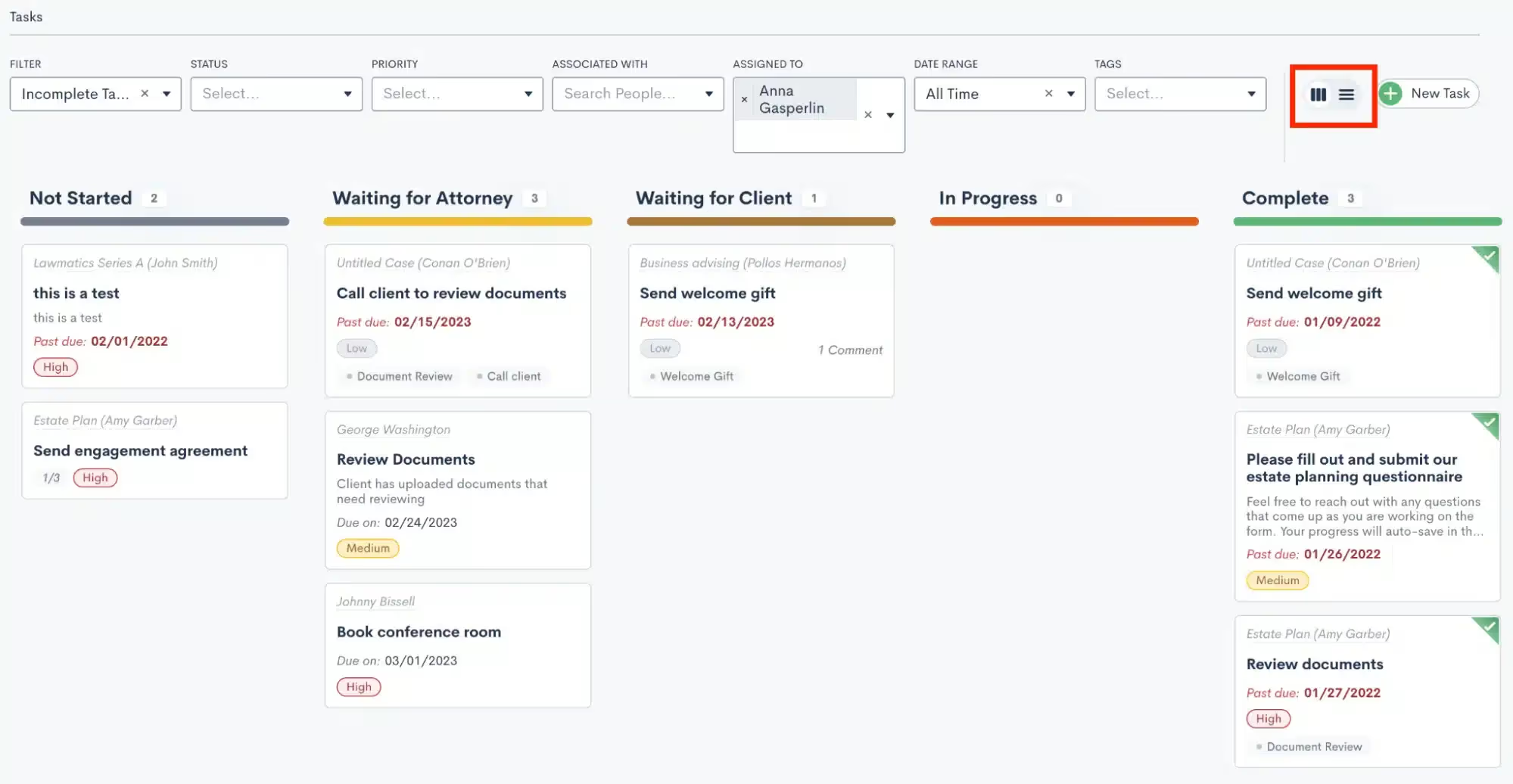
Of course in addition to viewing your Tasks, you can also create new Tasks here on this dashboard. To get started, click the New Task button in the top right corner. You will then see a new pop up that looks similar to the example shown below.
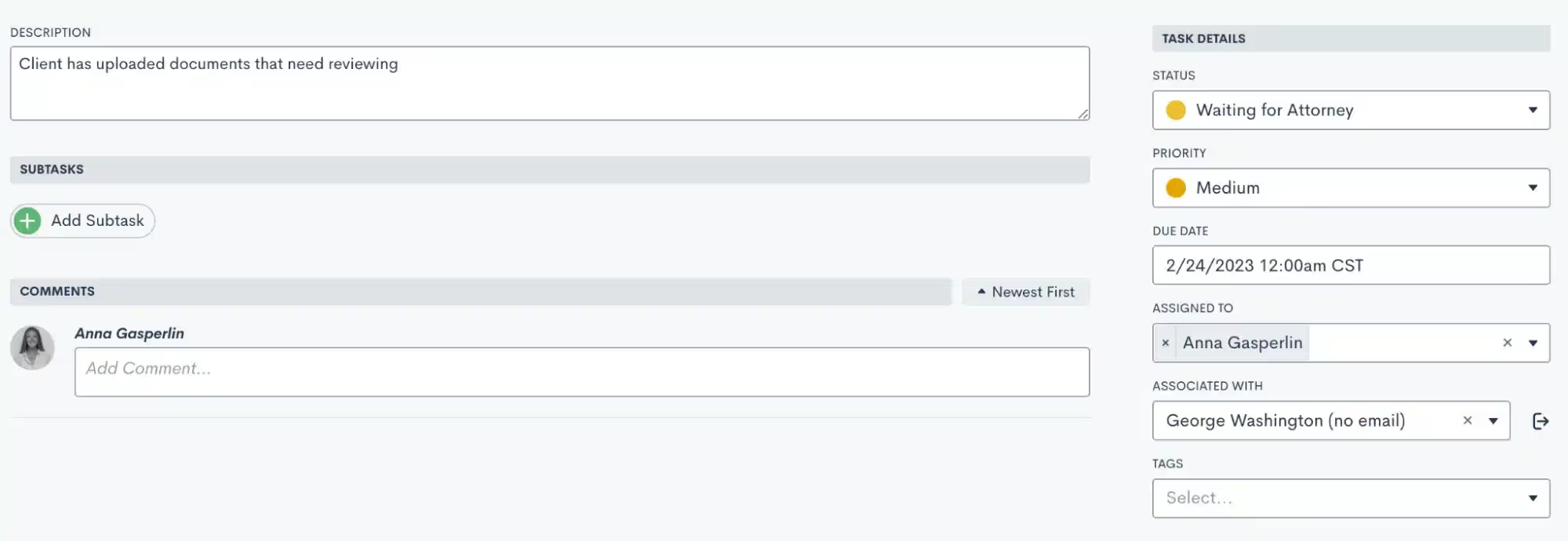
When creating the Task, make sure you give the task a name and a description, as well as the important Task details on the right sidebar menu. Also make sure to select which matter this Task is associated with when creating a task here from the dashboard.Another way to create Tasks is directly from a matter’s profile. When creating a Task this way, you will not need to select an associated matter since it will default to the current matter. Other than that, your steps for creating the Task will be the same as shown above.Simply select either the Tasks tab or the New Task button from the tasks sidebar on the matter’s profile.
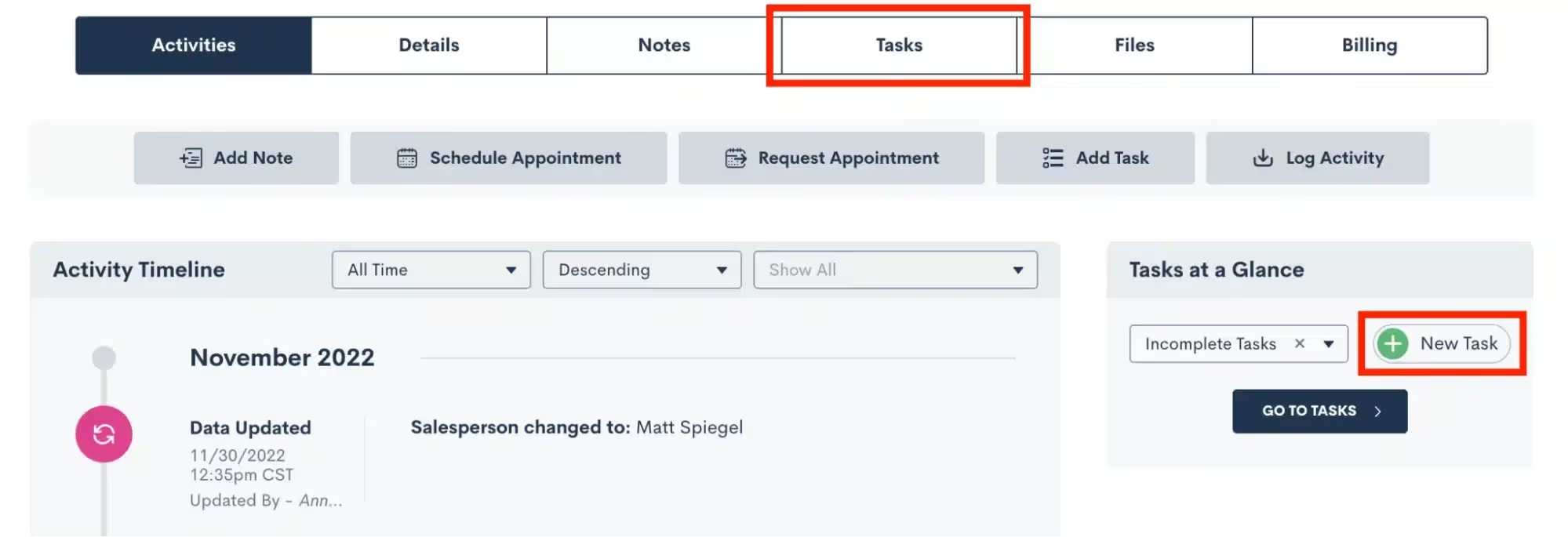
Custom Task Statuses
Whether you are new to Lawmatics or just starting to dive into the Tasks feature, you’ll want to make sure you have your Custom Task Statuses set up. These are created in your settings page (gear icon near the top right), and then select Tasks on the left sidebar.Your Task statuses are custom to your firm, and are created by clicking the Add Task Status button shown at the bottom of the image below. You will also see below some sample Task Statuses that may be used for your firm. Once you have created Statuses, use the icons on the far right to edit or delete a Status as needed. Also drag and drop Statuses to rearrange their order.
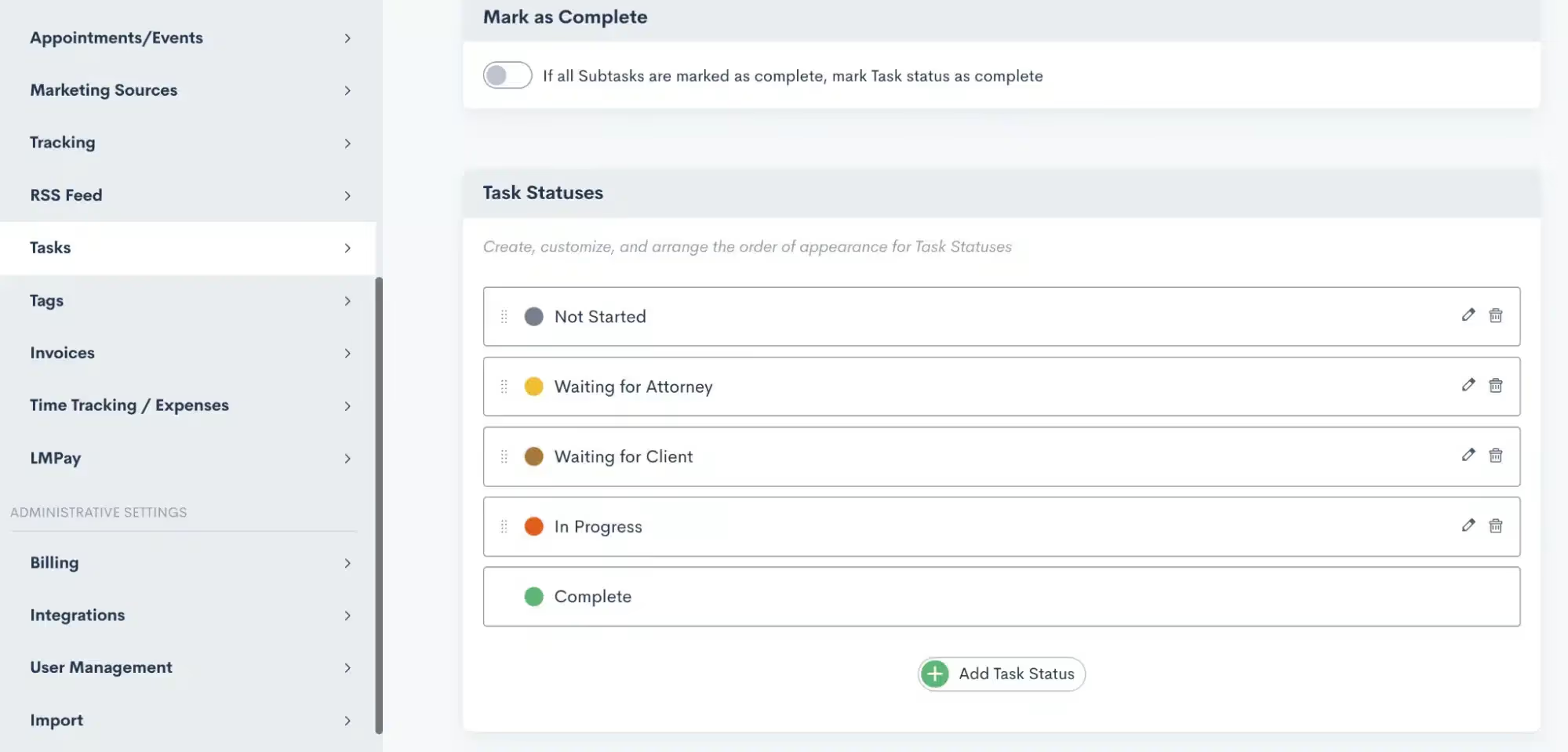
If viewing the tasks dashboard with the Kanban view, each of these statuses will be the column headers. The Kanban view allows you to easily drag and drop tasks between statuses. When creating a task, you will be prompted to select the current status of that task.
Task Tags
Task Tags are used purely for automation purposes; they allow you to trigger Automations when a particular Task is either created or completed. We’ll dive more into the automation piece in the following section, but for now we’ll discuss how to create your Task Tags.First, you can always create and edit or delete Tags by going to Settings, and then selecting Tags from the left sidebar. Note that you will also see your Contact and Matter Tags here too.You can also create a new task tag while creating a task itself. Simply start typing the Tag (as shown below) and then select to create the new Tag as an option.
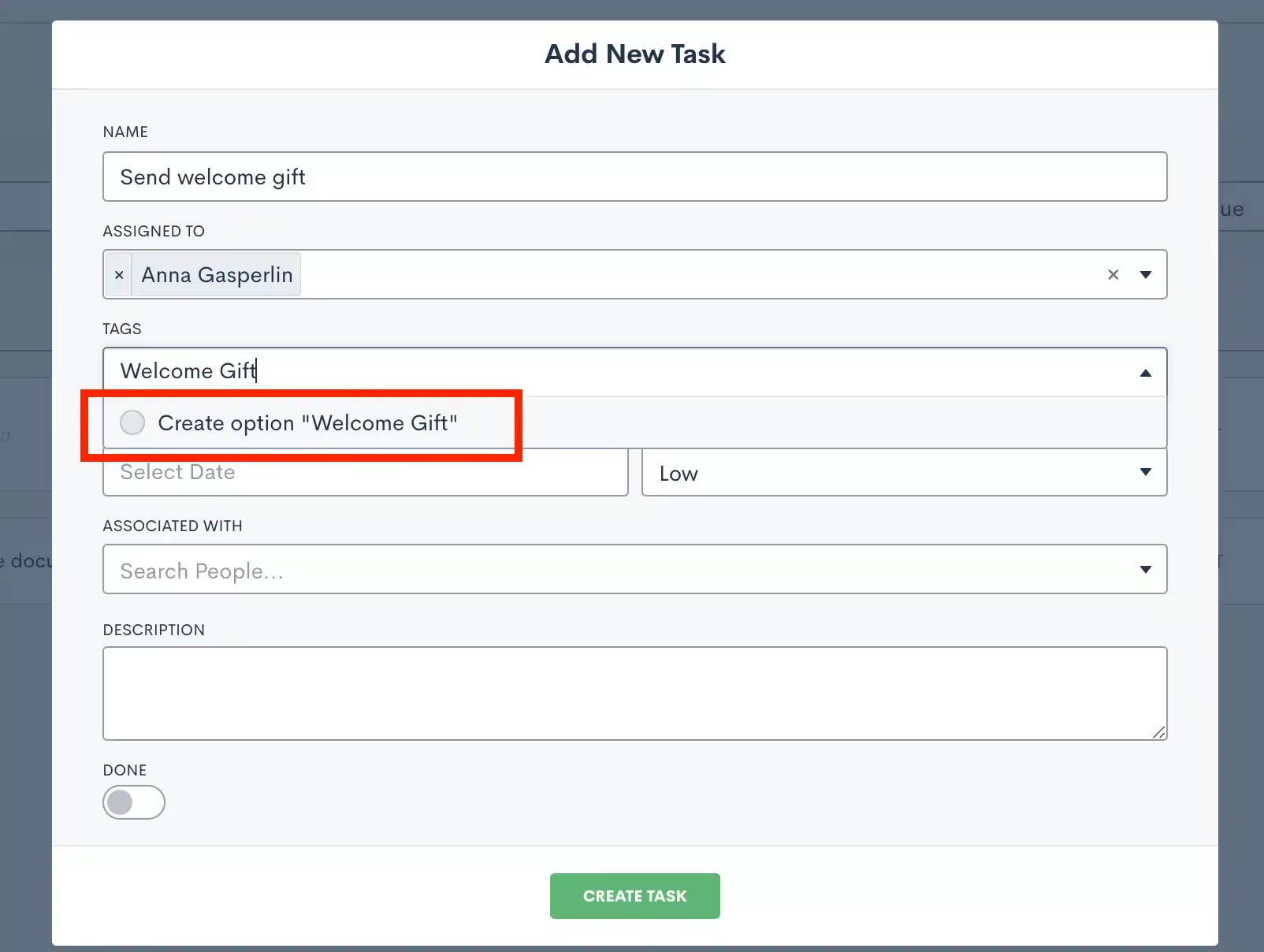
Editing and Completing Tasks
Last but not least in our Task overview, note that you can make edits to your Tasks at any time either from the Tasks Dashboard or from the associated Matter’s profile. You can also delete a Task in either of these places or mark a Task as complete.
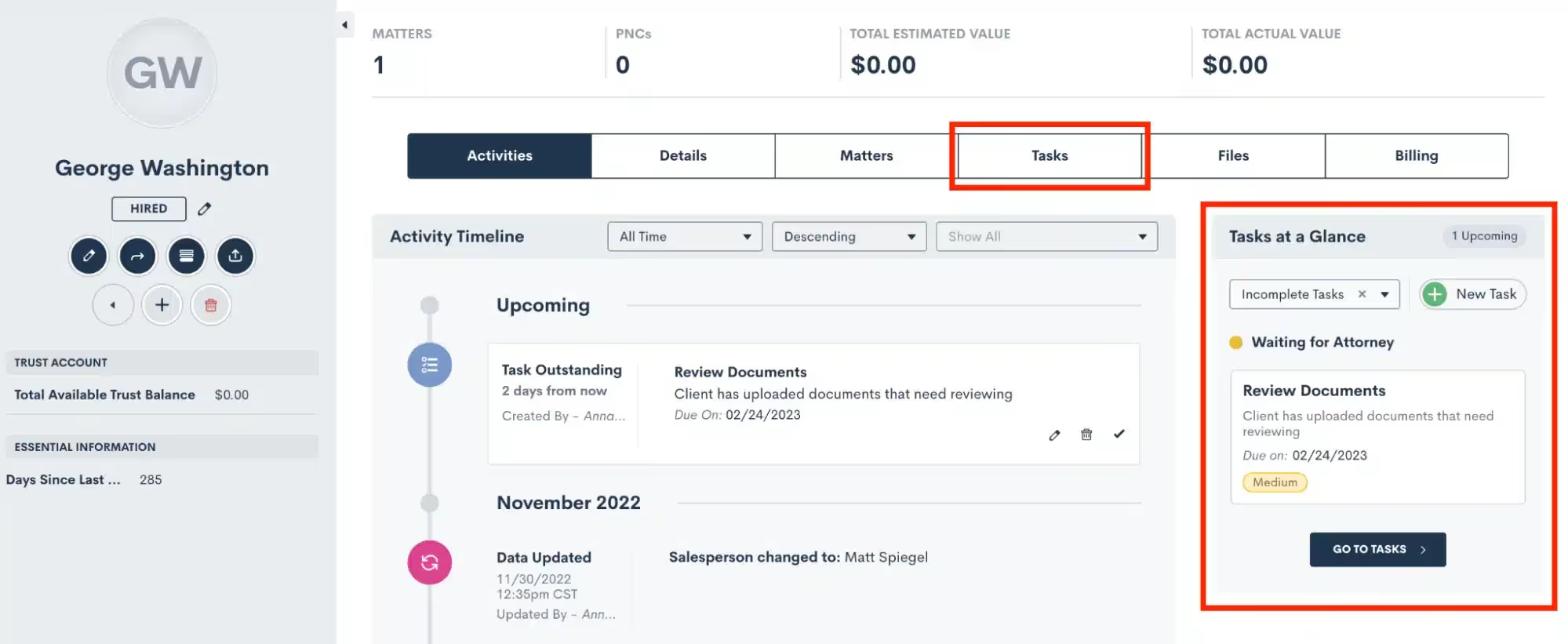
In the image above you’ll see that you can easily access a Matter’s Tasks from either the Tasks Tab, or the Tasks at a glance sidebar. Simply click on the task in the Tasks sidebar to edit, mark as complete, comment, etc.
Task Automation
Entry Conditions
The first way to use Tasks in Automations is to trigger one with a Task. Automations can be triggered based on Task Tags, discussed above. You also have the option to trigger the Automation based on a Task of a specific Tag being either created or completed.

Note that you can use this entry condition along with any of our other entry conditions to create either an AND or an OR conditional relationship with multiple entry conditions.It can often be powerful for your firm to trigger an Automation when a Task is completed. This may kick off another Task to be assigned automatically, or any other step that may come next in your process.
Tasks as an Action Item
Speaking of assigning Tasks automatically, this is easily accomplished by using the Add Task action item. When this item is selected in an Automation, you will make the same selections on the right sidebar that you would make when manually creating a Task.

This includes the Task name, due date, Task owner etc. While there may sometimes be a use-case for manually creating tasks as a one-off, we strongly recommend using Task automation whenever possible. This is a great way to reduce spent time on tedious Task creation, and streamline each step in your process as a template.Typically Tasks are used to assign action items to users within your firm, but Tasks can also be shared directly to a Client’s Portal via automation. We’ll dive into this deeper in our power features section below.
Examples
Now that you know the basics of Task automation, let’s discuss a few examples of how you may use this in your process.
- Trigger an Automation when a client submits a Form or uploads Documents, automatically assign a Task to review what has been submitted
- When a client is ready to receive a fee agreement, trigger a Task for the appropriate staff person to preview and send the document out for e-signature. For full automation, template your Document thoroughly and avoid the step of previewing the Document and simply send it directly from the Automation.
- Are there any manual steps in your process that must be done physically outside of your CRM? Use Lawmatics to trigger a templated sequence of Tasks helping to ensure that these items are all accomplished in a timely manner.
Task Power Features
Tasks are extremely useful to your practice no matter how you go about implementing them into Lawmatics. All of the elements of Tasks discussed so far are fantastic ways to use them in your process. Take things to the next level by adding in some (or all!) of these Task power features.
Comments
An exciting new feature, Lawmatics now gives users the ability to comment on Tasks. The system will automatically keep track of the date and time of the comment, along with which user left the comment.

To leave a comment, simply click on a Task (or click the edit button). Here you will also see the comment thread history of the Task.To level up your comments one step further, you can also use the @ sign to alert a particular user within your comment.
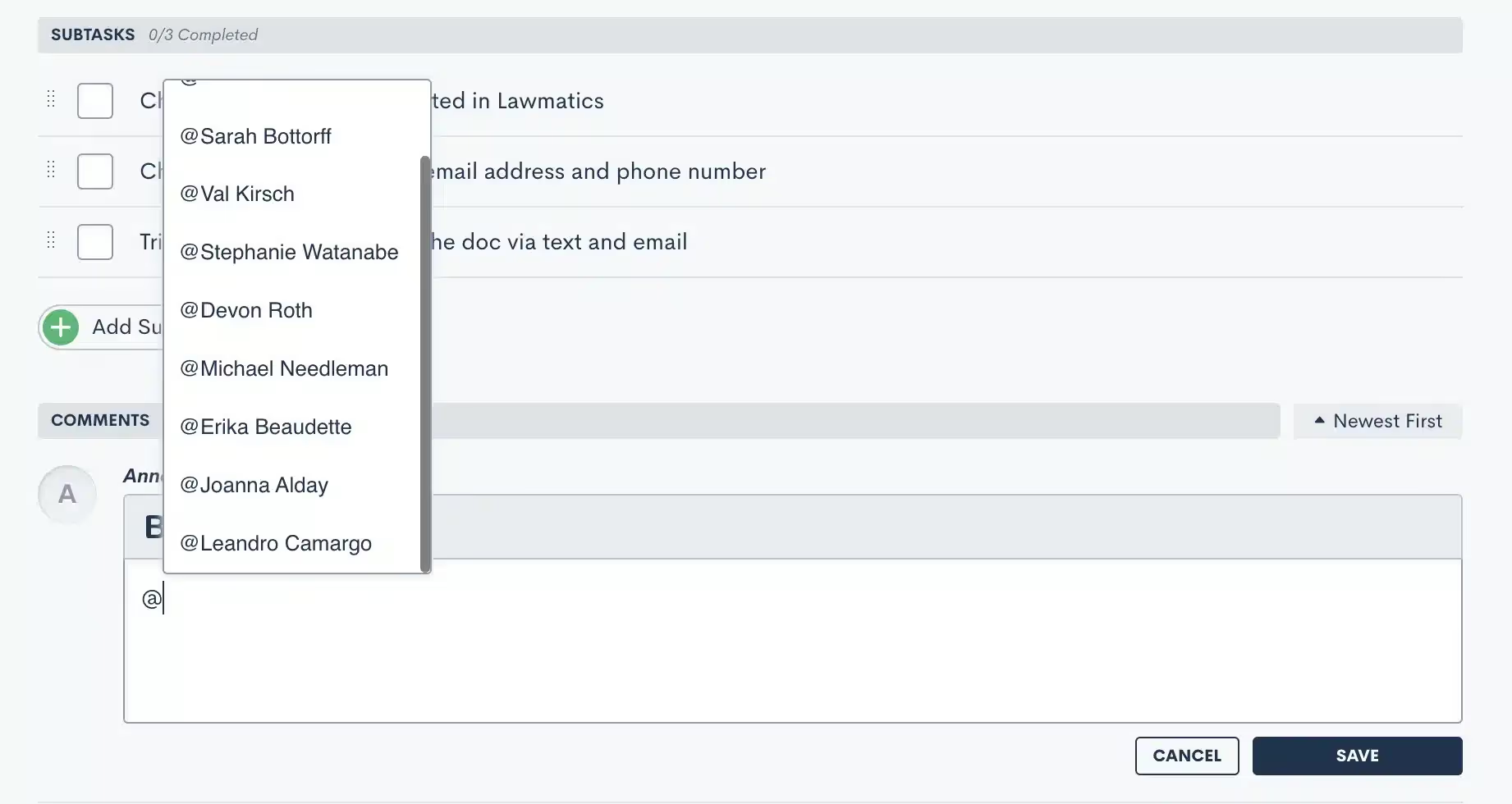
Task Notifications
To make sure you and your staff never miss any important Task comments or notifications, we encourage all Lawmatics users to turn on their Task notifications. We are also excited to share some new task notifications along with these new power features.To turn on notifications, each individual user will navigate to settings, and then select Notifications from the left side menu. Scroll down to locate the Tasks section.

Sub Tasks
When creating a Task, Lawmatics now gives you the ability to create Sub Tasks within the Task. You will notice the Add Sub Task button any time you are adding a new task, either from the dashboard or a matter’s profile.

These Sub Tasks can be marked as completed independently of one another, as well as of the Task as a whole. Once all sub tasks have been marked as completed, then the Task will automatically be marked as completed as well.
Client Portal
The Client Portal is a powerful tool for sharing Forms, Documents, Appointments, and of course Tasks with your clients. For any Tasks that you wish to assign directly to the client themselves, or to another related matter contact, you can share Tasks via Client Portal.This can be done directly from a matter’s profile, as shown below, or when creating a task via automation. Make sure that the client has first been given portal access using the button highlighted in red near the top left before selecting to share a task with them.

When a client logs in to their Client Portal, they will see a similar page to the one shown below. They can easily view the Tasks you’ve shared with them right in their Client Portal dashboard.
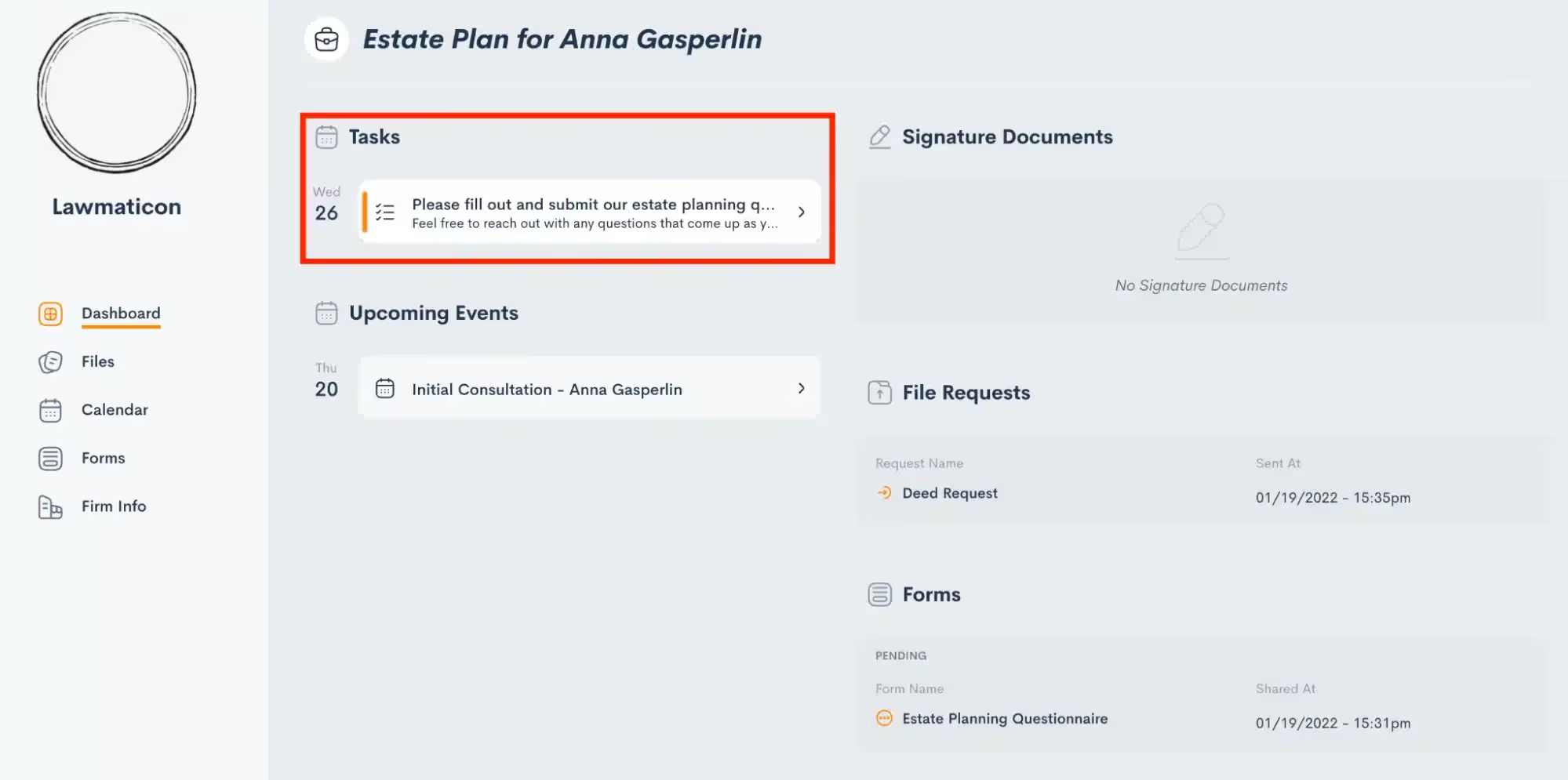
Conclusion
Lawmatics gives you the power to streamline your entire client journey, so why shouldn’t that apply to your internal process as well? Tasks are the key to increased productivity, efficiency, and hopefully happiness within your organization.Lawmatics tasks allow your team to spend more time on their actual work, and less on the behind the scenes setup and organization of their process. They can simply create their task templates once, and then find them automatically assigned each time they need them.
It may not be a box of chocolates or a dozen red roses, but Lawmatics is here to deliver something even better this February: a new batch of features!

Kanban Board for Tasks
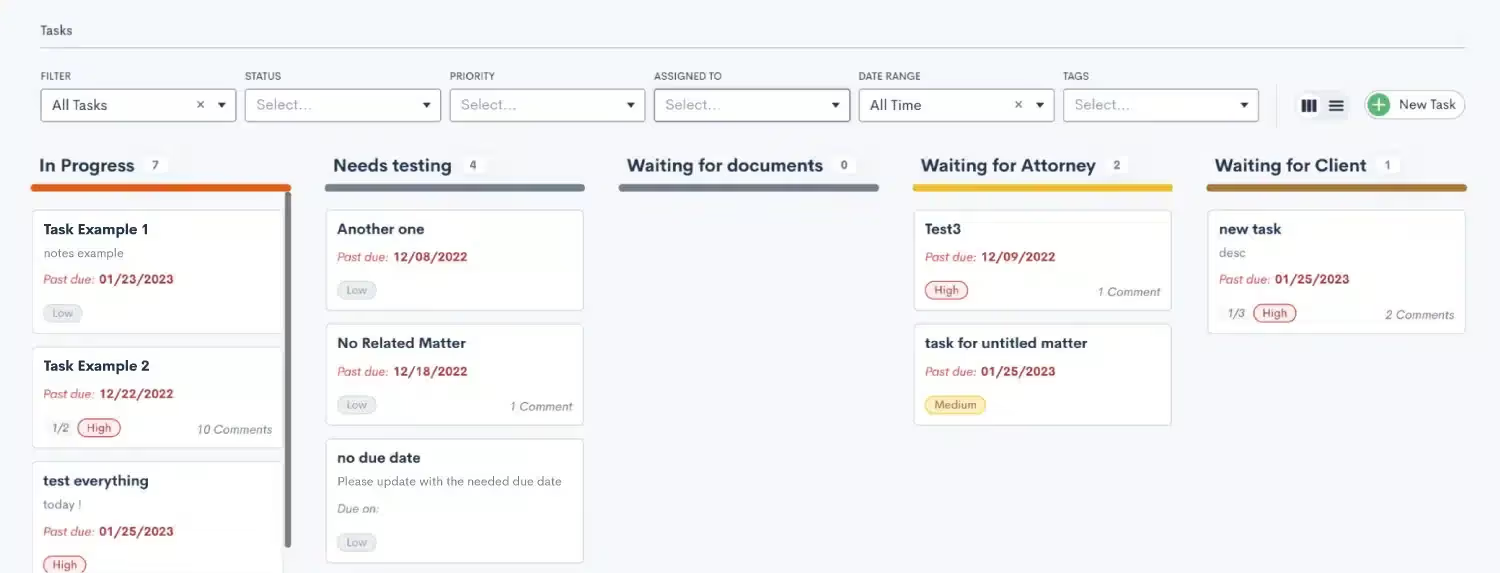
The Tasks dashboard now has the same Pipeline visualization you know and love. You can drag and drop Tasks through your sequence of statuses in the Kanban view. In addition to custom Task statuses, this feature will keep your Tasks more organized than ever. To select between Kanban or List view, simply go to the Tasks dashboard under your CRM tab and toggle the view selection next to the New Task button. Tasks will appear in the appropriate status column as they are created.Learn more about custom task statuses here.
Select Any/All Host Availability Option
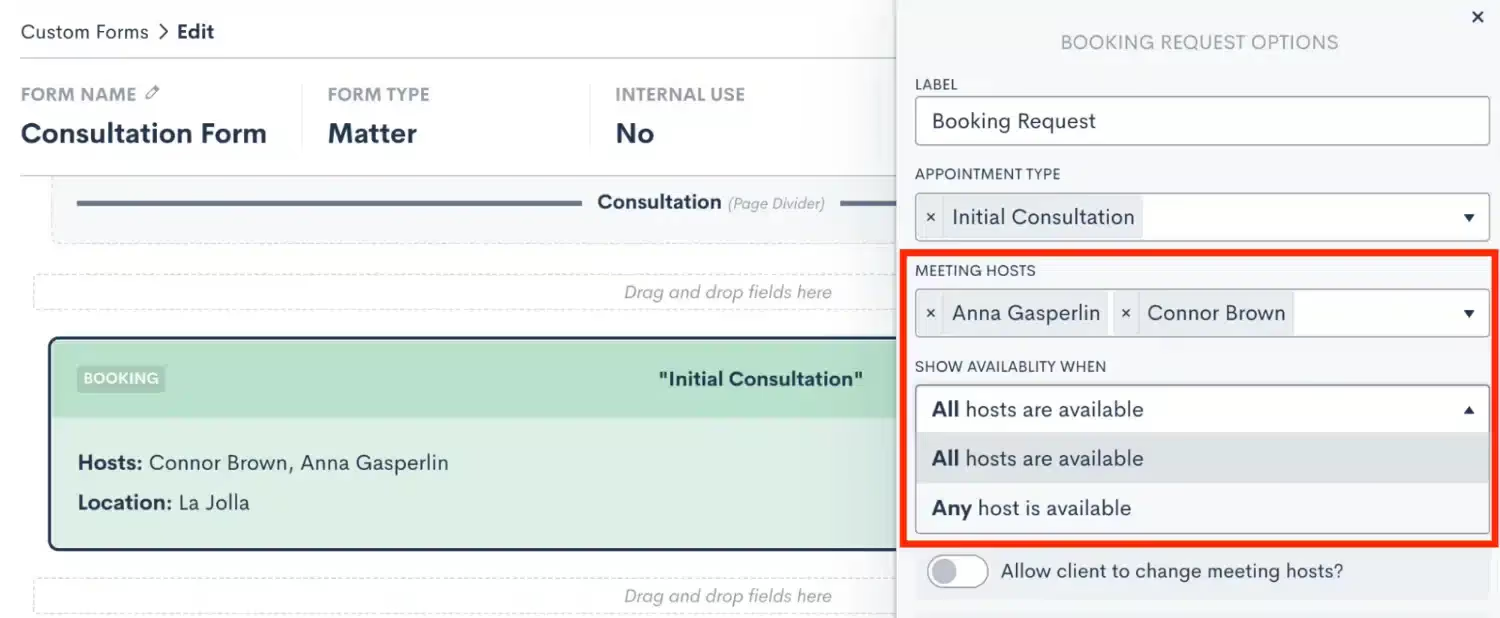
Automatic scheduling continues to be a fan-favorite feature among Lawmatics users. With this latest update, you now have availability options when booking for multiple hosts. Use the All option when both hosts must be available for the meeting, or use the Any option to showcase the soonest individual availability among the multiple hosts. You will find this option on your booking forms as well as custom forms.Click here to read up on booking forms.
Add Reschedule Link to Booking Forms
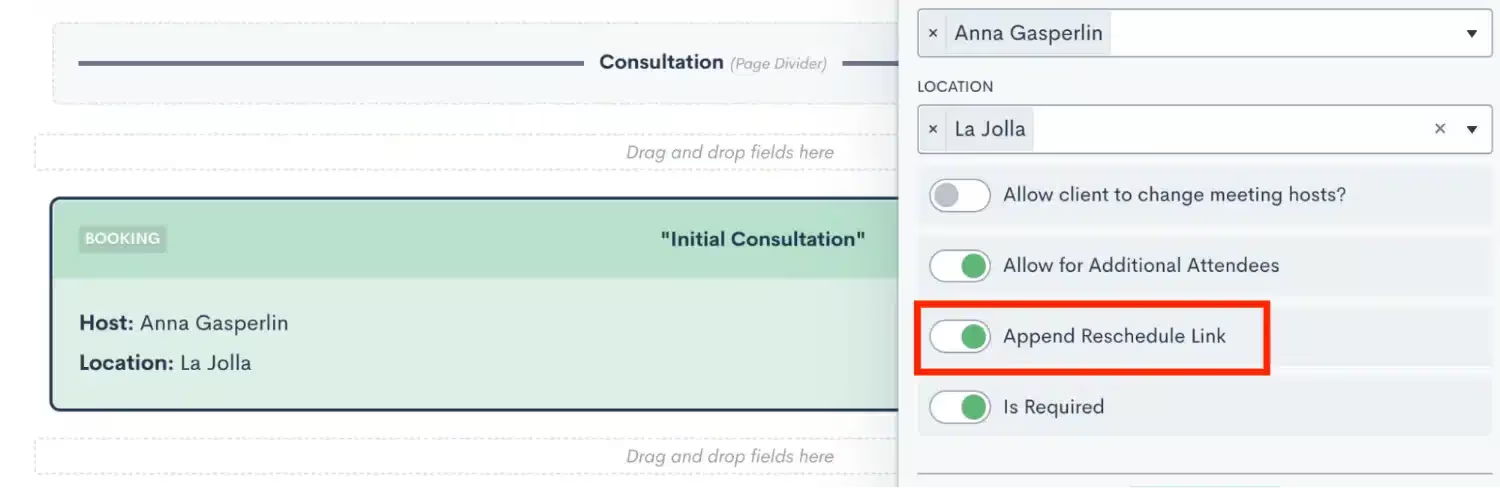
To make your automatic scheduling even easier, we’ve also added the ability to include a reschedule option in your booking forms. When a client wants to reschedule their appointment from a booking form, this new option allows them to simply reschedule their existing appointment. Eliminate the need to create an entirely new appointment when calendars move around. Choose whether or not to include the reschedule link in emails when editing your form.
Apply Trust Balance When Creating Invoice
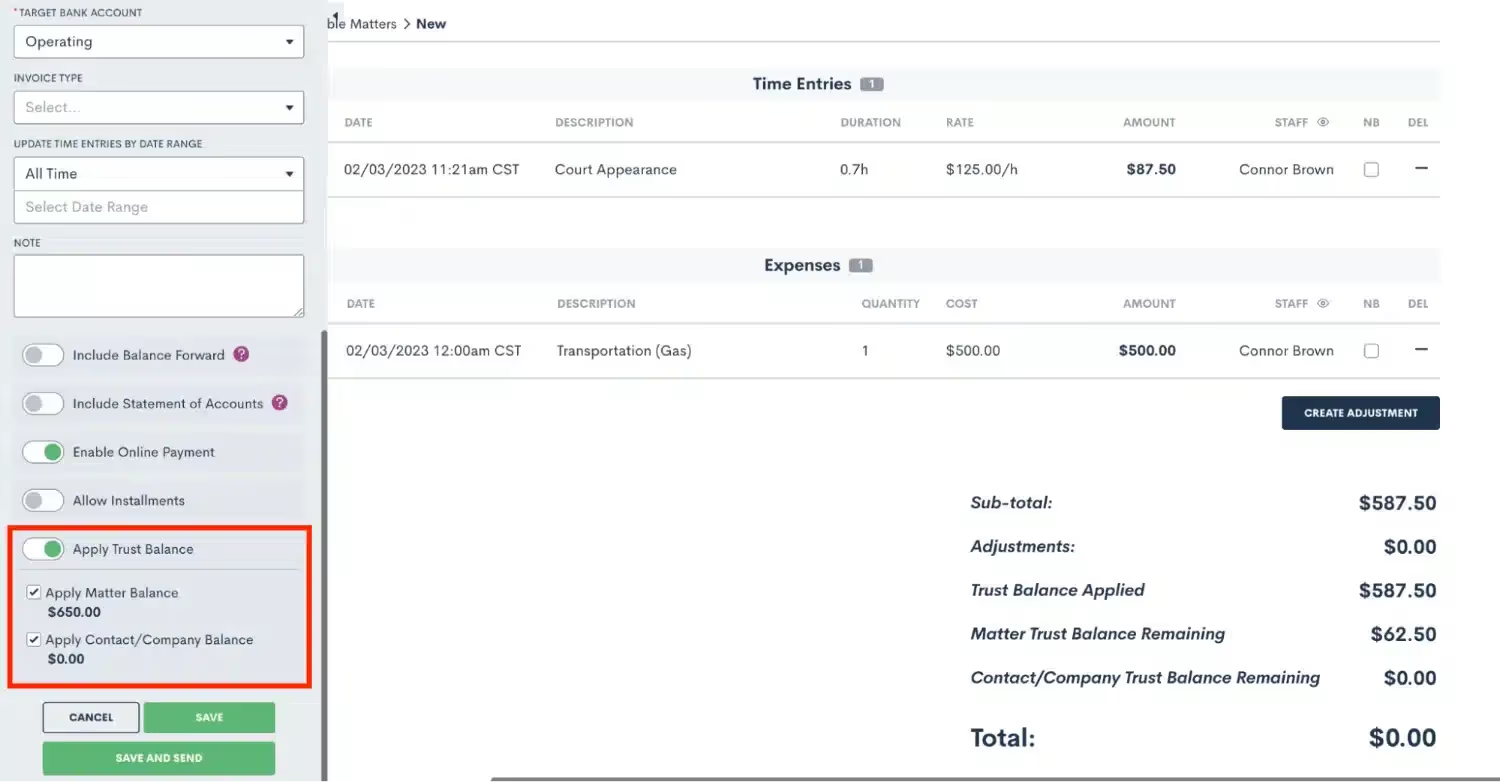
You now have the option to incorporate a matter’s trust balance when creating an invoice. After making all of your selections for the invoice terms, you will see the option at the bottom to Apply Trust Balance. This will be reflected on the invoice total to the right of the screen.Not yet using LMPay? Click here to learn how to get started.
Pay Invoice From Trust Account
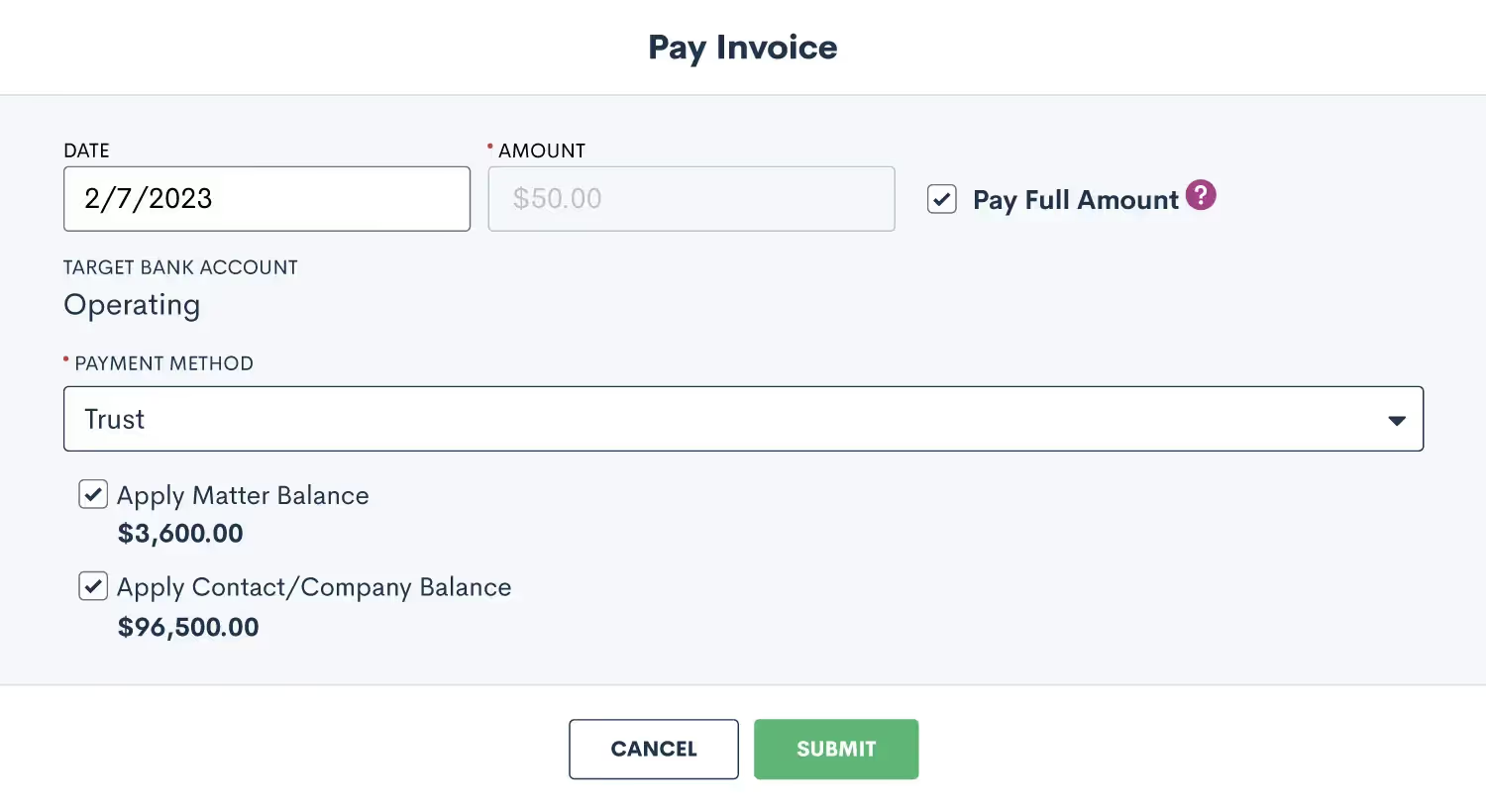
Similarly, when a client is sent an invoice they can also choose to pay the invoice themself using their trust balance. If they have a balance in their trust, that trust will appear as an option when selecting their payment method.Additionally, you can now choose if you would like to pay an invoice from the matter trust balance or the contact/company trust balance, or both. This can be used to pay an invoice from the trust account after the invoice has already been sent to the client.Click here to learn all about trust accounting in Lawmatics.
Billing Point of Contact Field
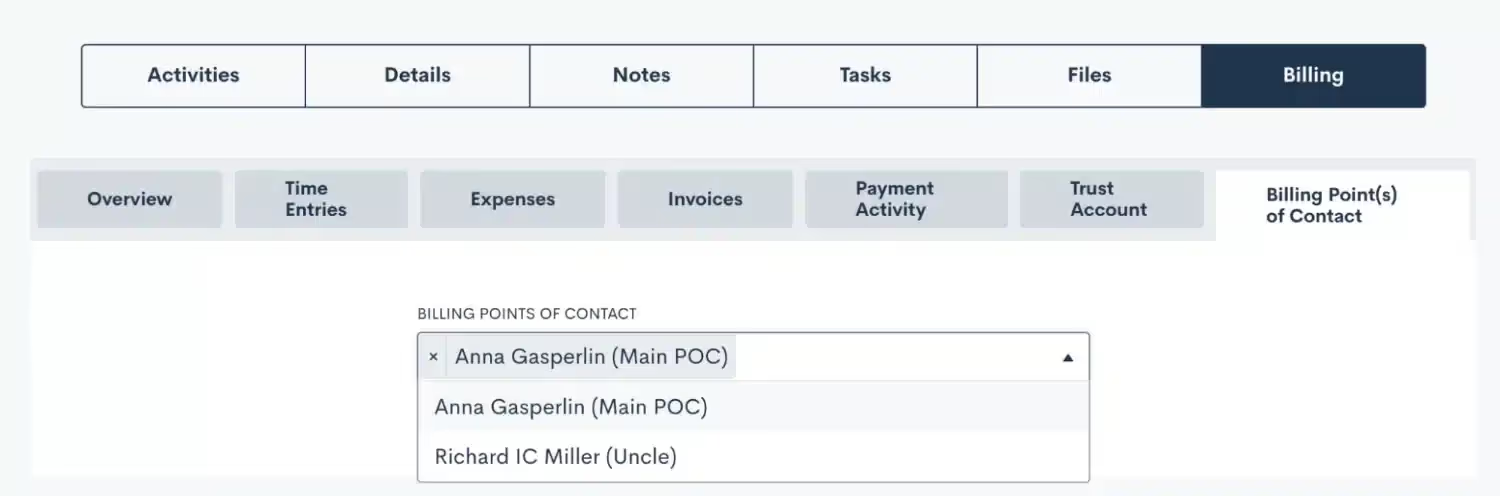
For our Time & Billing users, you now have the option to select one or multiple designated Billing Point(s) of Contact for your matters. This will default to the main contact on the matter, but you can easily select from any of that matter’s relationships as well. When creating and sending invoices, you have the option to select the Billing Point of Contact as the recipient for the invoice, making sure payment can be made by the proper contact(s).Read up on automating invoices here.
Also included in this release!
- New standard field: "Type of Billing" on matters
- Re-order custom activity types and expenses
- Zoom link merge fields available in email templates
- Email campaigns automatically remove duplicate email addresses
- Enhanced formatting capabilities in notes
From the bottom of our hearts, we have so much love for each and every one of our Lawmatics users! Hoping you feel the love with these latest features.

Lawmatics Time Tracking and Billing consolidates essential case management features into the platform that you already know and love. With the introduction of LMPay, you can now seamlessly collect your consultation fees through Lawmatics as well. Whether you are looking to implement the full suite of Billing and Time Tracking into your process, or use LMPay for collecting consultation fees, Lawmatics has all the tools you need to make that happen.Each of the aforementioned billing features make it easy to get paid quickly and easily while facilitating an exceptional client experience.
Introducing LMPay
If you collect or intend to collect consultation fees from prospective clients, LMPay is your go-to payment solution. LMPay is quick to set up, easy to use, and accessible without any additional fees on your Lawmatics subscription. LMPay also boasts no fees (or hidden fees) for ACH and competitive industry rates for credit card payments.
Registration
To use LMPay, you will first need to register your firm and complete a brief application process. Begin by opening Lawmatics and navigating to the Settings menu. Once there, select LMPay and you will then see a screen similar to the one shown below.
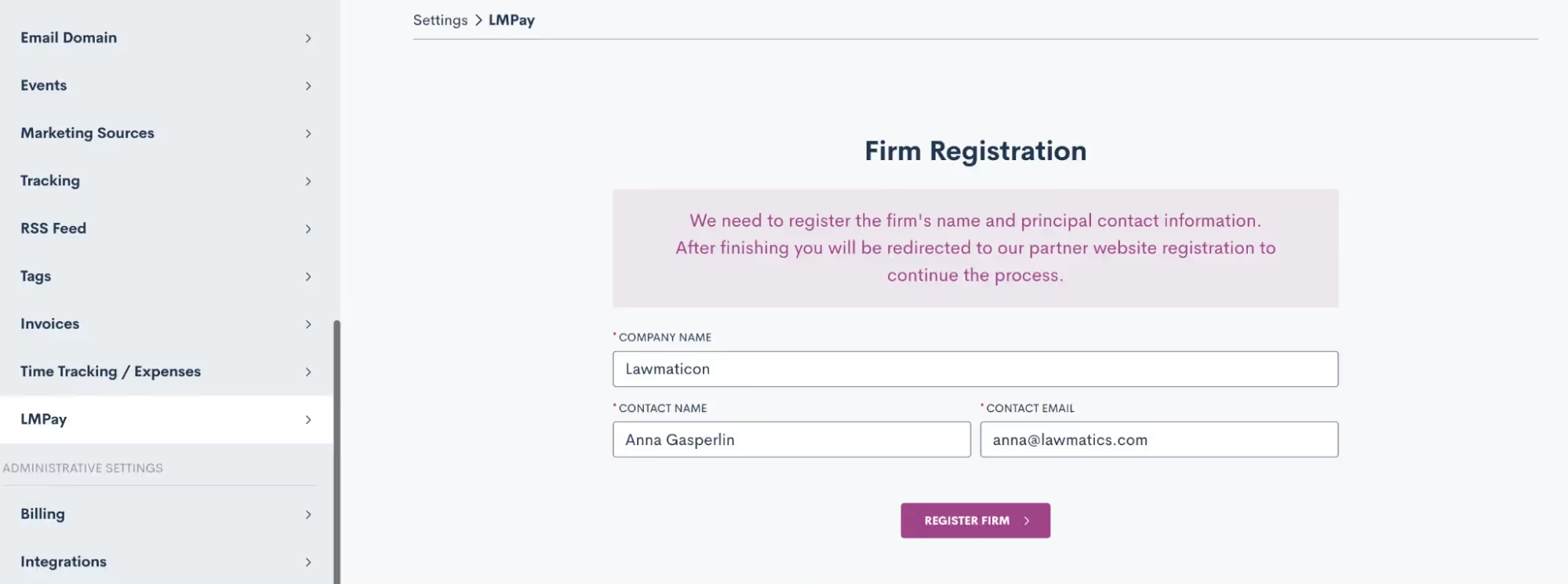
Upon initiating the registration process, the system will walk you through a sequence of steps to submit your application. The review process generally takes one to two days. Once approved, you’ll have complete access to LMPay.
Features
Payment Gateway
One of the key features of LMPay is the Payment Gateway, a tool to collect consultation fees. The Payment Gateway can be added to any Custom Form or Booking Form, of a seamless step in the consultation booking process.Drag and drop the Payment Gateway field from the Advanced section in the Form Editor, and then click on it to set your payment terms.
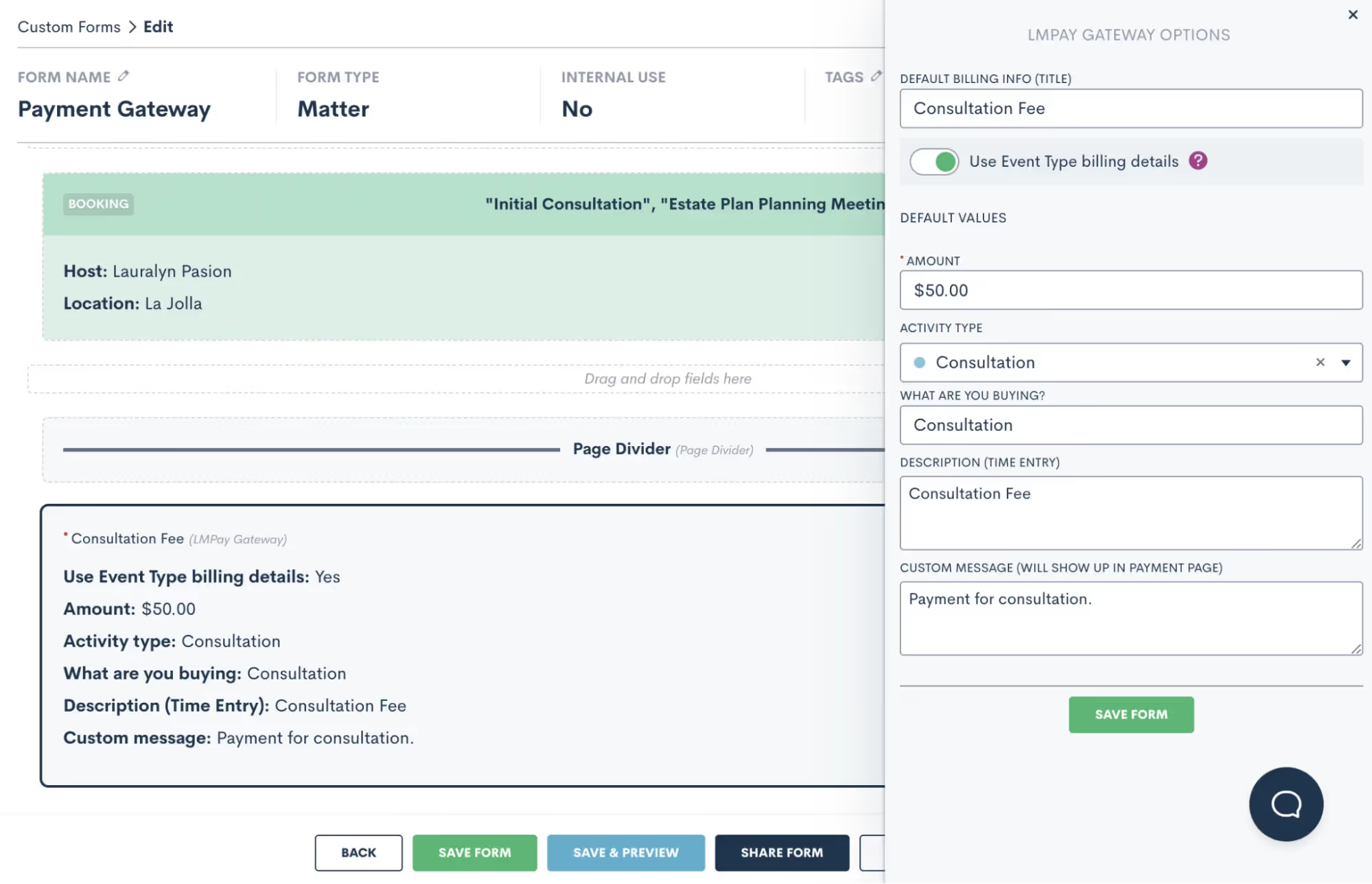
You can easily specify the amount, activity type, etc for this payment (pictured above). When the potential client fills out this form, they are able to select a time for their consultation and enter their payment details to pay your consult fee.
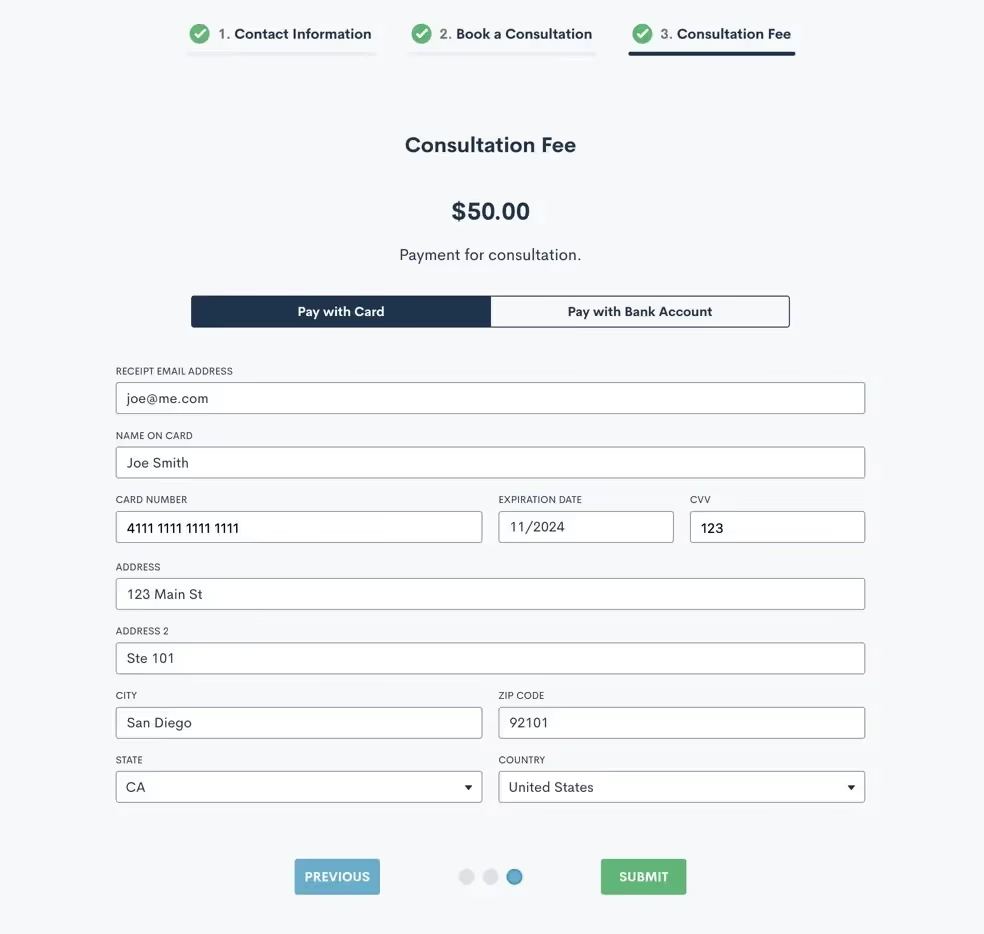
Any payments made via LMPay are tracked in Lawmatics and visible on the matter’s profile. Click on the Billing tab to view invoices as well as payment history for that particular matter.
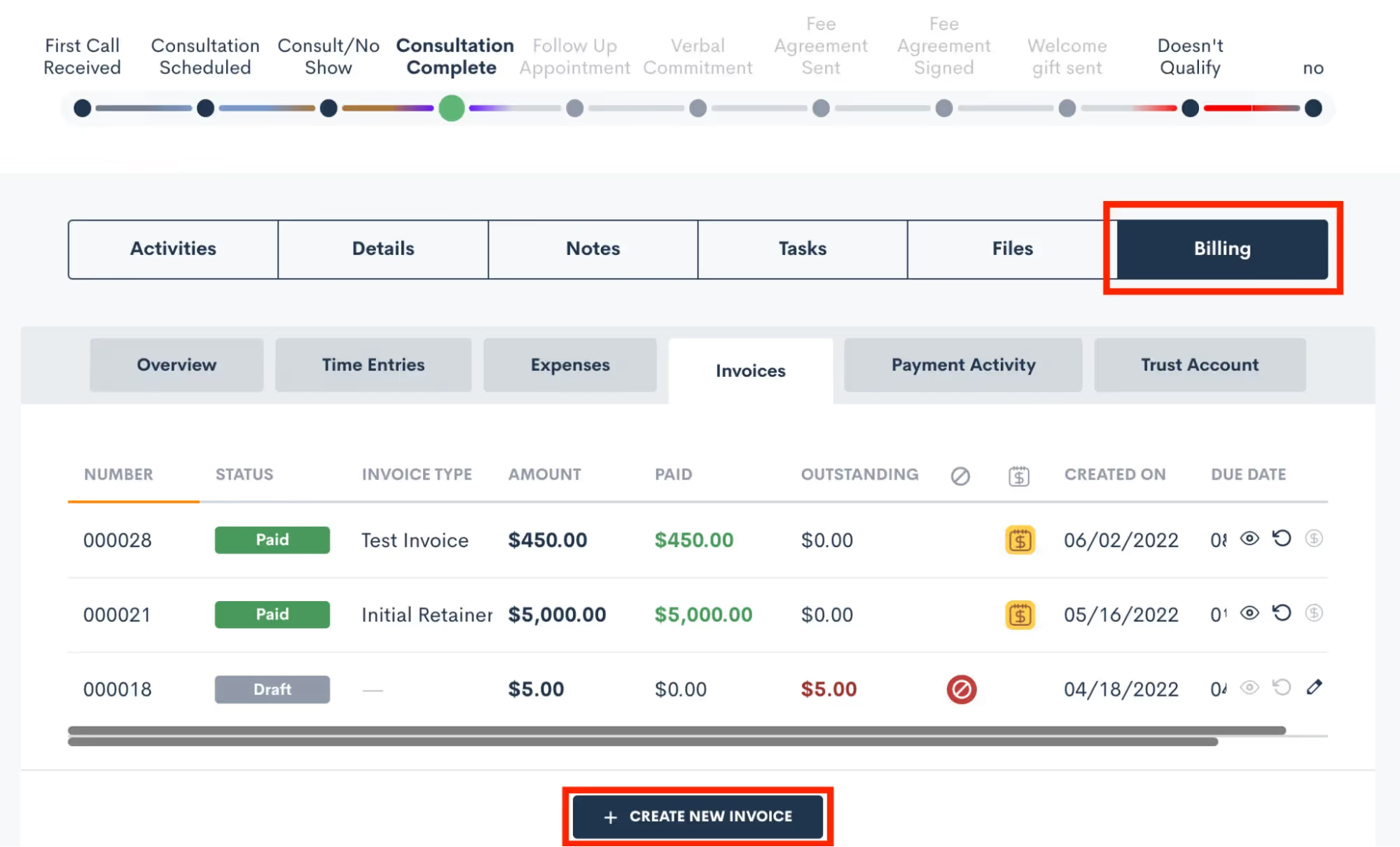
NEW Billing Tab
You will also have access to a separate Billing tab on the main menu of your Lawmatics window, located at the very top of any page. Here you will find an overview of all invoices and payments for the firm, as opposed to zeroing in on a specific matter.
Easily view, sort, and filter your invoices or create a new invoice manually if needed.
Time & Billing
Whereas LMPay is geared towards collecting consultation fees, the Time & Billing add-on offers an entire suite of time and billing features. Even if you currently use a case management system for this functionality, you’ll find that Lawmatics has everything you need under one roof.
Getting Started
To begin using Time & Billing, you will need to do the following:
- Email support@lawmatics.com to notify our team that you would like to activate Time & Billing. Time & billing does come at an additional cost per user to your Lawmatics subscription.
- Let us know which of your Lawmatics users you would like to access. You are only charged the add-on rate for the users that need to access the feature.
- Once Time & Billing is activated, configure your settings. This includes setting up your expense types, default hourly rates, payment receipt email template, and more.
Time Tracking
Lawmatics makes it easier than ever to track your time spent on various billable and non-billable activities. Once you have activated the Time & Billing add-on, a Time Tracker will appear in the top menu of your Lawmatics account. Click the Time Tracker to select the matter you intend to track time for as well as the activity type for this session. Then click the Play button (shown below) to begin tracking your time.

All sessions will automatically log on the corresponding matter and can be invoiced when ready.
Expenses
There are two ways to log your expenses in Lawmatics. You can either go to the Expenses page under the main Billing tab or navigate directly to the matter to which the expense pertains. Upon creating an expense, you will be prompted to select the staff person from your list of users, the activity type, as well as the quantity (when applicable).
Invoices
As you begin tracking your time and expenses, the time will come to invoice a matter and receive your payment. Here’s how:
- Create the Invoice either from the main Invoices page or from the matter’s profile directly. If creating an invoice from the main page, you will first need to select which matter you are invoicing.
- Select which time entries and expenses to include, as well as all of your payment terms and options shown on the left sidebar above.
- Create the invoice as a draft and then send it from the invoices page or the matter’s profile once you are ready.
We suggest selecting the option to Enable Online Payment so that your clients can easily make their payment online via card if they would like.When you send the invoice, the client will receive an email with their invoice attached, similar to the sample invoice shown below.
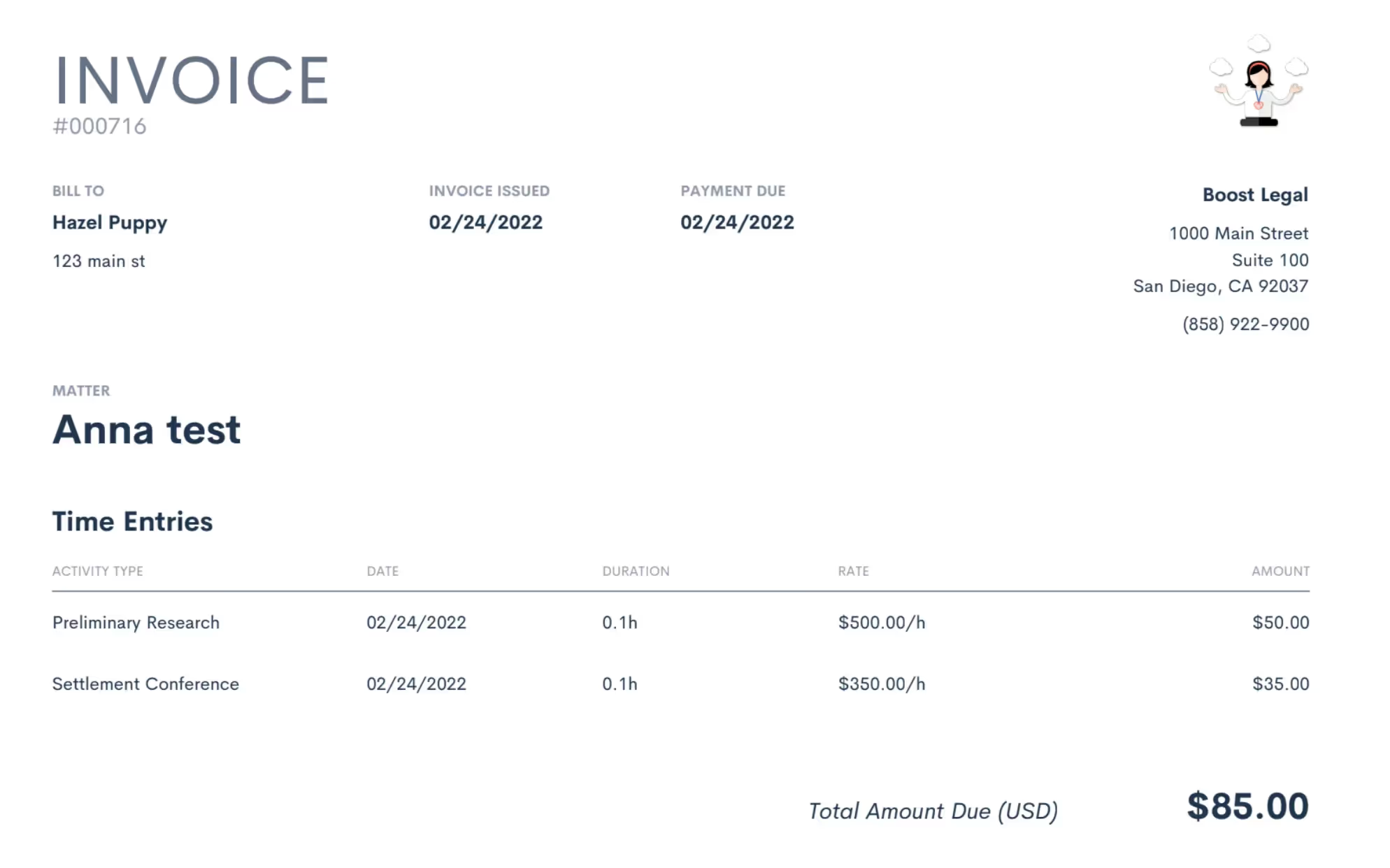
If a client opts to pay via online payment, then the invoice will automatically move from “Sent” to “Paid accordingly”. If payment is accepted offline, you can simply return to the invoices page or the matter profile to mark the invoice as paid when necessary.Lawmatics also give you the option to create a custom payment plan for an invoice as needed by selecting the option to allow installments.
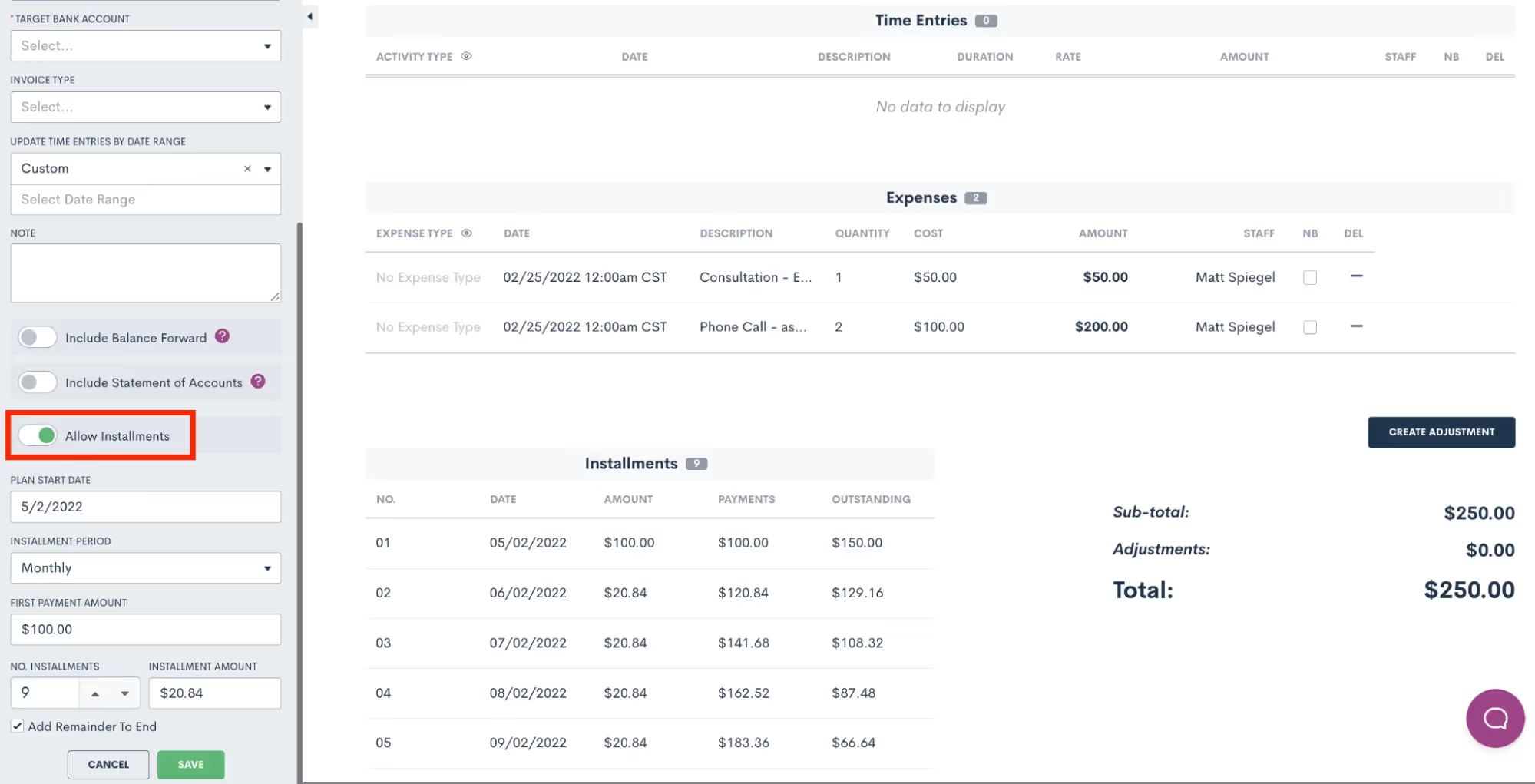
Trust Accounting
Lawmatics also handles your trust account for each matter. You will find a summary of your firm’s trust accounting under the main Billing tab at the top of your account or within a matter’s profile, after which you will select the Trust Account section on their specific Billing tab.
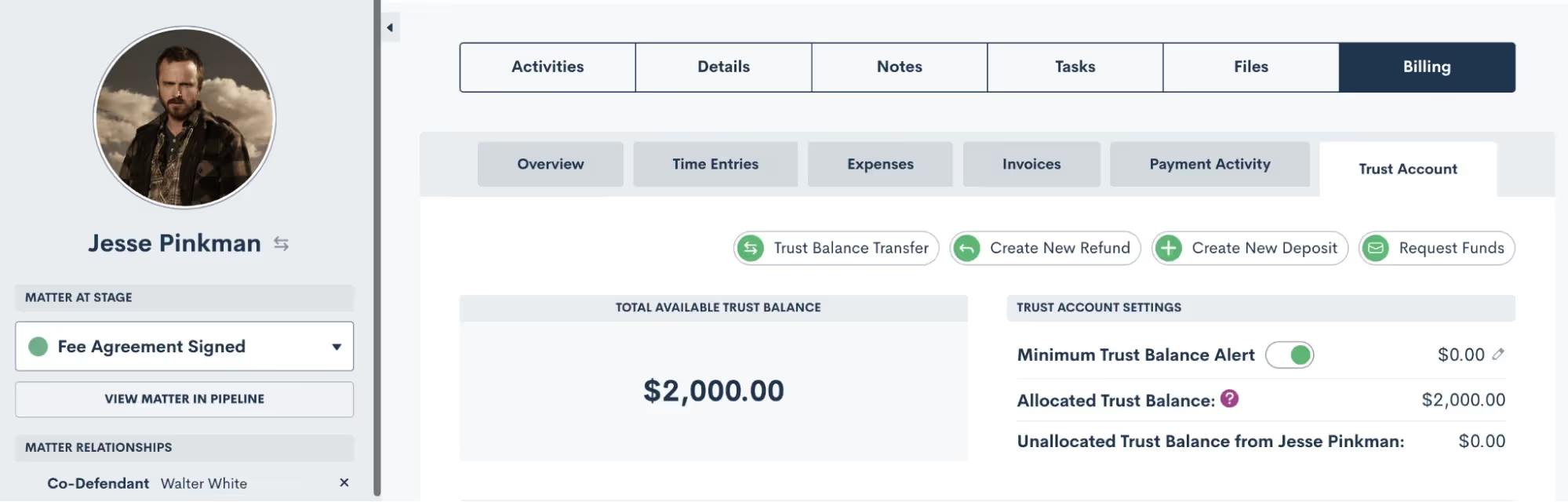
Here you can manage trust balance transfers, refunds, trust deposits, and set a minimum trust balance alert when needed. You will also find a summary log of all trust requests for this matter.
Reporting
When using Lawmatics Time & Billing, you have access to several reports for keeping tabs on your payments and history.
Hours Billed Report
The Hours Billed report keeps track of all hours logged for each user in your system.
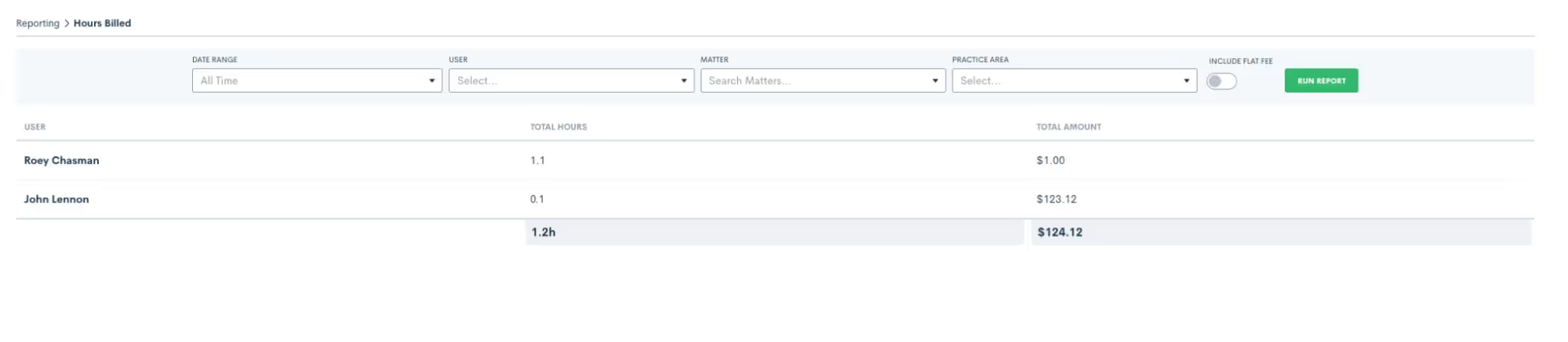
Accounts Receivable Report
The Accounts Receivable report displays outstanding balances to give you a sense of expected cash inflow.
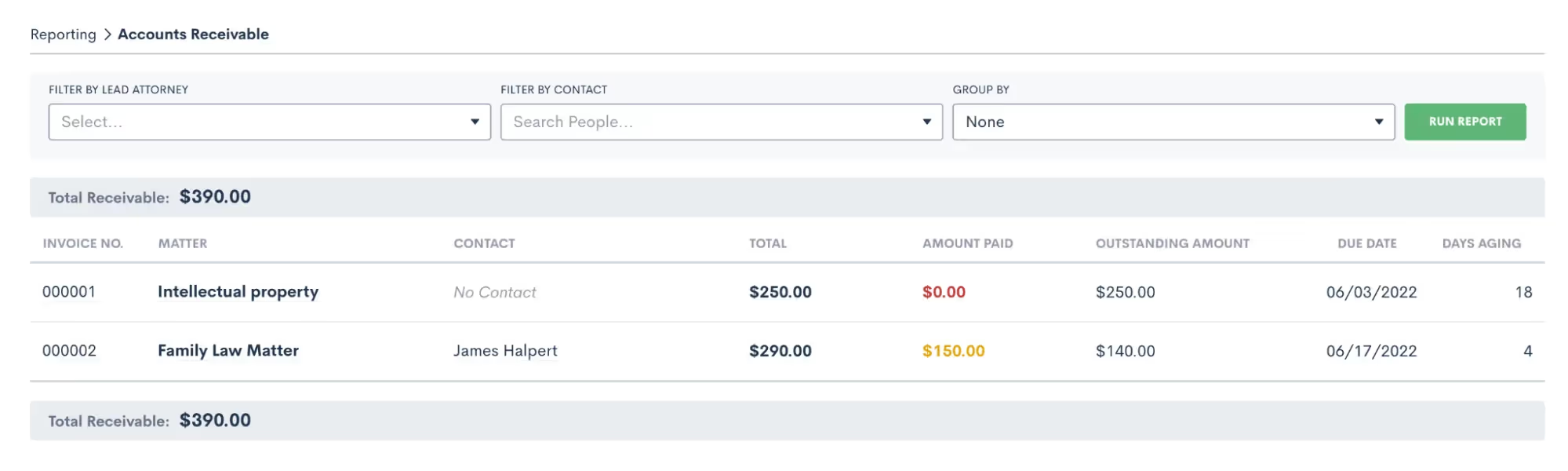
Payment Activity Report
From consultation fees to retainer payments, view a log of all payment activity on your account.

Remember, these features are only available for users with the time & billing add-on. You won’t find the full gambit of billing capabilities with LMPay. Feel free to email support@lawmatics.com with any questions or to add time & billing to your account.
Quickbooks Integration
Lawmatics integrates your invoices directly with Quickbooks. Use this integration to automatically create a customer and invoice in Quickbooks when an invoice is sent to a matter via Lawmatics. Here’s how to begin using the Quickbooks integration with Lawmatics:
- Go to your firm's Settings and select Integrations from the left sidebar.
- Click on Quickbooks.
- Connect your account using the guided prompts.
- Once your account is connected, you will then need to map your accounts, default types, time entries, and expenses to ensure that pertinent matter data syncs from Lawmatics to Quickbooks. Make your selections accordingly.
- Click Save Mapping. Note that you can come back and adjust these any time.
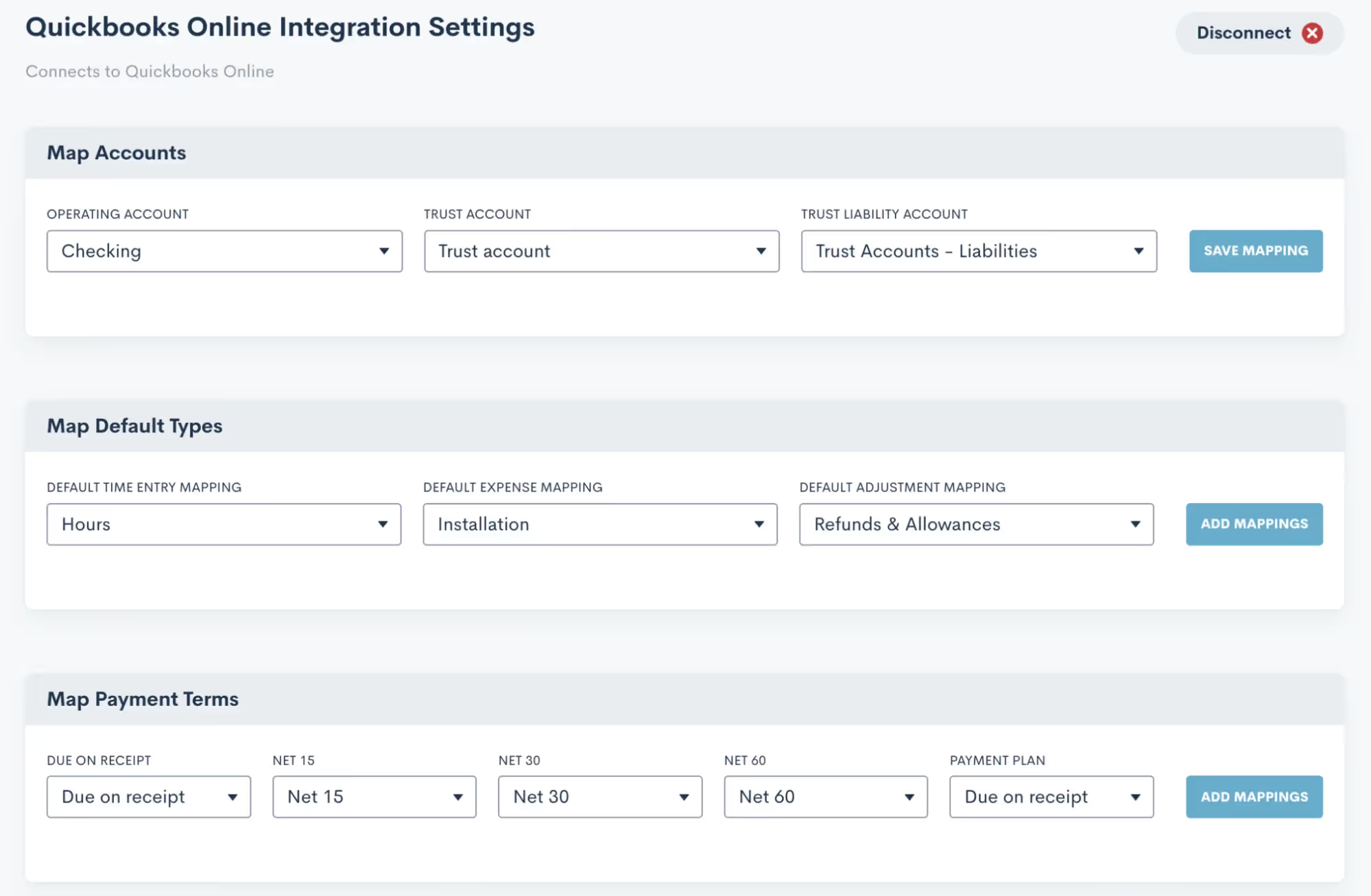
To sync an invoice, simply send it to a matter through Lawmatics as you normally would, then click the Sync to Quickbooks option as shown below.
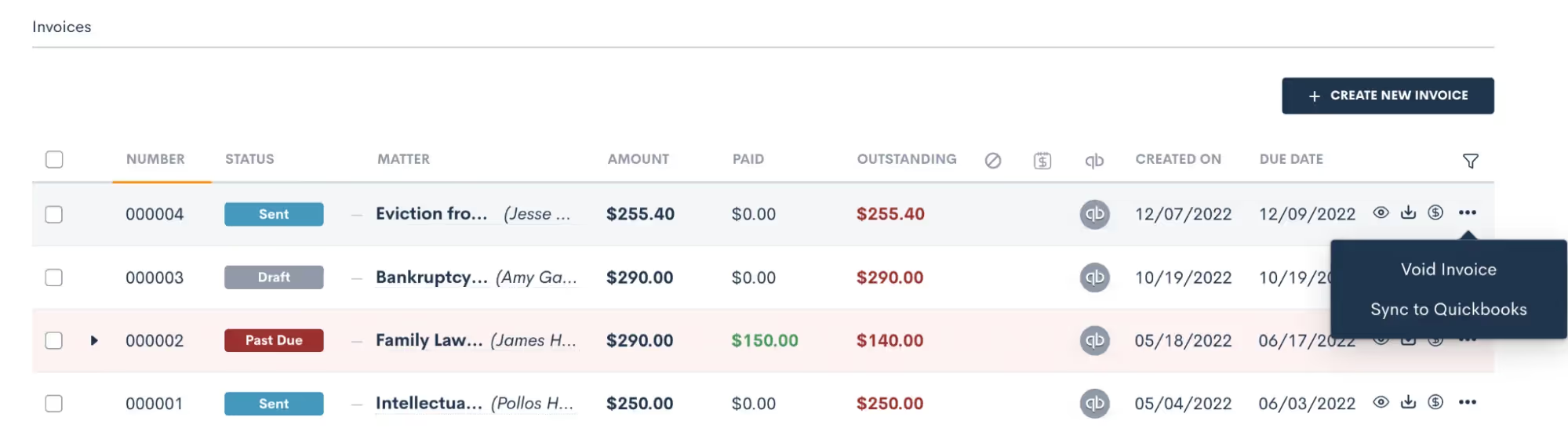
This integration is a one-way sync, pushing data from Lawmatics to Quickbooks. The customer and invoice will be created in Quickbooks, along with any other details you have mapped when you opt to sync the invoice. Additionally, when the customer is created in Quickbooks upon sync you will see "Lawmatics" along with the matter ID added to the last name
Automation
Create Invoices
Keeping in tune with the overall goal of Lawmatics, many of the features we have gone through so far can be used within your automations. First of all, you will find the Create Invoice action item which can be used for creating and sending a Lawmatics invoice automatically.
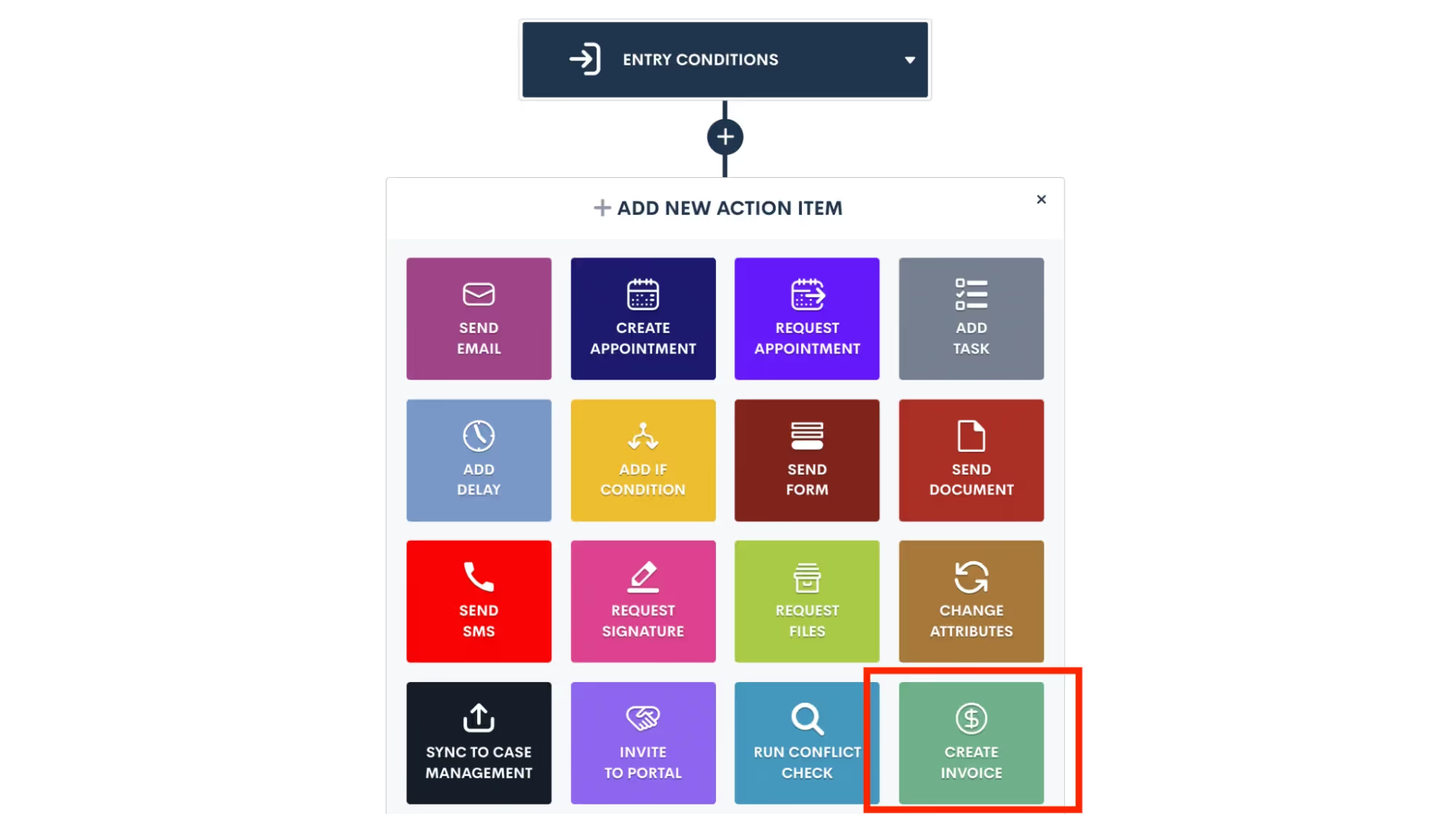
When using this action you will select your payment terms and other options as part of the automation template, just like you would do if you were sending an invoice as a one-off.
Trigger Actions Upon Payment
Additionally, you can trigger an automation when an invoice is paid. So for example, you may send out your retainer agreement for e-signature along with your retainer invoice for payment. You could then have an automation that triggers when both the document is signed and the invoice is paid for kicking off the next step in your process.
Invoice Payment Reminders
Another great way to add automation to your invoicing process is to set up invoice payment reminders. This option allows you to have an automatic email sent out, at the timing of your choosing, for any invoices that are not yet paid before their due date. Have the reminder sent the week before, the day before, or whatever other timeframe you would like.
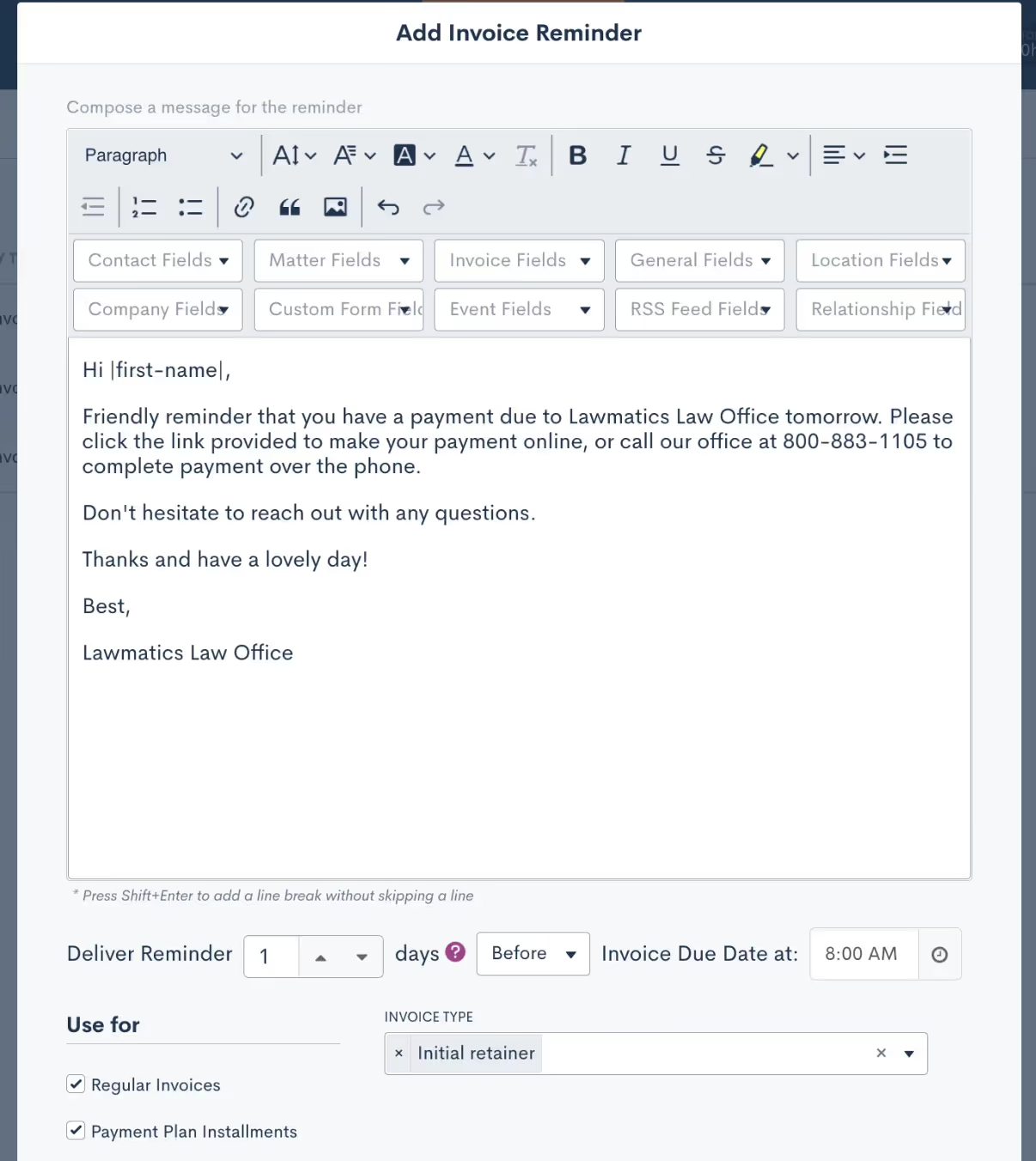
As shown above, you can also create your own custom email template for these reminders. No need to build an automation for this, simply set up the template on your Invoices page in settings and it will automatically go out at the timing of your choosing.
Conclusion
In summary, whether you are looking for the complete package of time & billing features or a simpler solution focusing on consultation payments, Lawmatics has what you need to access this functionality directly in your CRM.Most importantly, Lawmatics helps you collect your payments easily and quickly, creating a smooth experience for both you and your clients. These features work into your automations seamlessly, so you can set a workflow and forget it, knowing that it will run like a well-oiled machine.Unlike other platforms that only have one function, such as Calendly or Acuity for paid bookings or Lawpay to take payments, when you schedule paid consultations through Lawmatics you are keeping the entire process, from start to finish, in one platform.
New year, new features! 2023 is here and so is a massive upgrade to Lawmatics Tasks! We are delighted to share our exciting new Task functionality with you.
Custom Task Statuses
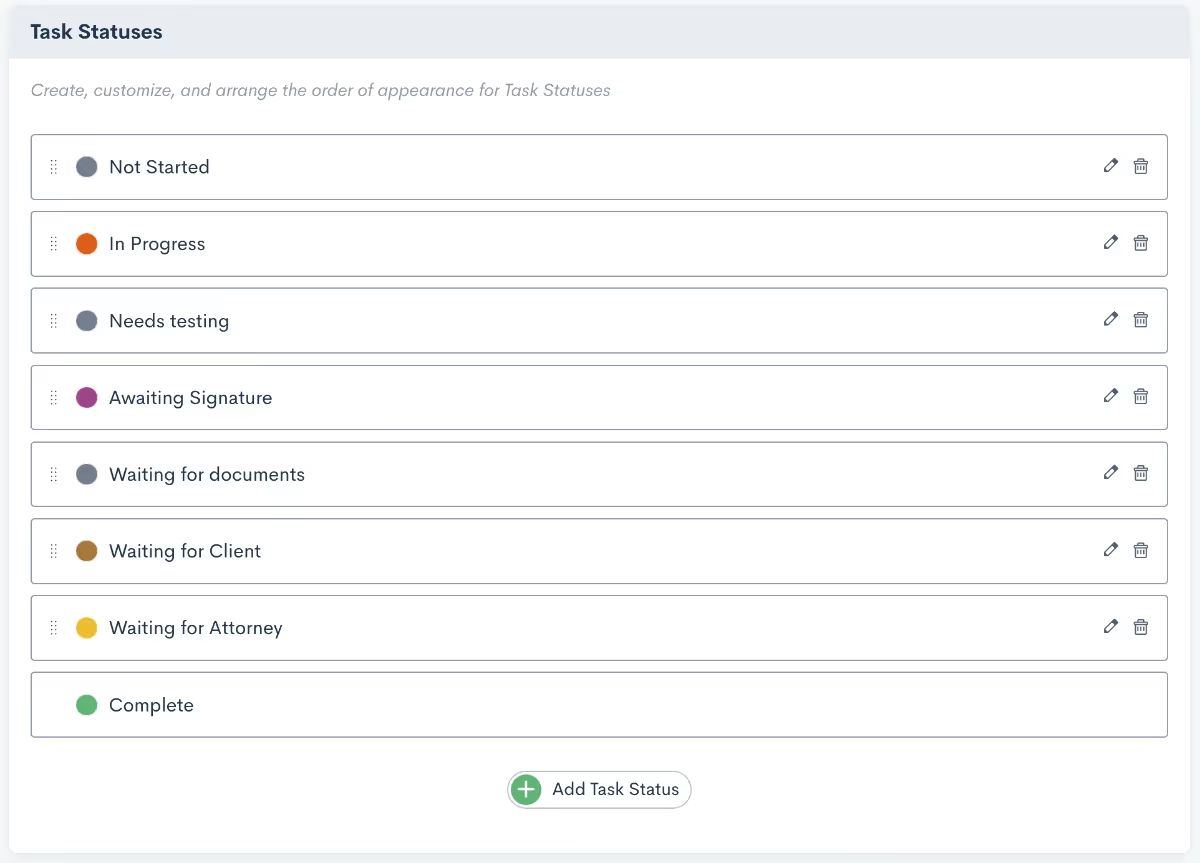
You can now create custom Task statuses in Lawmatics to further organize your Tasks in alignment with your unique operational processes. This update comes on the heels of our newest default Task Statuses such as Not Started and Waiting on Client. To create a custom Task Status, navigate to the Tasks page from the Settings menu.Learn more about custom task statuses here.
Sub Tasks
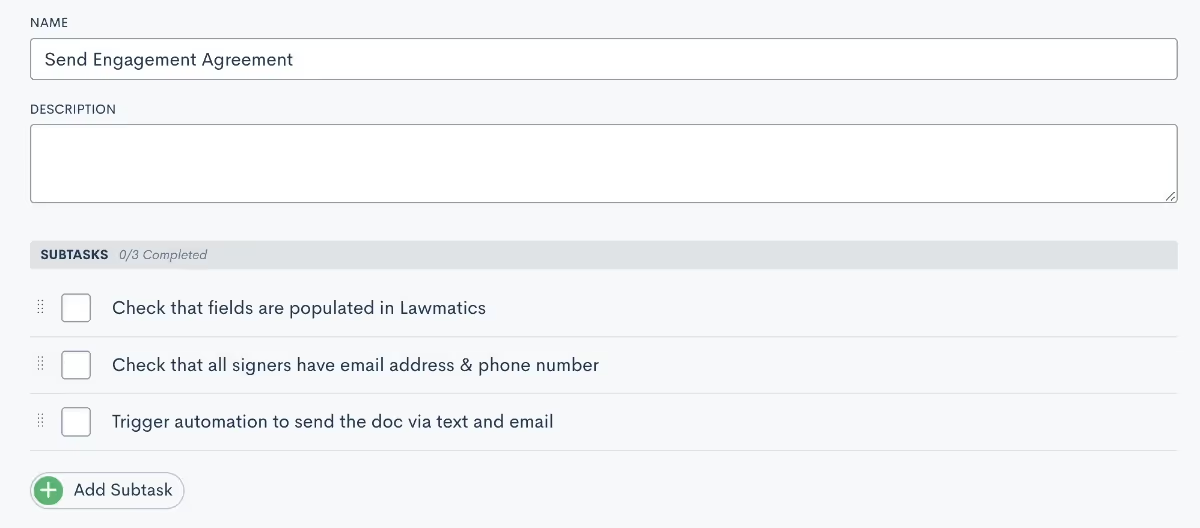
Any Task for which the work needs to be divided into smaller parts can now be broken up into Sub Tasks. Within any Task, simply click + Add Subtask and enter a brief task description. This enables your staff to easily check off each step as they work their way through a Task. Firms also have the option to toggle a setting so that automatically marks a Task as complete once all Sub Tasks are completed.Click here to read all about creating tasks.
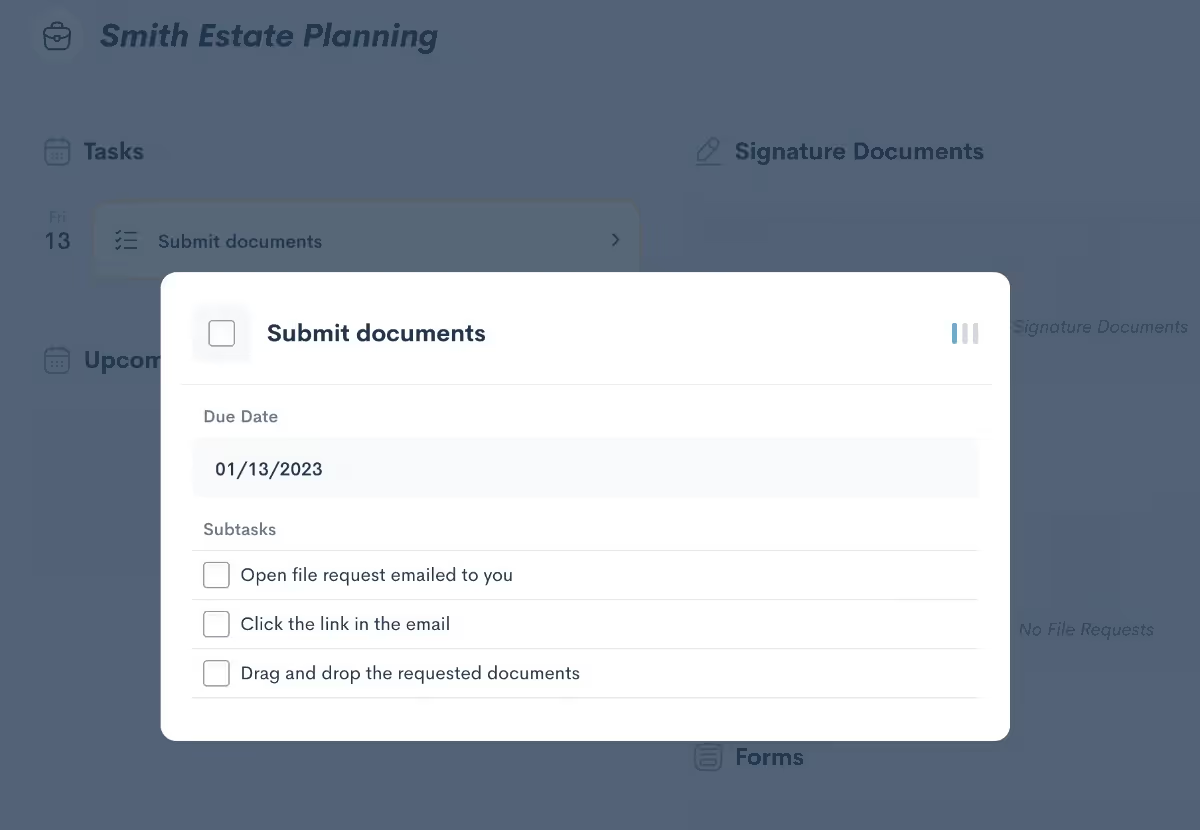
Get a refresher on using the client portal here.
Comment Thread on Tasks
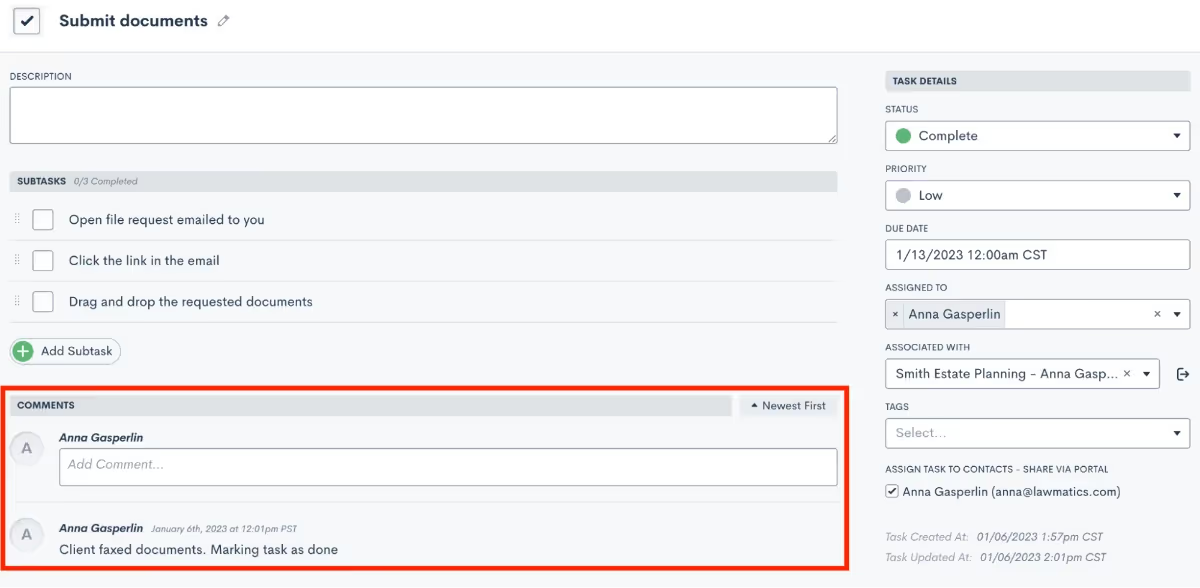
To ask questions, request extra information, or offer insight on an open Task, you can now add comments. Each comment logged within a Task is timestamped for future reference. Comments also denote which user left the comment, which comes in handy for Tasks that involve multiple collaborators. In addition, new notification options are available for Task comments so that no critical updates slip through the cracks.
@ Mentions in Task Comments
Want to leave a comment that pertains to a specific colleague? Simply type the @ symbol to select any users you’d like to tag in the comment. This is a great tool for making sure the correct person doesn’t miss any updates on action items that involve them specifically.Learn more about task comments and mentions here.
Notifications for @ Mentions in Tasks
In tandem with @ mentions in Tasks, we’ve also added a new notification option for Task comment mentions. Toggle on notifications to be notified when a fellow staff member tags you in a comment.Click here to learn about all of the notification options in Lawmatics.
Bonus Additional Features!
Custom Field Sync to Smokeball
We are thrilled to share an update to one of our most popular integrations. You can now sync Custom Fields to Smokeball via the Lawmatics integration. Whereas previously only a selection of default standard fields could be mapped from one platform to the other, you can now select any of your custom fields to map to a Smokeball field.Learn all about the Smokeball integration here.
Batch Invoicing
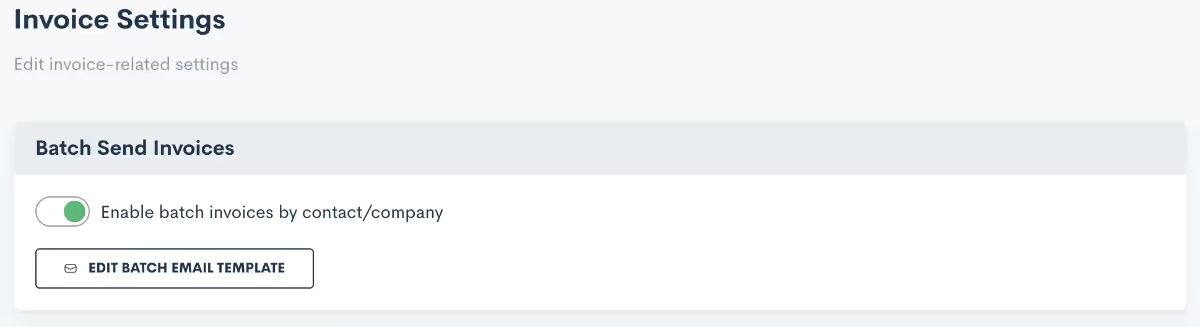
Collecting payments just got even easier with the addition of Batch Invoicing. For clients who have more than one ongoing matter with your firm, you can now send invoices for all of their matters in one batch. This allows them to receive all of their invoices for multiple matters in one email, making it easy for them (and you) to manage all invoices. We’ve also given you the option to create a custom email template specifically for batched invoices, providing extra clarity to the billing process for your clients.Read up on Lawmatics time tracking & billing here.
Even more new features we’re excited about!
- Subscribe to reports and receive an automatic email containing a summary of the report as well as an exported CSV file of said report
- Create matter file folders via automation
- Audiences will now automatically filter out contacts who don't have an email or have unsubscribed
If better organized internal communication is a new year’s resolution for your firm, this latest feature release will help you do just that. We’d love to hear your thoughts on how tasks have helped your firm, share with us at support@lawmatics.com!


We’ve had a momentous year here at Lawmatics when it comes to feature releases. From our new Time & Billing module to our MyCase Integration, you may have already implemented many of these into your practice.There may also be some enhancements and additions that you missed or have since forgotten about. This deep dive into the year’s features will give you a refresher on how you can utilize these to their fullest potential!Register for upcoming Lawmatics Monthly Deep Dives.
Matters & CRM
Client Portal Messaging
In lieu of flooding your inbox with client emails containing sensitive case information, 2-way messaging via the Client Portal conveniently centralizes all your client communications in one easily accessible place. All incoming and outgoing messages are stored in your account as part of a message thread, automatically generating a historical record of any interaction for future reference.Creating and replying to a message thread in Lawmatics is easy for both you and your clients. A new “Messages” menu item gives you a top-down view of all message threads wherein you can see all incoming and outgoing communications as well as the manner associated.On the client end, their unique Client Portal now features a “Messages” section to easily correspond with firm members assigned to their case. And to ensure no messages slip through the cracks, you can activate email or text notifications to be alerted of any incoming client messages.
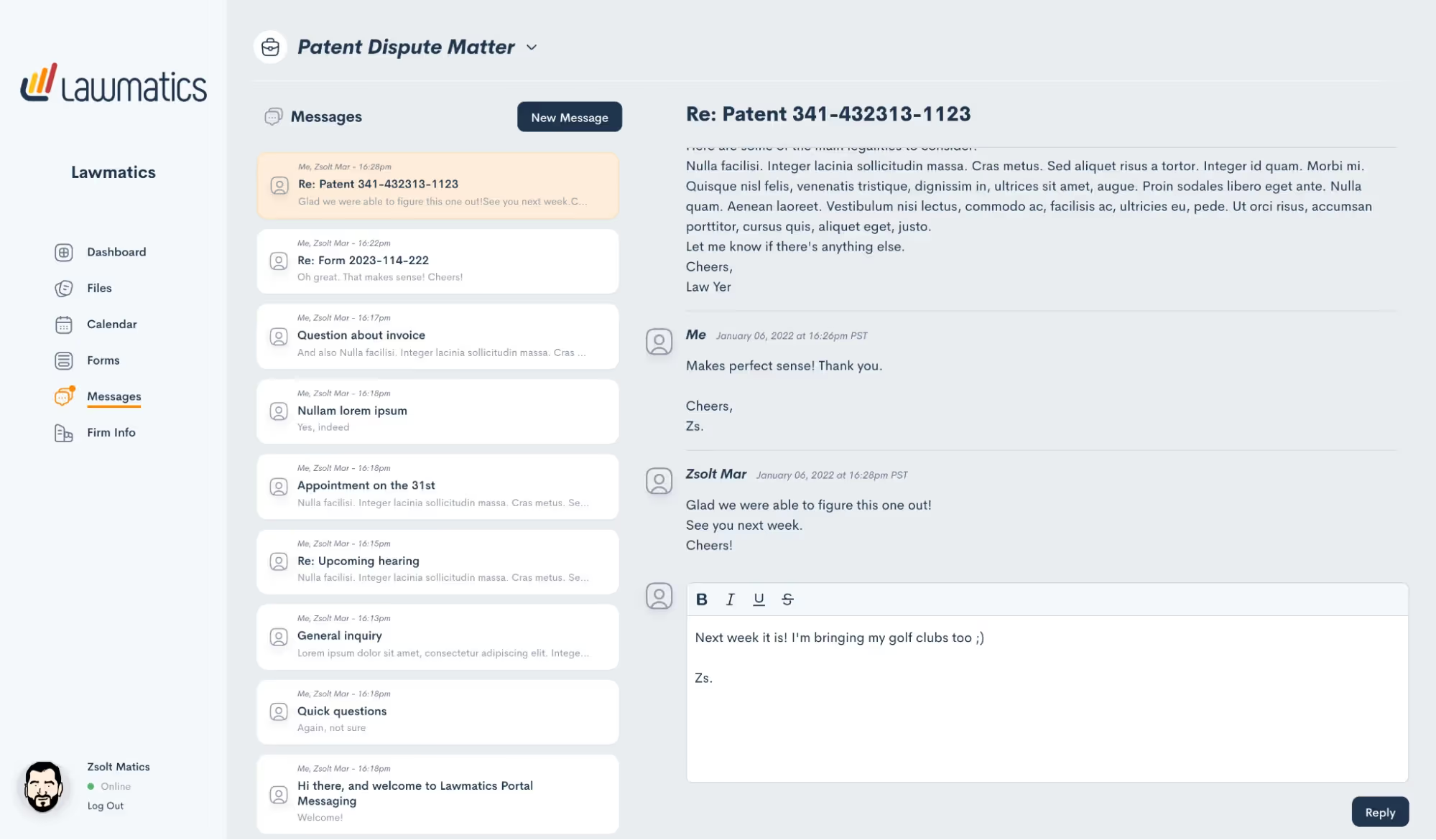
Conflict Checking
It is now easy to use Lawmatics to perform your firm’s conflict checks. Simply select the matter you wish to check a conflict for, enter your search terms, and Lawmatics will handle the rest. The system will search against all data entered into your law firm CRM, including fields and notes, and instantly alerts you if it finds a match.From there, you’re able to review any possible matches, and choose to approve, flag, or fail the conflict check.In addition to manual Conflict Checking, we’ve also added the ability to automate this process entirely and trigger further automation based on the outcome. Now you can be out enjoying time away from the office while Lawmatics handles this tedious task for you.
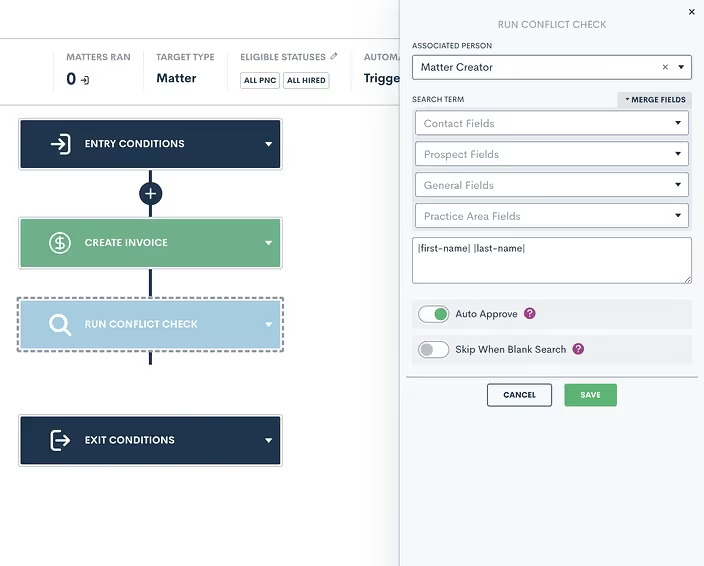
Adding to the conflict check capabilities in Lawmatics, users can now opt to receive notifications for approved, denied, and/or undecided conflict checks.
Change Main Contact/ Compact Matter
If your firm often works with matters that have more than one contact, such as a married couple, you may prefer one contact or the other to be listed as the primary name on the matter in your CRM. To that end, you can now easily swap the main contact on a matter from within Lawmatics. Simply click the arrow icon adjacent to a contact's name in their profile, and then select an alternate contact from within your CRM. The same functionality is applicable to company matters. This new feature helps you keep your CRM organized and accurate so that you can always find your matters with ease.
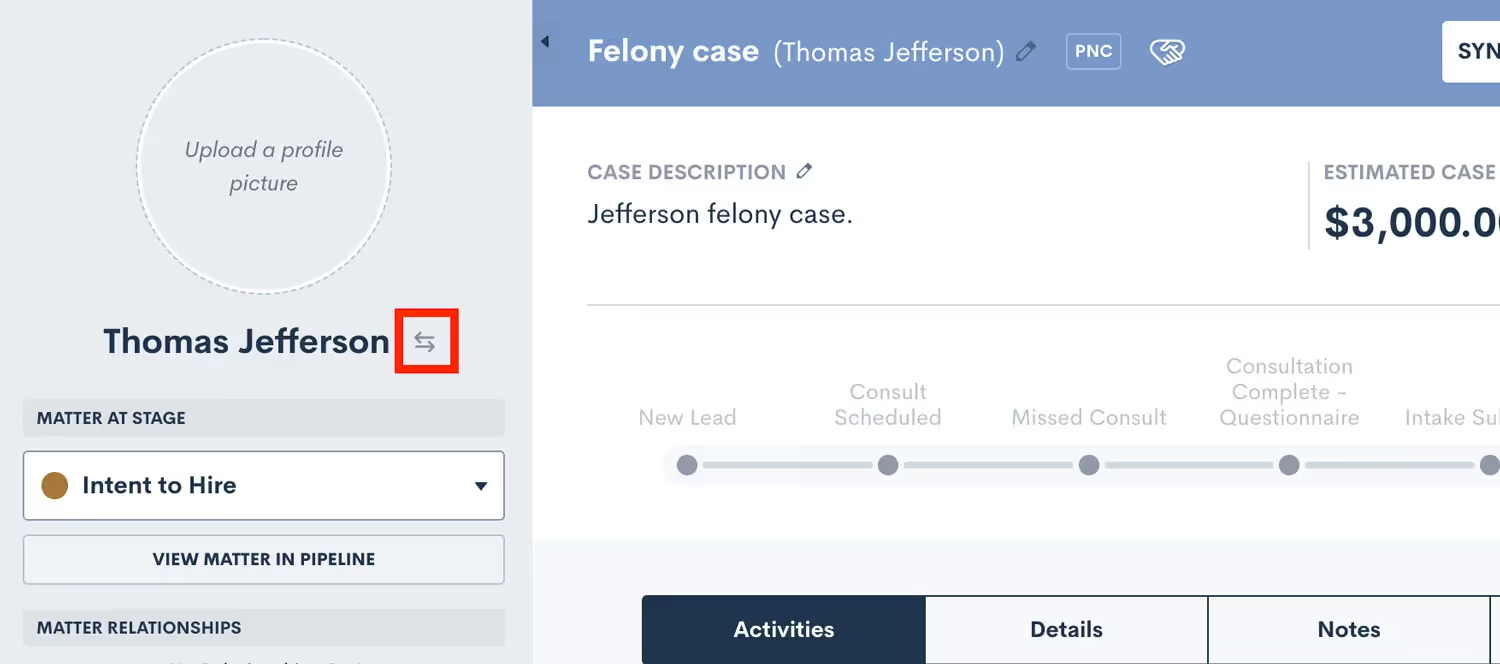
File Folders & Bulk Actions
Lawmatics is a great tool for securely storing important files and documents from your firm’s many matters. With this huge improvement to our file storage system you can now create custom folders within a matter’s files tab and move files between folders as needed.In addition to creating folders for your matter files, you can now bulk select files with the option to download or delete multiple files at once, saving you the time of managing files one by one. It’s easy. Simply select the box adjacent to the file name and click on the action of your choice.

Matter Auto-Numbering
To easily track down and reference cases in your docket, you can now auto-generate a case number and custom title into a matter’s title field as unique identifiers. Further refine your case numbering sequence by adding custom text or database fields such as practice area, lead attorney, client’s last name, etc.
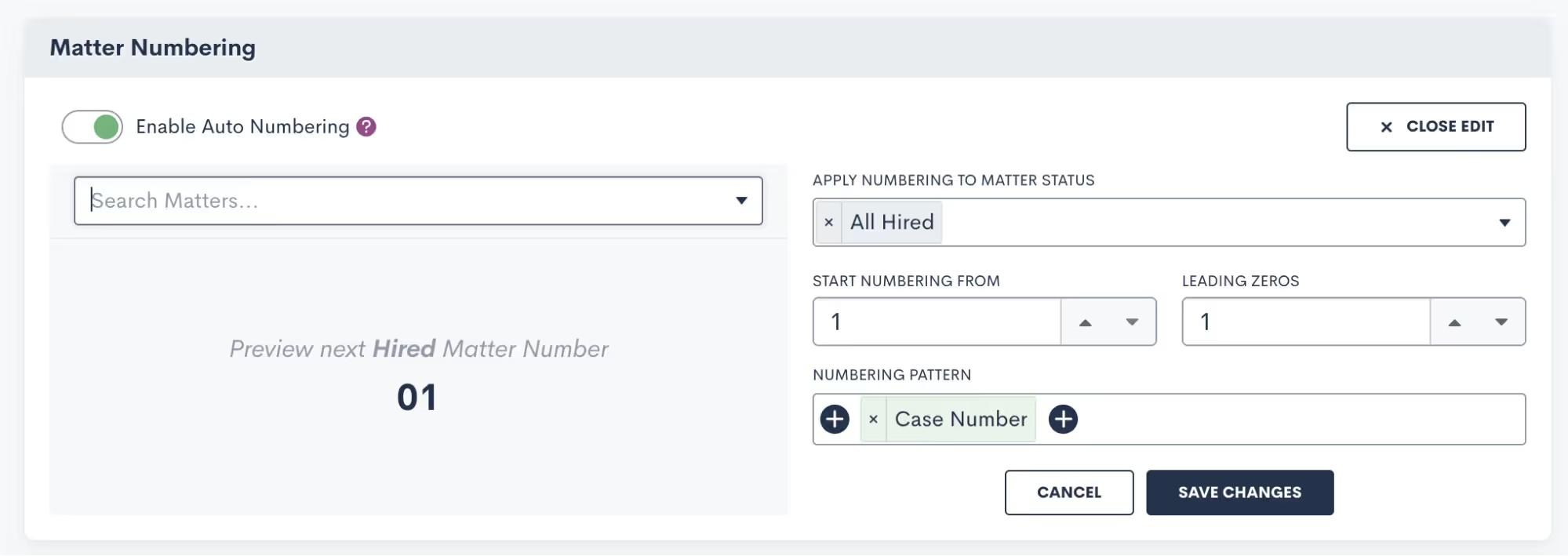
Once saved, the resulting case title format will automatically be applied to each of your matters moving forward. Begin auto-numbering your cases by navigating to the Matters page within settings, scrolling down on the page and toggling on “Enable Auto Numbering”.
Emails
Scheduled Email Sends
By popular demand, you now have the ability to control when your email messages are sent and arrive in your recipient’s inbox. In addition to sending automated and immediate one-off emails to matters, any email created either from a template or from scratch can now be scheduled to go out at a future date and time.

User Permission Options for Viewing Emails
Confidentiality and discretion are paramount when dealing with sensitive client information. While logging your external emails in Lawmatics can be helpful, you may not want the entirety of your staff to have view access to these emails on a matter’s timeline. With our new External Email Role Permission you can now easily limit any user’s access to view email communications, without limiting their access to the matter all together. To use this new permission, go to the User Management page in your Admin Settings, Click Manage Roles, edit the role you wish to apply this restriction to, and then uncheck the All Emails option, as shown below.
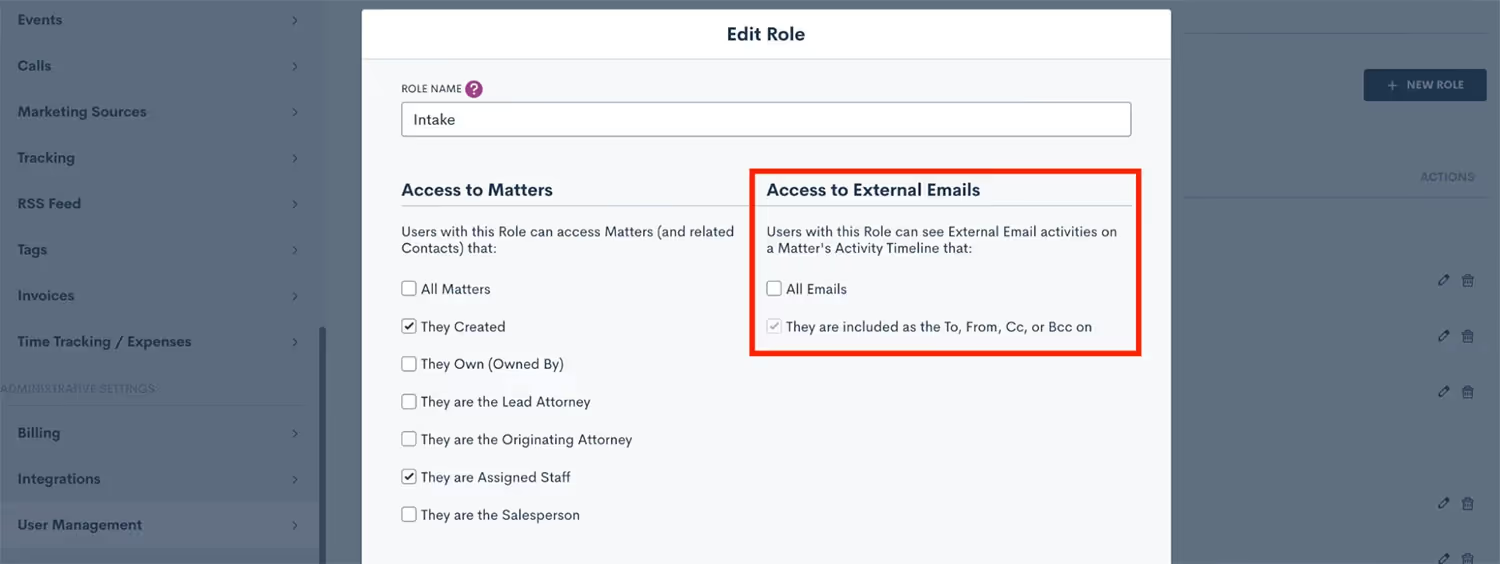
Send From Outbox
A highly anticipated feature among Lawmatics users, any emails sent via Lawmatics can now be set to appear in the outbox of your preferred email client. This update will help improve your firm’s email organization by storing all email correspondences in one central place — alongside your other communications.
Once activated, any email sent to or received from an email address that is tied to a matter in Lawmatics is automatically logged in the timeline for that matter. And for quick reference, you can easily go to your outbox to see all emails sent from your address, including those sent via Lawmatics.
Documents
Resend Expired Signature Requests
Delays happen; it’s the nature of the business. What you don’t want is for those delays to translate into lost time for you or your staff. For that reason, we’ve rolled out a new shortcut in Lawmatics that allows you to resend any expired documents requiring e-signature.Any document with a status of “Expired” is eligible for a resend, with the added option to extend the e-signature link deadline. No need to send a new e-signature required document from scratch.
Add Page Breaks to Custom Docs
Custom Documents, with their conditional logic and dynamic e-signature capabilities, have long been a Lawmatics staple for fee agreements and other important firm documents. With the new addition of page breaks, we’ve made it much easier to maintain the look and layout of your new and existing document templates.To add a page break, simply edit the document, and drag over a page break from the Standard Blocks menu. Any text below the page break will automatically be placed at the start of a new page when the document is previewed and/or sent.
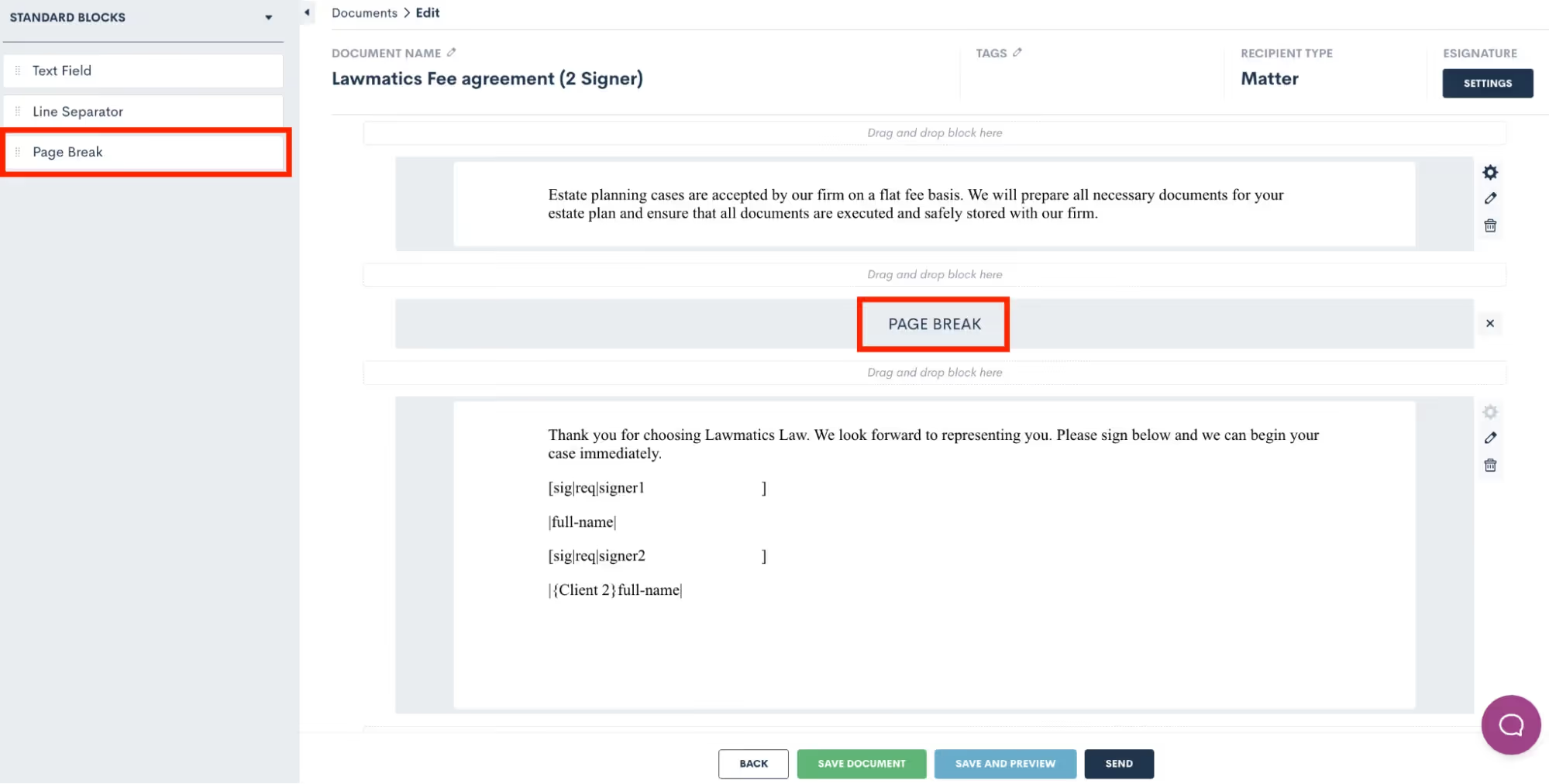
Forms
Set Conditional Logic Multiple Conditions
Onboarding should be a seamless process for all prospective clients, regardless of the circumstances of their inquiry. This update in Lawmatics allows you to add multiple conditional fields to your intake forms using AND or OR logic. These fields then only appear based on the responses entered into previous fields.
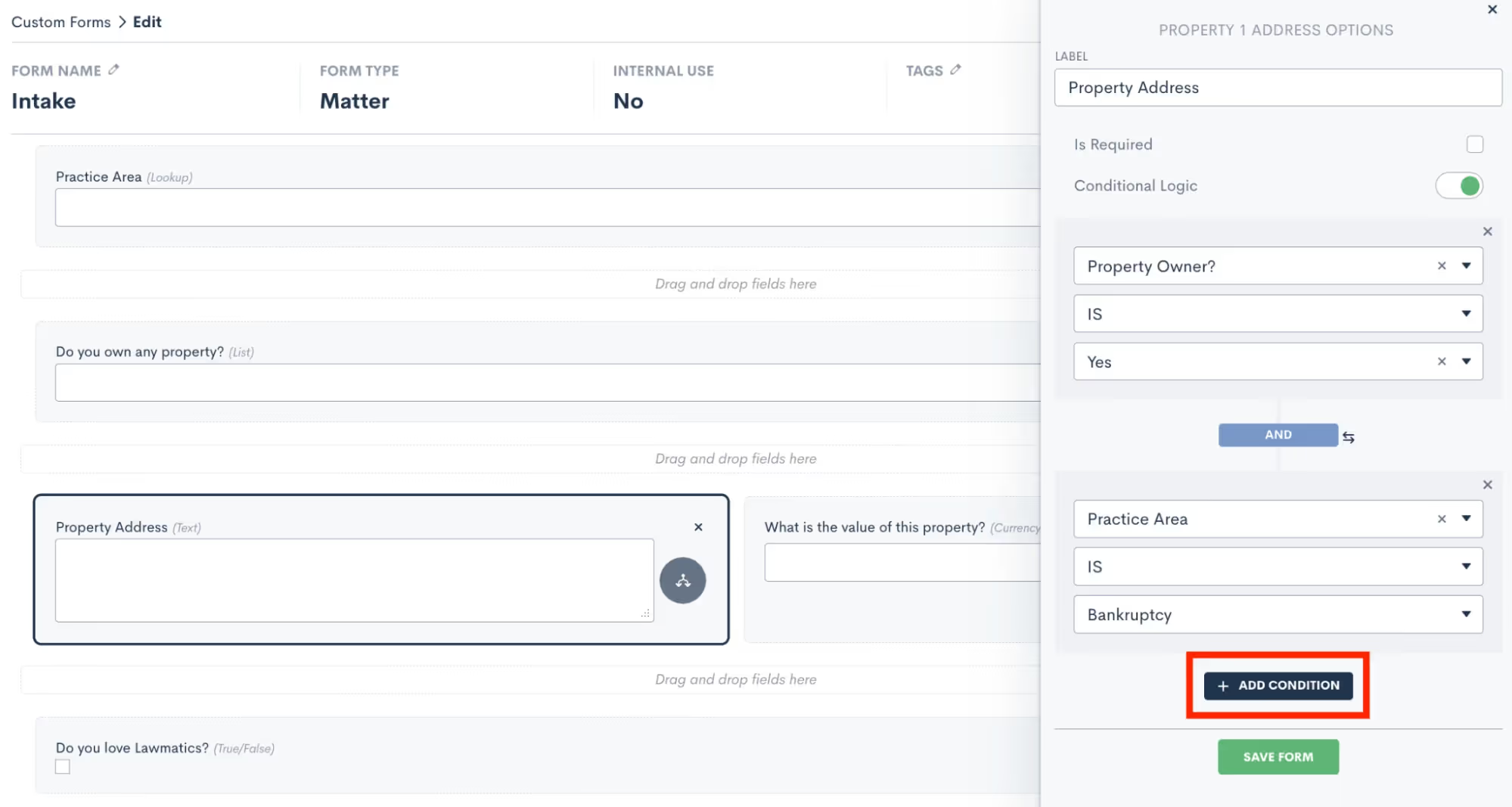
Hidden Form Fields & Default Value
Did you know that you can trigger automatic updates to a client’s contact information, matter information or even stage in your sales pipeline whenever they fill out a form? Hidden form fields do just that.This feature allows you to set form defaults by making any field on a custom form ‘hidden’. You will add the field to your form, select the “Is Hidden” option, and then enter your default value. Your lead or client will not see that field on their form, but when the form is submitted it will auto-submit the hidden value along with the rest of their information to trigger any actions or changes to their information in your Lawmatics account.
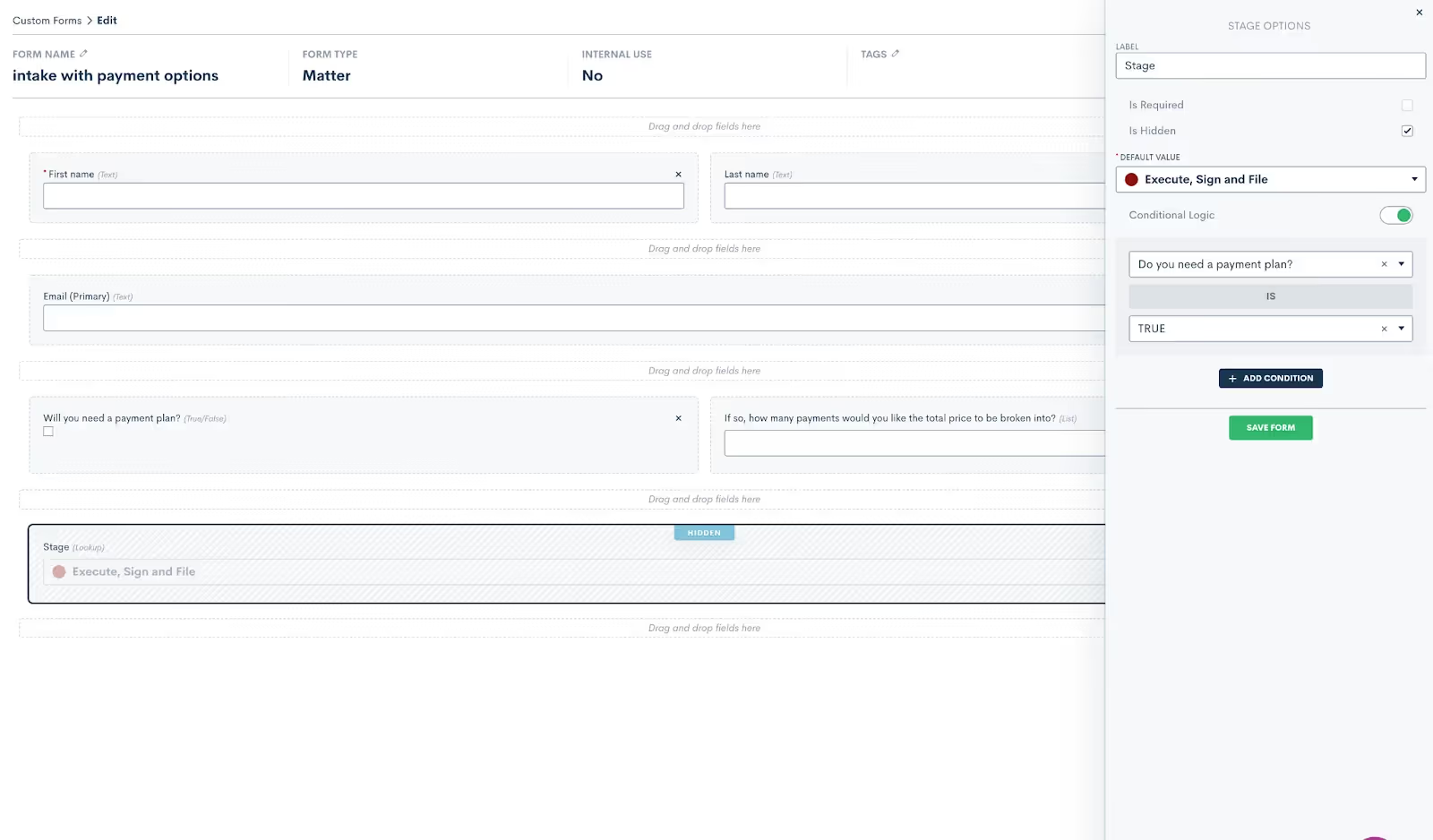
This helps you efficiently track your intake pipeline as simply as possible while eliminating the need for certain Automations previously set to update default values, the sales pipeline stage of a matter, their tag, practice area, etc.
reCaptcha on Embedded Forms
Lawmatics Custom Forms make it easy to capture new prospective client inquiries from your website, and we’ve now made this feature even better with the addition of reCaptcha. This technology prevents spam bots from entering your Lawmatics contact database via the ‘Contact Us’ form embedded on your website, ensuring that your account is protected against disruptive spam leads.reCaptcha can be added to any embedded form via the form Settings menu in the left sidebar. Simply toggle on the reCaptcha option the reCaptcha will be activated anywhere this form is embedded - no further steps need to be taken.

Access Existing Contact from Internal Form
Internal forms have long been a user-preferred way to create new matters for new contacts in Lawmatics. A new dropdown menu option in our internal forms feature now lets you create a new matter for an existing contact or company when filling out a form.
Simply select the contact for which you wish to create a new matter and Lawmatics will pre-fill the form with their existing contact information. Upon form submission, a new matter will be created for said contact.
Booking Form Updates
Automatic scheduling is a favorite feature of many Lawmatics users, and this year it got even better. To accommodate virtual meetings in addition to face-to-face meetings, you can now select Zoom as a meeting location option, along with any of your physical office locations on your Booking Forms. Furthermore, we added the ability to allow multiple attendees in one event. If any of your matters involve the representation of multiple clients, easily add them both to the meeting invite. With the growing popularity of virtual meetings, these upgrades grant your clients the flexibility to choose which option works for them, and have the zoom link added in automatically when needed.
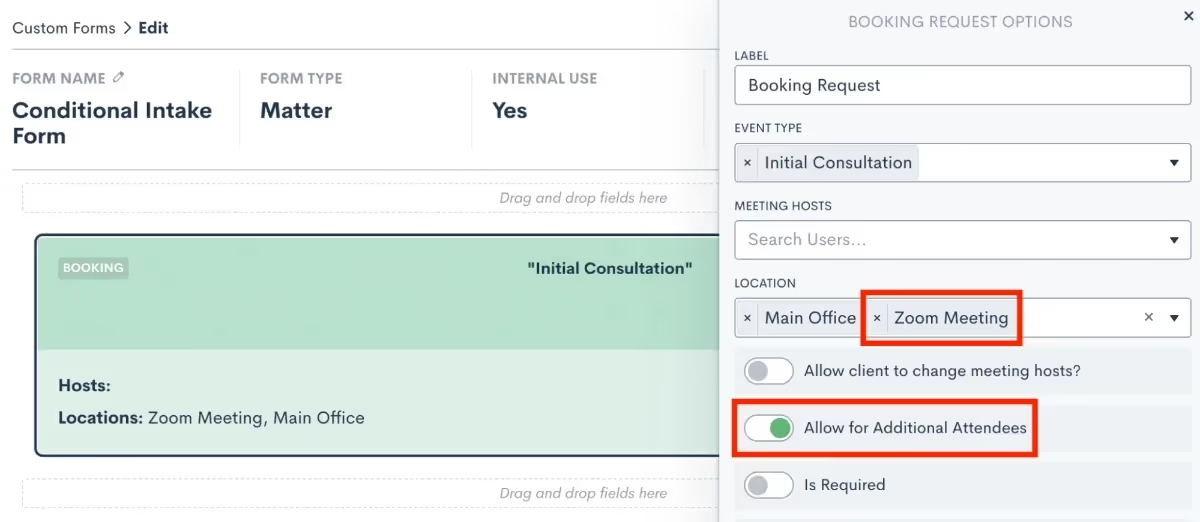
Automations
Set Multiple Entry Conditions with And/Or Relationship
You can now designate multiple entry conditions (or triggers) that add contacts to an Automation workflow, automatically. Using AND or OR logic, triggers such as form fills and eSignature completions can be paired or conditional.Entry conditions can be added easily within Automations in Lawmatics by clicking on and toggling the AND /OR labels, after which you can select your Workflow Entry Rules.
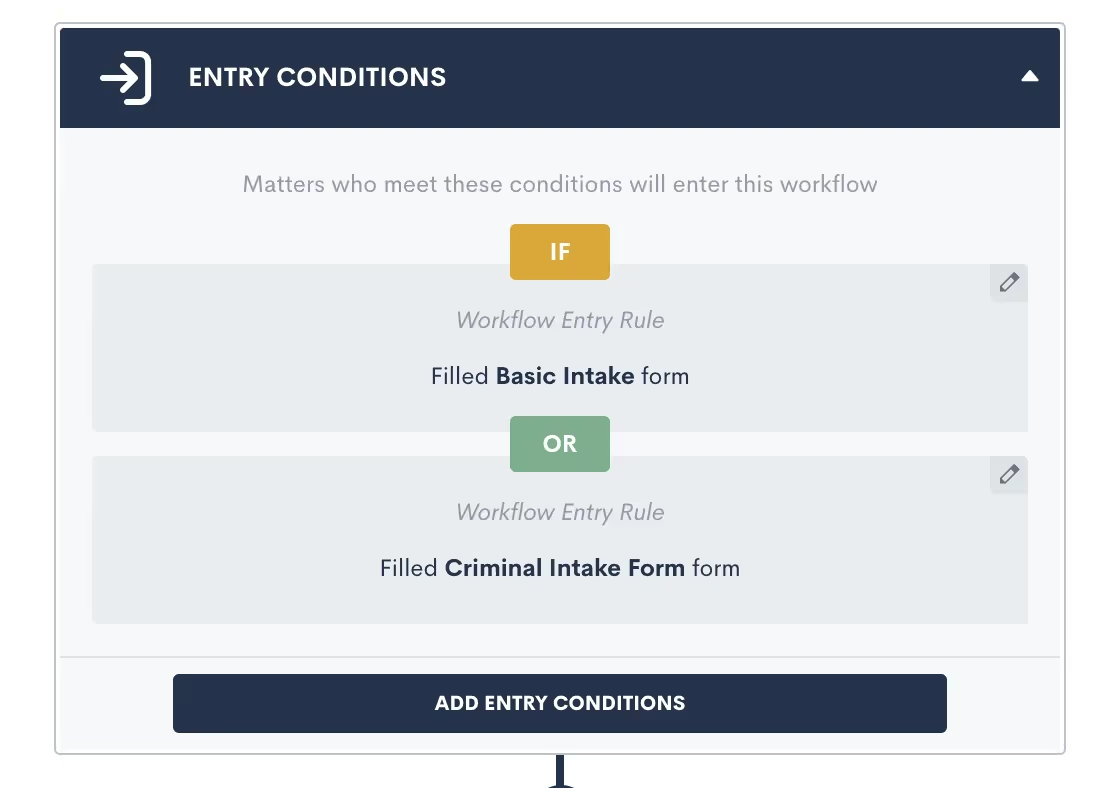
Date Field-Based Automations
You can now create time-relative automations (one hour before, two days after, etc.) for any date type field in Lawmatics. Our new Date Field-Based Automations take the existing concept of event-based automations and apply it to date fields. This new functionality allows you to trigger automated reminders or check-ins relative to a client’s court date, filing date, anniversary, or any other custom date field you may use in your practice — all from simply populating the date into a date type field.When creating a new automation you’ll select the Date Field option, then select from any of your firm’s date type fields as your target field to create a Date Field-Based Automation. You can then add your time-relative automations by clicking on the yellow label at the top of your page (highlighted below).
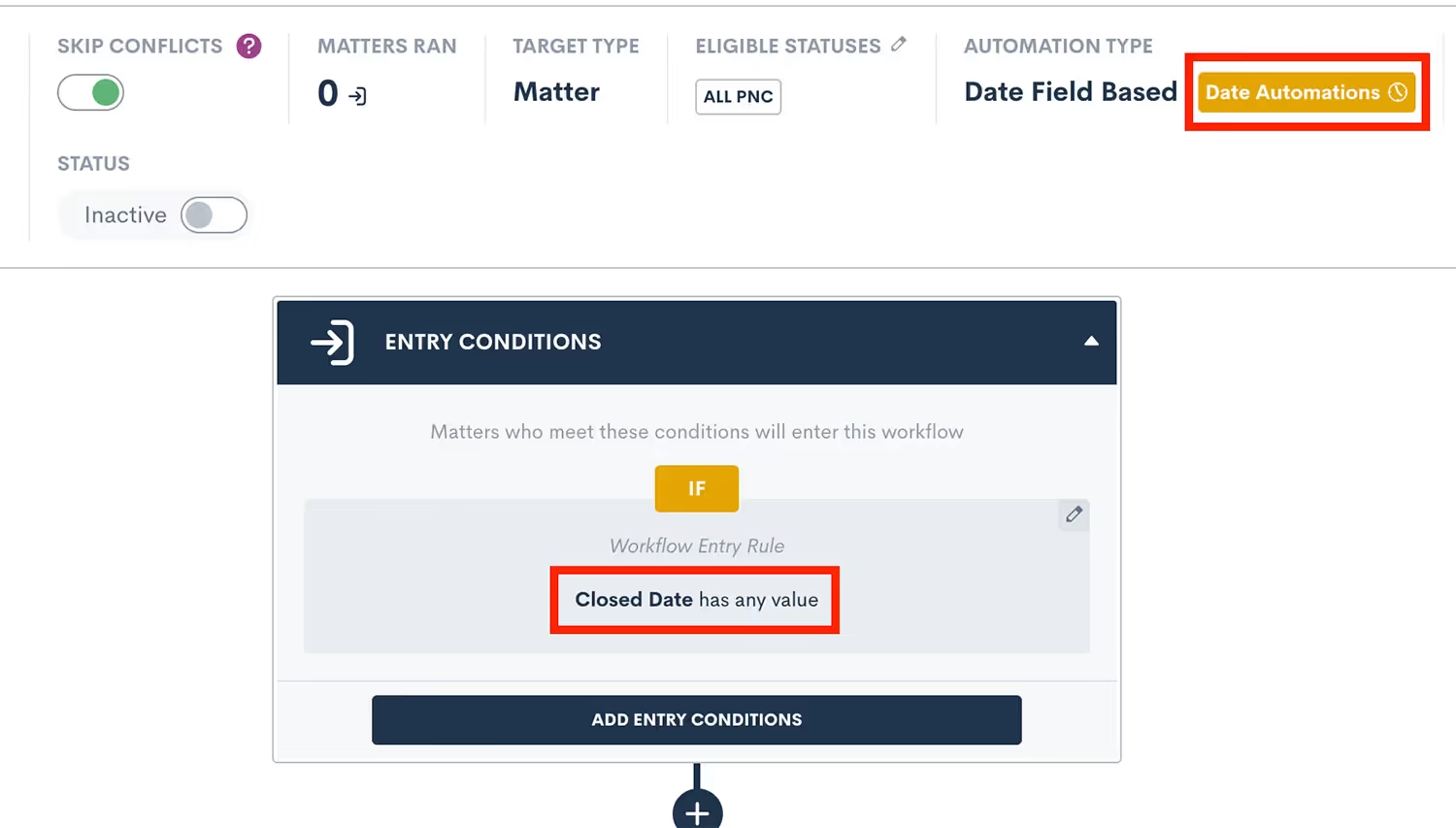
Time & Billing
Invoice Automation
You can now automate the delivery of your flat fee invoices! Automations in Lawmatics feature a new Create Invoice automation action that generates an invoice for any matter with a balance due that it runs on. Doing so enables you to accelerate your billing process in a manner that gets you paid faster while freeing up time to focus on other priorities needing your attention.
Payment Plans
For firms who want to offer their clients more flexibility of payment, use this new feature to set up invoice installments to be paid over time on a fixed cadence.
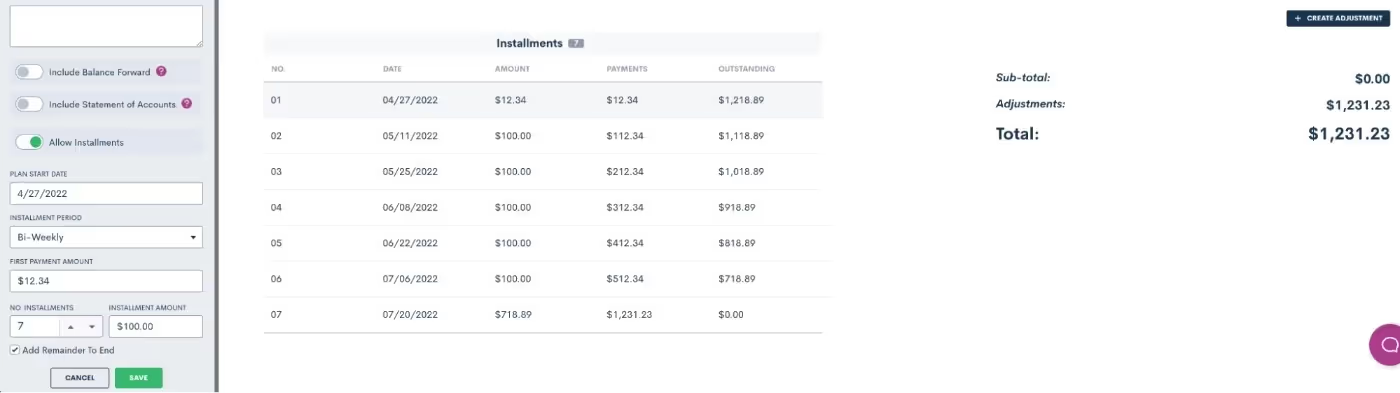
Of course we’ve made this feature highly customizable, allowing you to create unique terms for each individual payment plan as needed. This includes setting an initial payment amount, interval length, and the number of installments.
Custom Forms Payment Gateway
Collecting payment for consultation fees just got a whole lot easier with the addition of the LMPay Gateway in custom forms and booking forms. Add this advanced field to your consultation forms to make it easy for clients to schedule an appointment and pay for a consultation in one fell swoop.
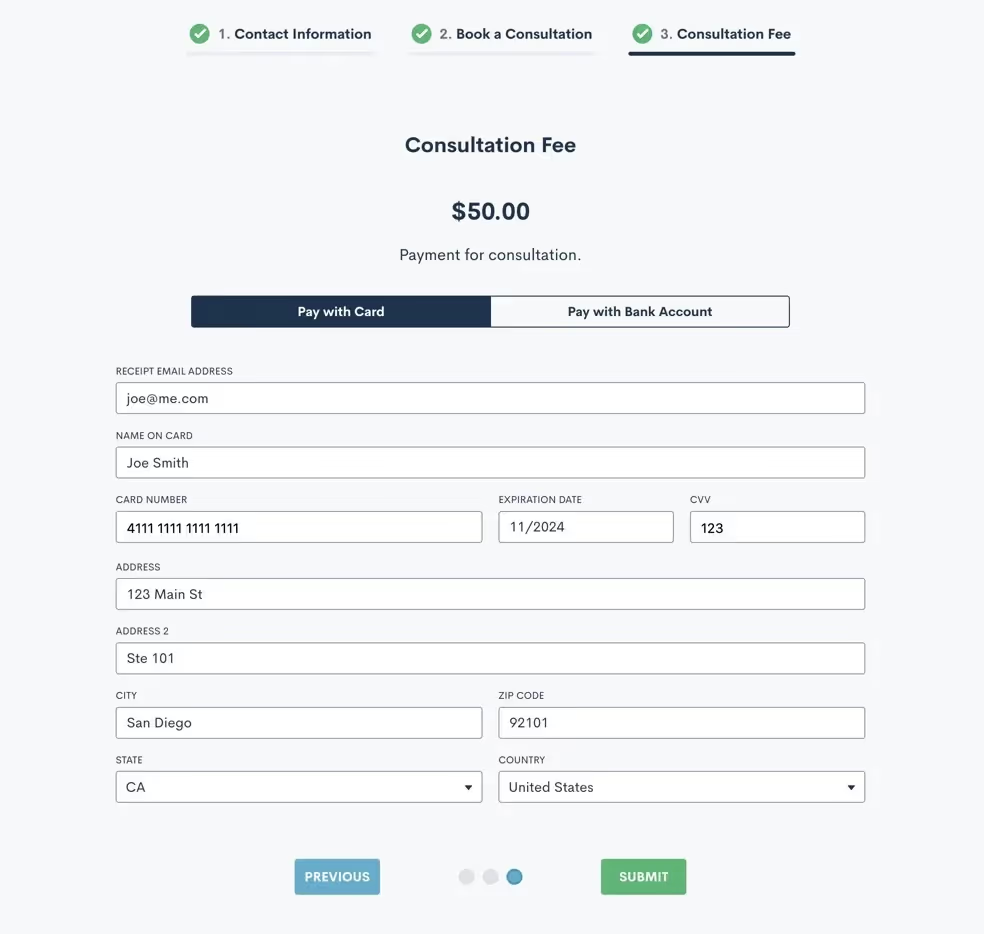
Hours Billed & Payment Activity Reports
Our new Hours Billed Report provides a real-time snapshot of billable hours based on criteria of your choice, so you can make business decisions accordingly. Get as granular as you need with your report by selecting one or more of the following search criteria: date range, user, and practice area.
Use the Payment Activity report to set custom filters for the date, payment method, and/or contact. Run the report to see a snapshot view of the payments that meet your criteria, making it even easier to keep an eye on your firm’s incoming cash flows.
Evergreen Trust Alerts & Request Funds for Trust
Our new Evergreen Trust Alerts give you the option to set a minimum trust balance notification, making it easy to take action when a matter’s trust balance dips below the minimum you have specified.
To use this feature, turn on the toggle on the ‘Minimum Trust Balance Alert’, as shown above, and then click the edit pencil on the far right to set the minimum balance for a particular matter.Another addition to our Time & Billing system allows you to request funds from a matter for their trust account with the option to let them pay via credit card. Paired with your minimum balance alerts, this will help ensure that a client’s trust balance stays above your designated minimum amount.
Custom Invoice Reminders
Avoid the frustration of seeing past due invoices go unpaid by notifying clients of an impending due date or past due balance. Reminders can be sent relative to the invoice due date, such as the week before or the day before, or anytime after. Customize each invoice reminder by using merge fields in your email reminder template and even create different templates for your different invoice types.
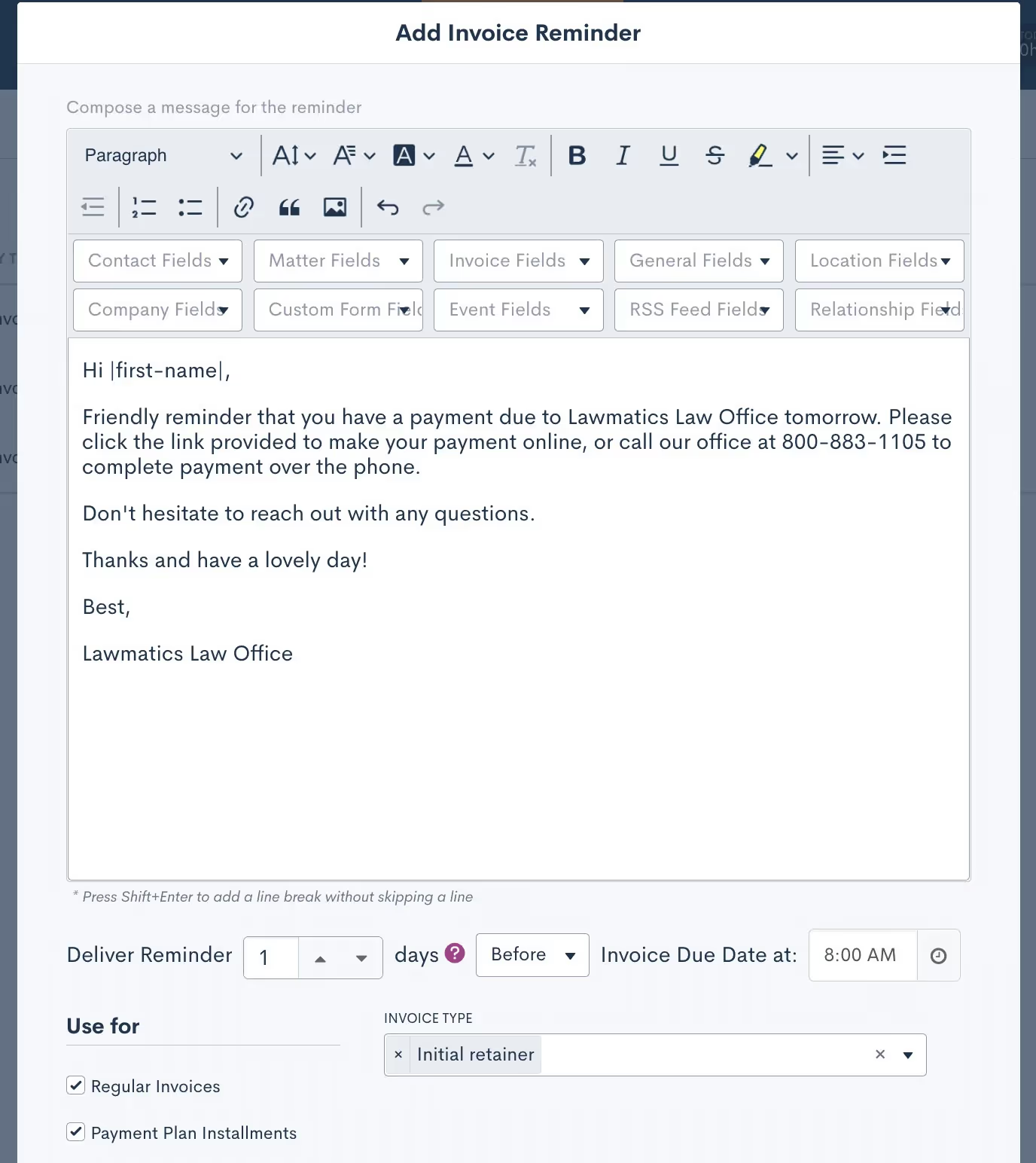
Settings
Update Contacts and Matters Via Import
In addition to importing contacts and clients into your Lawmatics database for the purpose of data migration, you can now use imports to update existing records in Lawmatics with new information. This is especially useful if you are migrating data from multiple software solutions or if you erroneously imported a contact list with missing information.When importing a list of contacts into Lawmatics, a new option appears to Update Existing Records in your database. Simply select .CSV file to upload, check the box, and all existing records with matching email addresses will be populated with any new field information.
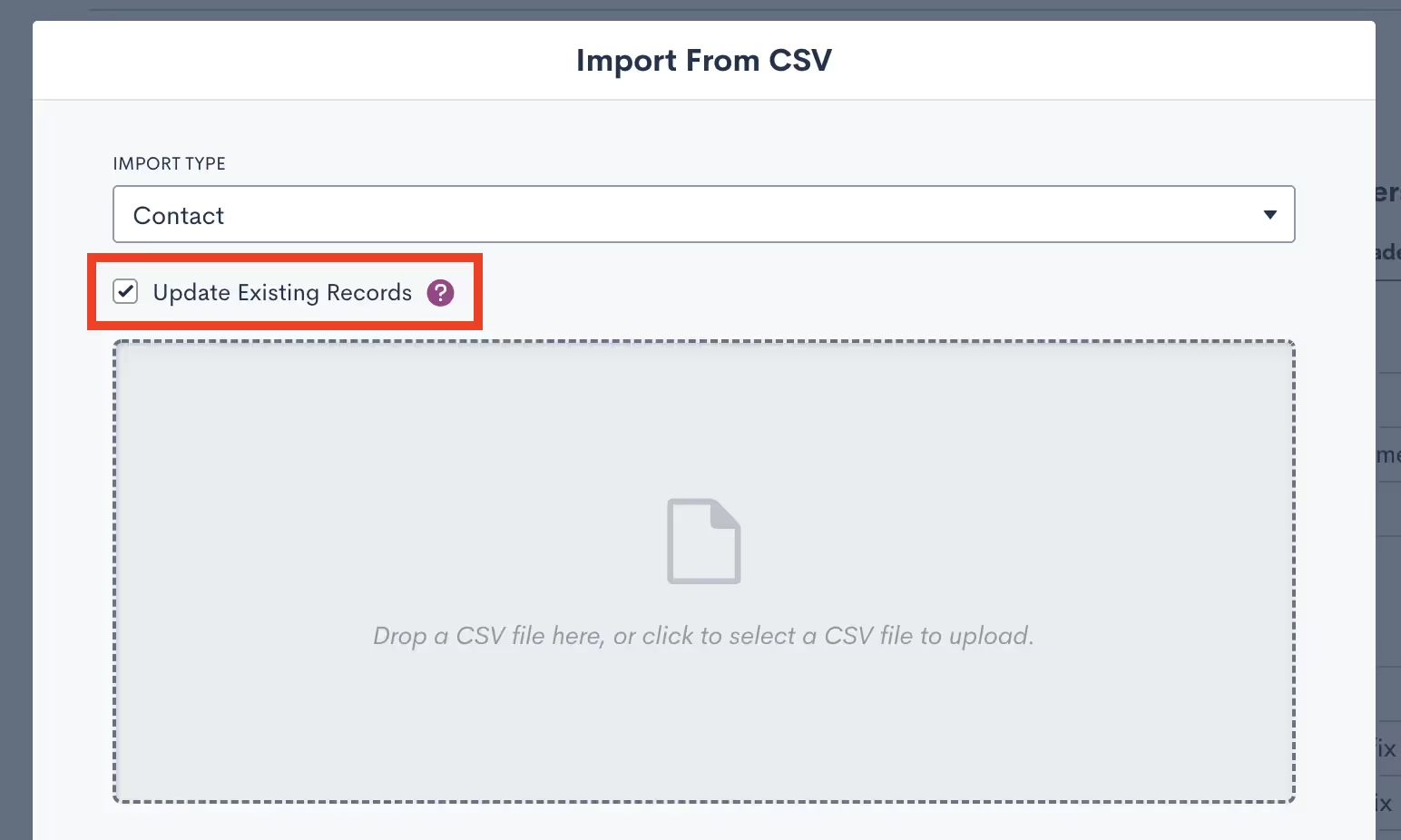
Appointment Availability Settings Improvements
Several new upgrades to one of our most beloved time-saving features, Booking Links, help you further customize your calendar availability so that you can ensure you and your staff are booked automatically and appropriately for each of your firm's event types.First, specify at which intervals you’d like to be available for people to book a meeting with you. For instance, if you select 15-minute intervals, people are able to book you at 9:00, 9:15, 9:30, 9:45, etc, based on your availabilityYou can now also customize your “time before” as well as your “rolling period” for all custom event types. “Time Before” refers to how soon you can be booked by someone whereas your “rolling period” refers to how far in advance you can be booked, allowing you to specify an ideal booking window per lead or client.
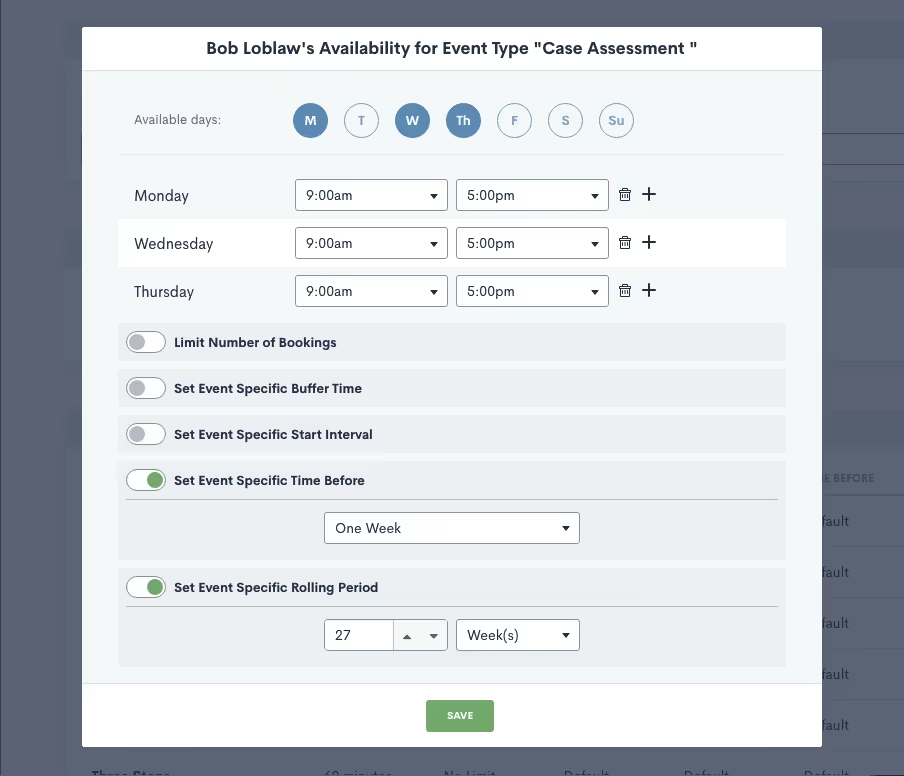
Integrations
MyCase
Lawmatics users can now automatically or manually sync matters over to MyCase. Any records that have been created in Lawmatics as matters will be pushed into MyCase along with corresponding details like notes and files. The integration, which takes only moments to activate, saves users time by eliminating redundant tasks and matter creation.
QuickBooks
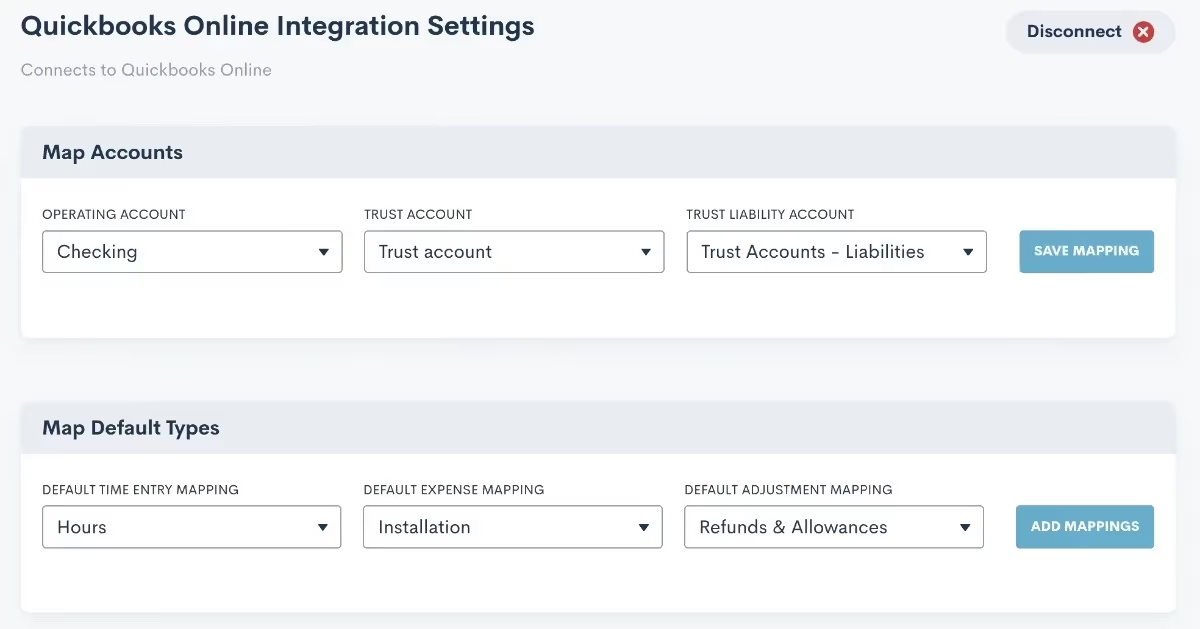
Automatically create a customer and invoice in Quickbooks when an invoice is sent to a matter via Lawmatics. Map your accounts, field types, time entries, and expenses to ensure that pertinent matter data syncs from Lawmatics to Quickbooks. Whether you or a fellow staff member manage your firm’s books, this integration is sure to make invoice generation a breeze.
New Zapier Trigger
For any software that Lawmatics doesn’t directly integrate with, there’s Zapier. This powerful third party tool enables you to connect the robust features of Lawmatics to any of the thousands of other applications available within the Zapier platform.While you may already know and love our popular Zapier triggers such as ‘Matter Converted’, ‘Filled Out a Form’, among many others; we are happy to add yet another trigger, ‘Appointment Created’.Here at Lawmatics, we couldn’t be more excited for all we have in store for 2023, but we are also thrilled at this retrospective of features that have been released this year. We are privileged to be working with so many wonderful firms who use Lawmatics and share new feature ideas and incredible feedback with us.Thanks for following along as we continue to develop and grow Lawmatics. Wishing happy holidays and a wonderful new year to all of you!
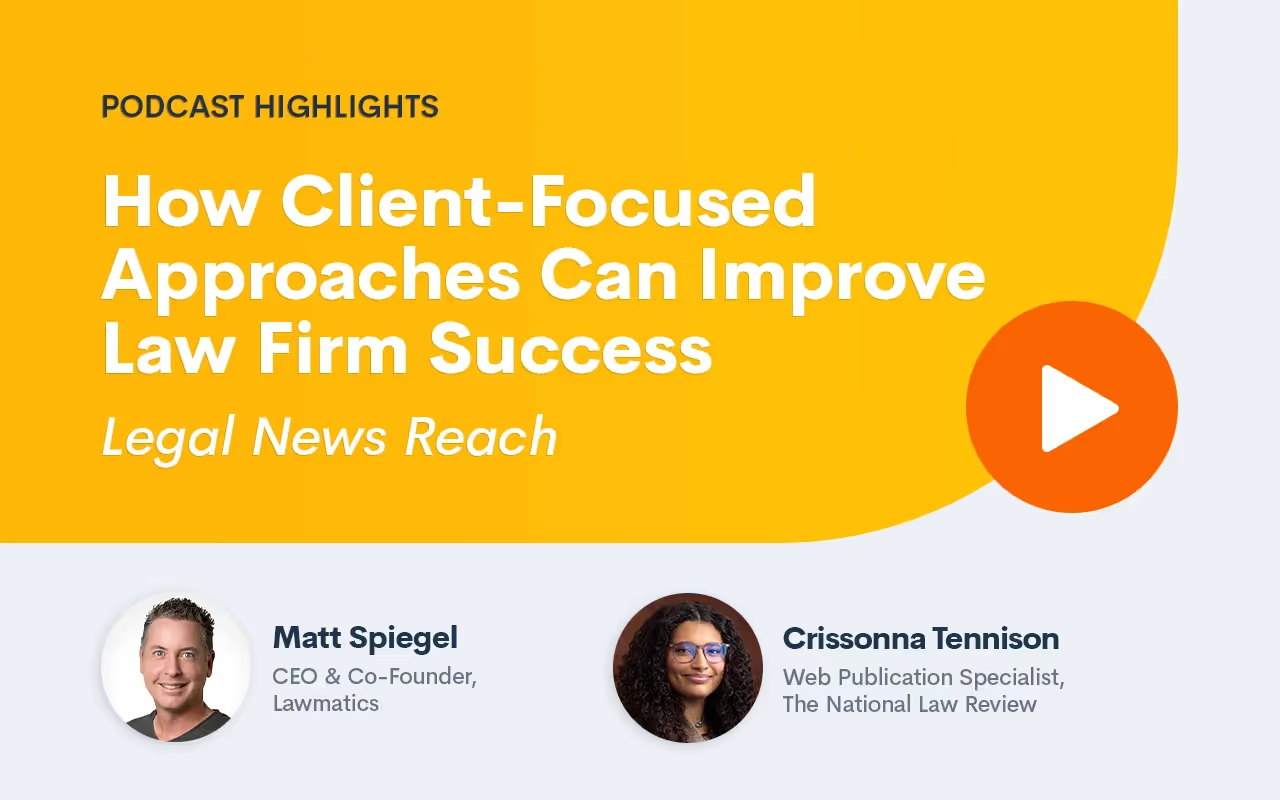
In the latest episode of Legal News Reach, Lawmatics founder and CEO Matt Spiegel joined host Crissonna Tennison to discuss what it takes to set up a law firm for success. They talked about what a growth mindset looks like at modern law firms. Here are some key takeaways:
The legal experience
Law firms don’t just provide legal services; they provide legal experiences. In addition to judging attorneys by case outcome, clients judge their attorneys by less tangible metrics:
- What was attorney-client communication like?
- Did the attorney follow-up with the client in a reasonable time?
- Was the process of making an appointment and sharing documents quick and convenient?
For modern law firms to surpass client expectations, they have to consider and design for the client experience.
Your law firm as a business
The client experience is why you need to evaluate your firm’s processes as both a lawyer and a businessperson. Along with building your firm to produce legal outcomes, you need to build it to produce business outcomes:
- How is your marketing strategy targeted?
- What’s your strategy to grow the size of your firm’s staff?
- How will you secure the reviews and referrals that are crucial to acquiring new business?
When you’re balancing your legal and business priorities, the tasks pile up and the to-do list runs longer and longer. You can only get so far with manual processes. Modern law firms are capable of a dynamism that’s only achievable with a sophisticated tech stack and an understanding of a law firm as a business.
Final thoughts
Modern businesses have entered a new era of potential because of the tools at their disposal. While CRM and marketing automation platforms have been widely adopted in other industries, only recently has the legal industry gained access to similar tools that can meet the unique needs of law firms. With legal automation software like Lawmatics, you can do more while having fewer to-dos. Freeing up valuable time from administrative work allows you to design and deliver the best possible client experience.
Podcast transcript
Crissonna Tennison
Thank you for tuning into the Legal News Reach podcast. My name is Crissonna Tennison, Web Publication Specialist for the National Law Review. In this episode, I will be speaking with Matt Spiegel, founder of Lawmatics. Matt, can you tell us a little bit about your background and what led you to start Lawmatics?
Matt Spiegel
Yeah, sure. So first of all, I'm very excited to be here, so thank you guys for having me. But yes, I’m Matt Spiegel, I am the founder and CEO of Lawmatics. I was a practicing lawyer, I don't actually practice anymore, I haven't practiced in like 11 years or so, but I still have my bar card. Long story short, I had a problem at my law firm that I wanted to solve with technology, and ended up starting a company called MyCase. So I founded MyCase, back in, like 2010. For those of you that don't know, MyCase is now one of the biggest practice management software platforms on the market. So I was the original founder of that company, I also ran the company for five years. And then I left, and after a couple years doing some things unrelated to law and legal tech, I decided to come back into the legal tech space. I'm a glutton for punishment, and Lawmatics was what I decided to build. And it was really a product of what we saw when I was at MyCase. We saw the shift in the market, we saw lawyers starting to think about their law firm like a business and not just like a law firm. And when they start to do that, then they need business tools, right? They need the same kind of tools that other companies throughout industries, different genres of companies, tools that they've had forever, right? And so there was a little kernel of this idea of lawyers shifting to this mentality, you know, back in 2014. And so fast forward to 2017, we really saw this starting to become an opportunity that we thought was going to be a big one. And so we built Lawmatics to really address the business needs of a law firm and not as much of the practice management needs, right? The practice of law, we felt like that was pretty well taken care of. Our goal was to focus on the business side of it, you know, the lead management, the marketing, the automation, that sort of thing.
Crissonna Tennison
That’s awesome, and it sounds like a major change for you. When you were first starting your switch from being a lawyer to starting MyCase, what skill sets did you have already? And what skills did you have to develop along the way?
Matt Spiegel
Yeah, so it's a good question. I mean, obviously, starting a software company is pretty different than being a lawyer. But I would say that I was probably a bad lawyer. And I just was always, I always had the skill set to be a decent entrepreneur, I guess. But I was probably just a really bad lawyer. It was very different. Well, I should strike that. Because the way I approached law--I was a criminal defense lawyer. And so I was in court all the time, I was doing a lot of trials, you know, it's a very unique practice area. But I treated my law firm like a business right from the get-go. So I worked at a big law firm for like, four years, and then I started my own practice. And when I started my own practice, I was like, “I need to treat this like a business.” And I think that was the way I thought about it, even more so than being a good lawyer. And I think that was just because I was probably very entrepreneurial, even then. And so I was thinking about my law firm as like a business that I could build, not necessarily, “I'm a lawyer, I'm going to practice law.” So I think I always had that mentality, it was just manifesting itself within the confines of the legal space with starting my law firm. But as soon as I saw this need in the market for a product, which became MyCase, I kind of ran with it. It was like, “Wow, I'm building this business, a law firm, which can be big, but it's going to have a ceiling, or I can start this, like, software company, which the ceiling is unlimited.” That just felt so much more exciting to me.
Crissonna Tennison
I do think it is very interesting that you brought up the entrepreneurial mindset, because from what I've observed there does seem to be a difference between that mindset and a lawyer mindset. It's really interesting to hear you break that down a little bit.What are some challenges that you're most proud of overcoming in starting both MyCase and Lawmatics?
Matt Spiegel
What I'm most proud of, I think, is the legal tech space is not an easy space to enter. You know, there are a lot of companies that get started and not a lot of companies make it through. The fact that I've been able to build two companies in legal tech that have both been able to support these teams--like what I'm the most proud of in MyCase and Lawmatics are the teams that we built. They're the people who made the company go and at MyCase, we just had an incredible team. It was such a great culture and at Lawmatics I think it's even better, like, you know, we've built such an incredible team with with such an incredible culture, and it's such a fun place to be and to work at. And so that's a hurdle, right? It's hard to build good cultures. You know, it's hard enough to build one company, one startup that becomes successful, let alone two in the same space, especially when the space isn't the biggest space in the world. So I think for me, you know, that hurdle of coming back into the legal tech space and trying to innovate in it, I'm think I'm most proud of that. And then the fact that we've been able to build such great teams. And that has nothing to do with the legal tech space, that's just, you know, company mindset in general, company building in general. I think if I had to say what I'm most proud of it would be the teams that we've built.
Crissonna Tennison
That makes a big difference. And I feel like the teams you're able to build and the workplace culture you're able to foster really is everything when it comes to building a company.You say that you saw some problems that you thought could be solved while you were a practicing defense attorney. So what exactly were you looking for that wasn't available?
Matt Spiegel
MyCase came as a result of client communication problems. So my first company was a result of actually a State Bar complaint that I got. When I started my first law firm, I got a State Bar complaint pretty much right away. And it had nothing to do with the way I practiced, it was nothing to do with the outcome of the case, it was simply, “Hey, you didn't call me back quick enough.” Right. And this is a tale as old as time. This is like, the most common complaint at every state bar still, even 12 years later, is attorney-client communication. And so I thought there has to be a better way to communicate than like, just calling me on the phone when I'm in court all day, every day. That cannot be the answer. And so I sought to develop a client communication portal. And that is what MyCase started as. Now it evolved into something so much more powerful and such a more robust piece of software. But the initial version, the initial idea was just simply a client communication portal. And so that's how MyCase came about. Lawmatics really came about from what I observed talking to thousands and thousands of law firms in my time in MyCase, and what we saw was this shift, this idea that lawyers were starting to think about their law firms as a business, and not just the practice of law. And when I saw that, it's like these people, if they have that mindset shift, they are going to experience some challenges with how to do that. Right? If they're going to start doing marketing, if they don't have a way to measure those marketing efforts, they're going to be met with challenges, if they don't have the ability to automate touchpoints, nurture campaigns, newsletters, like all the different things that are kind of marketing 101, if they don't have that infrastructure in place, they're going to be met with a lot of challenges. We anticipated that happening. And that's sort of the problem that we look to solve with Lawmatics. And again, we weren't reinventing the wheel. Products to solve the problems that Lawmatics solves have been around for decades, products like Salesforce, or HubSpot, they've been around for a really, really, really long time, they are not new concepts. What is new is a platform that is specifically built for law firms. And that's where lawyers are a bit unique. They do and I'm not gonna say they require, but they do significantly better and they adopt more often tools that are designed for them, because they do have some unique requirements. And so that's ultimately the problem that we look to solve with Lawmatics.
Crissonna Tennison
So as a lawyer, and as a person who's running a law firm, you want to provide a great client experience, but you actually need to find clients in the first place. So what can law firms do from a marketing and client intake perspective to help this process?
Matt Spiegel
It's about the client journey, right? A law firm needs to think about, “What is the journey that a client goes through with your law firm?” and we break that journey down into three phases.Phase one is the intake phase, which is from the moment that they reach out to your law firm, by whatever means, all the way through to the point where they sign a fee agreement, and they pay you your retainer. Then you have phase two, which is an active case, you're actually handling a case for them that has a definitive start and end time. And then phase three is after the case is over. Now, they are a former client. That is a very important part of the relationship.So what Lawmatics is designed to do is help you with everything in phase one and everything in phase three, the practice management software like MyCase, they are designed to handle everything in phase two. So that journey starts from the very moment that a client reaches out to your law firm. And you have to understand that from that very moment, you have opportunities to delight your customers, and you need to think about it in terms of customer service: what kinds of service, what level of service are you providing to your client? And this is right from the get-go. So if someone reaches out to you, and they fill out a form on your website because they're interested in talking to you, and maybe they don't hear anything from you until the next day, that's not good customer service. The first impression that they're going to get is that you don't respond to things very quickly. And so that initial moment of contact, there's an opportunity to delight your customer, right, you can immediately engage them and show them that you're on top of it. And that's not something that a lot of law firms can do without the help of technology, right? You need technology to help you with those automated touch points. And so that's just one example. But every step of the journey is an opportunity to delight your customer with customer service, not law. Forget about law. Right now we're just talking about providing good bedside manner, good customer service. I have a saying that I'd love to repeat, which is that you could be the best lawyer in the world, but if you provide bad customer service, you are going to have a failing law firm. And the vice versa is true. You could be a mediocre or even a bad lawyer, but you could provide really, really excellent customer service, and you could be wildly successful. The outcome of the legal matter is not always the most important part of that relationship.
Crissonna Tennison
That's something that I never would have thought about. But that makes sense that as a lawyer, of course, obviously, you want to win your case for your client, but you really want them to feel cared for and respected and like they can get in contact with you. And yeah, that is a lot of work to keep that going, especially because being a lawyer and running a law firm is so much work.
Matt Spiegel
Some of it is totally impossible! So here's another example, let's say after the case is over, something that would be a pretty nice thing to do would be to just send your former clients a note on their birthday every year, pretty simple. But you've got 2000 old clients, how are you going to keep track of all their birthdays and make sure you're sending an email? It would take you, it would take an army to do that. So if you have a tool that can automate that whole process, all you do is click one button when you first set up the software, and then in perpetuity, every one of your former clients is going to get an email on their birthday every single year. So there's so much that you can do that you can't do manual, you have to have technology to help you do it. I think that that's really important for law firms to understand when they're looking at, “Well, what does this mean? How do I provide good customer service? Like what role can technology play?” I think it's just really important to think about things that way.
Crissonna Tennison
The last few years have been a really chaotic time, especially for growing law firms. So what kind of feedback have you gotten from users of Lawmatics during this time?
Matt Spiegel
So the feedback that we get from our customers is pretty profound. So it's two things, it's what Lawmatics has enabled them to do. And then, you know, maybe not as sexy of a response is the amount of time that Lawmatics has saved them. So obviously, a product like Lawmatics that does so much around automation is going to save you time that really can't even be put into words, the true impact can't just be measured. And you know, some law firms are saving 20 hours a week. And that's just a crazy amount of time. And the impact that has on a firm as a whole is pretty remarkable. But it's really what Lawmatics has enabled them to do. Right? I mean, Lawmatics has really enabled growth for its customers. I think that's the way to look at it. I think law firms before you know, our customers, before they used Lawmatics, it was really difficult to facilitate big growth for them. I'm not saying that law firms couldn't grow before, that's not true. But our customers were really struggling with certain aspects of it. They were getting into marketing, they were getting into intake management and thinking about things beyond just practicing law and how to attract more leads, and how to convert more of those leads into customers. But they had no way to manage it all. Maybe some of them knew what best practices were. But they couldn't actually deploy those practices because they didn't have the ability. Lawmatics has really enabled them to do the things that they've wanted to do on the lead management, the conversion side, the generating leads, it's really pretty cool to hear the stories from these law firms that were struggling before to execute on growth plans, and now are exceeding what they thought they would be able to achieve.
Crissonna Tennison
I'm curious to hear more about why it's so essential for those people who are running growing law practices to invest in quality practice management and CRM software. At this point in the game, how much do firms risk falling behind their competitors if they don't use one?
Matt Spiegel
Personally, I feel like practice management software, right, like the MyCases, the Clios, the Practice Panthers of the world right now, I feel like that's kind of table stakes, there are definitely still a lot of law firms out there that don't use a platform like that. And for those firms, there must be some valid views. And but the vast majority of firms out there will have some sort of platform in place to help them with their time and their billing and their case management. I think that that's table stakes in the industry now for the most part. But if you don't have that, if you're like doing your billing manually, that just is a colossal waste of time. And you would be falling behind the rest of the industry significantly, just because of the time that you're wasting to input billing hours and send out invoices and things like that. But as far as CRM, this actually has the potential to make you fall behind even more. So first of all, we are at the inflection point for like CRM software and law firms. It is starting to become the focus of law firms, their understanding just how valuable it is and what they can do with it. And there's a massive shift going towards this type of thing. That's one reason why, you know, if you're not on that boat, then you just fall behind technologically, but more importantly, it's the byproduct of using a product like this. It's the shift in thinking that is happening where you're really going to fall behind because what it means is that law firms are out there thinking about marketing. They're thinking about lead generation, they're thinking about how to get more business and build their law firm. That means they're going to be going out and taking leads from you if you're not also thinking about that. So it's so much more than just a piece of software that you're talking about adopting, you're talking about adopting a strategy for your business and your growth. So if you're not on board with that, you are going to fall behind in ways that you probably haven't necessarily thought of just yet.
Crissonna Tennison
That definitely makes a lot of sense. When we look at recent years, how have expectations of legal clients evolved, kind of along the lines of what you're saying, if more and more firms are starting to really reorient their thoughts toward how they run their businesses and interact with their clients? How have their expectations evolved? And what changes have you seen in law firms and their operations since you started practicing?
Matt Spiegel
What we've really seen, I think, again, to me, it's just been the wide adoption of some type of software platform and that software platform being in the cloud. So in starting MyCase, I was one of the people who was at the forefront of this shift to cloud computing in legal. I've gotten to observe this whole thing over the last, more than a decade at this point. And it's really profound. It's really cool. Right? It's a mainstay in law firms now, cloud software. And what that's enabled, operations are just easier. And there's less operative people at a law firm, I think now, right? It's just, it requires less, because so much is in software, it's automated, it's easy to access, it's just makes things more streamlined. And so we see less of a need to have operators in a law firm and the ability for lawyers to focus more on actually handling their cases. A lot of this depends on the size firm that you are at. There's a massive segmentation inside of the law firm industry, right? Like if you have solo and small law firms, they operate very differently than midsize or large law firms.
Crissonna Tennison
That kind of goes along with things that we've heard about in the past and prior conversations about CRM systems in general. Do you think that law students will have to start having practical knowledge of CRM systems as they enter the industry?
Matt Spiegel
No. I mean, it can't hurt. But no, we saw this with practice management, too. I remember at MyCase, I would go down to the law schools, and I would help teach classes on managing a law practice and practice management software and what that meant and what it was. So the concepts we were teaching, but we weren't giving them familiarity with the actual software themselves. I don't think it's difficult to pick up, I don't think it's really that critical. What I think is important is understanding the importance of these concepts to the business. But I don't think it's critical for people coming into law firms to like, have knowledge of the systems. I mean, that would be a bonus, it would be cool. I don't think it's something that is required.
Crissonna Tennison
So along those lines, would you say there's been a change in law school education, in terms of a focus on how to run a law business? Like is that something that's showing up a little bit more in legal academia than it was in the past, or maybe when you were in law school?
Matt Spiegel
So when I was in law school, it was really not a focus. Within five or six years after I left law school, it started to become a focus again, I started getting invited into law schools that actually had practice management classes, right, like how to run a law firm. To be honest with you, in the last few years, I haven't seen it as much. So I don't know if there was a small shift towards it, like 10 years ago, and now it's shifted away from it. Maybe people thought that it wasn't a practical class. I don't really know. But I don't think that we've seen a massive shift towards it in the last five or six years. I think it's valuable to be honest with you. I think everyone always says, you go to law school, and the stuff you learn doesn't necessarily help you as a subject matter. It doesn't necessarily help you, when you get out of law school. What law school does is teach you how to think like a lawyer. Right? And that's like the old cliche, but I think it's relatively true. If law school is focused on the practicalities of running a business and running a law firm. I think that would be incredibly helpful. But unfortunately, I don't have that much influence over this.
Crissonna Tennison
For our listeners who are interested in checking out Lawmatics, can you kind of take them through the process of getting started using your platform? Where can they find you?
Matt Spiegel
Finding us is very easy, anybody can go to our website, www.lawmatics.com. And from there, what we always have people do is we have them sign up for a demo. And when I say signing up for a “demo,” I use that term a little bit loosely, because what you're really doing is you're going to be talking to one of our specialists, who's really going to spend some time learning about your law firm trying to, first of all make sure that as a law firm, you're ready for a tool like Lawmatics, like Lawmatics is going to make sense for you as a law firm, and then starting to understand “What do you do currently? What are your processes like?” and then starting to show you how Lawmatics might be able to help. So when we get on this demo, it's almost like a consultation. We have a lot of best practices that we share with people during this consultation, this demo, to hopefully get these law firms thinking about things a little differently. We really like this process. And that's the most important thing for people to do is to just come to our website, sign up for that demo, you're going to learn a little bit about Lawmatics, you might learn a little bit more about your law firm and certain steps you might need to take in order to execute on some of the initiatives that you're looking to execute on at your law firm. And then we will show you how Lawmatics hopefully can help you do that.
Crissonna Tennison
That's awesome. It sounds like the Lawmatics experience can be tailored to a variety of different law firm types.
Matt Spiegel
Lawmatics is really for everyone and anyone. We see it all across the spectrum. Sometimes brand new firms that are just trying to set up their tech stack and Lawmatics is the foundation of it or law firms with several hundred lawyers who have been around for a long time, but they need to update their tech stack and they see a lot of value in it.
Crissonna Tennison
Our time is coming to a close, so are there some points you would like to showcase that align with your organization's experience?
Matt Spiegel
Lawmatics is Lawmatics, it's great if people want to check it out, I encourage them to do that. But what I encourage all lawyers to do, regardless of the software platform, is to just start thinking about your law firm a bit differently and start thinking about your law firm as, you’ve got to be good at customer service. You have to think about satisfying your customers outside of their case, you cannot think, “if I get them a great outcome, if I'm a criminal defense lawyer, and I just defended my client out of prison,” you can't just assume that that's going to be enough, that that's going to make them really happy. What you need to do--and this is a point that I was thinking about earlier that I want to bring up now--is this is what you need to remember. And if you remember this, I think it gives you a different lens to look through almost all practice areas, right? Almost all of them fit into this mold, where it is the most important thing happening in their life. If it's a criminal offense case, if it's a personal injury case, if it's a bankruptcy case, if it's a family law case, immigration, all these practice areas, like the vast majority of practice areas out there, the case that you are handling for your client, it is the most important thing that they have going on in their life. For you it's just another client, right? And so sometimes it's hard to have that perspective. But if you think about it like that, if you think “Hey, wait a second, this is the most important thing happening in their life. If I had the most important thing happening in my life right now, how would I want to be treated?” If you shift to that line of thinking I guarantee you will provide incredible customer service, and that's going to benefit your firm.
Crissonna Tennison
Yeah, that makes a lot of sense, especially because if they're dealing with something that is the most important thing in their life, and you're the person guiding them through that, then that relationship is pretty important. So thank you for kind of expanding on that a little bit more.Thank you to Matt Spiegel for taking the time to join us on the podcast to talk about Lawmatics and the different mindsets that can help a law firm be more successful. We really appreciate you joining us today.
Matt Spiegel
Yeah, thank you guys so much for having me. I really appreciate it.
Conclusion
Thank you for listening to the National Law Review’s Legal News Reach podcast. Be sure to follow us on Apple Podcasts, Spotify, or wherever you get your podcasts for more episodes. For the latest legal news, or if you're interested in publishing and advertising with us, visit www.natlawreview.com. We'll be back soon with our next episode.
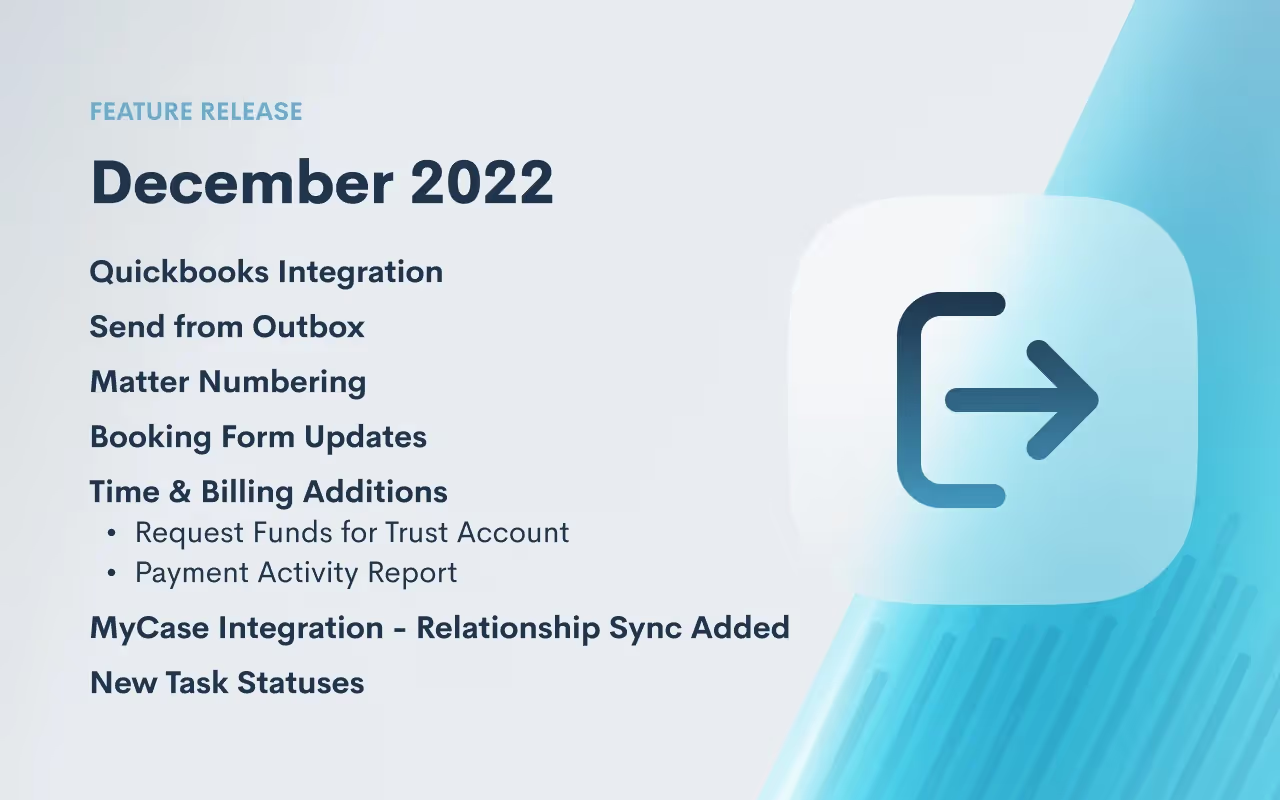
‘Tis the season for holiday sweaters and eggnog, as well as a new batch of features from the Lawmaticians! Cozy up by the fire and unwrap these exciting new additions to Lawmatics.
Quickbooks Integration
We are thrilled to share the release of our latest integration, Quickbooks! Automatically create a customer and invoice in Quickbooks when an invoice is sent to a matter via Lawmatics. Map your accounts, field types, time entries, and expenses to ensure that pertinent matter data syncs from Lawmatics to Quickbooks. Whether you or a fellow staff member manage your firm’s books, this integration is sure to make invoice generation a breeze.
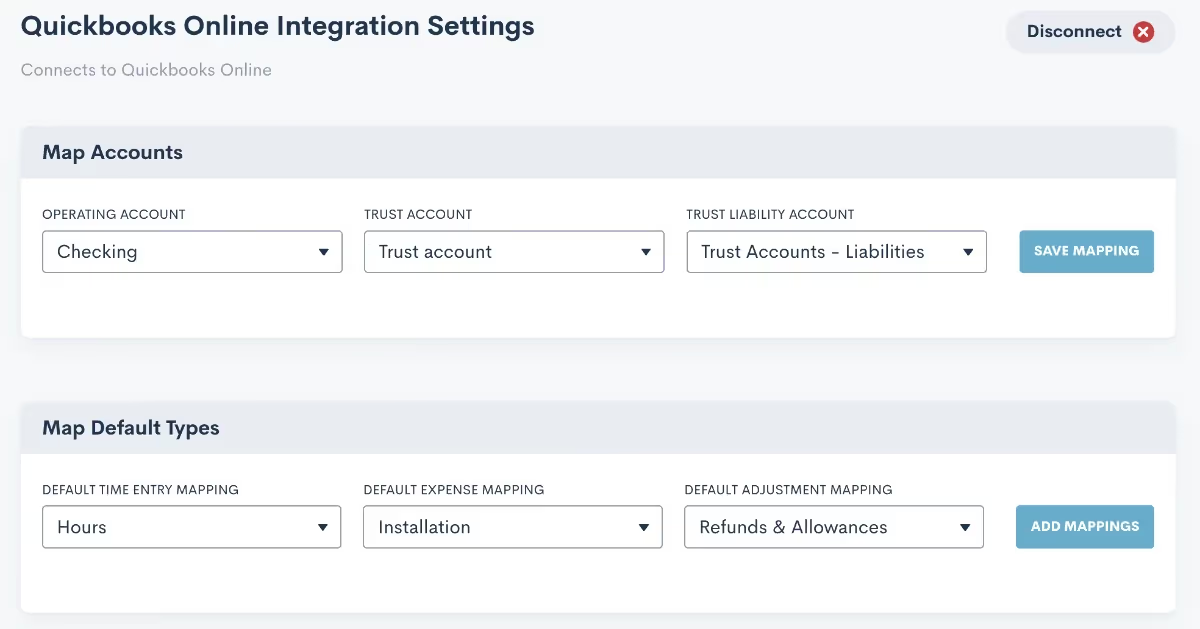
Learn more about this integration here. Not yet using LMPay? Click here to get started!
Send from Outbox
A highly anticipated feature among Lawmatics users, any emails sent via Lawmatics can now be set to appear in the outbox of your preferred email client. This update will help improve your firm’s email organization by storing all email correspondences in one central place — alongside your other communications. Once activated, any email sent to or received from an email address that is tied to a matter in Lawmatics is automatically logged in the timeline for that matter. And for quick reference, you can easily go to your outbox to see all emails sent from your address, including those sent via Lawmatics.
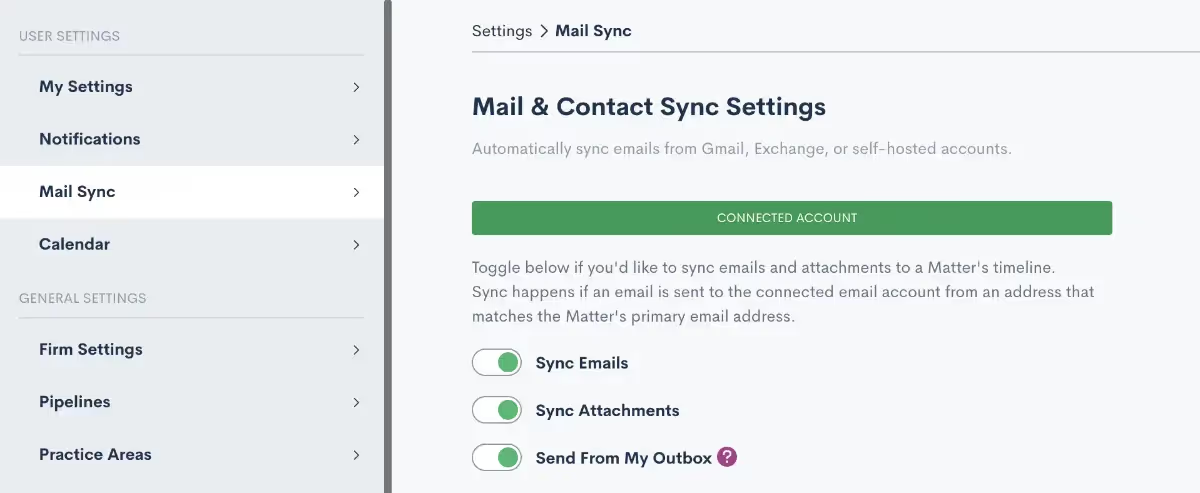
To learn more about Send From Outbox, click here.
Matter Numbering
To easily track down and reference cases in your docket, you can now auto-generate a case number and custom title into a matter’s title field as unique identifiers. Further refine your case numbering sequence by adding custom text or database fields such as practice area, lead attorney, client’s last name, etc. Once saved, the resulting case title format will automatically be applied to each of your matters moving forward. Begin auto-numbering your cases by navigating to the Matters page within settings, scrolling down on the page and toggling on “Enable Auto Numbering”.
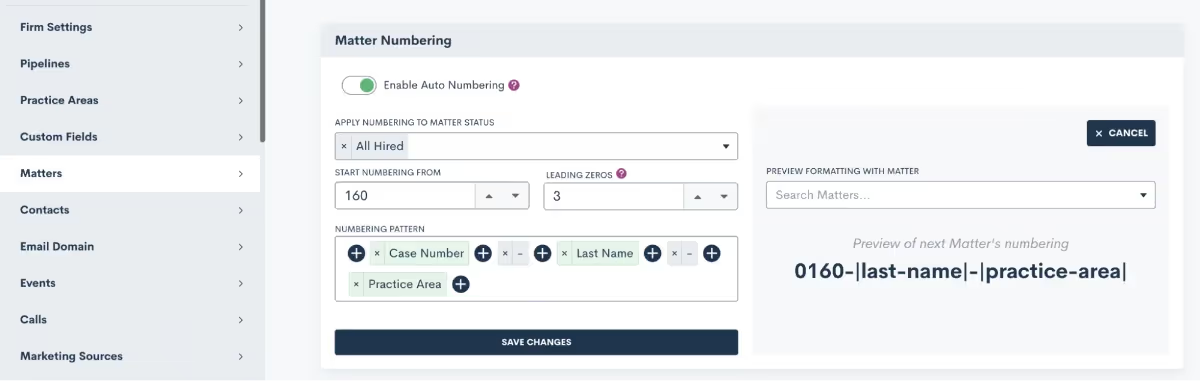
Read more about auto numbering here.
Booking Form Updates
Automatic scheduling is a favorite feature of many Lawmatics users, and it just got even better. To accommodate virtual meetings in addition to face-to-face meetings, you can now select Zoom as a meeting location option, along with any of your physical office locations on your Booking Forms. Furthermore, we have added the ability to allow multiple attendees in one event. If any of your matters involve the representation of multiple clients, easily add them both to the meeting invite. With the growing popularity of virtual meetings, these upgrades grant your clients the flexibility to choose which option works for them, and have the zoom link added in automatically when needed.
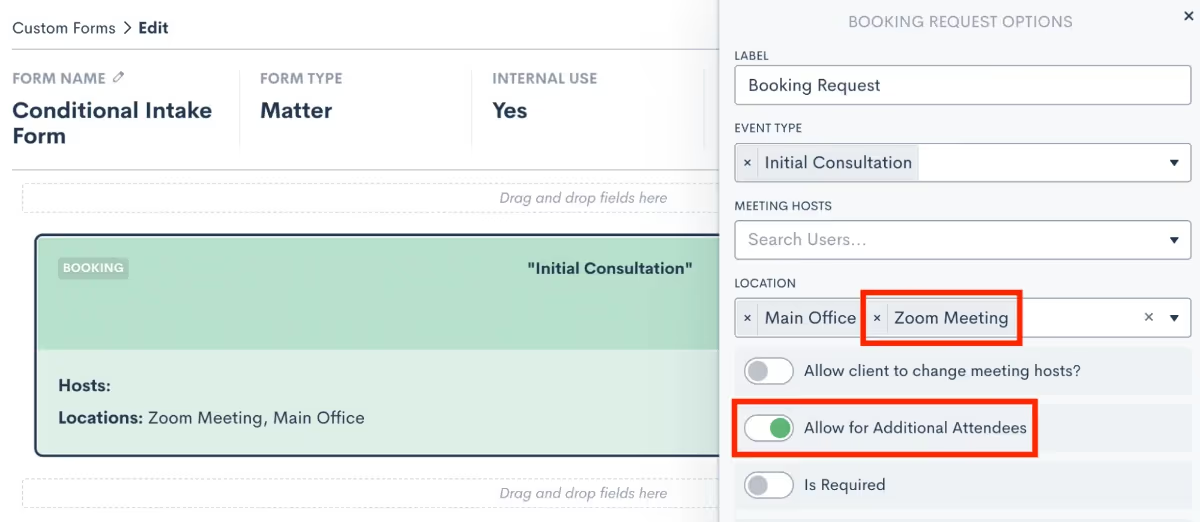
Click here to learn how to use booking forms.
Time & Billing Additions
Request Funds for Trust Account
The latest addition to our Time & Billing system allows you to request funds from a matter for their trust account with the option to let them pay via credit card. Paired with your minimum balance alerts, this will help ensure that a client’s trust balance stays above your designated minimum amount.
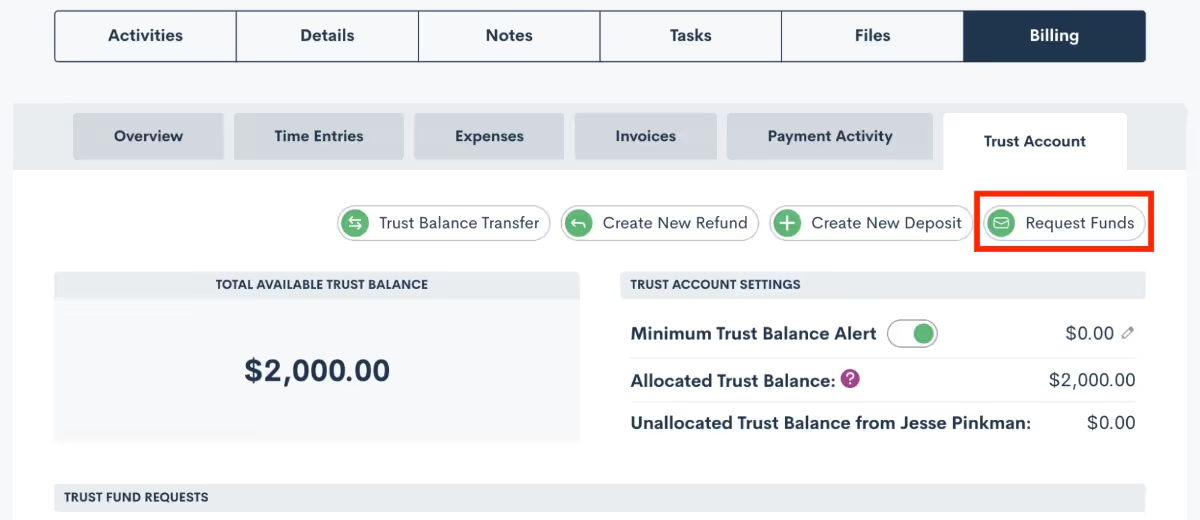
Learn more about Trust Accounting here.
Payment Activity Report
Lawmatics Reporting, a core function of our platform, now features a new report for tracking incoming client payments. With the Payment Activity report you are able to set custom filters for the date, payment method, and/or contact. Run the report to see a snapshot view of the payments that meet your criteria, making it even easier to keep an eye on your firm’s incoming cash flows.
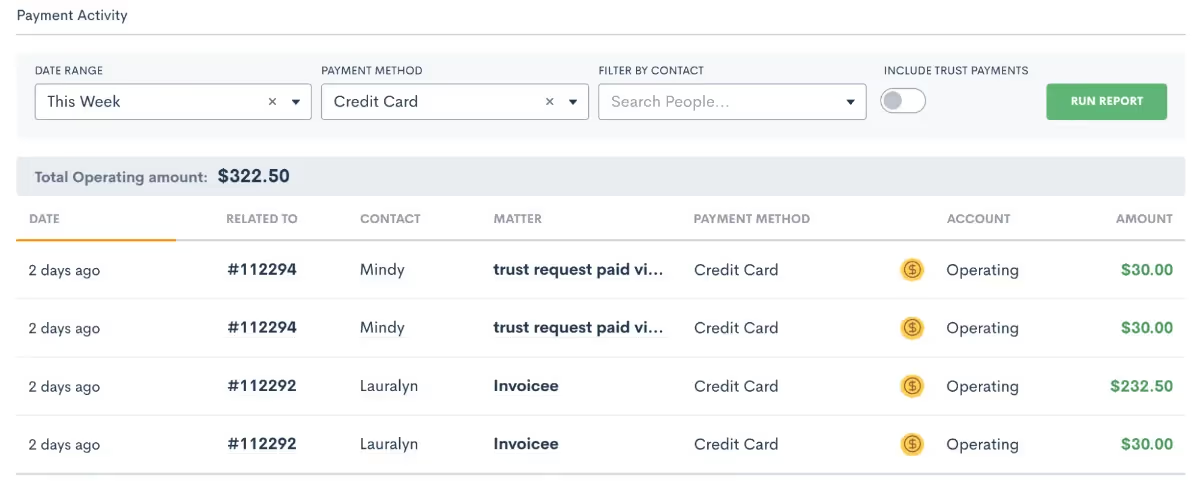
Click here to read about the different reporting options for Lawmatics time & billing.
MyCase Integration - Relationship Sync Added
In case you missed our recent announcement, Lawmatics now integrates with MyCase! This integration has only been available for a month and we’ve already released an update: Relationship Sync. When syncing a main matter contact from Lawmatics into MyCase, you can now sync related contacts with a simple toggle (pictured below). This is yet another way Lawmatics removes tedious data entry from your process, and replaces it with automation.

Read up on the MyCase <> Lawmatics Integration here.
New Task Statuses
Get more tasks accomplished, and keep your to-do list tidy with a new and improved list of task statuses. Whereas previously Lawmatics tasks could only be designated as complete or incomplete, we’ve introduced new statuses that account for dependencies or stasis in your processes. In addition, the Tasks dashboard can now be sorted by these statuses for quick reference. Stay tuned for more updates to come regarding Lawmatics tasks.
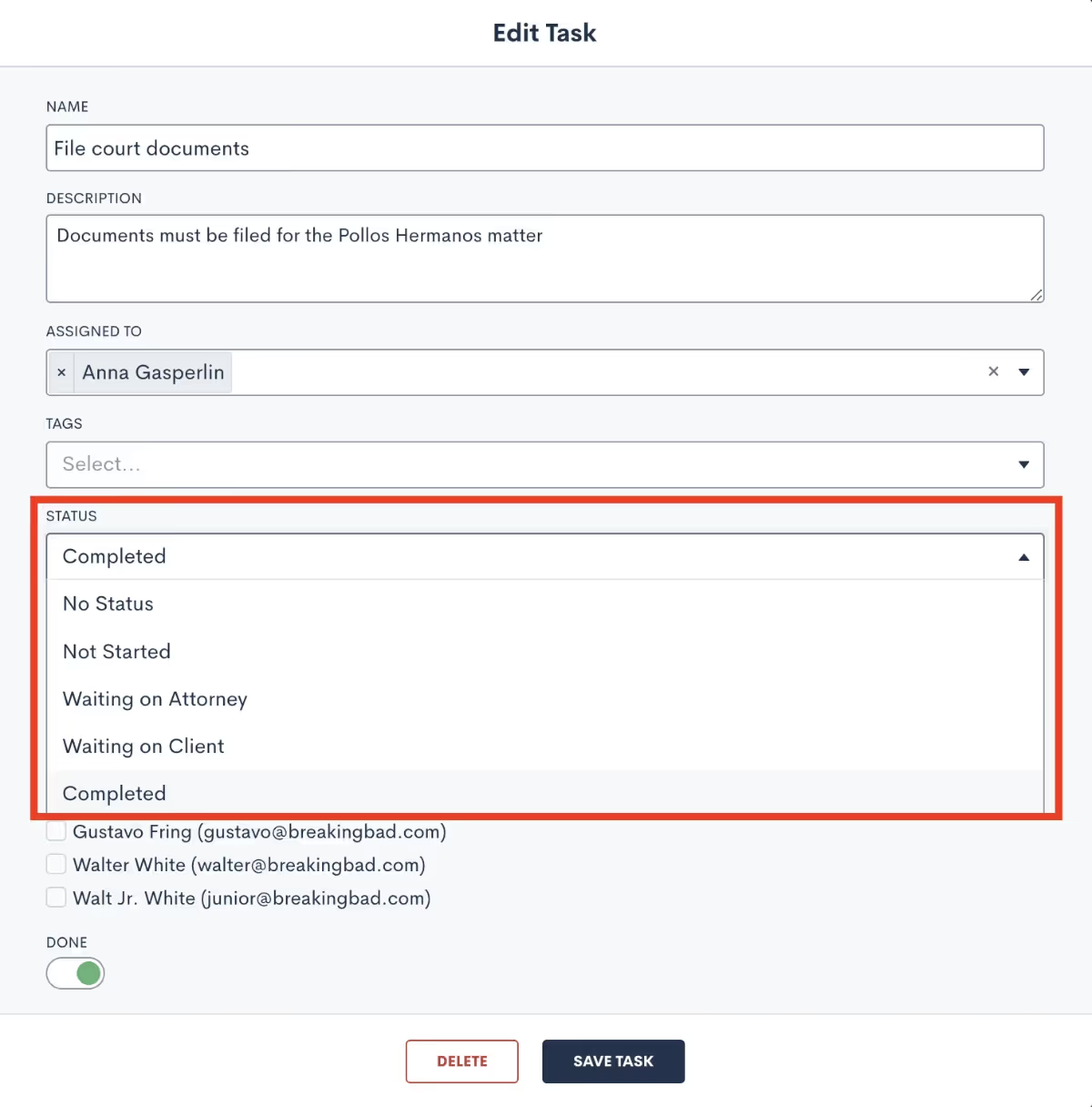
Click here to learn all about tasks.—We hope this batch of additions to Lawmatics keeps you warm during the holiday season. Until then, we’ll be cooking up a hearty helping of new features to release over the coming months As always, reach out to us at support@lawmatics.com with any questions. See you in the new year!

While Lawmatics has all the tools you need for collecting and inputting data, what good is all that data if you aren’t using it to gain insights on the performance of your firm? With the power of Lawmatics Custom Reporting and the Analytics Dashboard, you are able to make decisions from a business standpoint to grow and improve your firm.In addition to the KPIs you should be monitoring, Lawmatics gives you the ability to customize and export any of your reports. Meanwhile, the analytics dashboard grants you easy access to metrics like conversion rate, cost per lead, and custom growth goal settings.With all of these features at your fingertips, you’ll be able to grow your business without any guesswork or lack of insights into the trajectory of your business.
Custom Reporting
With custom reporting the possibilities are truly endless in Lawmatics. Slice and dice your data any way you want by essentially creating a table with any fields, filters, grouping, and date range. Furthermore, your reports automatically refresh in real time, meaning that each time you view one, you are seeing the most up-to-date information.
Columns
The first step in creating your custom report is to add fields to be used for your columns. Select from any of the built-in system fields, or any of your custom fields. Simply scroll though the complete list of fields, as shown below, or start typing the name of a field to easily access it.
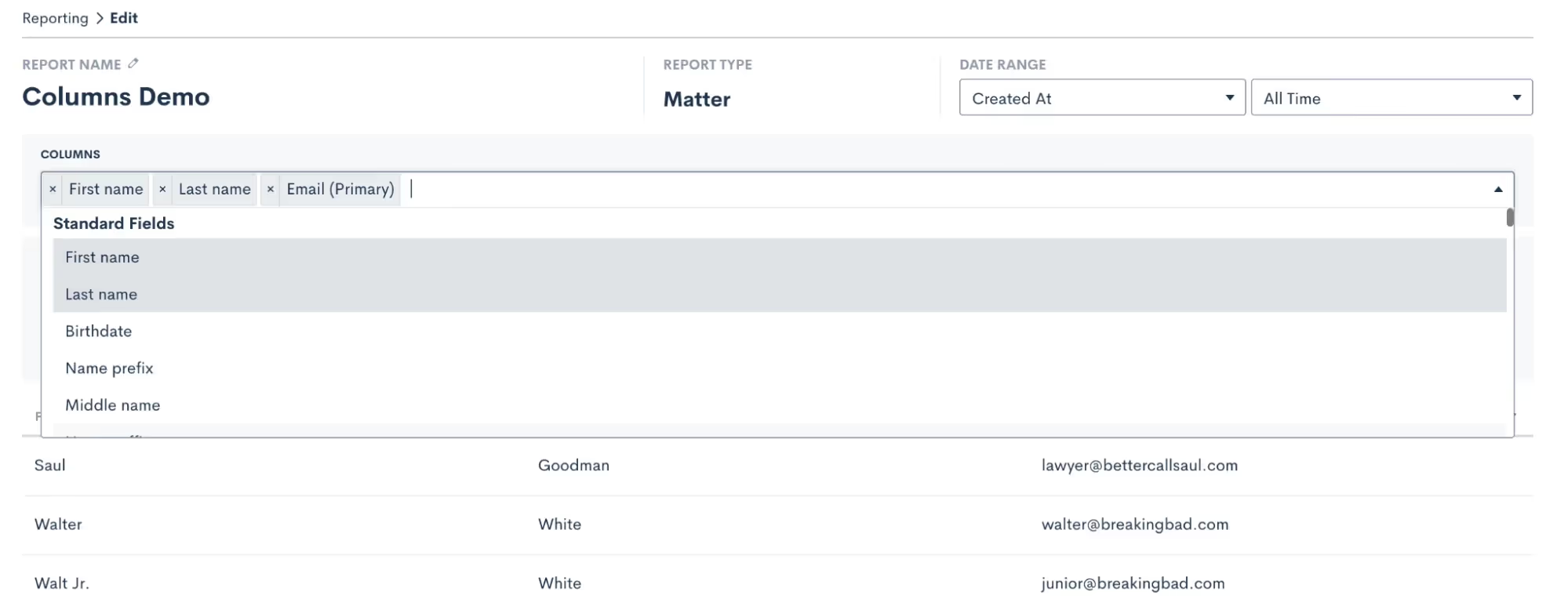
Any fields that you select will be added as a column into your report.
Filters
Depending on the goal of your particular report, filters can be your best friend. These let you keep the report relevant to the specific KPI, field, etc that you wish to report on. For example, you may create a custom report to only show hired clients. This can be useful if you are looking to narrow in on a data point relevant only to current or past clients, as opposed to leads or lost leads. To do this, simply add a filter. In the example below, we have filtered the report using the Source field, and have selected to only show the Hired matters.
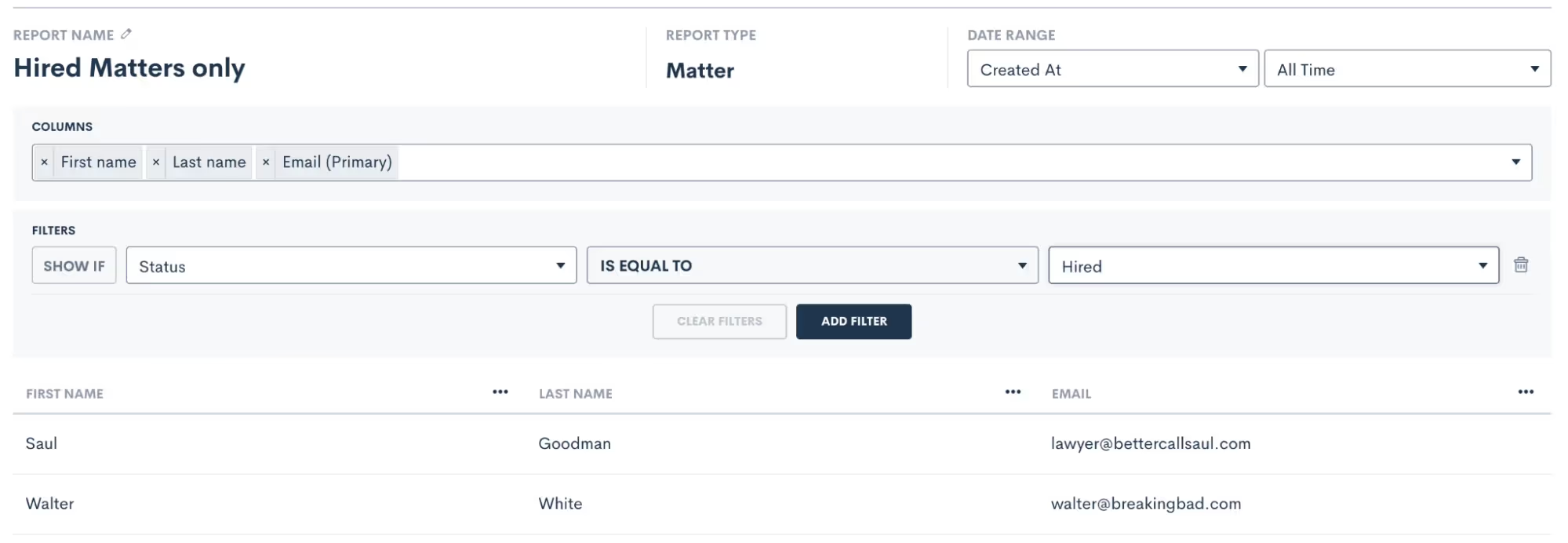
Once you make this selection, the report preview will update to show only results specified by your filters.
Date Range
Similar to adding field filters, you may also filter your report by date. Create a report that shows only the current week or month at a glance, and each time you view it it will be up-to-date for the current date match. Use the drop down in the top left to first select which date field you want to filter on. For instance, the date the matter was created, converted, or any other custom date field.
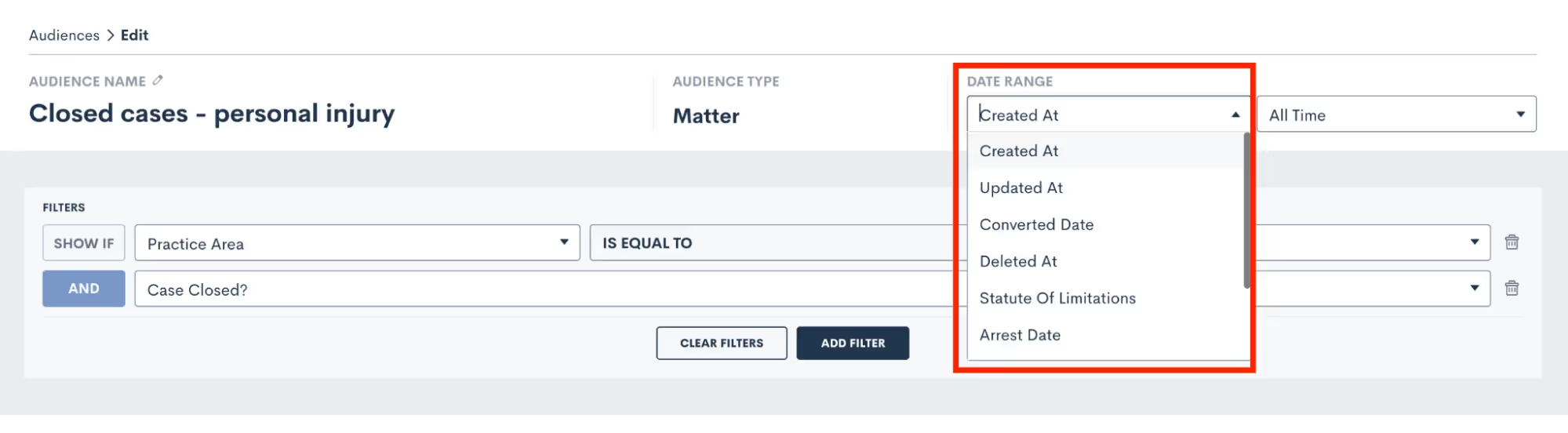
Then select the date range, using one of the preset options, or create a static custom range for this report.
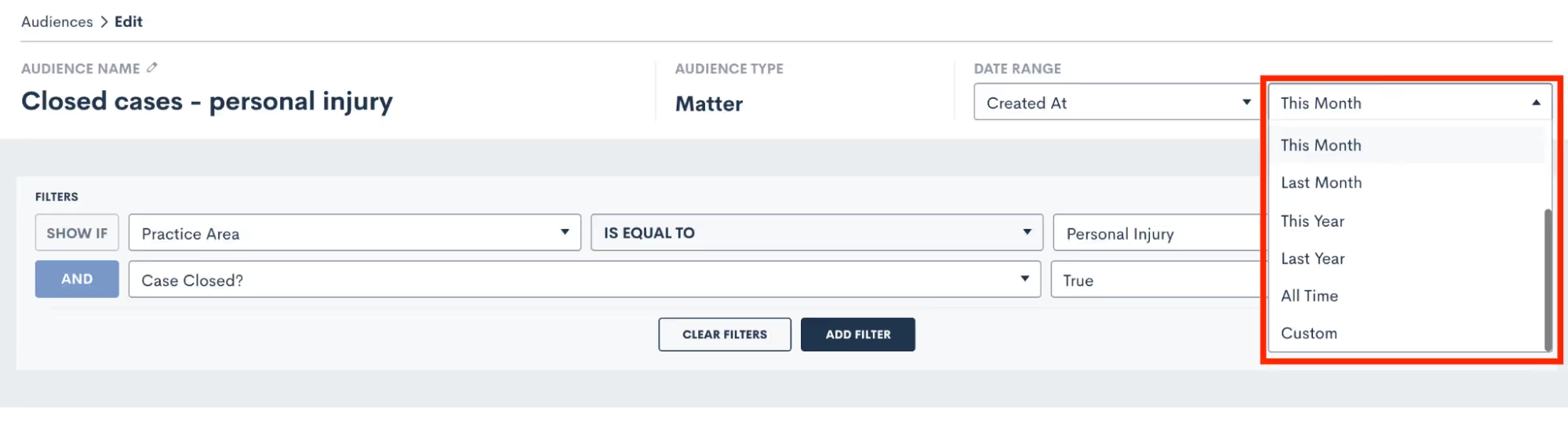
Grouping
You may have plenty of reports where simply adding columns and filters gets you the data you need. Grouping is a power feature that can add even more insights to your report. When you group by a particular column you will be able to easily see the total number of results in each group, which can help determine performance.For example, you may wish to see how many leads came in for each of your practice areas in a particular month. Grouping would be very useful in this situation. Click the column header, and then select Group by this column.
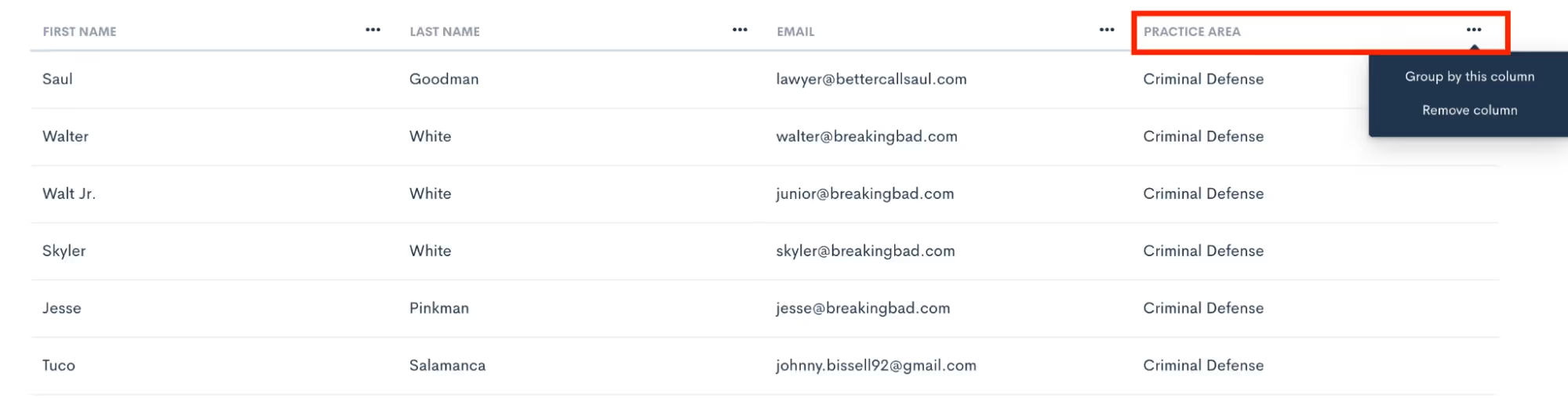
The report will then look as follows:
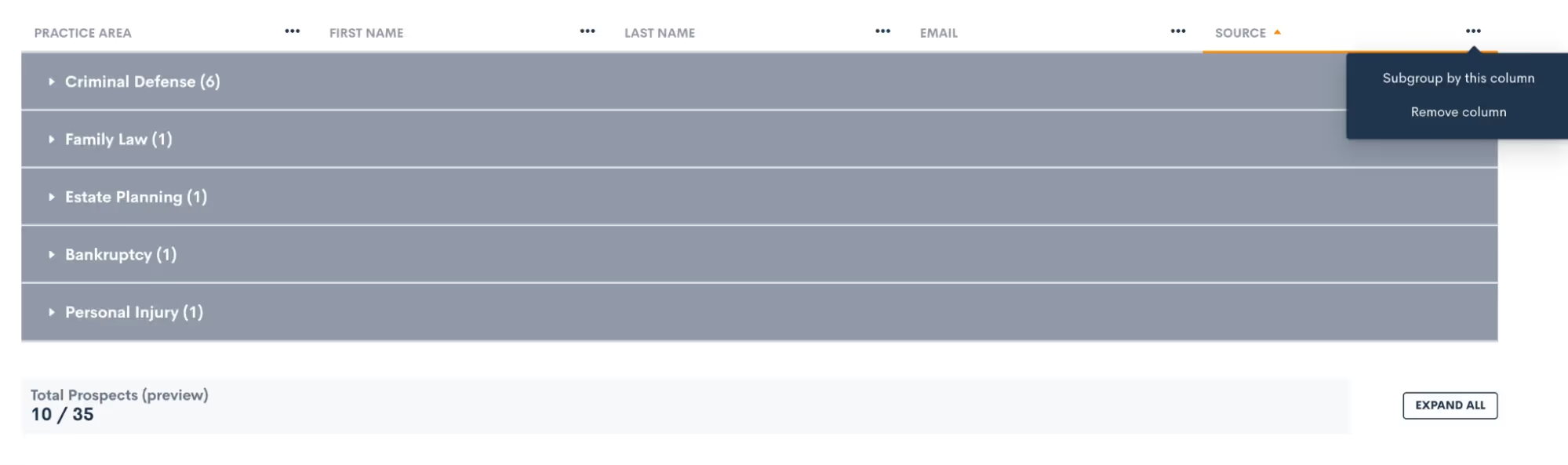
We can easily see that Criminal Defense was the most used practice area in the graph above. Also notice how you have the option to subgroup, as shown in the top right corner in the image above. This will add a second grouping by that field within each main group.
Sample Reports
Let’s walk through a few sample reports that may be useful for your firm. Keep in mind that the sky’s the limit when it comes to custom reporting, so these are merely suggestions to get you started.First, you may find it useful to create a report showing the marketing source of each matter in your CRM. When you select your columns for this report, make sure to include both the “source” and “campaign” fields, in addition to whatever fields you may wish to see like practice area, converted date, phone number, etc.You will find grouping on the “source” field helpful for this report, so that you can easily see how many matters came from each source. Then, we suggest adding a sub group by “campaign”, so you can also see insights on each campaign within your sources. Your report will end up looking something like this:
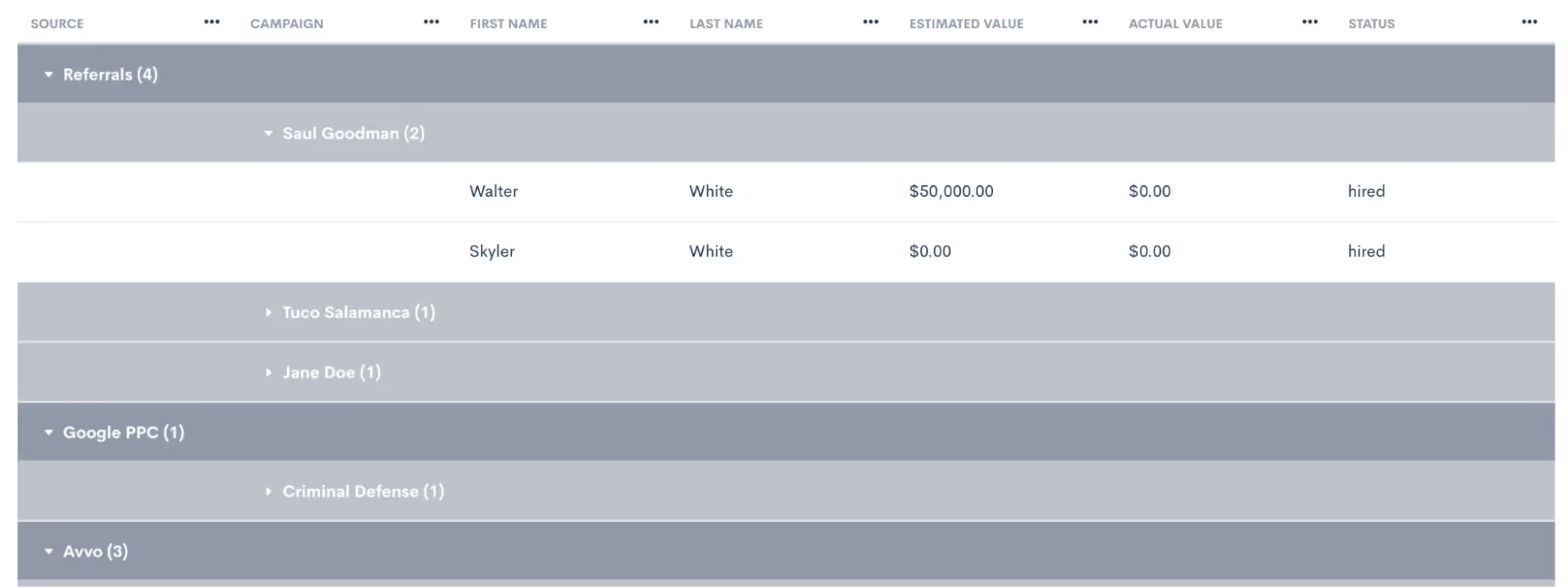
Example KPIs pictured above:
- Matters per marketing source
- Campaign breakdown within each source
Another way you can use a custom report is to track the estimated and actual values of your cases. When you add either, or both, of these fields to your report you will have the option to sum or average each of these columns. Of course with this report it is important to make sure that you are populating these values on each of your matters accurately and timely in order to get best results.When you use any currency or number type field on a report you will have the option to add a sum or average calculation, as shown below.
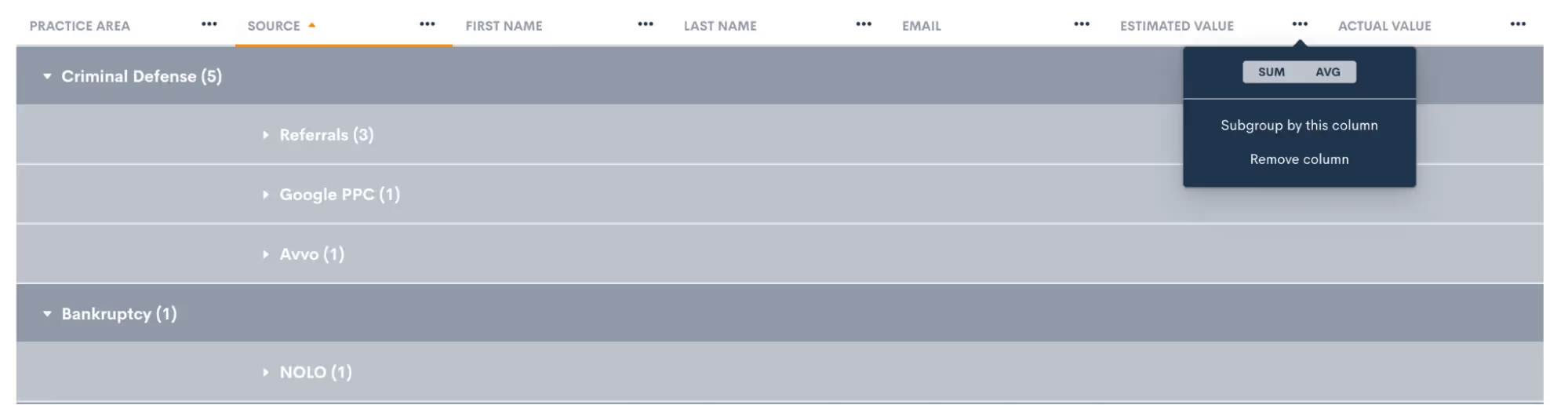
In this example, we have opted to sum the estimated value, but average the actual value.

Example KPIs pictured above:
- Matters per practice area
- Total value in pipeline per practice area and per source
- Average revenue per practice area and per source
Remember that any of these custom reports can also be exported to excel, where you can apply more advanced calculations and formulas as needed.
Analytics Page
In addition to building your own custom reports, Lawmatics also provides you with a built-in analytics dashboard for basic firm KPIs and other statistics. You’ll find this page by hovering your mouse on the Insights tab, and then select Analytics.
Dashboard
When you first arrive on the Analytics page you will first see the Leads at a Glance section of the dashboard. Before diving into these stats, first note that you can adjust the date range of this page as a whole. You’ll find this in the top right corner, it defaults to All Time, but you can make a custom date selection accordingly.
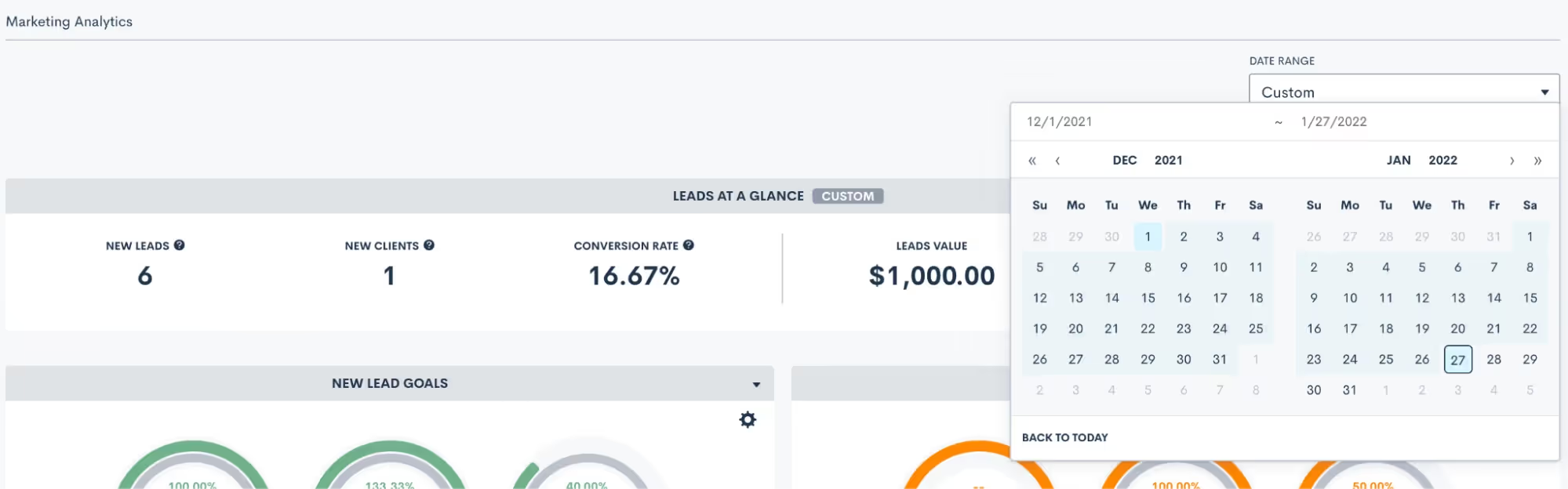
Once you have selected your desired date range, all data on the page will update automatically. First, in the Leads at a Glance section you’ll see a quick breakdown of some key statistics for lead intake and conversion.As you scroll down the Analytics page, you will see a number of different graphs and charts for nearly every aspect of your firm. We’ll walk through a few of them here.First, set customized growth goals for new leads and converted clients by clicking the icon highlighted below.

While you can also use custom reporting for reporting on things like leads per practice area or source, the Analytics page gives you a visual breakdown of the same information. This can be great for getting a snapshot view.
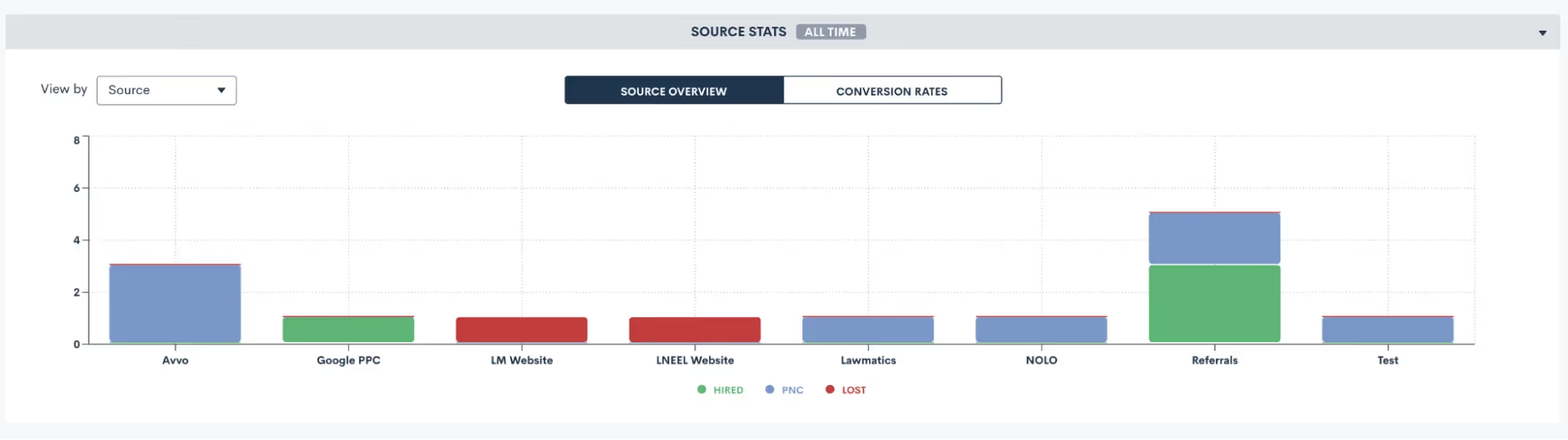
Additionally, you’ll find a built-in graph for tracking your appointment show rate by event type. This may provide great insights on performance of different types of meetings you hold with leads and/or clients that you would have never thought to look into before.

Some firms have designated sales people as opposed to (or in addition to) intake staff and paralegals. As with any sales team, it is crucial to be able to track each individual’s conversion rate in order to compensate and incentivize the team. Use the Sales Stats graph to do just that, by viewing a breakdown of conversion stats by sales person.
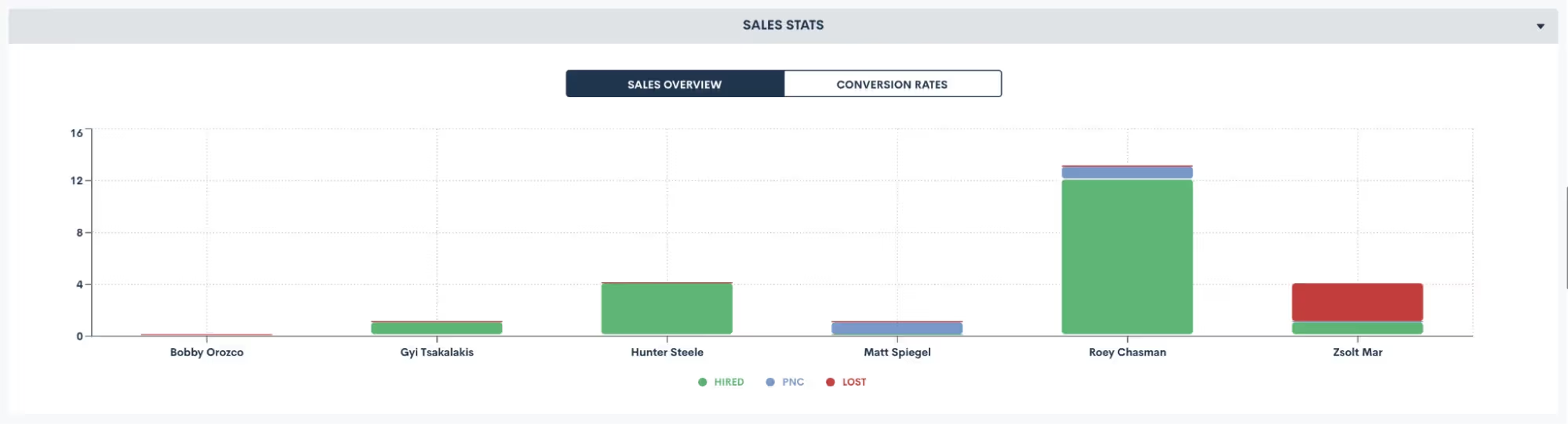
Stats By Source
Lastly, on the Analytics page you will find the Stats by Source section. This gives you a comprehensive breakdown of key KPI calculations for each of your marketing sources.
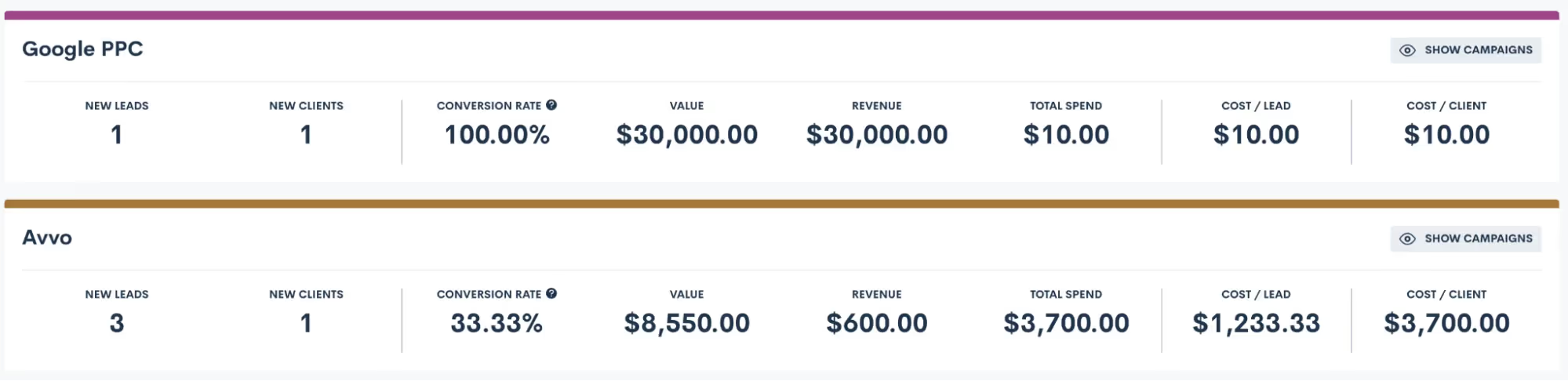
In this section you will be able to clearly see an apples to apples comparison of each source, taking into account how much you spent on that source, how many leads came in, the conversion rate, and a breakdown of cost per lead and client.Example KPIs pictured above:
- Total new leads and converted clients by source
- Total revenue and total spend on each source
- Breakdown of cost per lead and cost per client
ROI Tracker
When used in conjunction with the Stats by Source analytics, the ROI Tracker helps complete the full picture of the marketing performance for each of your sources. The tracker takes into account the number of new leads, the conversion rate, and the revenue and spend from each source to give you an ROI calculation.
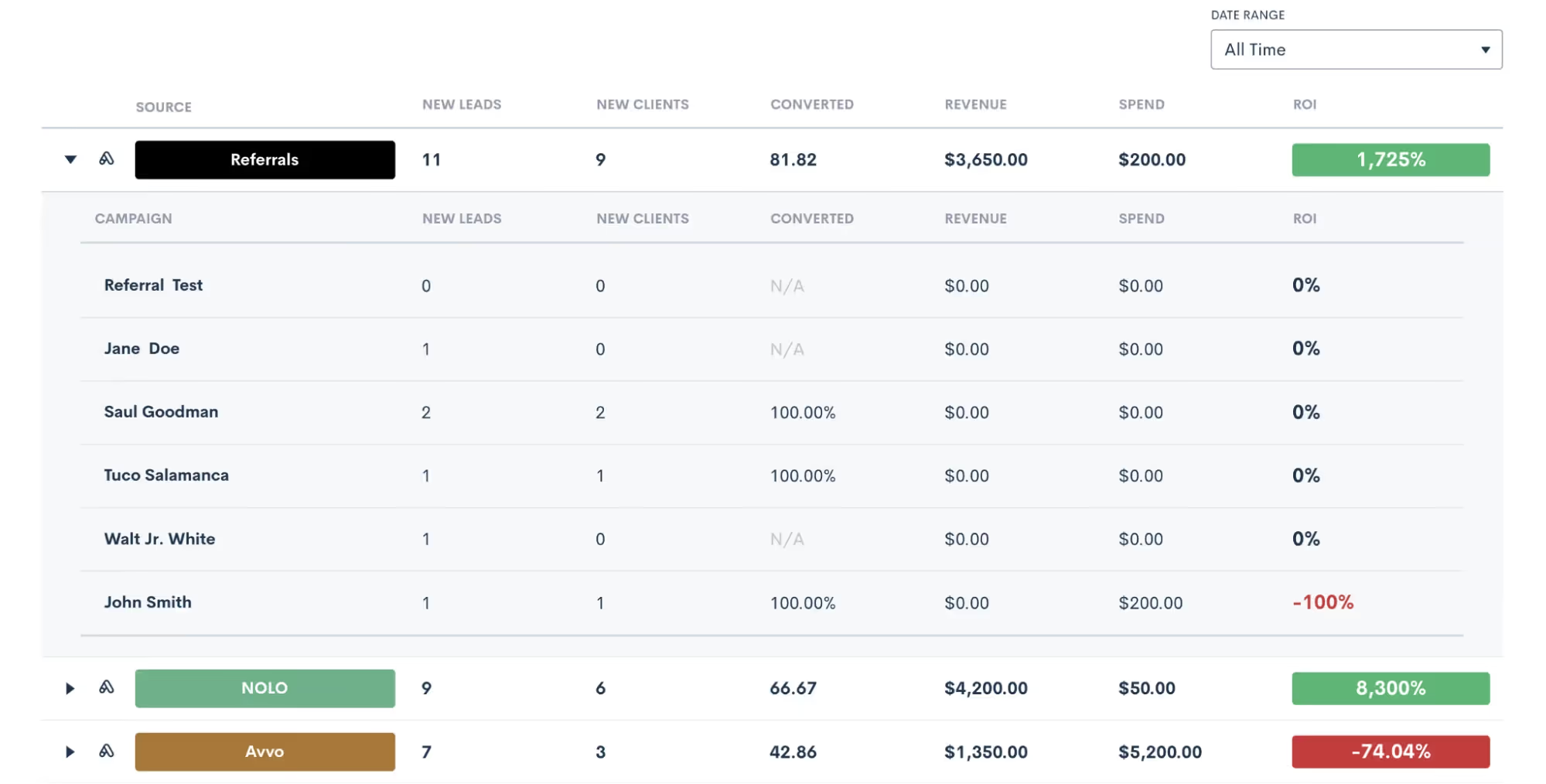
Marketing Source Spend
Before using the tracker, it is crucial to make sure that you are entering your marketing spend accurately on the marketing settings page. Once you navigate to that page in settings, you can make sure that you have all of your sources entered, along with any relevant campaigns under each source.The marketing spend is logged at a campaign level. Once you have added your campaigns, click the dollar sign icon for each one to enter the spend for that particular campaign.
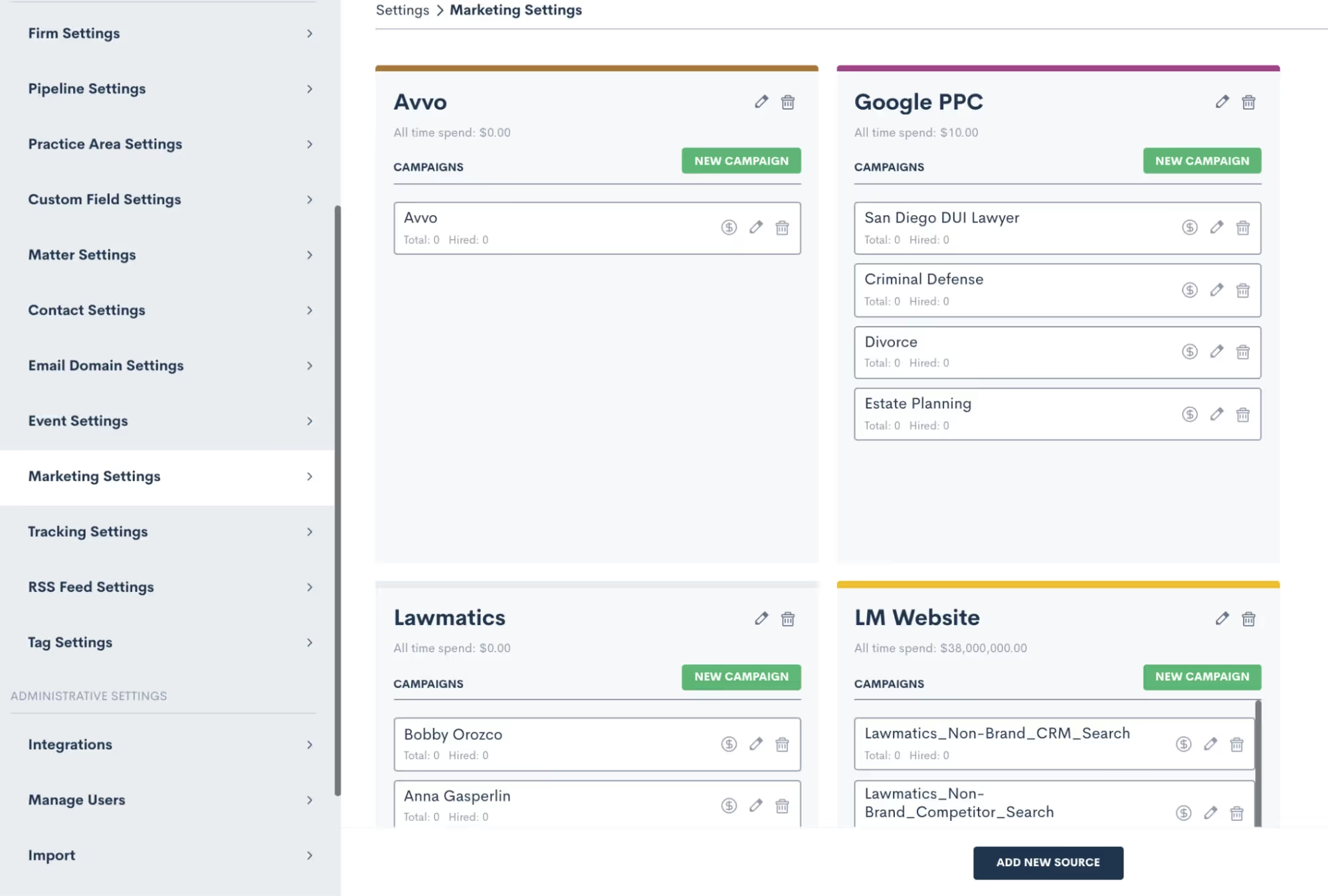
This spend will be used for calculations not only on the ROI Tracker, but also for the Stats by Source section of the Analytics page.
Matter Values
In order to get insightful ROI results you will also need to make sure you populate the revenue on each matter into the built-in Actual Value field. This step is crucial for making sure you get an accurate return on investment calculation.Remember, you’ll populate both the estimated value and actual value in the details page on any matter.
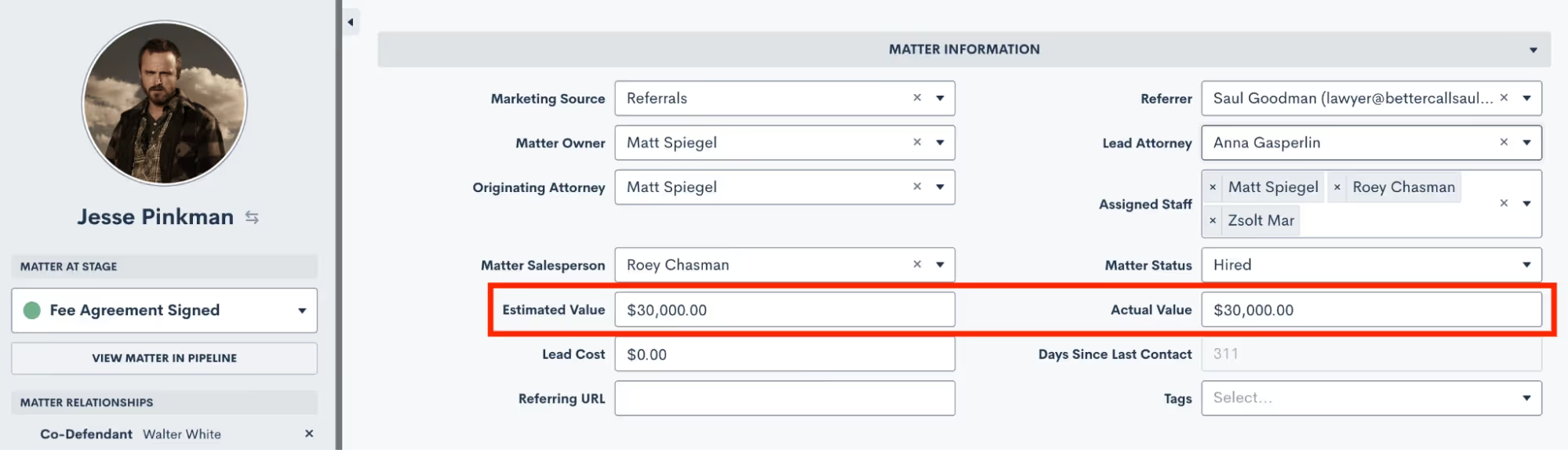
Put Your Data to Use
While all this data collection and reporting potential is great, the crucial next step to growing your firm is interpreting your KPIs and reports to make insightful decisions about the future of your firm. Instead of just being aware of a marketing source that has low to zero ROI, you now have the insight with Lawmatics to reduce your spend accordingly so you’re not investing in a poorly performing source. Maybe you have always had an idea of which of your practice areas was the most profitable, but now that you have the ability to actually track the exact performance, you may realize that it makes sense to invest more in a different practice area.All of these insights are right at your fingertips with the power of Lawmatics reporting and analytics.
2022 has been a whirlwind. Our team has taken massive strides this year, celebrating product milestones like the launches of Conflict Checking, Time and Billing, integrations with partners like Quickbooks and MyCase, and so much more. We’re thankful for every member of the Lawmatics community, from our internal team to our partners and customers. The spirit of collaboration and gratitude make it such a joy to work with our community every day to build the solutions our customers need.As an expression of our gratitude for working with such an amazing team, we hosted a potluck to bring folks together and share food, companionship, and thanks.

We also asked our team members what experience(s) they’re most thankful for in 2022. These were some of their responses:
“I am most thankful for the warmth and energy that I experience everyday when I walk into the office at Lawmatics.”- Matt Spiegel
“I'm thankful for the ability to work in a hybrid/remote environment! My mental health, sleep schedule, and cat back home really appreciate it”- Callie Burns
“I am thankful to be surrounded by such great coworkers and I am thankful and lucky enough to call them my very close friends!”- Kennedy Wickham
“I am most thankful for having gotten to experience all of the fun-filled gatherings, trips, and adventures alongside all of my favorite people this year. Another amazing one in the books!”- Sarah Bottorff
“I am grateful for a lot of different experiences, but I believe working two jobs this year really gave me perspective on how hard my mother and father worked to make sure we had the opportunities we had growing up. I worked two jobs for three months. My mom worked 2 - 3 jobs for at least 6 years from what I can remember, and my dad worked 2 jobs for 2-3 years as well. I am super grateful for the experience because it allowed me to understand how great my parents are! I am forever grateful for my parents’ sacrifices! I am thankful for the experience of working more than one job because it is humbling when you realize how hard working more than one job actually is.”- Cary Robertson
“I'm thankful to be a part of a great company and to work alongside a fantastic group of individuals as we grind for every inch of our success on our way to the throne of legal tech.”- Bobby Orozco
“I am so thankful for all the experiences I get to share with my family and friends both in San Diego and when I go back home to New York! I will always be grateful for getting to spend time with loved ones.”- Clare Struzzi
“In the midst of a lot of changes happening in the world and within my own life, I'm grateful to have a supportive team that values and supports its employees when life is unpredictable and tough. I also really love that I have a team I can depend on, work well with, laugh with, and learn from. I genuinely feel so lucky to work with such an incredible team of people.”- Joanna Alday
“Being rid of Bolsonaro. Was terribly, terribly disappointed in Brazil with him being elected in the first place, but with him being the first brazilian president to be purged out without a re-election through the same democratic means that elected him gives me a fresh breath of hope in us as a society.”- Herick Oliveira
“Running my fist marathon with friends and family there cheering me on.”- Anna Gasperlin
“I am thankful for meeting all of my teammates at Lawmatics. Getting to work side-by-side with everyone is such a privilege. It constantly pushes me to be a better team member and makes me look forward to showing up to work!”- Andrew Field
“I am thankful that my wife and I had the opportunity to travel to Spain and meet my niece! I feel incredibly luck to work for a company that prioritizes a healthy work life balance for its employees.”- Johnny Bissell

“I'm the most thankful for the six months I had to grow as an individual while my spouse was on deployment. In that time I gained confidence, a few great communities, and had the chance to reflect and enjoy my own company. My growth with Lawmatics is a direct reflection of that and I'm so proud to be a part of such a great team.”- Rachel Koscil
“I am most thankful for my first phone call with Monique, she opened up an opportunity that has challenged me time and time again and helps make $$$.”- Eddy Adame
“I am most thankful for the memories I have made this year with some of the greatest people. Being able to live life surrounded by good company is something we could only hope for!”- Connor Brown
“An experience I am thankful for with Lawmatics is when we all went to the "haunted" trail. It's great to be able to see your team outside of work and bond over having to embark on a journey of terror and delight. The happy hour drinks helped too! Hahaha, but truly... I am thankful to experience such a collaborative, creative, and motivated team that wants to build each other up and be team players. Culture is everything, and I feel incredibly thankful to be a part of Lawmatics. Cheers to more memories to come!”- Julia Anderson
“This year has brought me in fact two experiences that stood out, and for which I am incredibly thankful. I have received amazing opportunities for growth as a professional, as I developed my craft and earned new responsibilities at Lawmatics. I am surrounded by a very special group of people and without them, none of these accomplishments would have been possible. I also recently had the opportunity to visit my family and friends back in my home country after several years apart, which meant a lot to me. I look back to 2022 and feel my heart warm in gratitude.”- Erika Beaudette
“From a company events standpoint, seeing the Padres game from the Western Metal box. From a general standpoint, having the ability to work from the mountain remotely and rip snowboarding runs between work blocks.”- Eric Nelson
“I'm thankful that I got this job and also that I was able to experience Italy when I've never been to Europe!”- Dominic Viola
“I'm thankful that Lawmatics gave me a job.”- Ian Thorleifson
“Grateful for all the cool people I get to work with!!!”- Nihal Razak
“Being consistently productive at work during this year and being able to save some money throughout the months.”- Leandro Camargo
“I am most thankful for being able to take my dream vacation to the Maldives for my honeymoon! It was the trip of a lifetime that I will never forget!”- Monique Padilla
“I am most thankful for getting the job at Lawmatics this year. I have never felt this appreciated, supported, or encouraged in any other job. Not only is my team incredibly kind and supportive, the entire company has welcomed me and encouraged me to succeed. I am so very thankful for being able to work at this phenomenal company.”- Enid Migault
“I am thankful for all the memories I made with my coworkers this year!”- Ryan Brown

What is your role at Lawmatics, and what does your job entail?
I am the in-house Product Trainer for all of our teams. The majority of my day is spent building our onboarding training and specialized training for each team's needs. I work closely with each team to identify areas of opportunity for improvement. With that being said, I am also a sales engineer. I provide our future customers with information on how our software can fill gaps in their intake process, and facilitate a better case journey for their clients.
How did you end up working for Lawmatics?
I graduated from California State University San Marcos during the pandemic. Job offerings during that time were scarce so I was constantly searching for new opportunities on LinkedIn. After finding the Lawmatics customer success position posting on LinkedIn, I enjoyed the interview process. Once on board, I knew Lawmatics was a place I could see myself growing as a leader and professional. I officially joined Lawmatics at the beginning of 2022.
What’s the best part of your job?
The best part of my job is watching everyone on our team begin to understand the platform more and more as time goes by. I believe I have the privilege of working with each and every team and really understanding the ins and outs of our users (customers) journey. There is nothing like watching a new hire or coworker start to understand how our product really does make the intake process for firms a lot smoother and seamless. The phrase I hear most often is “Wow, this software really is amazing!” The phrase is common in-house and when speaking with existing customers/users! It is hard to get much better than that!
What challenges have you faced or opportunities you’ve uncovered working remotely during COVID-19?
I believe all of the challenges I faced during the Pandemic all became huge opportunities. The first challenge of working remotely was time management. I make work objectives priorities, and can really get wrapped up in getting everything done with very little breaks to no breaks at all. Therefore, I found myself doing great work, but missing the human interaction with others and feeling tired from constantly working. I learned short breaks were important and allowed me to work better. My second challenge, as with many others, was human connection. Working remotely can make everything feel transactional, which is how I uncovered an opportunity to make genuine interactions even through zoom or google calls. When working in person or remotely, it is important to not get sidetracked by ONLY completing objectives. The conversations I have with coworkers over zoom or slack can be just as meaningful as conversations in person. Our ability to build connections has limits, but the limits don’t have to stop us from trying to build meaningful connections when it is hard.
Where are you originally from, and how did you end up in San Diego?
I am originally from Rockingham, North Carolina and Buckeye, West Virginia. I moved to San Diego for college and don’t think I will be moving away any time soon.
What do you like to do when you aren’t working?
When I am not working, I spend a lot of my time being active or creative. I really enjoy spending time in nature and the gym. Surfing, hiking, running, swimming, and playing sports have either always been a part of my life or are hobbies I’ve picked up recently. The creative part of me presents itself in so many different ways. I love photography and videography. There is something extremely beautiful about telling a story with a photo that makes me smile. On the other hand, I love to capture a story that is going on around me and edit the video from an experience perspective.

What is a fun fact most people may not know about you?
When you meet me or see me, you would never guess I am a pretty decent surfer. Don’t let the Jordan’s fool you, I really can surf.
Tell us about one of your craziest SFW experiences?
I was selected as one of the players to play against the Harlem Globetrotters. We had a NBA player on our team, Bimbo Coles. It was the craziest experience I ever had on the basketball court. It is literally impossible to guard any of them.
What is the one thing you can’t live without and why?
I can’t live without Jesus, because I understand what he has done for me.
Do you have a favorite saying, quote, or personal mantra and if so, what is it and why?
“Your intention is not what sticks with people, what people will never forget is how you made them feel” I love this quote, because it challenges me to truly listen, and not just listen to respond. Sometimes listening and not responding can be really hard, because it is extremely hard to not always have the last word.
Can you walk us through your "Aha" moment - the moment when you realized how powerful the Lawmatics platform is for lawyers and law firms?
Honestly, I have “Aha” moments all the time. I think every time I am on a sales call or customer success call and the firm says “oh, wow your software can do that too, this is great” it’s another Aha moment. Whether it be an automation feature, document feature, or integration, it all just solidifies the power of our platform for each firm’s unique needs.
Based on your experience, what words of wisdom or advice do you have for legal professionals looking to help their law firms win more business, impress clients, and be more efficient?
If I were to say one thing, it would be this: Automating a response to your client or matter is not taking the personalization away from your interactions with them. I believe it does the exact opposite, because more than likely they will still have questions and call you to get those answers. Now instead of having to complete several tasks, send an email, and be on the phone, you can actually take the time you need to provide the client with all of your attention to answer their questions. There is nothing better than being able to breathe because while you know you are busy, you are not in a hurried state of mind.


Recently, Lawmatics founder and CEO Matt Spiegel joined the Law + Finance Podcast to discuss the legal tech landscape. Learn more about the founding of Lawmatics, how new features come about, and how the needs of law firms are changing. Read the transcript below, or watch the full conversation above.
Podcast transcript
Terrell Turner
Hi, I'm Terrell Turner, the host of the Law and Finance Show, and today we have another great guest on. Now, the reason why I'm excited about this guest is because many law firms that I have talked to, ones that we do bookkeeping for, and helping them with CFO services, are really trying to figure out how do you really keep a good handle on the CRM part of your business? Just managing that pipeline, all of the data, and the insights that you need to get to make sure that you're growing your firm, and you're on top of that sales funnel, and the front end of your firm. And there's so much more value that you can get when you are using the right tool. So, today we're going to be interviewing Matt Spiegel from Lawmatics, and we're going to be talking about some amazing things that they're doing, weigh his history with being a lawyer, helping build out some of the world's most successful law technology solutions, so stay tuned for today's episode. So, without further ado, let me bring on Matt. Matt, welcome to the show. How are you?
Matt Spiegel
I'm doing well, Terrell. How are you?
Terrell Turner
I am great. I am great. Matt, now a lot of lawyers that I've talked to are, they're familiar with Lawmatics, and I've heard great things. Like I said, literally as you, and I were talking right before this, I was working with a lawyer onboarding, and they were telling me about how much they love Lawmatics. So people may be familiar with Lawmatics, but they may not be as familiar with Matt. So can you tell us a little bit about your background?
Matt Spiegel
Yes. So happy to give you some color there. So, I'm a lawyer, I still have my license. I think my parents would be very upset if they spent all this money on my legal education, and then I didn't at least keep my license, even though I don't practice anymore. So I do maintain my license. So I still technically am a lawyer, but I practiced for five years. And then long story short, I ended up starting the company called MyCase, which is most of your listeners, if they're in the legal tech, they are in the legal world. They probably know what MyCase is. So I started that company back in 2010, and I sold the company, I stayed with the company until 2015. Obviously, MyCase today, especially kind of coupled with a lot of your listeners who are interested in finance, and how it intertwines with the world of law, MyCase is now owned by LawPay. LawPay bought MyCase about, I don't know, a couple months ago.So, it's very much one of the biggest legal tech companies in the world. And so now in 2017, so I took some time off doing some other things unrelated to law, or legal tech. And then in 2017 I decided that the law firm world, the legal world, was very much missing a critical part of business management. A lot of tools had been built to help us manage our cases and to help us make sure that we get paid. That's good. But no tools had really been developed to help us run our business, and nurture our clients, and create better customer experiences. And so that's why I ended up starting Lawmatics at the end of 2017.
Terrell Turner
Awesome. Now, one other questions I'm curious about, because you hear a lot of people talk about, they went through law school, become a lawyer. You don't often hear the storyline of, you know what? I started developing legal technology. So where did that kind of come into play for you?
Matt Spiegel
I mean, I think most people in legal tech have a similar story in the sense that I scratched my own itch. So I experienced a problem. I mean, MyCase, most people don't really know, but MyCase was started as just a simple client portal. That's all MyCase was. It was not a practice management tool. It didn't do time, and billing, or all the other bells and whistles that it does now. It was very simply a tool to just share data with your client. And this was because I had a client complaint. I had a bar complaint from a client about my communication, just basically that I didn't call them back quick enough. I didn't return their calls.Even though I did, it wasn't on their time. And so I thought to myself, "This was really silly, there should be an easier way to communicate these things to my client." And doing so with technology was really the only way and there was nothing out there to do that. And so that's, ultimately, how MyCase was born. So, I think this idea of experiencing a problem, and going out, and determining that there was nothing in the market to solve that problem for me, just going out, and building a solution myself, that's ultimately how it went.
Terrell Turner
Awesome. I wonder for when it came down to Lawmatics, I mean creating another technology solution to solve a problem that not only you experienced, but probably thousands of other lawyers when it came down to that, doing the research on, hey, first, let me see if there's something else that's out there. About how many different options of different tech solutions did you end up looking at before you came to the conclusion, "Hey, you know what? No one does what I need it to do?"
Matt Spiegel
Well, luckily, I knew, right? Because I had been in this space for a long time. So, I think I had an advantage in that building MyCase. I kind of knew everything that was out on the market. I knew what solutions were there. I knew what problems were being solved and what problems hadn't been addressed yet. I also had an idea for what problems were on the horizon. Lawmatics, kind of take a step back. Lawmatics would not be possible if lawyers weren't starting to think about their law firms as more than a law firm. If they weren't thinking about their firms as businesses, then Lawmatics wouldn't make sense, because Lawmatics is a tool that helps you think about the business of your law firm, and the things that make up a good business, not just practicing law. And so if you rewind 10, 12 years ago, the legal space was not there.They were not thinking about their law firms like businesses. They were just thinking about them like law firms. They were just focusing on being a lawyer. But in 2014, 2015 when I was still with MyCase, we started to see that sentiment shift a little bit. We started to see a little kernel of this idea, this concept, of thinking about your firm as more than a law firm, and thinking about it like a business. And so now fast forward two more years, your 2017, and now that environment has really started to change, and this idea of running it like a business was starting to become much more mainstream. And so that made a tool like Lawmatics very valuable.
Terrell Turner
One of the things that, it makes me wonder, because I see a lot of parallels between how lawyers think about law firms, and even when I talk to other accountants. I mean it's just where a similar journey of, for the longest accountants did not think of the firm as I'm running a business. It's just like, "Hey, I'm just practicing accounting." I wonder, from your perspective, did you see anything that started to trigger people to open their eyes to, hey, I'm not just practicing law, I'm actually running a business that happens to practice law?
Matt Spiegel
Yeah, in my opinion, what we saw was a shift to smaller law firms, and competition. So what I think you saw was you saw lawyers, you saw a lot of lawyers leaving big firms, and going to start their own firm, become a solo lawyer, hang their shingle. Then so you now have the market flooded with more small law firms. And all those small law firms are like, "All right, we need to go and advertise. We need to go get business." So when you have more firms, you're just naturally going to have more competition to get clients. And when you have more competition, now you need to do more things than just practice law. You've got to do things you're not necessarily used to doing in order to earn that business.You have to go and get it. It's not just going to come to you before. If you're in Cleveland, Ohio, and there's 10 law firms, business is going to just come to you, you're going to have plenty. But if you're in Cleveland, Ohio and there's a thousand law firms, business is not just going to come to you. You got to fight for it. And so I think that's what happened. And that forced lawyers to start to think about things beyond just practicing law. They had to think about how to wow their customer, how to go and market, how to attract them, and then how to close them, right? They got to sell.
Terrell Turner
Gotcha. I would guess probably similar to accountants, that became a new skill that they had to learn. Now, as they're kind of learning that new skill, I mean, then having a tool that helps them kind of understand, "Hey, where is this client in that journey? Or how is that working?" How did you find creating a tool in a way where the learning curve for using Lawmatics isn't so high that they get discouraged, because they're having to learn sales, and they got to learn how to use the tool to help them. How did you approach that where it's like, "Hey, how are we going to make this learning curve for this tool?"
Matt Spiegel
That's a tricky question. I don't know that we've done that well yet. I think we're still learning. I think, well, you make the assumption that we're good at that. Maybe we're not. No, I mean, we're always getting better at that, but I think that is the tricky thing. But I think what's what we've done, one way that we approach that is, look, we've been doing this for a long time. We've worked with thousands of law firms at Lawmatics and have worked with tens of thousands of law firms at MyCase. So, we've got a lot of experience at this company now. And so when we sit down with a new customer who's like, "All right, I've never used a CRM. I've never thought about my customer journey, I've never thought about different touch points and how to nurture them. And I've never thought about when someone's case is over, how I want to continue to communicate with them for the first year, or the first five years, or every year on their birthday. I've never thought about that."So, this is a big ask of them. And so the beauty is we do know some best practices we can help. And so our approach is to actually really push them in a direction, and help them with best practices so that they're not just doing it all from scratch, and they're not relying on themselves. This is not something where they're on an island just trying to figure out what processes to implement on their own. We really want to be a partner for them, and share our experiences, couple that with what they do, and see if we can actually improve their whole process, and experience.
Terrell Turner
Awesome. Now, I'm curious for, as you develop new features, or there are different things that have come out with Lawmatics, have there been any features that you introduced that you may have been surprised how well people gravitated to it, or how well it actually connected with the pain points that the clients were experiencing?
Matt Spiegel
I think so. And I think what I would say more that I was surprised about is I think I've been surprised at how deep we ended up having to go on certain features, that I thought would be good enough at a surface level. So, a good example of that is when we first launched Lawmatics, we knew that something that was going to be very important was going to be e-signatures, right? So, being able to, as part of an intake process, it's obviously very important that you send out your fee agreement, and that they sign it, and now they're signing up with your law firm. So we needed to support those e-signatures, but we thought that, "Look, this could be pretty basic." They have their document in there, we can just give them a little word editor, and they can create their document, they can slap a signature on it, and it's going to be good.We now have this massive document assembly platform that allows you to create PDF forms, and use Microsoft Word documents, and create really robust online, almost like Google Docs. And we have conditional logic, so you can have these documents that are based upon data in your system, and merge it all in there, and it's pretty robust. And I would've never thought at the beginning that would've been a direction that we would've gone down. It seemed we would've just needed something really basic. So, I'm always fascinated with how we create what we call an MVP, for a product. It's called minimum viable product, the minimum amount that you can do for a feature to deliver value to your customer. And I'm always surprised at where we start. So where are we release an MVP, and then where that feature ends up after. And so it's always really fascinating to see.
Terrell Turner
Awesome. I gotcha. Now, I guess also thinking is, were there any features that when you first worked on that MVP version of that feature, where in your mind you were like, this is going to be the feature that really knocks it out the part, but then when you released it, you got the actual customer feedback like, "Oh, they're not as excited about this as I was."
Matt Spiegel
So, that happens all the time. That happens way more than the other side. It's way more often that we release something that we're like, "This is going to change the world." And then it's like nobody uses it. I feel like that's almost everything. And honestly, I think that that happens with almost every feature. It's like, because what's funny about law firms, and I think it's also CPAs, we actually look at law firms, and CPAs interchangeably, and we actually suspect that Lawmatics will be available for CPAs at some point down the road, because we just see it as such a similar vertical.But what I find really interesting is everyone thinks that lawyers are technologically challenged, and they're very slow to adopt technology, but you would be shocked because if that was the case, then giving them something really, really simple would be enough. But that's never how it is. You always give them an inch, and then they want a mile. And so we always release a feature that's super basic, and it's never good enough, because then they need this, and they need that, and they need this, and they need that. And so the product just has to evolve so quickly around it. And I mean that's what keeps it fun and exciting, but it's pretty funny sometimes.
Terrell Turner
It's probably pretty interesting. I mean, when you think about, you guys are helping your clients do a better job of managing the client, their client experience, but on the same hand, I mean you got to manage your own client experience about introducing those new features. Building a product that you're focused on how we help them improve their client experience, do you find that you also have to take a step back? Or do you guys have a client success team, or happiness team that's devoted to how are you improving your client's experience?
Matt Spiegel
So, we always have to think about that from our perspective, and this is where I'm glad that there are law firms that are starting to think about client experience, and client success. From my perspective as a software company, it's all I think about. And we have a massive team of customer success agents who are helping our customers, which are obviously law firms, day in, and day out. And it's a part, we view it as a competitive advantage. If we have a good customer service team, then we are better than a competitor potentially. But what's also interesting is that we will actually use Lawmatics in our own company to do things that law firms would use Lawmatics for. So, we don't just build Lawmatics, but we actually use it for ourselves because of how powerful it is. But we also use Salesforce, and we also use some other marketing automation platforms, which are designed for companies like us.Lawmatics is not designed for a big tech company. Lawmatics is designed for law firms. So we are very open with the fact that, yeah, we have a CRM, but it's not designed for us, so we're not going to use it for everything. We're going to use Salesforce, right? Because it's designed for us. But Salesforce is not designed for a law firm. It's going to be really terrible for a law firm, not to mention very expensive. So, it's really an interesting experience for us having this type of a platform as our product, and how when we use it, when we don't use it, and how we take experiences from the products that we do use, and translate that into our product that we offer to our customers.
Terrell Turner
Awesome. Now, when you mentioned about MyCase, MyCase bought, and purchase Lawmatics. From that purchase, what have you seen has been some of the synergies that's come from the combination of those two companies?
Matt Spiegel
You mean MyCase? LawPay bought MyCase, right?
Terrell Turner
Yes, yes.
Matt Spiegel
So, what's interesting there is that a big part of MyCase business, which people don't necessarily realize is payments. So, MyCase as a practice management platform, they obviously charge a monthly fee, and they can do all your time tracking and they help you do all your invoicing, but then they also have a huge part of their business called MyCase payments. So, that all the lawyers are running credit card payments, they're sending out their invoices, and the clients are paying the invoices, and MyCase is taking a portion of that processing revenue. That's natural, but they're processing an insane amount of money, a huge amount of money. It would make your head spin. So it's a big revenue source. So now you have a company like LawPay, which all they do is provide credit card processing to law firms buying that company because MyCase, a huge part of what they do are payments.So, there's a lot of synergies there. It's been a really interesting experience to sit on the outside and watch what is happening over there. I think the whole legal industry, the legal industry, as a whole, is really kind of sitting back and waiting to see what happens with that marriage. I don't know that, in my opinion, it was a little unexpected, and I think it's going to be interesting to see how that relationship plays out and where it goes. I mean, I think for the first time in a lot of years MyCase has shown some signs of life. For a while it was pretty stagnant, and now it's cool to see it moving along. From my perspective, obviously, I will always be tied to that. That's my legacy. Lawmatics is a great company, and will probably be bigger than MyCase one day, hopefully, but MyCase was my first, and so always going to kind of be remembered for that. So I do want to see it be really successful. So it's interesting to see what's happening with it.
Terrell Turner
And I'm curious for yourself now with focusing on building out Lawmatics, as you look and see what other players in legal technology are doing. One of the things that I've seen in the accounting world is vertical integration becomes a common strategy for a lot of your tech stack, or tech companies in the accounting space is when you look at Lawmatics, do you see other kind of legal technologies trying to make a vertical move into the CRM space?
Matt Spiegel
So, we don't see it that much, right? We have great relationships and integrations with most of the other legal tech companies out there, the big ones, the ones that do practice management, the companies like Cleo, and Practice Panther, and File Vine, and Rocket Matter, and Smokeball, all these companies that really have dominated the space, and we integrate with them. And so what a CRM does is so fundamentally different than what most other software in legal tech does. And it's very hard for them to just sort of say, "Oh, we want to do CRM stuff now, so we're going to go ahead and develop that." It would be a very unnatural transition. So we don't really see it. There are less than a handful of competitors out there, and most of them have actually been purchased by other companies already. And so that has of removed them from the market as a whole, and has made them very specific to the solutions that they're partnered with. So we feel like we're really the only solution out there that does what we do, and does it without any real ties to any other company.
Terrell Turner
Awesome. I love it. I love it. So a couple things before we wrap up. One of the things that I always love to hear from the founder of the company is when you think about the solution that you provide, when people are asking, "Hey, what's the pain point that you guys are addressing?" In your own words, how do you usually explain that to, "Hey, here's the pain point that Lawmatics is addressing, and here's why our customers are happy with what we provide."
Matt Spiegel
So first of all, Lawmatics, I think delivers on what I call the holy grail of value to a law firm, and CPAs act the same way. But if you're a provider of services or a product to a law firm or a CPA firm, I think that there's only two real value propositions that you can deliver, right? One, you can save time, because time is money. We bill by the hour, we're expensive. So, if I save you time, that's valuable to me. And the second thing is you can bring me more business, but those are really, the only two value props. Save me time, and bring me more business. Now, most legal software out there is designed to save you time, and then you have marketing agencies, which are designed to bring you more business, but there are very few companies that can actually deliver on both value propositions.Lawmatics helps you do that. So Lawmatics saves you an in incre... The average law firm saves 20 hours a week. It sounds crazy, but they save 20 hours a week combined, because usually we're at law firms with four or five, six lawyers, or more. We're going to save 20 hours a week, which is insane. But because of what we do, we are going to actually help you get more business with nurture campaigns helping you develop referral business, and then helping you convert more of the leads that you're getting into clients. So, that's the value prop. But at the end of the day, I think where we really help lawyers is the way we do this is by helping them deliver a better customer experience. That's what it's all about to us, is we look at the journey that a client goes through with a law firm, and we try to help a law firm delight that customer at every step of the journey.
Terrell Turner
Awesome. I mean, that's an amazing point of reference for, I guess, for all the lawyers that are listening. I mean, let's say if you charge $200 an hour as your billable, I mean, if you're saving 20 hours. I mean the tool more than pays for itself.
Matt Spiegel
Yes, very much so.
Terrell Turner
So, I mean, if people are interested in finding out more about Lawmatics, and learning more about the great things, where should they look for you guys online?
Matt Spiegel
So, very easy. Just head over to Lawmatics.com. That's where you can go, and you can check things out. You can get a demo there, see a little bit about what we do. That's great. Also, I'm always around. I love hearing from lawyers. I love getting random questions. It could have nothing to do with Lawmatics, I get asked about all kinds of stuff. MyCase is fair game law. Lawmatics is fair game. Being a lawyer is fair game. If you want to talk golf, that's fair game. So anybody can always email me matt@lawmatics.com. I get emails all the time. I'm super, super responsive. I truly do love it. It also helps me. You have no idea how many random conversations get started, and they end up turning into something that helps me grow, or helps me learn what we might need to do differently at Lawmatics. So please feel free to reach out.
Terrell Turner
Awesome. Awesome. Well, before we wrap up, one final question, if you're thinking about all the experiences you've had from MyCase to Lawmatics to being the lawyer yourself, and just growing a business, if you had to share one piece of advice for lawyers who are trying to manage, and grow a law firm, what would be that piece of advice you would want to share with them?
Matt Spiegel
I would tell them to worry less about being a good lawyer, and worry more about providing good customer service. Think about your law firm like Trader Joe's thinks about their customer service, or Amazon thinks about their customer service or Nordstrom for that matter. You go back to those places, not because they sell something that other people don't, but it's because you have a great experience when you shop with them, or when you go to their stores, or when you buy things from them. Make it the same at your law firm.
Terrell Turner
Awesome. I love it. Well, Matt, thank you so much for coming on. Thank you for being an amazing guest, and taking some time out to help us understand the value, and the benefits that Lawmatics has, and then just also your advice, and your wisdom on building a successful business. It's been a pleasure having you.
Matt Spiegel
Yeah, thank you, Terrell. I appreciate it.
Terrell Turner
If you're looking for ideas on how to manage and grow a profitable law firm, this Facebook group is perfect for you, because every week we are featuring conversations with successful lawyers, and businesses related to law firms on tips, ideas, and technology that are helping many people grow, and manage a profitable law firm. So, if you're looking for great tips and ideas, you definitely want to click the link below so you can join the conversation, and be part of the Law Firm's and Finance Facebook group.


Growing your law practice isn’t easy, but it doesn’t need to be an uphill battle. Marketing, technology, and operations can work seamlessly together to provide a best-in-class experience for prospects, clients, and attorneys alike. Leveraging these proven systems will allow you to increase your law firm's revenue while decreasing your caseload simultaneously.In this webinar, Lawmatics founder and CEO Matt Spiegel welcomed David Crum and Brent Harkins, co-founders of Cardinal Concepts, an agency that provides marketing services for law firms across the United States. Some of the key points they discussed:
- Turning basic marketing best practices into a sophisticated client acquisition strategy
- Building a technology stack that converts more leads and automates internal tasks
- The staffing and processes needed to become a market leader
- How to assess new business opportunities to expand your practice