The Lawmatics Blog
Insights on legal marketing, automating the law practice, and legal tech in general


Last month, we walked through how to set up custom matter views. But building views is only half the equation — the real value comes from putting them to work. When intake staff, attorneys, and admins are all looking at the same long list of fields, it's easy to miss what matters, waste time hunting for the right information, or forget to fill out a field before firing off a contract.
In this Deep Dive webinar, Devon Butler, product manager at Lawmatics, and Clare Struzzi, who leads the account management team, showed how firms can use custom matter views to trigger automations, surface reporting fields, and tailor layouts by role and practice area.
Time stamps of key takeaways
5:53 – Why customize your Matter pages
Devon kicked off with four reasons to invest in custom matter views: cutting through the noise so each role only sees what they need, supporting cleaner reporting, strengthening team handoffs between intake and attorneys, and working faster directly from the Matter page without having to search for fields.
9:48 – Building practice-area-specific views
Clare walked through an estate planning intake view built specifically for intake specialists, showing how organized sections replace the old starred-fields approach. She highlighted how a field like "Next Steps Pre-Consult" can live right at the top of the view so the intake team can trigger automations directly from the details page — no need to reopen a form.
14:58 – Creating role-specific views
Devon and Clare showed how the attorney view for the same estate planning practice area includes different fields at the top — like "Next Steps Post-Consult" and a dedicated contract fields section where merge fields for engagement agreements can be reviewed and completed before sending. Clare also pointed out that sensitive information like Social Security numbers can be placed in sections that default to a collapsed view.
25:00 – Triggering automations and managing contract workflows
Devon walked through a live example of building an automation that fires when the "Next Steps Post-Consult" field is updated — automatically moving the matter to the correct pipeline stage and sending the engagement agreement. She also showed how duplicating automations makes it simple to handle variations, like sending a single-signer versus a joint estate plan document.
35:09 – Surfacing fields for cleaner reporting
The session wrapped with a look at how the reporting fields on custom views — source, campaign, estimated value, actual value — feed directly into the analytics page and custom reports. Devon demonstrated grouping a report by source to quickly see which referral sources are converting and where data gaps need attention.
Webinar slide deck

While in theory, the idea of casting a wider net may lead you to believe that you'll catch more fish, the truth is it doesn't always apply to business. When it comes to catching customers, the more you appeal to one specific kind of customer, the higher your success rate, and the more qualified you'll be at what you do. Practicing law is no exception. In today's age, more and more law firms are starting to recognize legal specialization as a necessity for tapping into their target market. Not only does it benefit clients, but it also benefits legal professionals.
Benefits for Lawyers
Better client relationships
When you specialize in an area of law, you intimately know your niche, whether that be corporate law, health law, criminal law, environmental law, or international law. As such, you can provide the best possible representation to your clients and better pinpoint solutions to their problems as a certified specialist. Exclusively specializing also means that you are well informed of all of the latest updates, news, legal issues, strategies, and changes in that area of law. When compared to having a general understanding of the law, this is a tremendous benefit to your clients since you offer tailored legal guidance unique to their circumstances. A law practice that has handled hundreds of cases similar to their clients' can anticipate and navigate the nuances of such a case on a much deeper level than someone who doesn’t have the same kind of experience under their belt.
Less competition
As an expert in a very specific area of law, you effectively position yourself as the easy choice to opt for you over a competing attorney with a more generalized approach. In essence, your competitor pool shrinks significantly. General practice attorneys with a wide breadth of practice areas are going to be competing with every other such law office within a ten-mile (or more) radius. Yet, if your law practice specializes in boat accident cases, you’re likely one of few options, if any, in your respective region, thereby lowering your marketing costs, and potentially increasing client acquisition volume for this legal specialization. Assuming your reputation is top notch, the more specific you can be about your legal services, the more challenging it is for competitors to keep up with you.
Improved visibility
Law firms that choose to specialize don’t just stand out, but are often featured in publications related to their practice area. The more you can partner with local businesses that are related to or adjacent to your area of expertise, the greater your sphere of influence. For instance, if your practice focuses solely on estate planning for the highly wealthy, you’ll likely opt to leave business cards where the wealthy are bound to spend time, like country clubs, civic clubs or auctions. Get creative with candidates in your referral network; it’ll pay dividends over the lifetime of your business.
Greater satisfaction
As the saying goes, “do something that you love and you’ll never work another day in your life.” When choosing what you want to specialize in, consider an area that speaks to you on an emotional and even philanthropic level. One of the benefits of choosing a niche is doing something that you truly enjoy day in and day out. Not only will you get a real sense of fulfillment on the best days of your profession but clients can easily sense when your practice area originated from a true passion of yours. Plus, it’s always more advantageous to be a big fish in a small pond as opposed to a small fish in a big one.
Increased expertise
Expertise involves becoming a thought leader in your area of law. Naturally, mastery requires experience. Attorneys who bounce between different types of cases don’t have the same familiarity with the nuances and challenges as someone who handles the same type of legal representation every time. While it’s always a good idea to have legal malpractice insurance, specializing in one niche area of expertise may also lessen the chances of your law firm having to put it to use. When you are recognized as an expert in your specialization area, you don’t just attract more clients, but you also win more referrals through client trust.
Better efficiency
Completing the same workflows and legal documents over and over again in quick succession equates to faster completion, since you know them inside and out. As such, specialized lawyers can master the administrative side of running their law firm in a fraction of the time.In today’s legal climate, more and more legal professionals are turning to automation tools to streamline recurring processes such as client intake and billing. Time-consuming document generation, for instance, can now be done in a matter of seconds rather than hours thanks to automated workflows.
Greater profitability
When your practice is specialized you’ll increase your value thanks to the power of referrals. Concentrating on one type of case brings extra knowledge and experience to the table that clients yearn for, who will in turn refer you to their friends and family. Since 80% of a law firm's business typically comes from referrals, the more targeted you are, the more your practice may benefit from word of mouth. As a result of your greater understanding of the inner workings of certain cases, you’ll develop a strong reputation for getting clients the results they’re after, ultimately increasing your overall profitability. The more you can offer experience paired with efficiency, the more work you can take on, increasing your overall revenue.
Benefits for clients
Improved guidance
When a client seeks out a legal professional that is well versed and focused on their particular needs, they in return receive much better guidance for their specific context. Beyond the legal support that a specialist offers, also comes a deeper understanding of the emotional needs of their client. For more turbulent cases such as divorce cases or immigration, a specialized lawyer can be an enormous benefit to the mental well being of those they have trusted with their case.
Increased network
Specialists have a wide network of other experts that they can use to the client's advantage. Because they have a more comprehensive list of contacts to support their case, clients have greater access to leading experts who can provide adjacent services and even strengthen their case.
Better success rate
There’s a reason why general practitioners in the medical field typically don’t perform spinal surgery — because it requires unique skills. The same logic can be applied to law. Attorneys specializing in a particular field generally have a higher rate of winning cases in court or settling successfully. Specialized lawyers who see the same case types day in and day out can offer a much higher success rate based on experience and dedication. Those who hire specialized attorneys generally are more at ease knowing they’re in good hands when it comes to their legal proceedings.
When is a good time to consider specialization?
It can be unnerving to dive into specialization from a generalized legal focus, so it’s important that you read the room first. In order to ensure that whatever you choose to specialize in will deliver the kind of demand that you hope for, answer the following questions using the data at your disposal:
- What trends are you seeing in the types of cases you currently manage?
- What is your success rate in those cases?
- How satisfied were the clients?
- Which cases have been the most lucrative for you?
If you notice that you take on a considerable amount of one type of case that’s yielding happy clients, then it’s a good indication that it would make a great choice to specialize in. If you don’t feel like you have the experience or know-how to call yourself an authority on one particular niche yet, then allow yourself more time to grow. Ultimately, there is no defining moment that is the same for every lawyer who chooses to specialize. It all comes down to how much knack and drive you have for one kind of legal resource.
How to identify your specialization niche
1Create a vision
Every achievement starts with a vision. Your vision will be the very foundation of your overall success, and how you are perceived as a brand. When creating your vision, take into account not only your skills but also what drives you. How do you see yourself representing your clients and what do you hope to achieve for them? Are you passionate about one type of law specifically, such as civil rights, intellectual property, or family law? What do you love about practicing law and why? Let these answers be your guiding light when forming a vision for how you hope to stand out.
2Consider your experience
First and foremost, it’s ill-advised to choose a niche that you have no experience in. Choosing to specialize in something that you aren’t well versed in would not only be setting yourself up for failure, but it’s a risk to any potential clients who choose to come your way.One of the greatest tools you have for narrowing down your choices is consulting with other more experienced lawyers and mentors. Ask them for their advice based on personal stories, recommendations, and experience-based guidance. Talk to other lawyers that specialize in the area you’re considering and pick their brains. Be direct and ask the questions that matter most like:
- What are the biggest challenges in this area of law?
- What are the greatest rewards?
- What is the success rate?
- What are the long-term implications?
When you hear about the advantages that law firm specialization can offer, it may be tempting to jump in head first. Yet, it’s important to step back and assess all of your choices. Weigh out the pros and cons, and go back to your overall vision. Rushing in too quickly can lead to prematurely pigeon-holing yourself into something that ultimately restricts you from your full potential and passions.
Pick a specialization and pursue it
There are many advantages to becoming a specialized legal professional. If you can manage to pick a niche and master it, you won’t just find yourself with less competition, but you’ll have a greater devotion to practicing law.Are you ready to see how Lawmatics can help you run a successful specialization practice with greater organization, fast follow-ups, and hours saved on administrative work? Sign up for a free product demo today!Sources CitedLawyer Law Industry Statistics, Apr 23, 2022, Advisement.comhttps://advisement.com/review/lawyer-law-industry-statistics/Online Masters of Legal Studies Programs, Types of Law Degree Specializations: Which Areas of Law to Study?https://onlinemasteroflegalstudies.com/law-degrees/specializations/

An informative webinar can be a strong lead generation tool for law firms — the success of which hinges on registration volume, attendance, and engagement. But did you know you could coordinate and automate the heavy lifting of webinar promotion, registration, and follow-up in Lawmatics? From capturing registrants via a custom form, to triggering automated reminders and updates regarding the webinar, to reporting on engagement, Lawmatics is your one-stop-shop tool for top notch webinar management.
Before you build in Lawmatics:
Choose a topic
As you begin planning your firm’s first webinar, try to select a topic that is granular enough to be covered in a 30-45 minute webinar presentation. At longer durations it can become challenging to hold the interest and attention of your audience. In addition, many in your target demographic likely don’t have the bandwidth for a 1+ hour seminar in one sitting. If you select a topic that is too broad, you then run the risk of touching on only high-level information that doesn’t offer much practicality to attendees. For broader topics, consider hosting a webinar series, breaking the overall topic down into narrower sub-sections.
Timing
Much of the success of your presentation may hinge on the time of day at which your webinar is held. Research shows that 11 AM local time is the best time to capture and keep the attention of your audience. Since Lawmatics only handles the marketing and performance tracking of your webinar, make sure you select and familiarize yourself with a webinar platform that best accommodates your business and webinar objectives. With these housekeeping items out of the way, you are ready to start creating your automated webinar workflow in Lawmatics. In this article we’ll walk you through each step of capturing your webinar leads and creating Lawmatics automations to stay top of mind with this audience as your webinar approaches.
How to build a webinar campaign in Lawmatics
The first step in creating your Lawmatics webinar campaign is to use a custom form to capture webinar registrants. Keep in mind that there is no one-size-fits-all approach when it comes to lead capture in the broad legal landscape. Consider the nature of your practice, your target audience and the topic of your webinar when building out your webinar registration flow.
1Create a registration form
Our suggestion is to begin by creating a simple Matter type custom form. Do this by going to the Custom Forms page found under the Assets tab in Lawmatics. When creating your new form, give it a title such as “September 2022 Webinar Registration” and select Matter as the form type. This will need to be an external form, since it will be filled out by potential leads outside of the platform.

One key thing to keep in mind when creating this form is to keep it simple. Try to limit the fields to only those that are strictly necessary: typically first name, last name, and email address. Those 3 fields should all be included in your form and marked as Required. You may wish to include additional questions such as “What are you hoping to gain from this webinar?” or “Do you have any questions on this topic that you would like to see answered during the webinar?”. It is strongly recommended to make any additional questions or fields such as these not required, so that a lead isn’t deterred from registering if they don’t wish to provide additional information.Additionally, we suggest creating a custom field and adding it into your form as a hidden field, with a default value of the date and time of the webinar.
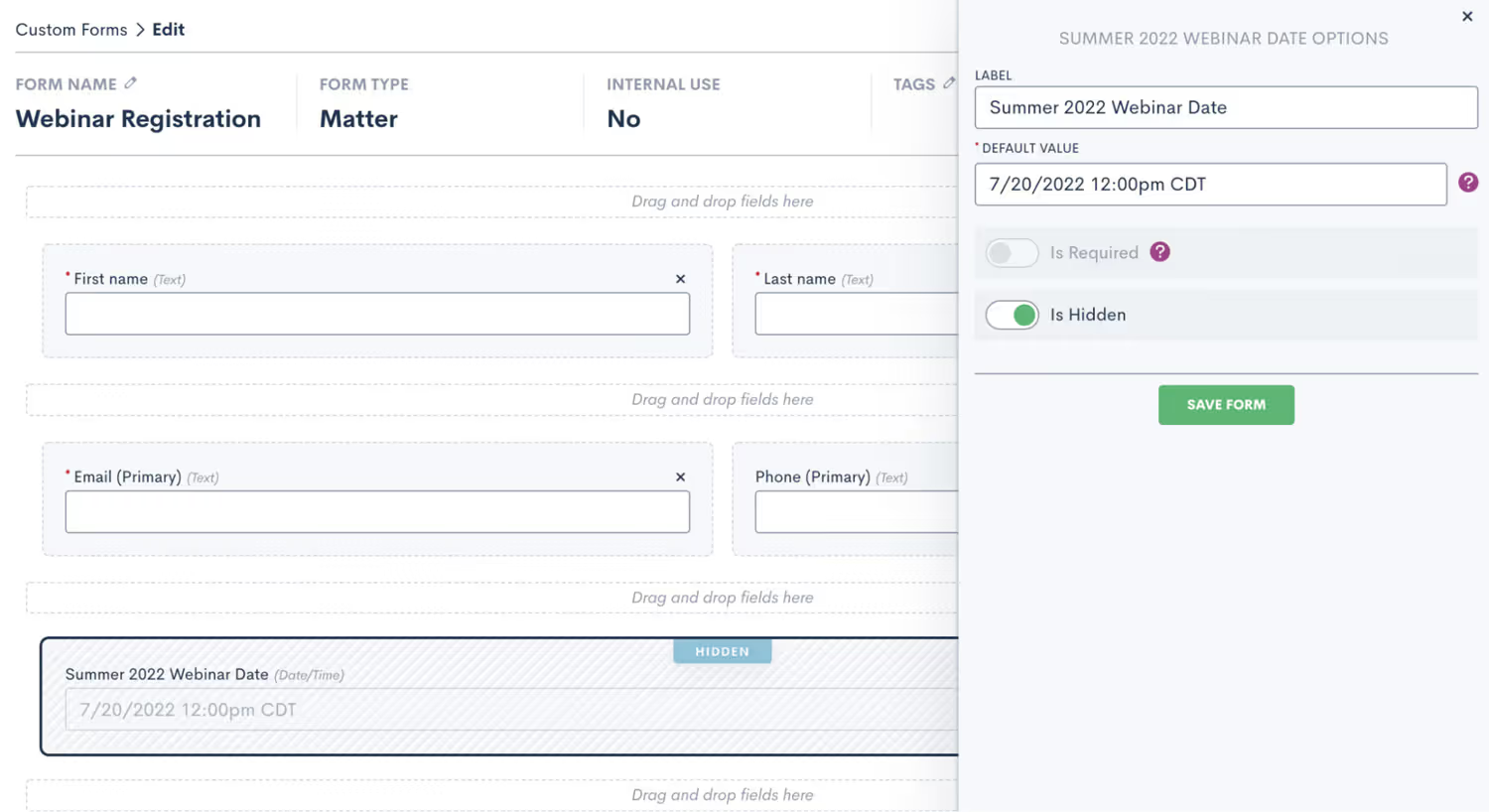
This field, invisible to anyone who fills out the form externally, will be necessary for triggering automated reminders for the webinar, as covered in a later section of this article. Create this field right from within the form, and make sure you select date/time as the field type. After you have created and saved your custom form in Lawmatics, make sure to embed and feature it on your website. You may even consider a google ad or landing page, depending on your budget for promoting the webinar. When embedding the form, don’t forget to adjust your styling options to make the form eye-catching but not distracting.
2Build your webinar post-registration automation
Before you go live with embedding your custom form on your site or promoting your webinar, make sure you have your automations place. This will ensure that any potential registrants submitting the form will receive immediate attention.
Add an Entry Condition
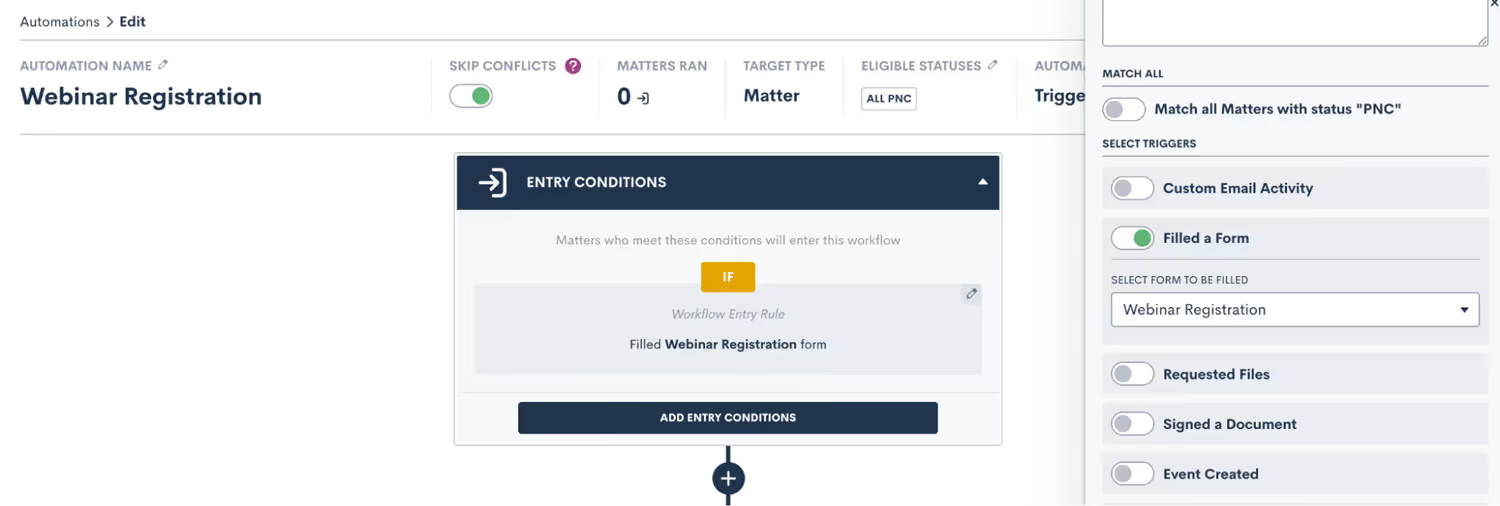
Begin by navigating to the Automations page found under the Marketing tab in Lawmatics. Create a new automation, and title it based on the name of your webinar. Once you have created the automation, add an entry condition and select the Form Filled toggle. You will then select the specific webinar custom form that you have already created in the step above. You have now set this automation to trigger when someone fills out that form. The registrant will not only be created as a contact and matter in your Lawmatics CRM, but they will also enter into this workflow.
Add Action Items (Tags + Marketing Source)
Next, you will add action items into this automation. What actions you choose to add may vary depending on what you all wish to track and how you want to communicate with registrants, but there are a few items that we strongly recommend for all webinar workflows.First, you may wish to use the change attributes action to apply a tag (or multiple tags) to each registrant automatically. You could tag each contact based on the topic of the webinar, to indicate that they are interested in webinars in general, and also the specific name of this webinar. This is a great way to set yourself up for future reporting and audience segmentation down the road.We also suggest creating a marketing source (found in Settings>Marketing Sources) called Webinars, as well as a campaign under that source for this specific webinar. This is a great way to track how the number of leads that originated from your overall webinar efforts, and compare the success of each webinar over time. Use two more “change attributes” actions in your automation to set both the source and campaign fields accordingly.
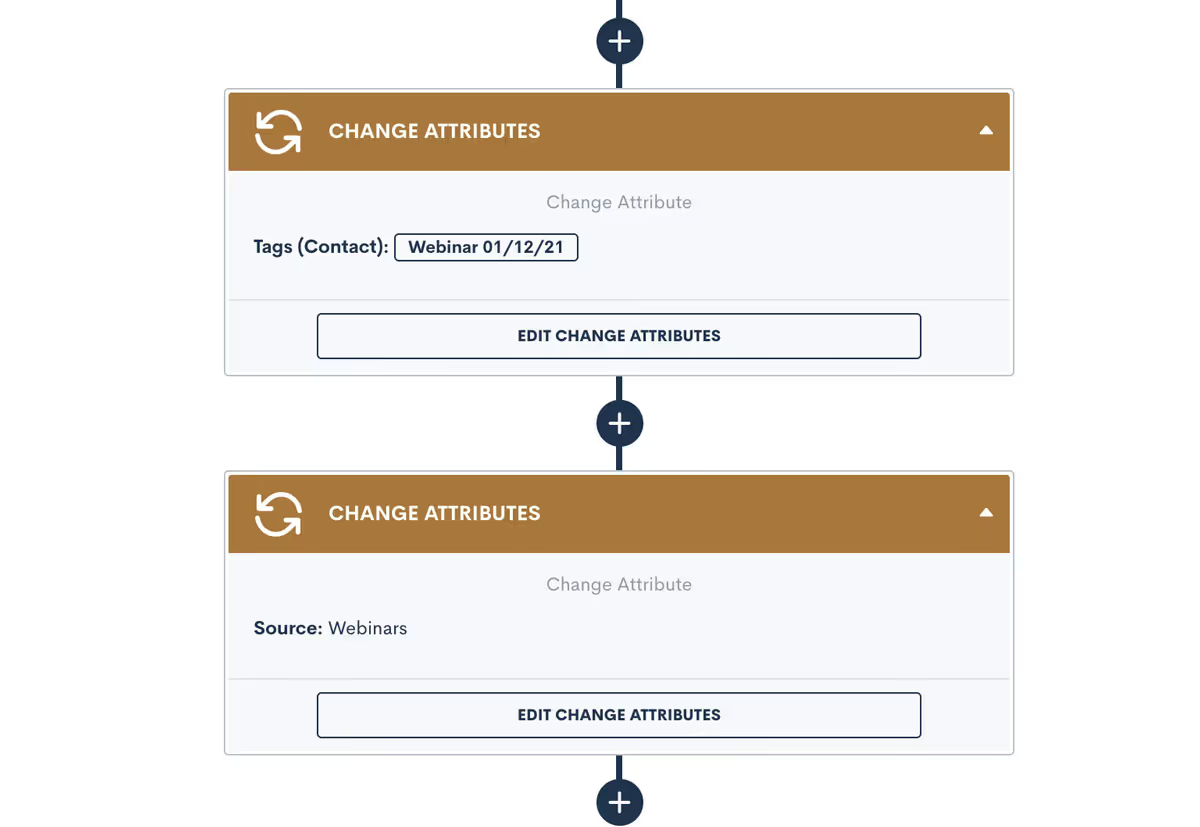
Add a Confirmation Email or Text Message
At this point, you will also want to send out an automated confirmation email or text (or both). Create your email template under the Assets tab of Lawmatics; this is a good opportunity to use the email design suite to create an HTML designed email. The email can include your logo, color scheme, or even a video thumbnail promoting the webinar. Also be sure to include all pertinent information for the webinar itself, such as the date, time, and directions for joining.
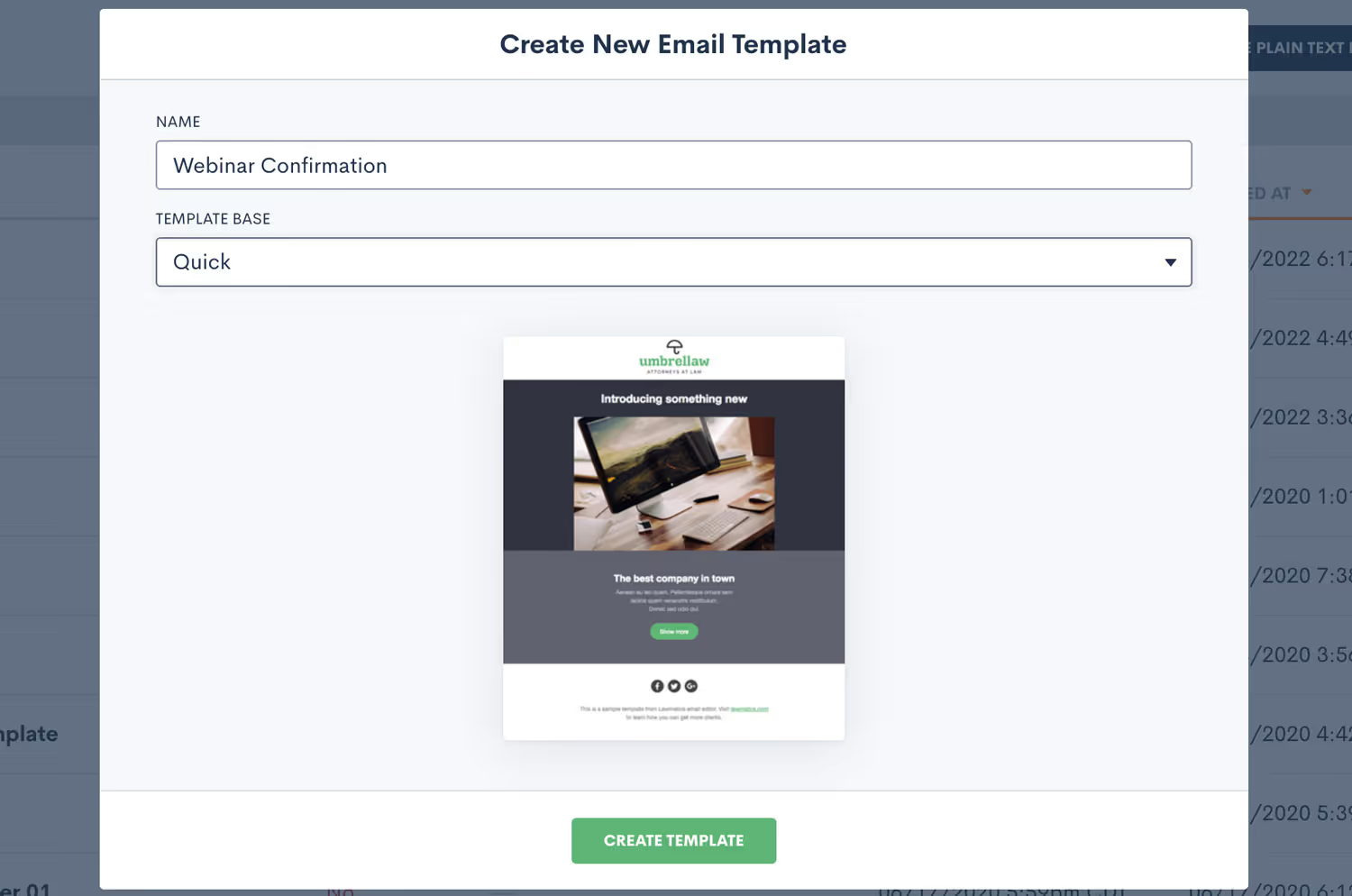
Once you’ve created your email template, add it into your automation using the Send Email action item. It can’t hurt to add a time delay of a few minutes prior to the email action, making it seem more personalized and less automated. Depending on your audience, and if you have chosen to capture phone numbers on your registration form, you may also wish to use the Send SMS action to deliver a text message confirming the registration.
Add Webinar Reminder Emails or Texts
Remember that hidden field you added to your registration form to default the date and time of the webinar? We’re finally coming back to that and using it to trigger our next automation. Return back to the main automations page and create a new automation, this time select Date Field as the type of automation, and then select the field you created for the webinar date as the Date Field.
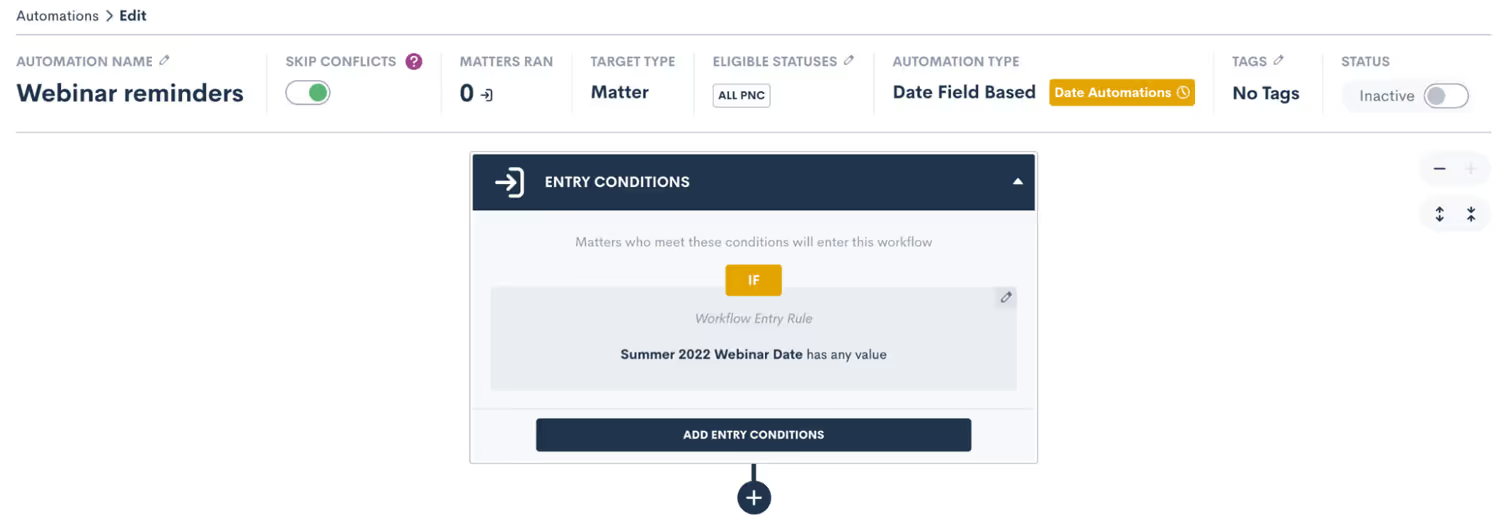
You won’t be adding any action items to the main section of this automation, but rather click on the yellow Date Automation button at the top of the page. Here you will be adding time-relative triggers to create a sequence of reminders leading up to the webinar. You may wish to include emails, text messages, or both in this sequence, and they can be used not only to remind registrants of the upcoming webinar date, but also to build hype and get them excited for the event.The cadence of timing is up to you, but we suggest including at least 2 touchpoints: one 5-7 days before the webinar and one the day before. Each of your touchpoints will be created as a separate date automation, and you will set the time frame when you create that date automation. Then add in your email template or other desired action item to each date automation accordingly.
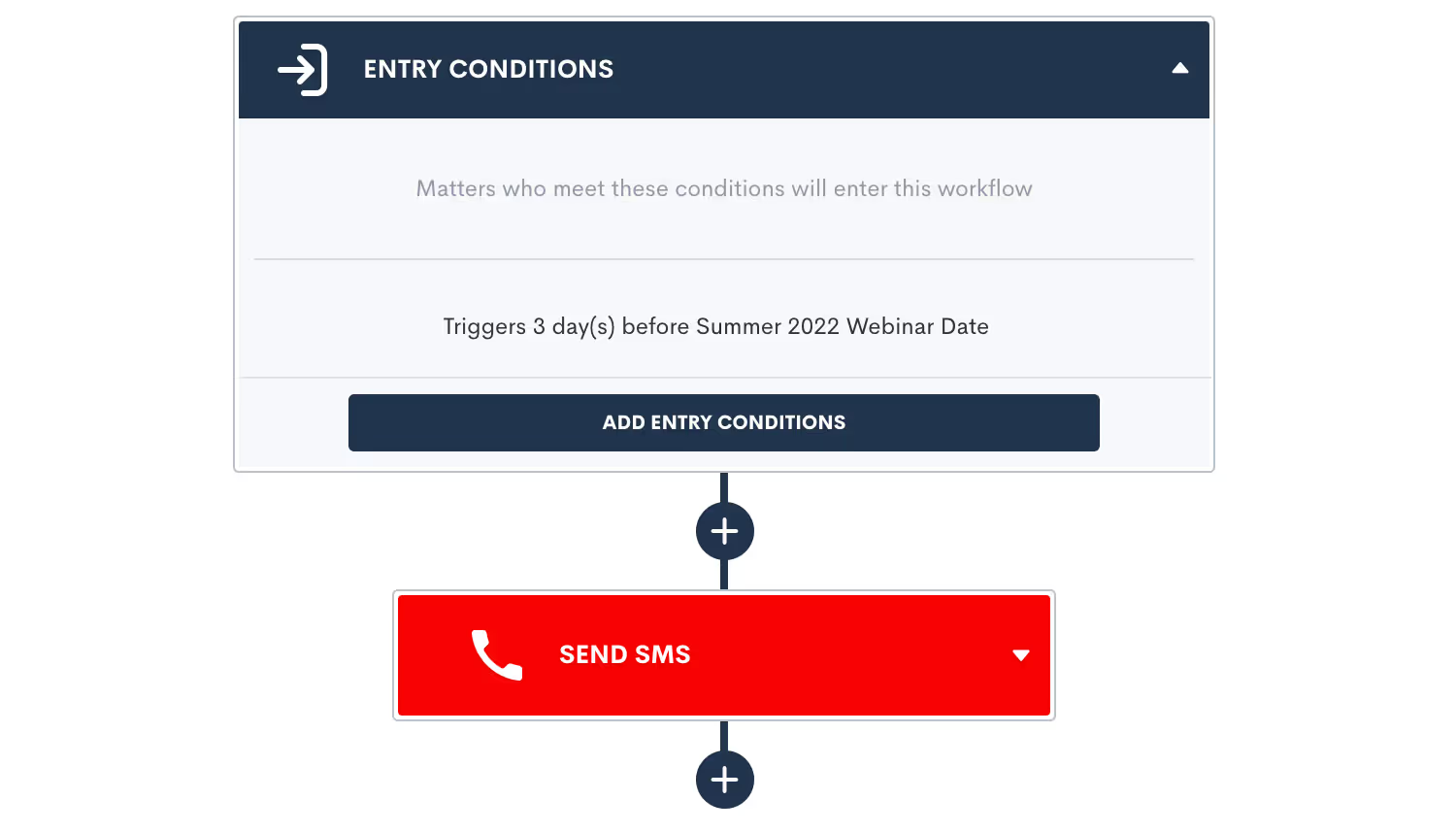
If someone registers for the webinar after any of these timeframes have already passed (for example, if they sign up less than a week in advance and you have a 1 week reminder email set), they simply will not trigger into those workflows that have already passed.
3Track webinar registrations
Now that you have set up your automated reminders to build excitement and boost attendance for your webinar, your next step will come on the day of the actual webinar. Be sure to track (or log) which registrants actually attended the event; this information will be used to send the appropriate follow up emails. Depending on which platform you use for the webinar, it may track attendance automatically, or you may need to download/capture a manual list.Whichever method you use to track attendance, you’ll want to input that information into Lawmatics so it can be used for reporting and segmenting your follow-up audience. Create a custom field or a tag to label attendees, either option will suffice.
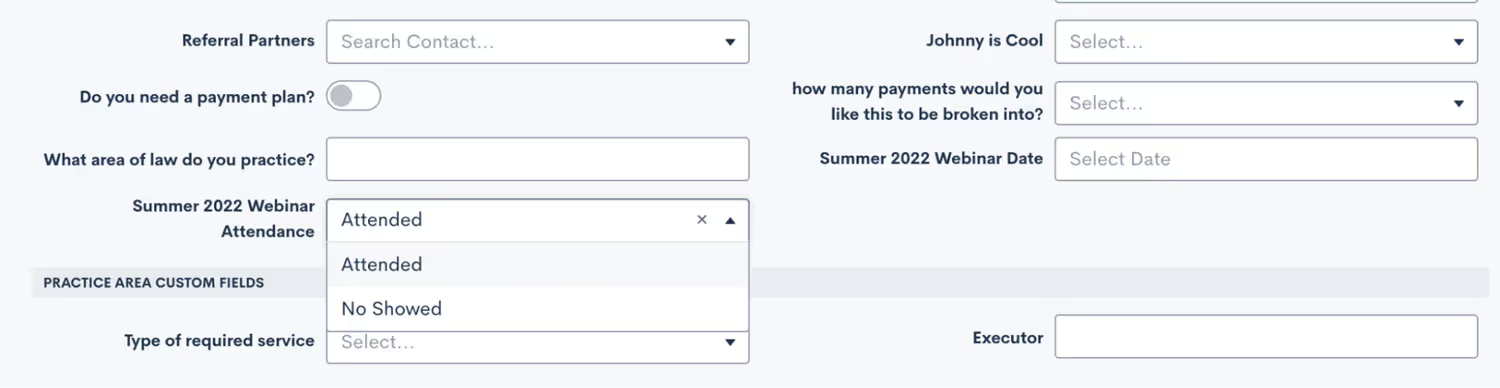
It may make sense to use an import to update your existing contacts if you have high numbers.To keep your marketing statistics up to date, you will also need to input the dollar amount that you spent on this webinar. Return to the marketing sources page in settings, locate the campaign that you created for the webinar, and click the dollar sign icon to log your spend. This will be used to calculate the ROI on this webinar as leads start to convert.
4Schedule a post-webinar follow-up email
After you have completed logging attendance and spend of your webinar, you are ready to start following up with these leads and gather insights to help prepare for your next webinar.First, create a separate audience list for attendees and no-shows, filtering either by your tag or custom field that you used to track attendance.
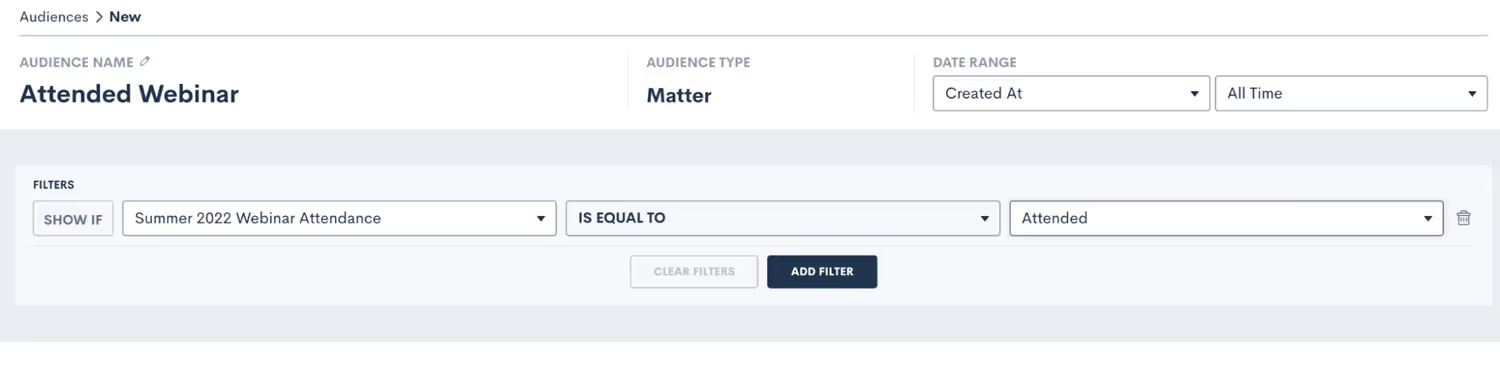
Then create a thoughtful email to send to each group. In both emails, thank them for their interest, include access to view a recording of the webinar, and a call to action for them to get in contact with your firm if they have questions or would like to learn more about you. This is another great opportunity to use some creativity when crafting an eye-catching and professional HTML email template.As a bare minimum, send the email to each group using a one-time-send email campaign. For increased touchpoints and exposure, create a whole sequence of automated emails to continue following up with these leads long after the webinar has occurred. Your automations could be triggered by the attendance status of either attended or no-showed, or you could use a date field automation along with conditional logic for the attendance to keep in touch X number of days after the webinar.
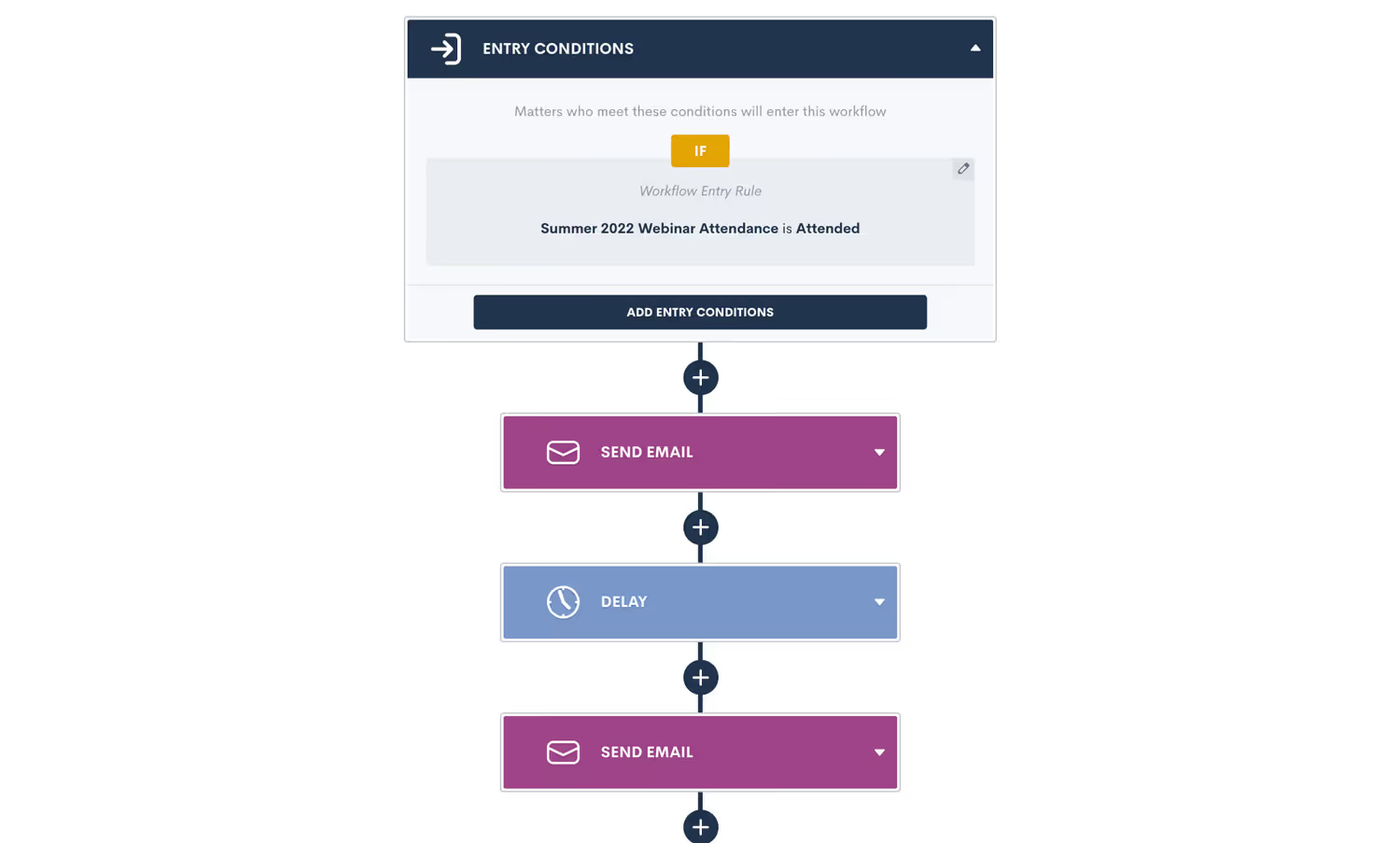
Every audience is different and may respond better to certain outreach, so Lawmatics grants you the ability to customize and personalize your workflow as much as you would like. However frequently and intensely you decide to go after this audience, make sure that your outreach is aligned with what you know about your audience in particular.
5Further engagement
As time goes on and these leads start to engage with your firm, you can use Lawmatics reporting to collect insightful data on what went well and what didn’t for your first webinar. Create a custom report filtered by source to pull in only your webinar leads, and add columns like tags, attendance, status (to track conversions), and estimated value. This report will dynamically update as updates are made in your CRM, so check back to view your updated stats. Hosting your firm’s first webinar may seem like a daunting task, but Lawmatics is here to keep you organized and keep your leads engaged through each step of the process. From initial registration, to automated reminders, to post webinar reporting, Lawmatics has all of the tools you need to host a successful first webinar, and hopefully many more to come. At the end of the day, webinars are a wonderful way to capture leads who otherwise may not have engaged with your firm, and what better way to keep those leads engaged than with a webinar workflow in Lawmatics.Best of luck with your webinar, and feel free to share your experience and results with our team, we’d love to hear from you!Sources citedhttps://www.goto.com/blog/7-webinar-scheduling-secrets#:~:text=Plan%20it%20for%2011%20a.m.,mess%20with%20people's%20lunch%20hourhttps://www.airmeet.com/hub/blog/why-webinars-should-be-a-part-of-your-marketing-strategy/https://www.thebalancesmb.com/best-webinar-platforms-4802615

The tech industry embodies innovation, creativity, and revolution. And while “tech” can be seen as a broad term that comes with many sub-sectors, all of them come down to the same goal: to make humans stronger, wiser, faster, and more agile than they would be in the absence of these tools. So, isn’t it wild to think that in our journey towards humanity as a whole through technology, there is predominantly one gender leading the show? After all, how can we hope to develop and design technology that represents all walks of life if it’s not being created by all types of people who will use these products? In the male-dominated industry of tech, women are more important than ever—not only to represent a larger user base of tech products but also to provide fresh ideas and greater diversity that can help shape richer ideas.Because if you develop a product that only consists of one type of person, you run the risk of missing the mark. That’s why we at Lawmatics are proud to be a diverse team, breaking the mold of technical positions, and in turn developing products that are represented by all kinds of people with varying perspectives — with the goal of creating a product that works for everyone.We want to do our part in representing the women in tech. So, we’ve asked our own women team members to share their thoughts on what being a woman in tech means to them.

I love being part of a market that creates innovation for people. I also love interacting with so many intelligent, creative and fun individuals. Being a woman in tech means I can participate in this solution-oriented world, learn and contribute with what I am. This environment is becoming more inclusive and more diverse, so everyone benefits and grows from this opportunity.
— Erika Beaudette, Customer Success Specialist

Being a woman in tech is a learning experience. Not only do you learn so much about tech and the industry itself, but you learn so much about yourself as well. There are challenges women face when coming into a male dominated industry, such as being overlooked due to biases based on gender, race, age, and even appearance. We also have internal challenges we struggle with like confidence or feeling like we need to be more masculine in order to be taken seriously. Although I struggled with some of these internal challenges, I feel stronger now that I have overcome them. This is also why I'm so grateful to be a woman in tech, because I was lucky to find a company that supported me and let me be who I am.
— Val Kirsch, Implementation Team Lead

It's empowering to be a woman in tech, especially in sales. We're flipping the script and showing that we can come into an organization that's predominantly male and provide a fresh outlook, boost productivity, and be successful.
— Rachel Koscil, Sales Development Representative

To be a woman in tech in 2022 means to be mindful of the struggle of women of past generations to make space in all workplaces for future generations of women, while at the same time having confidence in our ability and never losing sight of the fact that our space in these places is well deserved. This also means embodying the ideals of diversity and inclusion that have allowed us our place in these spaces; to be an advocate of other groups who may not be represented fully, not just in the workplace but in all aspects of our lives.
— Mahnoor Mian, Customer Success Team Lead

Being a woman in tech to me means having a positive and diverse impact on the company and industry and empowering other women professionally. I love offering a different perspective and encouraging others to do the same.
— Sarah Bottorff, Senior Vice President
Being a woman in tech means being able to share a different perspective and come up with more solutions to problems. There's no one size fits all approach to problem solving and the solution could be a combination of input that comes from multiple people, regardless of gender!
— Anonymous

B.D.E. = Boss Diva Energy
— Kaia Dobbs, Account Executive

Being a woman in tech in 2022 means working to create a collaborative, diverse and inclusive workplace for everyone. At Lawmatics I love having the ability to work with my team on building a strong network of professionals who support one another, learn and grow together. Everyone working together towards the same common goal while striving to make a positive impact on the organization and tech industry. My hope is that this means working towards a future in which this no longer has to be a question that is asked.
— Monique Padilla, Talent & People Ops Leader

What is your role at Lawmatics, and what does your job entail?
I’m an Implementation Specialist here at Lawmatics. After a law firm signs up with our software, I’m responsible for setting up their new account with them and familiarizing myself with their intake process. With that knowledge, we create automations within Lawmatics based on their unique business needs and objectives.
How did you end up working for Lawmatics?
I’ve always worked in customer service and was eager to branch out into technology, so I started looking for a customer success position in my area. When I saw the description for the position at Lawmatics, it seemed like a perfect fit. I applied and spoke to Sarah Bottorff, our SVP of Growth, after which I knew I would love it!
What’s the best part of your job?
The best part of my job is the amazing team I work with and the incredible culture fostered by our company. Everyone does a great job of making sure each employee feels welcome and cared for, and heard; I have never felt more at home being in an office!
What new thing did you discover about yourself during the pandemic?
During the pandemic, I discovered that I am the type of person who will stay up until 4 AM to finish a puzzle they had no intention of starting, while watching a show about a corrupt tiger zoo.
Where are you originally from, and how did you end up in San Diego?
I’m originally from Niskayuna, which is a small town in Upstate New York. I went to school at the University of Delaware and graduated with a degree in Hospitality Business Management. Obviously, the pandemic hit that industry hard, so I figured it was a perfect time to explore a new place! My best friend, who was currently living in San Diego, flew back East and we took my trusty Camry across the country together in September 2020.

What do you like to do when you aren’t working?
Outside working hours I love spending time with friends, trying new restaurants, hiking, and going to the beach. I also love to draw and paint, so I teach “paint and sip” classes on the side. It was my first job in San Diego, but now I just do it for fun, when I can.
What is a fun fact most people may not know about you?
I played the violin for 10 years when I was younger. I always played by ear, and didn’t learn how to read sheet music until 5 years in.
Tell us about one of your craziest SFW experiences.
My friends, family and I fully believe that the house I grew up in is haunted - so I have quite a few crazy experiences with that!
What is the one thing you can’t live without and why?
I could not live without music! It can be so powerful in affecting your mood and creating a perfect environment for validating your feelings. I listen whenever I can and love finding new songs, going to concerts, and dancing (poorly)!
Do you have a favorite saying, quote, or personal mantra and if so, what is it and why?
There’s a long quote I love by Anthony Hopkins, “None of us are getting out of here alive, so stop treating yourself like an afterthought. Eat the delicious food. Walk in the sunshine. Jump in the ocean. Say the truth that you’re carrying in your heart like hidden treasure. Be silly. Be kind. Be weird. There’s no time for anything else.”
Can you walk us through your "Aha" moment - the moment when you realized how powerful the Lawmatics platform is for lawyers and law firms?
I absolutely love getting on a call and going over functionality that the firm didn’t know the platform was capable of. Seeing them come to the realization that they’re going to save so much time never gets old! They are so appreciative, and it really shows how much an automated process can change some people's lives.
Based on your experience, what words of wisdom or advice do you have for legal professionals looking to help their law firms win more business, impress clients, and be more efficient?
I believe that following up with a client is very important. Making sure they know you care can truly build rapport and keep clients coming back - not to mention that if they have a good experience, they are likely to recommend your firm to someone they know!

Marketing your law firm, whether you like it or not, is a necessary part of attracting and retaining clients. Because despite how adamant you may be that providing a good service should be enough to grow your business, marketing plays a critical role in the overall success of your law firm. What’s more, marketing your law firm today isn’t the same as it was 20 years ago. Whether you just opened your practice or have been at it for some time, it’s easy to fall behind on the latest marketing methods and tips to get the most return on your investment. Without further ado, here are five top tips for marketing your law firm in 2022.
1 Your website matters
Your website should be the cornerstone of your entire marketing strategy. But why does your law firm need a website when your business is visible from the street or featured in the local paper?
It establishes your credibility
If a potential client Googles you and can’t find a website for your law firm, they may question the validity of your business. After all, in a world where even amateur photographers have websites, why wouldn’t an attorney have a website as evidence that they exist.Your law firm’s website is an opportunity to shine by showcasing your strengths and proving you’re as credible, if not more, than your local competition. Use the real estate on your website to highlight cases you’ve won, and share customer testimonials— show a prospective client why you’re the best person for the job. This is done by both demonstrating your abilities and the human element of your business. Beyond the content of your website, the design and user experience matters equally. It must look professional and well constructed, with an easy-to-navigate layout. For this reason, it’s highly recommended to hire a skilled professional to design your website.Your design should have:
- High-quality photos
- Clearly stated services and practice areas
- Awards and recognitions
- Previous experience
- A strong call to action
It generates leads and increases visibility
The better optimized your law firm’s website is for SEO, the higher you’ll appear on Google results. The higher you appear in Google’s search results, the higher the likelihood that you’ll be found by someone seeking legal representation in their area. By nature, humans want as effortless of an experience as possible. 95% of web users will never click past the first page of Google search results, aka Google SERP. Yet 25% of people will call the first three law firms listed. In short, if you don’t show up on page 1 of Google, you may as well not exist.
It will streamline your client intake process
If you’re a smaller firm without the luxury of a front desk staff, then your website can serve as a full-time receptionist. It can provide answers to frequently asked questions, helpful information such as your location, the option to self-schedule consultations, and a client intake form for prospects to fill out that will automatically push their information into your intake software. From that point on, prospective clients are tracked from every stage of the client journey, ensuring that no engagement opportunity is missed. Client intake software seamlessly moves leads from one stage to the next thanks to custom marketing workflows, not only saving you time but delivering a positive customer experience at each step.
2 Embrace the TikTok era
We live in a digital world where people are more distracted than ever. While words will always be valuable, it’s a lot easier to grab someone’s attention with a video than a wall of text. Platforms like TikTok are fun and entertaining, and during these times of Covid, a climate crisis, and political unrest, many are looking for an escape from the exhausting news cycle. Entertainment aside, video also humanizes your business which, in turn makes you and your staff more relatable to legal consumers.The great thing about video is that there are so many different ways to use it as a marketing tool. Some lawyers find great success in adding a quick 30-second legal tip to their social media channels each week. Others create funny, relatable videos about the seldom seen side of an attorney’s life. It all depends on how much work you’re willing and able to put into video creation. In the end, it’s better to have something than nothing, so don’t fret over production value or media experience. Regardless of whether you’re ready to learn a TikTok dance or not, one thing is for sure, video grabs more people's attention in today’s distracted society, even if as simple as a quick informational video recorded with your iPhone.
3 Five stars or bust
We live in a star-rated world where consumers value a Google review as much as they would a personal recommendation. Not only will a strong rating on Google make you look more credible to prospective clients, but it will also result in a higher ranking on Google search results. Remember— the winners are at the top. If you don’t have a Google My Business profile set up yet, then you might want to do that—now!Don’t be afraid to ask for reviews — in fact, it’s encouraged, particularly when clients have visibly or verbally expressed their satisfaction with your service.If you somehow manage to get a poor review, don’t panic. One negative review in a pool of positive ones won’t risk damaging your overall reputation. The best way to respond is to remain calm, apologetic, and offer a solution if you can. On the other hand, if you’re noticing the same negative points coming up in reviews, it may be an opportunity to address the problem area and make changes where necessary. Even though criticism can be hard for your ego, reviews can be an extremely effective way to learn what’s working and what’s not.
4 Leave the legwork to marketing software
Email remains one of the most ubiquitous forms of communication. For that reason, launching a weekly newsletter is still an extremely effective way to stay top of mind. If you’re thinking, “You want me to learn TikTok and now you’re asking me to take time out of my already spread thin schedule to write a weekly newsletter?” don’t worry, there's software for that.The last thing lawyers need is a more time-consuming task to add to their plates. That’s why delegating your marketing efforts to automation software can be a time changer. Marketing automation makes it easy to send scheduled and tailored content to specific email lists using audience segmentation software. With automation, you can create a digital marketing campaign that delivers pertinent messages to the right person at the right time, on autopilot. Automation features like drip email marketing send out emails based on triggers of your choice, whether someone signs up for your newsletter or schedules a consultation. What’s more, you can track every interaction and analyze contacts’ behavior thanks to data so you can fine-tune your marketing strategy.
5 Start a blog
A blog is a great way to create fresh content on your website that keeps Google’s search engine happy, while also establishing your authority and legal experience. The more relatable and informative you can make every blog post, the more likely legal consumers are to read and share your content.If you’re not sure where to begin, try starting with addressing your clients' most frequently asked questions. Offer a hot legal tip of the day, or highlight one of your staff members. Get to know what the most commonly searched phrases are related to your practice area like “how much time do debt collectors have to sue for payments?” or “Is it legal to record a conversation?” Finding out what questions people are asking can be a great source for writing information for your legal blog. Make sure that you sprinkle your blog with plenty of relevant keywords that will push your content even higher on Google search results, which is known as SEO (short for search engine optimization.) Check out our guide to law firm SEO marketing here.
Stand out and grow your practice with Lawmatics
Law firm marketing can seem like a time-consuming part of running a law firm that you’d rather not have to deal with. Nevertheless, it’s a necessary ingredient for law firms who want to generate more clients at a steady pace.Yet marketing your law firm and generating a steady stream of leads isn’t all it takes. You’ll need to have an effective system in place to keep track of all of your contacts and ensure no opportunity gets missed. When you consider that the average law firm takes three or more days to respond, it’s easy to see that many busy lawyers struggle to keep up with the success of their marketing efforts.By using legal technology like a CRM and client intake software like Lawmatics you can ensure no opportunity is missed, and automation takes care of your follow-ups so you can focus on what you do best — practicing law. Are you ready to see how Lawnatics all in one legal client intake, CRM, and marketing automation can put you on the top of Google search results? Sign up for a free product demo today!Sources CitedMatt G. Southern, Search Engine Journal, Over 25% of People Click the First Google Search Result, July 14, 2020https://www.searchenginejournal.com/google-first-page-clicks/374516/#closeNathan Thompson, OptinMonster, 10 Crucial SEO Ranking Factors You Need to Know, March 8, 2022https://optinmonster.com/seo-ranking-factors/
Summer is heating up and so is the latest batch of feature releases from Lawmatics! You’ll be delighted to see these new additions and improvements from our team to yours.
Date Field-Based Automations
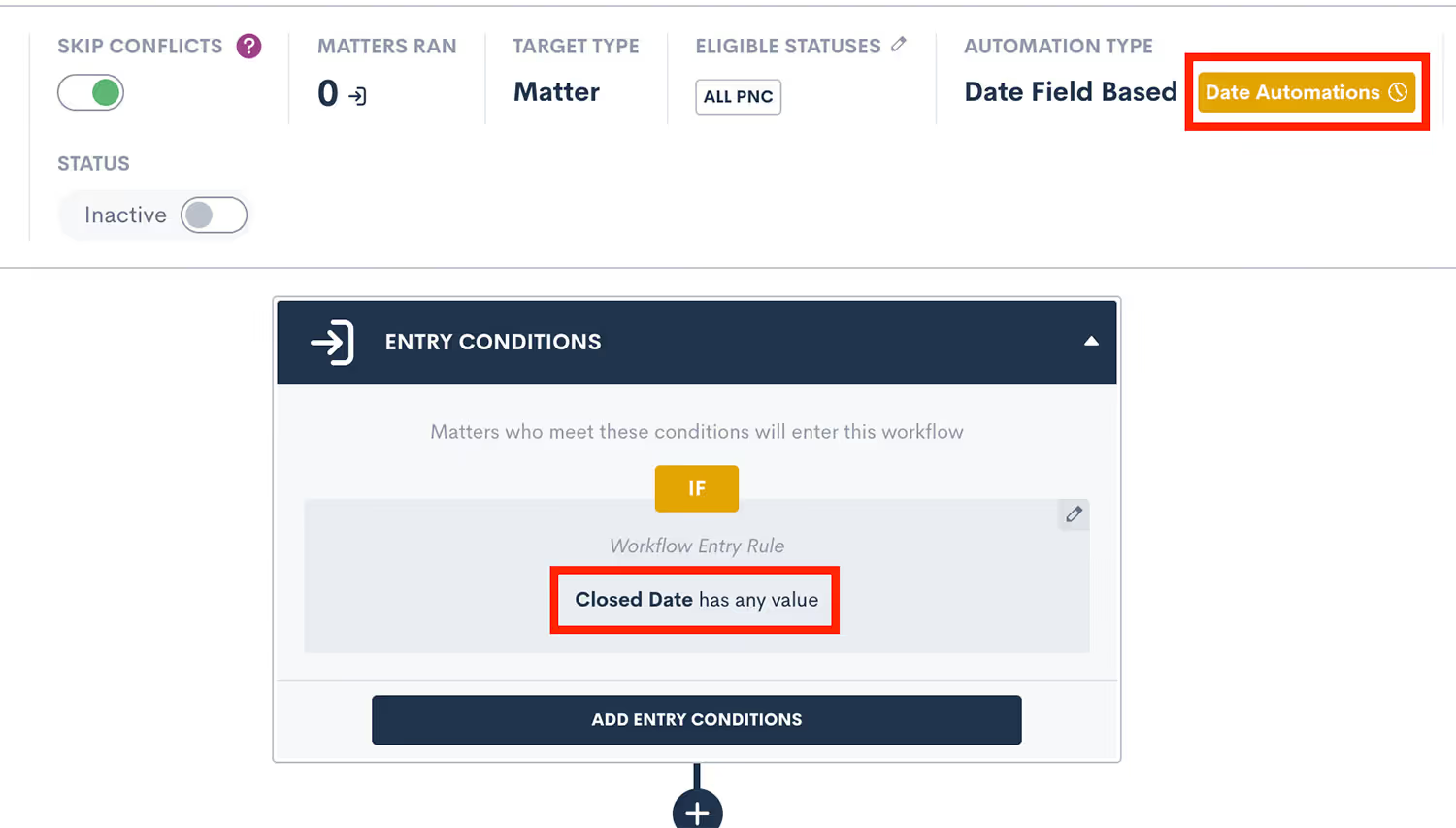
We are thrilled to announce that you can now create time-relative automations (one hour before, two days after, etc.) for any date type field in Lawmatics. Our new Date Field-Based Automations take the existing concept of event-based automations and apply it to date fields. This new functionality allows you to trigger automated reminders or check-ins relative to a client’s court date, filing date, anniversary, or any other custom date field you may use in your practice — all from simply populating the date into a date type field.When creating a new automation you’ll select the Date Field option, then select from any of your firm’s date type fields as your target field to create a Date Field-Based Automation. You can then add your time-relative automations by clicking on the yellow label at the top of your page (highlighted below).To learn more about Date-Field Based Automations, click here.
Custom User Permissions for Viewing Email Communications
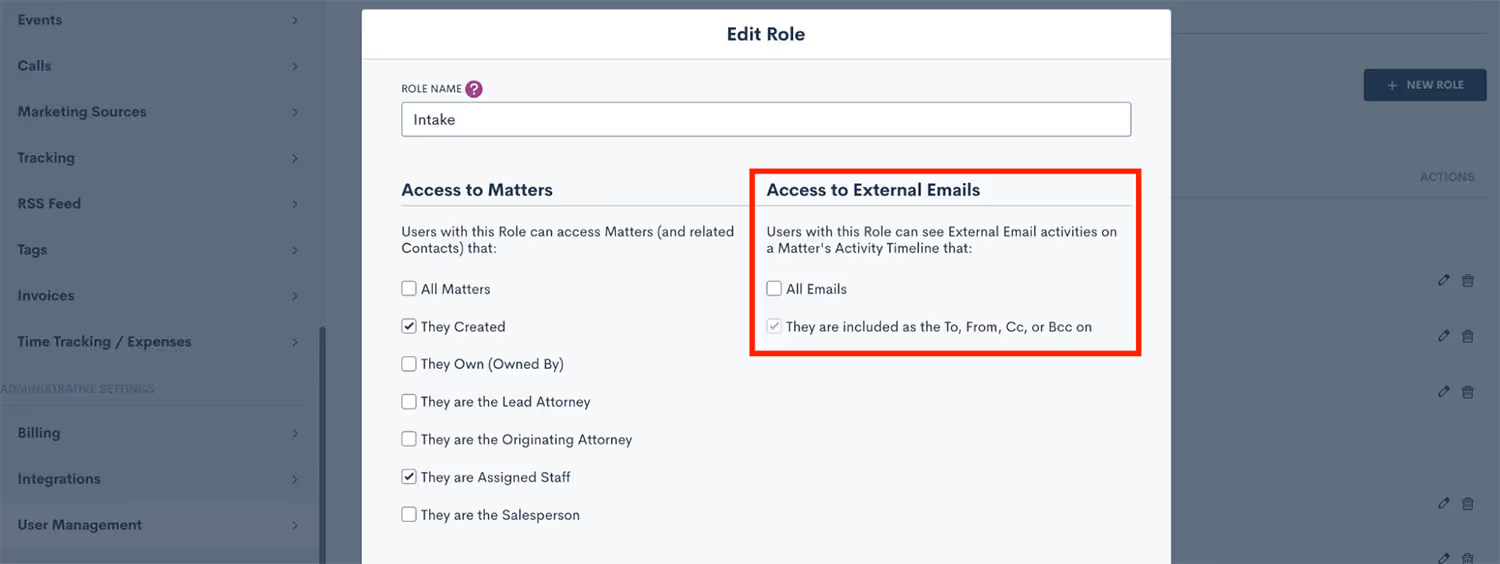
Confidentiality and discretion are paramount when dealing with sensitive client information. While logging your external emails in Lawmatics can be helpful, you may not want the entirety of your staff to have view access to these emails on a matter’s timeline. With our new External Email Role Permission you can now easily limit any user’s access to view email communications, without limiting their access to the matter all together. To use this new permission, go to the User Management page in your Admin Settings, Click Manage Roles, edit the role you wish to apply this restriction to, and then uncheck the All Emails option, as shown below.
Not yet using custom user roles? Learn all about that option here.
Set Default Tax Adjustment
With this latest update to Lawmatics Payments, you can now set a default percentage or flat amount for tax adjustments. While the default can be overridden when creating an invoice if necessary, setting a default will save you the time of entering a tax amount on each invoice if your firm does have a standard rate or amount. This adjustment can be applied to the invoice subtotal, expenses, or time entries, as shown in the example below.

Find this option on your firm’s Invoices settings page. If you are not yet using the Time & Billing feature in Lawmatics, email us at support@lawmatics.com to add it to your account.As always, we hope you enjoy these latest updates from Lawmatics and stay tuned for another round of releases in August.
Subscribe to get our best content in your inbox
Law firms love Lawmatics
Our customers give their clients the client-focused experience they deserve. Learn how they do it all with Lawmatics.
.avif)
.avif)

.avif)

Ready to grow your law firm with Lawmatics?
Schedule a demo of legal’s most trusted growth platform.