



CRM


Will AI replace lawyers? Artificial intelligence (AI) will not replace lawyers, but it is fundamentally changing how they get legal work done. As AI becomes more embedded in research, document review, and client intake, firms are increasingly automating many traditional legal tasks. This article examines whether AI can truly replace lawyers, which legal functions are most affected, how law firms are using AI today, and what these trends mean for associate attorneys navigating an AI-driven legal industry.
AI is already reshaping how your firm gets work done. It’s changing how you handle research, drafting, intake, billing pressure, and the future of associate work.
For many firms, the real question is how to use AI without disrupting the way they already work. Firms are figuring out where AI adds value and where attorneys still need to stay hands-on, while navigating how these tools change the work without changing who’s ultimately responsible.
In this guide, we’ll examine where AI affects legal tasks, why associate attorneys feel the most pressure, how firms are using AI today, and what the next 12-24 months are likely to bring.
Will AI Replace Lawyers or Just Change the Job?
The short answer is no: AI will not replace lawyers. What it can do is automate or accelerate certain tasks lawyers have traditionally handled manually, and that distinction matters.
When people ask, "Will lawyers be replaced by AI?" or "Can AI replace lawyers?" they are usually reacting to how quickly these tools have improved at summarizing information, reviewing documents, and generating draft language.
But those capabilities are not the same as practicing law. Lawyers are still responsible for legal judgment, ethical obligations, advocacy, and client outcomes. And courts, clients, and regulators continue to hold licensed attorneys accountable.
A better question is: “Which parts of your work is AI already automating, and what does that mean for you?”
Why Associate Attorneys Feel Most at Risk
If any group in the profession feels exposed by AI, it is associate attorneys. Associates often spend a large share of their time on high-volume, repeatable work:
- Document review
- Contract comparison
- Drafting from templates
- Follow-up tied to matters in progress
Those are also the kinds of tasks AI is taking on.
It’s no surprise that many associates feel pressure as these tasks shift. Many associates are already under pressure to be faster, more accurate, and easier to justify to cost-conscious clients.
But "most exposed" does not mean associates are the most likely to be replaced. It means the tasks that make up their role are among the first to be reshaped by AI, while expectations for more substantive work rise earlier.
Legal Tasks AI Can Replace or Automate
AI is most effective at handling structured, repetitive, text-heavy, and rules-based work that slows your team down.
Legal research and case summarization
AI is already changing the first layer of legal research. Attorneys can use it for a faster first pass to:
- Scan cases, statutes, and regulations quickly
- Summarize large volumes of text
- Highlight recurring themes
- Spot potential issues faster
That means less time gathering information and more time testing whether the output is accurate, relevant, and persuasive. These are the kinds of outputs that actually move cases forward.
Contract review and document analysis
Contract review is another area where AI can help. AI can be useful in due diligence, compliance review, procurement workflows, and any matter involving large volumes of contracts or standard language, including:
- Identifying clauses
- Comparing language across document sets
- Flagging deviations from standard terms
- Surfacing inconsistencies that manual review might otherwise miss
Many firms are also exploring legal document automation software to streamline repetitive drafting and review tasks while keeping attorneys in control of the final output.
Intake, qualification, and administrative work
Some of the fastest wins come from automating intake and follow-up with predefined criteria, so no potential client gets lost. These are areas where automation and AI can reduce a major administrative burden:
- Client intake
- Lead qualification and routing
- Follow-up
- Automated scheduling and reminders
Legal Tasks AI Cannot Replace
For all the attention on automation, there are still core parts of legal practice that AI cannot replace.
AI cannot replace certain legal tasks
Legal work often involves high-stakes decisions where the details matter, and the right call isn’t always obvious. Many matters require attorneys to navigate uncertainty, emotional dynamics, and practical risk in ways that go beyond pattern recognition.
Lawyers do more than surface information. They interpret ambiguity, weigh tradeoffs, and make recommendations when the answer is not obvious. AI can help organize information and support analysis, but legal judgment still depends on attorneys.
Advocacy and negotiation
Legal advocacy is deeply human. Whether in court, at a mediation table, or in a negotiation, persuasion depends on judgment, timing, credibility, listening, and adaptation.
Strong advocates read tone, pressure, resistance, leverage, and opportunity. AI can assist with preparation, but it cannot respond to the human dynamics that shape negotiation and advocacy in the moment.
Ethical responsibility and accountability
The biggest boundary in legal practice around AI use is accountability. Lawyers have ethical duties to clients, courts, and the profession, including competence, confidentiality, candor, supervision, and professional judgment.
Those duties still rest with attorneys. They must verify the work, protect client information, exercise judgment, and stand behind the advice they give.
How Law Firms Are Using AI Today
Law firms are using AI in several practical ways today. It supports legal work by improving intake and connecting workflows inside a legal client relationship management (CRM) system.
AI as an assistant, not a replacement
In many firms, AI is being used to accelerate research, support drafting, improve consistency, and reduce time spent on routine tasks. It helps attorneys work more efficiently, but they still have to review outputs, make decisions, and stand behind the final work product.
AI in client intake, lead qualification, and routing
One of the clearest applications of AI for law firms is in client intake. AI can help firms improve the quality of information they collect, apply qualification criteria more consistently, and move leads through the right next steps with less manual effort.
For example, AI can:
- Evaluate urgency: Identify inquiries that may need faster attention based on timing, case type, or stated circumstances.
- Screen for practice fit: Help determine whether a matter aligns with the firm’s services before teams spend time reviewing it.
- Assess lead quality: Apply defined qualification standards consistently to help teams focus on stronger opportunities. Tools like QualifyAI support this process by helping firms automate intake screening and matter qualification without crossing into the realm of legal advice.
- Collect intake information: Use custom forms and structured workflows to gather client details and create more complete records from the start.
- Route inquiries intelligently: Sort leads by priority, stage, or next step and direct them to the right person or process.
- Automate follow-up: Trigger responses, reminders, and outreach to ensure promising leads do not stall due to delayed communication.
- Support scheduling: Move qualified leads into consultations with less back-and-forth and fewer manual touchpoints.
- Reduce administrative drag: Improve upstream intake so attorneys spend less time on triage and more time on billable work.
AI paired with legal CRM workflows
AI becomes more useful when it works inside a broader system. That works best when legal CRM software and legal software integrations connect intake, follow-up, and client information into a single centralized system.
When intake data flows directly into a centralized CRM, follow-up can happen automatically, and attorneys can work from more complete, organized information.
What Will Actually Change for Associate Attorneys in the Next 12-24 Months
The table below illustrates which legal tasks firms are already automating, which are likely to change in the next 12-24 months, and which still depend on human judgment.
| Legal task category | Examples of tasks | Level of AI impact | Timeline |
|---|---|---|---|
| Intake and administrative work | Intake data collection, lead qualification, follow-up, and scheduling | High | Already happening |
| Legal research and summarization | First-pass case law research, statute summaries, issue spotting | High | Already happening |
| Contract review and analysis | Clause identification, risk flagging, document comparison | High | Already happening |
| Drafting standard legal documents | Routine motions, template-based agreements with attorney review | Medium | 12-24 months |
| Litigation prep and discovery support | Document organization, evidence tagging, timeline creation | Medium | 12-24 months |
| Intake decision support | Applying firm-defined qualification rules without legal advice | Medium | Already happening |
| Legal judgment and strategy | Case strategy, risk assessment, application of law to facts | Low | Unlikely to be replaced |
| Client counseling and advocacy | Client advice, negotiation, courtroom advocacy | Low | Unlikely to be replaced |
| Ethical and professional accountability | Malpractice liability, ethical judgment, licensing responsibility | None | Not replaceable |
Fewer low-value tasks, higher expectations
Associates will likely spend less time on intake administration, document work, and other repetitive tasks that can be standardized. As a result, firms may expect associates to handle more substantive work earlier.
As routine work takes up less of the role, firms may place greater value on analytical skills, precision, and the ability to take on client-facing responsibility.
Faster feedback loops
AI-assisted systems can make performance more visible. When workflows are digitized and standardized, firms can see turnaround times, follow-up completion, response rates, matter progression, and other indicators sooner.
Faster feedback loops help strong associates stand out while also making expectations around consistency and execution clearer across the board.
Increased leverage for AI-literate associates
The associates who benefit most from AI will be the ones who adopt it quickly and use it responsibly. That starts with understanding how to prompt, review, verify, and refine outputs. It also involves knowing where automation adds value and where it introduces risk.
The real advantage comes from turning saved time into stronger work, not just faster work.
The real risks of AI in legal practice
AI can create leverage, but only if you understand the risks that come with it. Key concerns include:
- Hallucinations and inaccurate outputs: AI can produce confident-sounding errors, including fabricated citations, misread authority, or oversimplified legal distinctions. In legal work, every output requires attorney verification.
- Confidentiality and data privacy: Firms must handle client information carefully, and not every AI tool is appropriate for legal workflows. Tools can create risk when firms do not understand how data is processed, stored, or reused. That is why firms need clear policies, controlled workflows, and tools built for legal use cases.
- Unauthorized practice of law: AI cannot independently provide legal advice. Firms can use AI to support intake, qualification, and internal workflows, but if implementation crosses into unsupervised legal advice, the risk becomes regulatory exposure.
- Over-reliance and skill atrophy: Attorneys still need to build judgment, pattern recognition, and analytical strength. If AI is responsible for too much thinking, it can result in weaker legal reasoning over time.
How Associate Attorneys Can Future-Proof Their Careers
The strongest position is knowing where AI supports your legal work and where your judgment still matters most.
Focus on high-judgment legal work
The more your value depends on strategy, counseling, nuanced analysis, negotiation, and client communication, the harder you are to replace. Look for opportunities to build skills in asking better questions, improving communication, and taking ownership of recommendations.
Become AI-literate, not AI-dependent
Lawyers do not need to become AI experts. They need to understand how AI fits into their day-to-day workflows.
Learning how to evaluate outputs, identify weak reasoning, spot missing context, and supervise automated processes will better equip you to leverage AI without becoming dependent on it.
Use AI to protect billable work
AI should protect time for more meaningful work. When firms automate low-value administrative steps, intake bottlenecks, or repetitive drafting processes, you can focus your time where it adds the most value: analysis, advocacy, and client service.
The Future of Law in an AI-Driven Legal Profession
AI isn’t changing who’s responsible for legal work. It’s changing how efficiently you can get that work done.
For attorneys, AI is most useful when it automates administrative tasks and streamlines intake, follow-up, and qualification, allowing them to spend more time on substantive legal work.
As a legal CRM, Lawmatics helps firms automate intake, follow-up, and qualification through custom automations. You receive better information and fewer administrative bottlenecks, so you can spend more time practicing law.
To see how AI-supported intake fits into a modern Legal CRM, request a demo.
FAQ
Will AI replace lawyers entirely?
No. AI can automate parts of legal work, but it cannot replace legal judgment, ethical accountability, or advocacy. Lawyers are still responsible for advising clients, applying the law to specific facts, and standing behind the decisions and filings.
Are associate attorneys more vulnerable to AI?
Associate attorneys are more affected by AI-driven task automation because early-career roles often include more routine, document-heavy, and process-driven work. With AI, the structure of their work is changing, with more emphasis on analysis, judgment, and client-facing readiness.
Can AI practice law on its own?
No. AI cannot practice law independently or provide legal advice without attorney oversight. It can support research, intake, and administrative workflows, but licensed attorneys are still responsible for verifying outputs, protecting client information, and exercising professional judgment.
What legal work is safest from AI?
Legal work that depends on strategy, advocacy, negotiation, and client counseling is the least likely to be automated. These responsibilities require judgment, persuasion, relationship management, and the ability to respond to nuanced facts and human dynamics.
Should lawyers be worried about AI?
Lawyers should prepare for change, but not assume AI is replacing the profession. Firms and attorneys who learn how to use AI responsibly will be in a stronger position than those who ignore it.

We’re delighted to announce that Lawmatics has been recognized by TechnoLawyer as a ‘Hot Product’ in their 2022 Buyer’s Guide. The TechnoLawyer publication reports on the latest in legal technology, law office management, and law firm management.“We’re extremely proud to be identified as a premier tool for helping law firms grow,” said Matt Spiegel, CEO of Lawmatics. “Our software empowers law firms to spend less of their time on administering the business of their practice, and more time focusing on the clients they serve. We know that firms thrive when they can prioritize people rather than paperwork.”This honor is just the latest acknowledgement of how our client relationship management (CRM) software is revolutionizing law firms’ approaches to marketing, lead management, client intake, client reengagement, timekeeping, and billing.TechnoLawyer cited Lawmatics’ powerful and versatile automations as our ‘killer feature.’ Together with the workflow pipeline, Lawmatics automations seamlessly guide firms and clients through every stage of the intake process.
“You can build an unlimited number of automations in Lawmatics, each of which starts with one or more triggers. Triggers include events, completing a task, a form submission from your website, receiving or sending an email message, requesting files, and various client actions such as signing a document or paying an invoice.”
Other features highlighted in the buyer’s guide
- Unlimited custom fields
- Document building
- Email templates to communicate with prospective clients
- Time and expense tracking
Check out the full TechnoLawyer Buyer’s Guide review here. To see these features in action, book a free demo.

To be successful, estate planning law firms must have a comprehensive marketing strategy. We'll dive into marketing tips that will help you attract new clients and grow your estate planning business. We will begin by addressing estate planning and then discuss the skills required to work in this area. After that, we will dive into a variety of digital marketing tips that you can use to attract more clients. These tips include social media, SEO, email chains, and many others. Finally, we'll provide a few words about Lawmatics – an online marketing platform designed specifically for lawyers.As an estate planner, getting in front of as many potential clients as possible is key to a successful practice. But how do you do that? This blog post will discuss tips and tricks for marketing your estate planning law firm. We will begin by addressing estate planning and then discuss how to market your firm using social media, SEO, and email chains. We will also discuss the benefits of using Lawmatics services to help grow your practice!The rising number of individuals aged has contributed to the increasing demand for estate plan services. Is your estate planning practice effective at attracting more clients? A successful estate planning campaign should incorporate all relevant marketing methods. The best plan for lawyers beginning their clients' development should be based on a clear plan to leverage their knowledge to gain clients.
Overview of estate planning law
Estate planning is a process that helps individuals and families protect their assets while also ensuring that their wishes are carried out after death. It can encompass various activities, including estate tax planning, drafting wills and trusts, and creating estate administration plans.A solid estate plan should take into account everything you own. To get you in the proper frame of mind, consider the many forms of property that make up your estate:
- Real estate and property (e.g., houses, land)
- Personal property (e.g., cars, artwork, jewelry)
- Bank accounts
- Retirement assets, stocks, and securities
- Life insurance policies
Many individuals overlook all of the aspects that go into a finished estate plan. Estate planning entails more than simply putting your last will and testament in motion. You'll help families anticipate as many circumstances as possible.
Skills required to be a good estate planning lawyer
Estate planning law is a specialization within the legal field that deals with estate-related tasks such as estate tax planning, drafting wills and trusts, and creating estate administration plans. As an estate planning lawyer, you must comprehensively understand these areas to provide sound advice to your clients. In addition, you must also be able to communicate with your clients and understand their needs effectively.
You think ahead
Estate planning lawyers must think long-term because they often work with clients for many years. During this time, estate planners are responsible for helping their clients safeguard their assets and ensure their wishes are fulfilled after they die.
You like to help people
Some estate planning lawyers work with families through generations. When one client passes away, estate planners may be enlisted by any surviving family members, which means decades of service. Your client relies on you to safeguard their family assets. They entrust you to craft the plan that aligns with local and federal laws, manages taxes, and passes most of the wealth to the beneficiaries upon death.
You like dealing with financial, trust, and taxation issues
You must also communicate with your clients about their financial situation and estate planning goals. Many estate planners need to track a client’s assets, liabilities, and estate taxes.
Why implement a marketing strategy for estate planning attorneys?
Estate planning attorneys face a competitive marketplace that makes attracting clients difficult. An effective marketing program that attracts new business clients will be essential for achieving the company's objectives and growth.
Beating out the old guard
It can be challenging to break into markets with an "old guard." Established players in a market often have a decisive advantage, and it can be hard to dislodge them. This is especially true in estate planning, where many attorneys have been practicing for years. Young attorneys must be prepared to work hard and develop creative marketing strategies to attract new business.
Competing against do-it-yourself (DIY) options
Many individuals may be tempted to take on writing their will themselves to avoid paying for a lawyer's services. After all, many online resources, like LegalZoom, RocketLawyer, and other DIY kits, are available to help people create a comprehensive estate plan without legal assistance.
Competing with financial industry
The financial industry has been increasingly targeting estate planning to expand services. As a result, estate planners must continuously adapt their marketing strategies to stay ahead of the competition. There are many estate planning law firms, but how do you make yours stand out from the rest?However, we know that estate planning is a complex process that requires the expertise of a qualified lawyer.
Foundations of marketing best practices
A well-crafted marketing strategy can help you attract new clients, expand your client base, and grow your estate planning law firm.
Track your leads with call tracking
Call tracking is a valuable tool that estate planning law firms can use to track the success of their marketing campaigns. By monitoring the number of calls generated by a campaign, your estate planning law firm can measure the effectiveness of your marketing efforts.Use a call-tracking service that offers local or toll-free number options, call recording, and detailed reporting.
Use a CRM to manage relationships
A CRM, or customer relationship management system, is a valuable tool that estate planning law firms can use to manage their qualified leads and clients.A CRM can support your estate planning law firm's marketing efforts by helping you keep track of all the essential details about your clients. With detailed information about each client's assets, liabilities, and estate, your estate planning law firm can more effectively market to them. Additionally, a CRM can help you track the progress of your estate planning services, so you can more effectively measure the success of your marketing campaigns.You can attract and retain clients more effectively by using a CRM to support your estate planning law firm's marketing efforts.
Nurture leads with email campaigns
One of the most effective ways to keep potential estate planning clients in mind is through email nurture campaigns. An email nurture campaign involves sending targeted emails to potential clients to persuade them to become clients. Creating a simple birthday email campaign can delight and remind your potential clients.Each of the three foundations of marketing efforts - call-tracking, CRM, and email nurture - is necessary for estate planning law firms to succeed in attracting new clients.
5 Channels to market your estate planning firm
Estate planning law firms have a unique opportunity to market their services in various ways. Networking, Google My Business, Content Marketing, Social Media, and Paid Advertising are five effective methods that estate planning law firms can use to reach more clients and grow their business.Estate planning law firms should create a marketing plan that encompasses all of these strategies based on your goals, budget, and target audience.
1Referrals, online directories, & local involvement
Start your marketing strategy by leaning on and growing your network. You can't just sit and wait for clients to come to you. You need to be proactive and generate leads by getting the word out about your law firm.
Referrals and networking
Start your marketing efforts by tapping into your network and community.One of the best ways to market your estate planning firm is to receive referrals from other professionals. Financial advisers, accountants, insurance agents, and other attorneys are all potential sources of referrals for estate planning law firms.
Get involved in local events
Attending and sponsoring local events allows estate planning law firms to gain exposure and build relationships with the community. Consider sponsoring a Fun Run or 5k that donates to cancer research, a local choir, theater, or museum, or buy a little league's baseball shirts.You show that you care and are committed to the community. Sponsoring local events is also a great way to get links to your law firm website.When another website links to your estate planning law firm's website, it is called a backlink. This strongly indicates to Google that your website is an authority on the topic and should be ranked. Backlinks are essential to SEO, and estate planning law firms should take advantage of them to improve their website's ranking.
Online directories
One of the most effective ways to market your estate planning firm is by listing your firm in online directories. Online directories are websites that allow businesses to list their contact information, products, and services. Listing your estate planning firm's online directories can help you reach more clients and grow your business.Some standard legal online directories you should consider are:
- Avvo
- Nolo
- Justia
- Lawyers.com and Lawyer.com (yes, they are different)
- HG.org
- Martindale-Hubbell
2Google my business
While, in a sense, Google My Business (GMB) is an online directory, it is also the best way to get in front of your community. It allows you to control your estate planning law firm's appearance in search results and Google Maps.The best part about using Google My Business is that it is a free business listing.
Claim & fill out your GMB profile
Claiming your GMB profile is the first step in taking control of your estate planning law firm's online presence. To claim your business, you must log in to Google and either claim an existing profile or create a new one. You will need to coordinate with Google to receive a verification code to verify your profile. The default method for obtaining the code is by postcard to the address.After you have claimed your listing, it is time to fill out your GMB profile. Your GMB profile should include:
- Your business name
- Your contact information (i.e., address, phone, website)
- A description of your estate planning services
- Your hours of operation
- Answer questions
When filling out your Google My Business profile, include keywords that people may use to search for your services in the description.
Use GMB like it's social media
Did you know that you can post on GMB? When you post new content on your GMB profile listing, you provide local customers with helpful information about your company. This contributes to increasing your local authority.Treat posts as additional ways to answer FAQs, promote your website, and add additional keywords.
Add photos and videos to your GMB listing
Showcase your firm's office, team, and services by adding pictures to your profile. Adding photos allows potential clients to understand you and your firm better.Take it one step further and get 360 photography of your law office- think Street View, but indoors. To get 360 photos on your Google My Business, you must work with a Google Trusted Photographer.
3Optimize your website
Creating and updating content on your website will increase your authority on Estate Planning in the search results. The more information you provide on your website will help your site appear prominently online.
Practice area pages
When we talk about web content, we don't only mean blogging. Make sure your website details all of your practice areas. Explain your topic and how you would handle that issue, and end with a call-to-action (e.g., "call today for a consultation).
Blogging for busy lawyers
An estate planning firm should consider blogging to keep its website up to date with relevant content. Use your blog to answer questions that your clients ask you over and over again. A blog is a great way to show your expertise on the topic and can also act as a resource for potential clients.
Experiment with other forms of content
Once you've built your website and started blogging as part of your estate planning marketing strategy, you can experiment with different media.Estate planning can be a complex process, and many people have questions about it. Try filming a video to answer some of the most common questions. This is a great way to show your expertise and help potential clients understand estate planning better.You can also create long-form, helpful content like an eBook that people can download. This is a great way to show your expertise and provide potential clients with additional information about estate planning.
4Social media and reviews
Estate planning lawyers can use social media to connect with potential clients and build their businesses. Estate planning lawyers can attract new clients and grow their practices by creating interesting, engaging content.
Go where your clients already are
Your prospective clients are online. They are watching videos, reading articles, and checking social media. Social media can be highly effective for keeping in touch with existing clients, reaching new ones, and expanding your referral network. That said, choosing the proper social media channels is important.It makes sense for estate planning lawyers to be visible on social media platforms like Facebook, Twitter, and LinkedIn. Lawyers can use these platforms to share blog posts, answer client questions, and connect with potential clients.
Linkedin, where everybody knows your game
LinkedIn is the most useful channel for estate planners. LinkedIn users are usually more professional, more established, and better educated, so it's only natural to have a presence on this platform.Like most social platforms, you can use it to share analyses or insights about changes in legislation or other timely news. You can promote your new blog articles, share information about your business, and add videos or images to enhance your posts.Regular posts will help you establish yourself as an estate-planning expert and help you reach more potential clients.
Ask your clients for reviews
Online reviews are incredibly important and give social proof to prospective clients. Make it easy for your clients to leave a review by providing them with a link to your online profiles to leave a review.In an ideal world, every happy client would leave a 5-star review on Google, but sometimes clients are shy about leaving reviews on Google because it will list their name publicly. If your client feels more comfortable leaving a review on LinkedIn, Facebook, or even an online directory like Avvo—encourage them to do so.
5Social media and reviews
As with all marketing strategies, you want to strike a balance in your approach. SEO and social strategy require consistency over time. Building strong relationships through networking and community involvement also take time.Paying for advertising is a great way to ensure that your company is always at the top of the search results, and it can keep the phones ringing when your firm is in a slump.
Paid advertising campaigns for estate planning attorneys
Law firms can also consider using paid marketing strategies to reach potential estate planning clients. Placing ads in relevant online and offline publications or websites targeting your desired audience can be extremely effective.Additionally, law firms can use targeted online advertising, such as pay-per-click advertising or display advertising, to reach individuals interested in your services.
Use a dedicated landing page to track and convert leads
If you are investing in paid advertising, you need to take the extra step to include a dedicated landing page for each of your paid campaigns.If you choose to have your landing page on your website, remove all site navigation so the lead will stay on that page and convert. You can also build out landing pages on platforms that specialize in converting PPC leads.Your PPC landing page will be specifically designed to capture the contact information of individuals interested in learning more about estate planning services.The advantage of using a landing page is that you can track how many people are visiting the page and how many are filling out the contact form. This data will be extremely valuable as you assess your ROI for your paid campaigns.
Test Google local service ads
Google Local Service Ads is a relatively new advertising platform that allows you to place ads for their services in the local search results. These ads appear as a sponsored listing at the top of the search results and include a call-to-action button that allows potential clients to contact the law firm quickly.To be eligible to participate in Google Local Service Ads, all of the attorneys at your firm must meet specific requirements, such as being licensed and insured. Additionally, your firm's attorneys must undergo a background check conducted by Google.Despite the effort, Google Local Service Ads can be an extremely effective way to reach potential estate planning clients who are searching for estate planning services in your area because you will appear at the top of search results (even above other PPC ads), and Google will have verified you.
Grow your estate planning practice with Lawmatics
Some of the most effective marketing strategies for an estate planning practice include creating helpful, optimized website content to address FAQs, sponsoring local teams or charities, and filling out your Google My Business. These strategies will help you reach prospective clients and connect you to the community.Take your marketing to the next level with Lawmatics. Lawmatics also offers a case management system to manage long-term relationships with your clients easily.
FAQs
?What are the best places for estate lawyers to have an online presence?
There are several great places estate planning lawyers can have an online presence.A website is a must-have. Your website should accurately represent your practice and what you provide. Consider an search engine optimization (SEO) strategy to optimize your website so that potential consumers may locate you online with ease.You should also consider social media sites, as they are ideal for establishing connections with potential clients. LinkedIn is a fantastic platform for estate planning professionals to network and develop relationships with new clients.
?How can Google attract clients who need help with wills & estate planning?
You can use Google products like Google My Business and Google Local Service Ads to get in front of prospective clients.To start, you need to claim and verify a Google My Business listing and optimize it for search engines, making it easier for prospective clients to find you. Once you have your GMB listing, you can write posts related to estate planning.Google Local Service Ads will display your law firm information at the top of the search results page and push people to call you.

After two consecutive recognitions in Above The Law— first in 2021 as the most intuitive and robust CRM and client intake platform, and once again in the 2022 Legal Practice Management Buyer’s Guide, Lawmatics is thrilled and honored to announce we’ve made the list yet again, this time in their CRM, Business Development, Virtual Receptionist, Chat & Text Messaging Buyers Guide 2022 Edition .The list of outstanding legal technology solutions and latest developments which Lawmatics offers was determined by gathering reputable supporting articles and product reviews of software in our space.Our goal has always been and continues to be offering you the most comprehensive all in one solution to enrich your workflow and enhance your client relationships. By participating in the Legal Tech Publishing eBook series, we stand with our community of fellow providers. Together we can offer law practices a vetted selection of legal technology solutions for their consideration.Here are some of the highlights from the latest buyers guide that features Lawmatics.
“Lawmatics Enriches Your Workflow Processes and Manages Your Client Relationships From Beginning to End With Automation”
Why legal tech publishing recommends Lawmatics:
- Lawmatics provides a thorough method of managing all client contacts thanks to powerful automation, allowing a law firm to build workflows that take a user through firm-defined processes ensuring no missed steps.
- The custom forms in Lawmatics are highly configurable so that a firm can gather information based on the needs of each client. Fields are highly customizable and can be conditional.
- Lawmatics legal document automation features pulls information from a contact directly into an agreement, eliminating errors and providing a workflow for approvals and signature Collection.
- Lawmatics provides an easily digestible view of visuals that track what's important to a firm in real time.
Check out the full Lawmatics review in Legal Tech Publishing’s CRM, Business Development, Virtual Receptionist, Chat & Text Messaging Buyers Guide 2022 Edition here.

Lawyers naturally expect to be paid for the work they do. As a result, one of the most prominent strains on a law firm’s bottom line is outstanding accounts receivable, and there’s nothing worse than getting into a billing dispute with a client.Although the amount might be small, the issue, if it remains unsolved, can be large enough to tarnish even the most respected lawyer’s otherwise stellar reputation. When a legal bill is unpaid, some attorneys are tempted to “fire” the client and sue for fees, but this can be a risky move – it is estimated that up to 40 percent of fee lawsuits lead to counterclaims of legal malpractice against the attorney. So how can attorneys and law firms address billing issues that arise when it comes time to collect from clients and prevent future miscommunications surrounding billing and payments?Clients value transparency. They want to know precisely what they’re getting for their money, meaning an attorney needs to state, in writing, what their billing procedures are before they begin work on a case. Then, if an issue arises down the road, they will have a signed agreement to support their position. A written fee agreement signed by both the attorney and the client sets forth the scope of their relationship. Here are some things to include in an attorney’s fee agreement:
- The extent and limits of the representation
- Who will perform the services, including who will be the lead counsel on the case
- The billing rates of non-lawyers like paralegals who perform substantive legal work on the case
- How often the client will be billed, and how long they will have to make payment
- Details specifying whether the fee is hourly, fixed, or contingent based upon the award issued at the end of the case
- How litigation costs like filing fees, expert witnesses, travel expenses, and process servers will be handled
- The types of costs to be paid by the client, outside of the cost of legal representation – filing fees, expert witness fees, court costs, and copying charges
- How each party can end the relationship, if necessary
Avoiding billing issues with legal clients is an ongoing balancing act that involves complete transparency and open communication, and a comprehensive retainer agreement is an excellent way to start.
Why do billing issues arise?
Attorney-client billing issues can arise for numerous reasons, including a general lack of communication. Some of the most common situations that can lead to billing disputes with clients include:
1Vague estimates.
When quoting fees as a range, attorneys should be aware that most clients hear the low end of the scale and ignore the high end, so if their bill is calculated at the high end, they are likely to experience sticker shock, cry foul, and a billing issue might ensue.
2Unspecified fees.
Clients are often stunned by the out-of-pocket expenses that they must pay at the conclusion of their case. Telling them upfront about the types of fees that they can expect to incur – filing fees, expert witness fees, court costs, and copy charges – can help soften the blow when the bill arrives.
3Less than full disclosure.
If your work hours start to exceed the original estimate provided to a client, inform them as soon as possible. The failure to do so will encourage some clients to argue that you need to stick with the initial budget since you gave them no warning regarding the additional hours.
4Services left unperformed.
Even a reasonable legal fee might be questioned if the attorney fails to complete the agreed-upon work specified under a signed fee agreement. These circumstances can become the basis for a billing dispute.
5Wrong amount of information.
When you provide too much detail in a bill, it can confuse the clients, but they might think you’re not working hard enough for them if you give too little information. So, the best approach is to provide sufficient detail to clearly explain tasks and address anticipated client questions, but no more.
6Legalese.
Try to write billing descriptions without using complicated legalese. One way to do this is to establish parenthetical definitions of common legal terminology in your software’s billing task descriptions. Understanding a legal invoice is challenging enough without having to decipher legal acronyms and abbreviations.
7An abundance of no charges.
Although it’s a good idea to include a task in an invoice with a $0.00 charge when you perform a service for a client without charging them, if you do this too often, clients might begin to expect it and balk when a line item that they weren’t billed for last month appears with a charge on this month’s invoice.
8Outsourcing without explanation.
If you have a matter that requires legal or non-legal outsourcing, include a detailed description of this on the invoice. If you don’t, the client might assume that you cannot provide adequate requisition without help from third parties and start to question your fee. Also, ensure that you have addressed third-party resources and outside counsel in the initial fee agreement.
9Allowing past-due bills to accumulate.
When a client ignores a bill (or two or even three), don’t sit back and hope for the best. Instead, meet with the client to determine why the bills are outstanding and explore potential options to bring the account up to date.Another way to avoid billing disputes is to put a standardized law firm billing policy in place. The policy will address issues like how the firm bills clients, when to send invoices, how long descriptions should be, what expenses should be billed and which should be written off, and standard introductory communication to be included on bill
More billing pitfalls
There are some billing practices that lawyers generally need to avoid entirely. These include:
- Double billing - when an attorney invoices two clients for work done simultaneously. If you performed an hour of research that can apply to two cases, bill each client 30 minutes (not one hour each).
- Block billing – combining distinct tasks into a single billing entry. Although block billing might be appropriate during instances like travel, this practice might be considered somewhat suspicious because it does not accurately report the time taken for each task individually.
- Inflating time – marking up your time spent working on a matter. You should only invoice for your time to ensure that you are not overcharging your clients and maintaining a strong attorney-client relationship.
- Value billing – charging additional fees for specific, higher-value tasks. Many disputes happen when a client notices that an attorney is billing an unreasonable or excessive time for certain tasks. Although there may be legitimate reasons why some work takes longer than anticipated, you need to explain this to the client, and provide them with descriptive time entries to educate them and potentially avoid a dispute down the road.
- Unnecessary charges – billing for wasteful, unnecessary, or redundant processes that could have been avoided., e.g., traveling to a meeting when a video conference would suffice.
- Charging for overhead – meaning billing a client for creating a bill. Clients should not be expected to pay for your firm’s administrative tasks, and some will take issue if you ask them to do so.
Because these billing practices might involve deception, fraud, and misrepresentation, they can frequently lead to billing disputes and legal liability claims.
How to address billing issues
Billing is a double-edged sword for lawyers. While they want to ensure that they’ve billed a client correctly and ethically so that they will be paid on time, attorneys don’t want to spend too much time on billing (a non-billable service). This situation often gets complicated when a billing dispute arises, forcing the lawyer to walk the tightrope between getting paid and not being sued for legal malpractice. Here are some ways an attorney can proactively address billing issues:
- Be direct. When a client is late paying their invoice, you must be clear and straightforward regarding your expectations. Many clients believe that lawyers are wealthy and “don’t really need the money,” at least not right away, and they elect to pay other bills before their legal invoice. Let your clients know that you expect prompt payment from them to avoid this situation.
- Address concerns immediately. Whatever the reason for the lack of payment, you need to address your and your client’s concerns right away. Be assertive but also respectful and understanding. Don’t harass those who are behind on their payments, but don’t let your concerns go either. Work on the problem as soon as you realize that there is a problem.
- Send a written reminder. Resend the invoice to the client, along with a message stating that you haven’t received payment. While you don’t have an obligation to give the client extra time to pay their bill, if you are dealing with a large company that needs additional time to process payments, consider setting another due date within a week or two.
- Follow up with a collection letter. More formal than a written reminder, a debt collection letter includes the payment due date, provides a timeframe for payment (usually two weeks), the methods of payment accepted, and a statement regarding the action that you will take if payment is not made. This statement can be vague in nature (“to avoid further action”) or more forceful (you’ll turn the matter over to a collection agency or initiate legal action). Which phrase you choose to use will depend on the time that has passed, the amount the client owes, and your need to work with this client in the future.
- Call the client or meet in person. If your reminders and letters receive no response, consider calling or meeting face-to-face with the client to discuss the issue and a potential resolution. If you haven’t been paid due to financial difficulty, consider setting up a payment plan or accepting partial payment to resolve the matter without resorting to more aggressive and costly actions.
- Discontinue work. Suppose you’re working on a long project or an ongoing contract under which you agreed to be paid monthly or at some other interval. In that case, you should stop delivering work after your client misses a payment – sometimes, this is enough to get the client’s attention and get you paid.
If you’ve exhausted all other avenues to obtain payment from a client, you could opt to proceed with a fee suit. Before doing so, research the statute of limitations for a potential legal malpractice claim and wait until it has expired before filing your lawsuit – this will help minimize the possibility of a legal malpractice counterclaim. Before you file a fee suit, ask a colleague to review the file to pinpoint any errors that may have been made that would potentially expose the firm to a malpractice claim. You need to also determine whether the file supports the work outlined in the invoices and analyze the net recovery should you win the fee suit (considering the cost of outside counsel, taxes owed on the recovery, and lost billable time to the firm). Also decide regarding whether you will be able to collect on a judgment against the client.
How to prevent future billing disputes
A law firm is a business that will not survive if it does not get paid by clients. Although most clients pay their bills on time and most fee disputes are resolved quickly and amicably, others morph into ugly battles – often much larger than the legal matter that led to them. Here are eight ways your firm can improve collections and avoid future billing disputes:
- Know what is in your fee agreement. Most fee agreements are comparable to ordinary contracts, and both parties are bound by what is contained in them. Unfortunately, like contracts, people (including attorneys) do not always carefully read them to know what they are signing. To protect yourself and your firm from a billing dispute with a client, you must know exactly what is in your fee agreement to ensure that your billing practices are consistent with your contractual obligations. If you don’t, you risk charging rates that significantly differ from what is outlined in your fee agreement. Uncaught, this situation could cost the client thousands of dollars in unauthorized fees and costs, and if caught, you might be facing an extremely irate client who decides to bring a legal malpractice action against you.
- Collect a realistic retainer. Although some lawyers are hesitant to ask for a retainer, thinking that they might scare a client away, if the client cannot come up with a reasonable retainer at the onset of representation, this could be a sign of their inability to pay later. Collecting a retainer and having it replenished as needed is one of the most straightforward ways to avoid payment issues. For certain cases, such as personal injury, a lawyer waits until the case’s conclusion to take a percentage of the award as their fee.
- Take cases on a contingency. This type of payment allows attorneys to represent people who have been damaged but cannot afford a lawyer. However, be aware that some contingency clients might be unhappy with the percentage they initially agreed to when presented with an unexpected result. Therefore, when a lawyer is paid on a contingency basis, the fee agreement must state what percentage of any award they will take, whether they will collect a higher rate should the case go to trial, and whether they will be entitled to a portion of the award if representation ceases before the end of the case.
- Ensure that your fees are reasonable. Unfortunately, a signed fee agreement won’t help much if your client feels that your fees are unreasonable. According to Model Rule 1.5 of the ABA’s Model Rules of Professional Conduct, the factors used to determine whether a fee is reasonable are as follows: the time and labor required, novelty and difficulty of the issues, whether the fee is customary for similar services in a similar area, the amount involved and the results obtained, the time limitations the attorney is operating under, the nature and length of the relationship, the experience, reputation, and ability of the attorney, and whether the fee is fixed or contingent.
- Avoid financial surprises. Legal clients do not like surprises, especially from their attorneys. Although it isn’t possible to completely avoid unanticipated fees and costs, experienced attorneys can prevent most of them by preparing a comprehensive budget at the beginning of the case that lists all the potential fees and other charges a client is likely to be responsible for paying. To stay on track – and avoid unwelcome surprises – this budget should be honest, realistic, and updated regularly throughout the matter. Before starting any particularly costly projects, discuss the reasons for those tasks and the anticipated costs. If the client agrees, put it in writing.
- Manage client expectations. While a lawyer can substantially influence the result of a case, much depends on the law and the facts, which are out of their control and cannot be changed. Also, sometimes good lawyers get back results, but less-than-ideal results should not shock the client if the attorney has done the groundwork of managing client expectations. Clients are much more likely to pay fees, even if they have received an unfavorable outcome if their attorney explained the risks upfront and the client was still willing to proceed. Although clients do not typically like to hear about the weak spots of their case, attorneys must explain them in detail, in writing.
- Address payment problems immediately. It is much easier to resolve a $10,000 fee dispute than a $100,000 fee dispute. As soon as a client begins to fall behind on paying their invoices, contact them to discuss the situation. Although many lawyers try to avoid this uncomfortable conversation and continue to send invoices, hoping the client will one day miraculously pay the bill in full, this is not realistic. If you fail to address invoice and billing concerns right away, it harms the attorney-client relationship. Unfortunately, when a lawyer feels underappreciated, the resulting animosity can sometimes affect their willingness to provide competent representation to the client, an ethical violation.
- Identify problems before they happen. Some clients simply do not intend to pay for legal services no matter the outcome of their case, an unfortunate risk of the legal profession. Some red flags: A potential client who is on their third or fourth attorney, one who refuses to make retainer deposits, or another who fails to pay the first invoice you send them (they will likely not pay subsequent invoices either). Although it is not always easy to identify payment risks before representation, problem clients usually reveal themselves early on. It is wise to end the representation quickly if you can ethically do so.
Successful attorneys know how to practice law as effectively as possible, not just in the way they manage clients but also by the manner that they bill. For example, when they create client invoices, they combine transparency, timeliness, and common sense to improve their chances of getting paid on time and retain more clients by strengthening the attorney-client relationship.
How technology can help your law firm escape billing disputes
It isn’t easy for a law firm to juggle practice management and client relationships. Whether your firm bills hourly, fixed fee, or on contingency, law firm time and billing software offers an easy way to seamlessly record billable hours without disrupting your workflow. With accurate and detailed time entries that appear on your client’s invoices with a single click, technology allows you to capture billable hours, non-billable time, and everything else – to significantly decrease the risk of legal billing disputes.Lawmatics’s time entry and tracking features make it incredibly easy to log billable and non-billable time, create customized billing rates for different clients, be more organized, and avoid unpleasant and costly billing disputes. To learn more about how Lawmatics can help you maximize productivity, minimize loss, and avoid time-consuming billing disputes, request a demo today.

Catherine Tang is an intellectual property lawyer, business owner, and single mother of 2. After launching her virtual law practice abroad, she relocated to Madison, Wisconsin to manage life and legal work on her own terms. In just a couple of years, she built a substantial following on social media that has generated continuous business and lucrative networking opportunities to fuel her brand awareness and lifestyle.In this 3-part blog series, Catherine offers insight into living a fulfilling life while managing a busy law practice.
Abroad and back again
I started my law firm from overseas right before the start of the pandemic. Becoming a firm owner was the end goal before I even started law school, but I didn’t think it would happen so early on in my legal career. I am a single mom of two young children and had been living in Bangkok, Thailand working in international corporate law. When I passed the California Bar the firm I worked for presented a few options to me. They had a large presence in Asia with a base in Singapore. I was told I could move my family to Singapore, or stay in Thailand and start working full time. My work hours would become increasingly more demanding, sometimes requiring me to entertain clients or senior partners in town or travel to other countries regularly, as is the norm abroad. I knew that if I stayed with them as a foreign, American educated, native English speaking attorney I would enjoy success in my career, but as a mother I wanted to be around for my children especially at their young age. It was then that I decided I would open my own firm.

The decision to leave security and a modicum of success for the unknown and unstable is never an easy one. It was a bit easier for me knowing that if I failed horribly I had job offers waiting for me back in the States…. but it was terrifying nonetheless. In early 2020 I hung a shingle as a virtual lawyer and only two years later, I have a successful award-winning law firm with a beautiful office located directly across from my local courthouse.

My practice remains virtual friendly for the most part, I have the best clients that are located all over the world, and I have never had to meet most of them in person. More importantly though, my practice has allowed me to thrive in my personal life like no law firm job could have ever done. As a virtual firm operating during a pandemic with initially no physical presence whatsoever in the US, marketing and social media became integral to the success of my firm. It was the one and only way prospective clients could find me. In this article I will discuss a few key concepts to focus on when building a social media profile for attorneys hoping to build a law firm, as well as some additional thoughts on successful social media marketing.
Embrace the downtime
When you are starting a law firm from scratch, you might find yourself coming up with a clever law firm name, hiring someone to make a website, getting your headshots taken, and all those other ancillary necessary-but-not-income-generating parts of building a firm. You may also find yourself with no clients to serve and a business line that doesn’t ring. What I have learned is to embrace this time-- it is time for you to build your practice, focus on content creation, establish your systems, and generally improve your firm so that when clients do come in, you are ready to serve in the most efficient manner. My law school electives were almost entirely focused on family law and estate planning. I did not anticipate that I would be practicing from another country where very little of what I had learned really applied, if at all. Furthermore, pre-covid, the legal industry as a whole was not remote-friendly. I very quickly realized that certain types of law such as most litigation was probably out of question since I was very far away from the nearest American courthouse. I was also in the opposite time zone. I had always imagined myself as a litigator but since it seemed impractical if not impossible at that time, I ended up focusing on transactional law: business and intellectual property with a focus on trademarks. This is a topic I knew nothing about before opening my practice. Thus, I used my free client-less time to learn every single thing I could find on trademarks and business law. I took multiple courses, watched every CLE I could find, and read books and practice guides. I took notes during the learning process…. And then I transformed those notes into social media content.

Pick a platform then speak to your audience
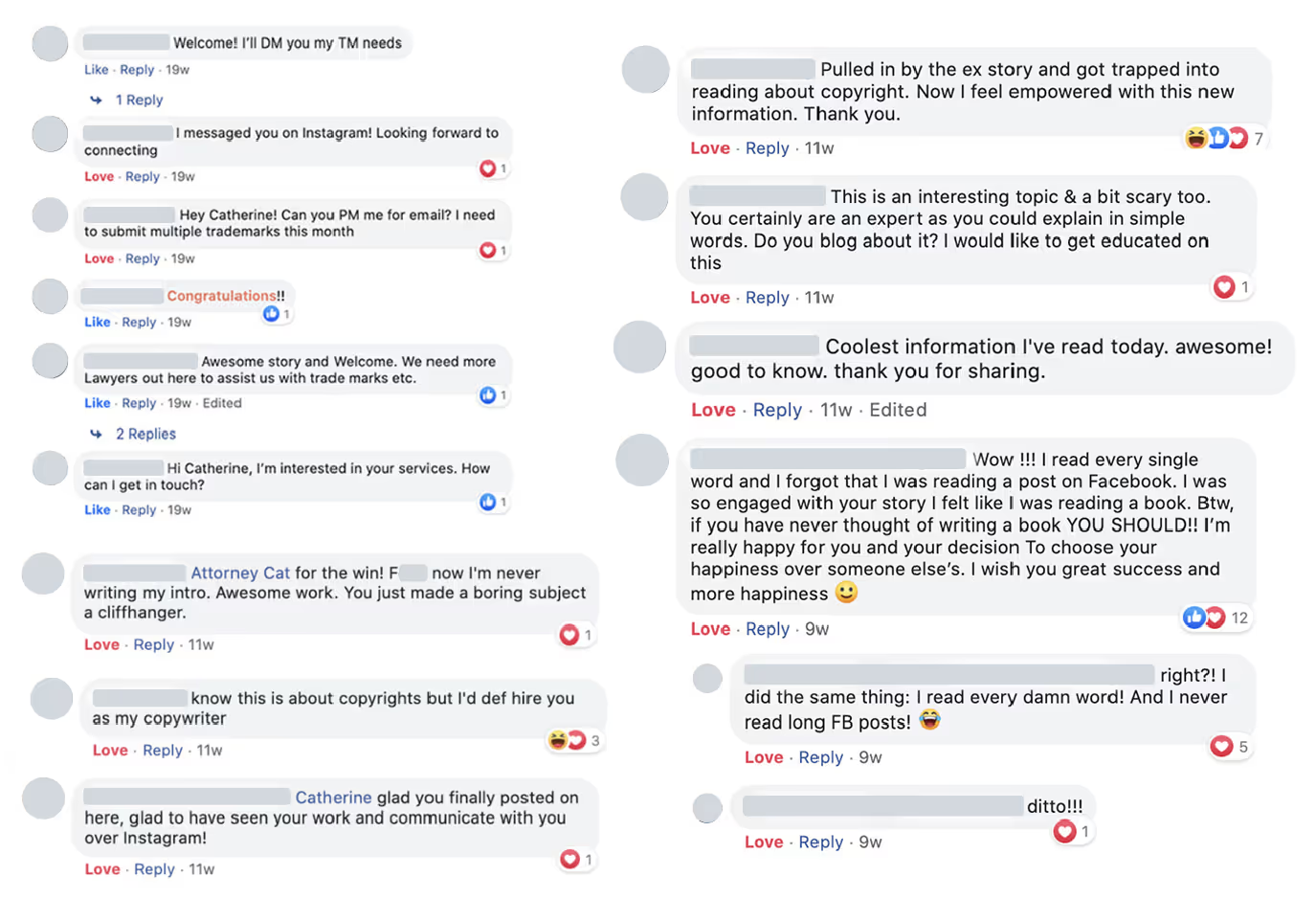
My platforms of choice are, in no particular order, Facebook, Instagram, and Youtube. The very first thing I did when building my firm was repurpose the law that I learned into multiple short bits on various platforms. Importantly, I did not merely recite what I learned in a dull manner. While some of my content is solely legal focused, most of it I try to weave into stories that are both entertaining and informative to the average social media user.One of the things I try to convey when teaching lawyers about marketing is that often I have seen lawyers use marketing to benefit themselves, to try to promote their firm. The most effective form of marketing, in my opinion, is content that benefits the audience. Think not about what people can do for you, but what you can offer to others. What I mean by that is that an advertisement about how your law firm just opened and everyone should call your law firm is just that: an advertisement whose sole purpose and beneficiary is the promotion of yourself. A person scrolling through social media on a Sunday afternoon is not scrolling so that they can benefit you. They are scrolling for their own enjoyment and spikes of dopamine. With traditional social media advertisement posts, people ignore them and scroll on to their desired content. What I try to do when creating content is create content that will catch the reader's attention, get them to want to read it, and remind them that I am a lawyer ready to assist should they ever come across a legal issue. Oftentimes, I do not even directly talk about the services I provide. The only thing that I care about is leaving an impression and keeping at the top of a person's mind so that if and when they run into a legal issue, they think to call me. I have had a lot of success doing this by creating engaging content that people want to see. Generally by the end of a post, if I have done my job, there are people asking me for more content, finding a way to stay in contact …or hiring my firm.
Think about back in the days when we only had cable tv. During a commercial, many people tune out, leave to get a snack, and while it may still get that person to recognize or buy your product some day, most people do not actively engage in commercials except perhaps during the Super Bowl which has mastered the art of entertaining advertisements. Most law firm marketing I see is the equivalent of a channel playing commercials all day long. Not memorable, not engaging, and not that effective. Effective marketing, in my opinion, is making your content the entertainment. Make your content the show they’re waiting to see… and your law firm is merely the product placement in the background. By doing this, you are creating content that people want to see, that people share, thereby creating algorithm favoring viral content. I would be the first to admit that creating viral content based on law is not easy …but can be done.
Learn and break the algorithm
My first few months of practice I set out to combine my knowledge of law with my knowledge of social media to create viral posts that trend. If you are unfamiliar with those terms, we’ll take a minute now to explain. When social media first became a thing, posts by users were shown in reverse chronological order in a feed, by any person you were connected with. The newest post would show on top, and it didn’t matter if a person posted any random thing multiple times, it would still show all their “friends” their content in the order it was posted. Before long, the Zuckerberg’s of the world realized that the more entertaining they could make the experience of their platform be for you, the longer you would stay on, and the more their company would be worth. Thus came the introduction of algorithms. Nowadays, most social media platforms employ algorithms that use machine learning beyond the scope of this author’s full understanding to figure out which posts are the most entertaining to the average human being, and they show you those posts first. This formula ends up showing you the most entertaining, likable, funny, and/or controversial posts first Often, the ranking of a post is based on the user engagement (likes, shares, comments, length of time spent reading/watching it), with highly engaging posts being shown to the most amount of users, and posts with little engagement get pushed down the social media abyss, never to be seen by your friends or future clients, ever.

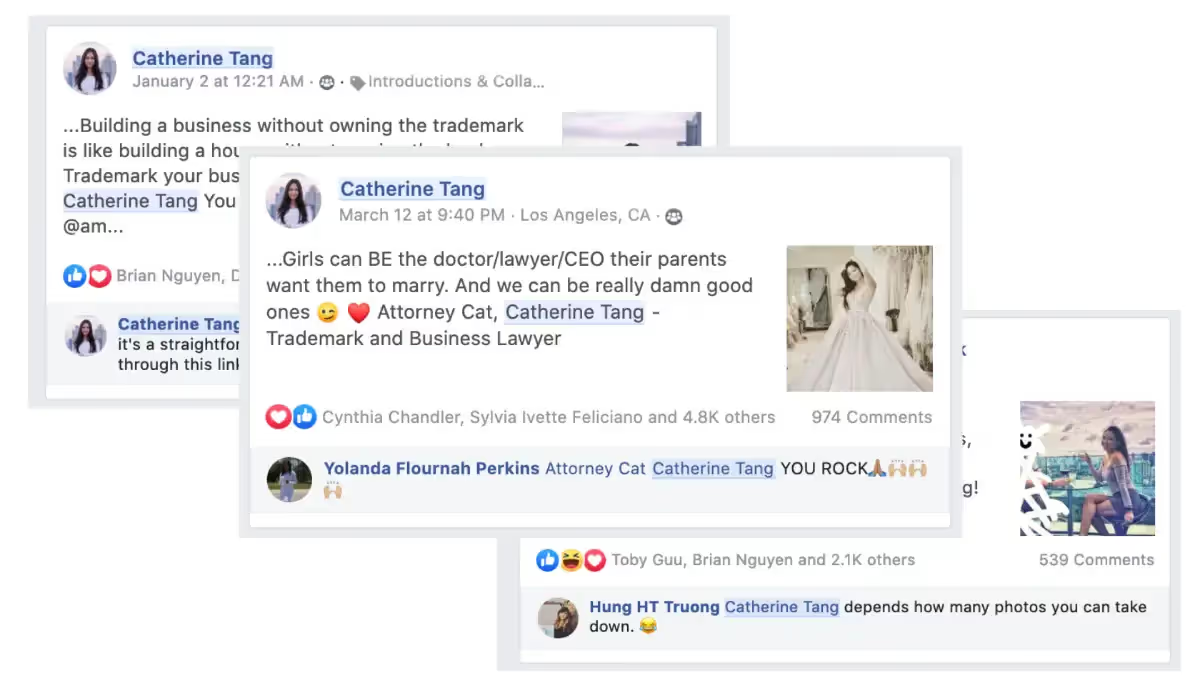
While this formulaic approach may seem exhausting, take comfort in that I typically think that if done correctly, you do not need to be posting content multiple times a day, or even every day as many social media experts seem to suggest. In fact, I took my time coming up and releasing my posts, usually releasing a single marketing directed post every month or two. The catch of course, is making sure those posts trend. Each of the posts I released received thousands of likes and hundreds of thousands of views. With practice, you inevitably learn what people want to see. In fact, it is practically a pavlovian response as you will receive “likes” for everything you do right, and the dreaded social media abyss if you do not. Unlike conventional social media marketing advice, I do not post the same content on all of my platforms. I prefer to custom tailor my content to each platform and want to encourage users to add me on all of them due to the variety of content they will get on each. I spent the first 6 months of my law firm actively marketing, and I am still reaping the benefits of my initial marketing posts to this day. In fact, I rarely actively market at all these days. I often get messages from people saying they had read a post of mine from a long time ago and now that they’ve run into a problem I was the first person who came to mind. Marketing, when done correctly, should have a snowball effect if it is combined with good service. I started my instagram while still in law school and then when I moved to Bangkok I started posting photos of my travels for friends to see. However, my audience slowly began to grow. As my followers grew, I started getting free things and those perks did not go unnoticed. Initially a free upgraded meal turned into a free meal. Then a free upgrade at a hotel, and eventually fully paid for week-long resort vacations in exotic places. I started putting more and more effort into my photos and captions, and regularly studied what made other posts trend down to the hashtags. Since Instagram was very focused on aesthetics and beautiful photography my posts became more picture perfect. The way I tied it into law was by telling stories about what I was doing at work at the time the photo was taken, or sometimes the story was entirely unrelated but somehow complimented the picture. With Instagram the main components for a viral post are the photo, the caption, and the algorithm. What I did not like about instagram and why I eventually stopped focusing on it is because it required a constant flux of picture perfect photos which as a full time practicing attorney I have a hard time keeping up. (This is changing soon as Instagram has lost a lot of creators to TikTok and they are now focusing on video content and loosening their algorithm). Nowadays I mostly use it to post stories and give snippets of my day to engage with followers. However, different attorneys are able to produce different vibes on instagram. Mine was highly focused on travel photos. I have seen many attorneys employ a different approach with more business oriented posts which can be successful if done the right way. Importantly, the number of followers you have does not necessary directly translate to the amount of paying clients you get. Because I incorporated a travel theme, my audience net was larger… however the same people looking for travel content might not be the same people needing legal services. The conversion percentage is lower than a legal instagram focused and targeted directly to business owners (or whoever your target client is). Likewise, because I primarily practice federal intellectual property law, it makes sense for me to cast a wide net because anyone with a US business can potentially be a client of mine. Whereas if you are a local personal injury law firm, you may want to target people in your general location.

No matter which social media platform you decide to use to grow your business I think it is important to study it as each platform favors different content, has its own unique characteristics, and different algorithms. Instagram often favors visually appealing images and puts the most focus on picture perfect photos, with a caption as an aside. On Facebook you can mix in a variety of photos, text, or I have seen some profiles that have great success merely posting curated news articles. Engaging in witty banter is valuable on Facebook. LinkedIn has a more professional feel and is one of the best platforms to use in order to reach people outside of your network (you can“trend” easier). Instagram, Facebook, and Twitter are platforms that are very “in the moment” and require you to post constantly to stay relevant. Youtube on the other hand is great for people who want to make content once and have it searchable for a long time. Writers may favor Facebook and speakers may gravitate to Youtube or Tiktok.
A few final tips
Lastly when growing your social media presence I think it serves well to keep a few things in mind:Quality over quantity. As noted above, the number of followers you have or likes you get on a post does not always directly translate to business or cash in hand. Some of most successful business-generating posts do not always have the most likes. Similarly, a person with 100,000 followers may not always be the highest revenue generating firm. My favorite example of this is legal meme accounts. Yes they may have a lot of followers because they’re posting relatable, funny memes…. But none of their followers are reaching out to them when there is a legal issue at hand. Do not be discouraged or compare yourself to others.Consistency is key. Starting out a new social media account can be overwhelming and it can seem like no one is paying attention to your posts. It doesn’t matter. What you are doing is building a foundation so that when you get your first “viral” post, those who view your account see all your previous related content and follow you. In the social media world it is very common to go from 5 followers to 5000 overnight because of a single post. Marketing is a learned skill. Once you learn social media marketing skills they are generally easily transferable to other platforms. Start with one platform and get really good at that platform before moving on to another. Watch other content creators and try to figure out what they are doing that speaks to their audience, then try to do it on your own. Think about what worked and what didn’t, and why.

I think most important of all is to have fun with it. I believe a large part of my social media success is because I enjoy content creation and engaging with my audience. In life, time is our most valuable asset. If you aren’t doing what you like with your time, you are better served using your time to do something else. Social media is not for everyone, and that is ok. There are many different ways to bring clients into a law firm, and while social media is highly effective, there is also paid advertising, in person networking, and many other ways to build a law firm. You can also outsource the job entirely. Bringing clients in from various means is just one piece of the overall puzzle of a successful law firm. Success is defined differently by different people. My personal aim is to build a law firm and lifestyle that I love, and having plenty of time for my kids. -- something we’ll talk about in the next article.

Most law firms have an ebb and a flow when attracting and retaining new clients. However, when an ebb drags on a little longer than anticipated, firms often begin to panic, wondering how they’re going to bring in new leads and, with another payday approaching, how they will meet their obligations.If you have been losing sleep due to the financial burden of running a law firm, you’re not alone. Sales is an integral part of running a business. No matter their size, solo, small, and larger firms are all businesses. Yet, managers often wonder how they should approach sales, how it plays into the staff dynamic, and whether technology should play a significant role. Operating a law firm without a sales pipeline is a little like running a retail business without a physical or online presence – nobody is going to know you are there unless they stumble upon you by accident, and if they do, they’re likely going to be unfamiliar with what you have to offer. This is not a sustainable way to run a profitable law firm.For decades, lawyers have relied on business cards, yellow page ads, word of mouth, and maybe a basic website to advertise their firm. However, in this increasingly competitive legal environment, these methods are no longer effective, at least not by themselves. There are many ways to market a law firm, but you risk spending time and money on maneuvers that don’t fit their needs or type of client without one dedicated strategy in place. The law firm sales pipeline is an effective way to create and organize the marketing activities most relevant to your firm and get the right clients closer to hiring you.
What is a law firm sales pipeline, and what should it look like?
A law firm’s sales pipeline is a list of your process for pinpointing new leads and qualifying them, showcasing your firm’s value, selling your services, and asking for referrals. Although there is more than one way to build a law firm’s sales pipeline, most are made up of several stages.
1Attract
The first step in most law firm sales pipelines involves attracting ideal clients. Legal consumers in this stage are actively searching for an attorney, and a law firm’s job is to pursue activities that will gain exposure and grab the attention of these potential clients. Some examples of ways to attract clients at this stage of the sales pipeline include running creative and effective television ads, engaging in online marketing activities with regular presence on social media platforms, and featuring an easy to navigate website can help a firm reach a wider audience and attract more relevant clients.
2Convince
After you’ve grabbed a potential client’s attention, the next step is to convince them that you’re the right lawyer to handle their needs. This is where effective website landing pages, client testimonials, and thought-provoking content are all excellent ways to achieve this. However, no matter which method you choose, the goal is to offer proof regarding why your firm is the answer to potential clients’ legal issues. This will often be enough to motivate them to reach out by calling you on the phone or filling out your website’s online form.
3Convert
This crucial part of the sales pipeline is where potential firm clients are transformed into leads. During this stage, law firms must make it easy for people to contact them once they have decided that they are interested in hiring one of their attorneys. However, this critical stage is where many firms fail to convert these valuable leads due to the lack of an efficient intake management system, the failure to follow up, and a general lack of awareness of what is at stake – a new client.No matter how you decide to set up your law firm’s sales pipeline, the result should look the same: a clear pathway to guide potential clients from the moment they hear about your services online to when they decide to give you a call.
How to staff for sales - or assign sales to an existing role
The lawyers who are best able to build a successful law practice never discount the importance of marketing their practices. However, most are so busy serving clients, working on cases, and appearing in court that they neglect their sales pipeline. Although many attorneys think their firm is too small to warrant a sales team, it’s not about firm size. Whether your firm is small or large, you need a dedicated person (or team) to manage your unconverted leads.Your sales department can be made up of existing team members or salespeople (nonlawyers) acting on your behalf. With some limited exceptions, most lawyers dislike selling and are typically not as good at it as a trained sales professional. An externally focused, client-centered sales professional with experience marketing law firms can help any firm drive more revenue, retain more clients, and lighten the pressure that legal professionals face related to increasing business. When collaborating on a team with legal professionals who can provide an understanding of substantive law, sales pros know precisely how to move the sales process along, attract the right clients, and win business.
How to track your leads and follow up
Law firms must find better ways to reach new clients and create more sophisticated promotions to make the most of their marketing budget and use it strategically. However, the most outstanding marketing campaign won’t do any good if the firm doesn’t take advantage of the leads it generates. Unfortunately, law firms are often resistant to the lead tracking methods used by other industries. As a result, many people who contact an attorney are left to wait days for a callback, and some never hear back at all. But fortunately, some new tools and techniques are now available to help law firms boost their client retention rates. Here are seven ways to improve lead tracking in your firm:
- Capture. A systematic approach is necessary to obtain the full benefits of lead tracking. Consider the many ways someone can become a lead for your firm: email, phone call, web form, referral, and social media messaging, to name just a few. With cloud-based lead tracking software, you can automatically track all these types of leads, nurturing and engaging them every step of the way to drive sales, scale business, and increase revenue for all firms, no matter their size.
- Follow up. We live in an instant gratification society. Legal consumers expect an immediate response to their requests, yet one ABA study found that 42 percent of the time, law firms take three or more days to reply to a voicemail or web-generated form from a prospective client. This delayed response often proves to be harmful when building a relationship with a client – particularly during their early interactions with your law firm.
- Automate. To capture every incoming lead that comes your way, consider using automation software. Rather than personally addressing each lead at every stage, automation technology allows firms to set up custom templates and let the software take it from there. Templates enable firms to create, schedule, and send automated client communications to improve organization, streamline your workflow, account for every detail from lead to conversion, and keep everyone on the same page.
- Speak your clients’ language. Know how to best communicate with your potential clients. Some appreciate phone calls and emails (although some ignore calls from unknown numbers and only occasionally give their email a quick skim), but almost everyone regularly reads their text messages. Why do people seem to prefer texting to other forms of communication? It’s fast, easy, and feels personal. It can lead to greater success when communicating with potential clients, is helpful throughout the intake process, and enhances your entire operation.
- Track sources. With so many marketing strategies, law firms can be hard pressed to keep track of all their lead sources, yet they must do so to allow teams to make smarter decisions down the road. For example, you can ask leads how they found you, use specific phone numbers for certain campaigns, or utilize specialized software known as a legal customer relationship manager (CRM). A legal CRM gives lawyers a clear view of where each prospect stands in their journey toward becoming a client and beyond.
- Make better decisions. How many of your leads eventually become clients? How do your client acquisition rates change over time? Do certain staff members or lawyers affect your firm’s conversion rates? Which of your firm’s marketing efforts is leading to the best outcomes? You need to know the answers to these questions to attract and retain the most clients, and you can, with a centralized system keeping track of lead sources and outcomes. These systems generate the numbers automatically, from the first interaction with a potential client to the case’s outcome.
Once you’re tracking your leads, you need to ensure that you are at the top of the list of lawyers a client is considering retaining. To keep the sale moving down the sales pipeline, you’ll need to focus on educating the potential client, possibly by offering a free consultation or sharing helpful information pertinent to their case. Finally, encourage the client to act by asking for their business – in other words, sign the retainer agreement and move forward with the intake process.
Why legal technology is crucial in law firm sales
Modern legal marketing and digital marketing are now the same. Over the past twenty years, law firm marketing has been driven by emerging new technologies that have profoundly changed how firms can locate, engage, and track prospective clients. The 2021 LexisNexis InterAction Marketing & Business Development Survey found that “high growth” law firms (those that grew more than 20 percent in 2020) were four times more likely to track metrics for marketing and business development efforts than slower-growing firms. Moreover, this metrics-led marketing is much more likely to succeed when firms leverage the right emerging technology tools to help make their efforts more precise, efficient, and targeted.Most lawyers understand that technology is vital to efficiently perform routine legal services like automating document creation, tracking critical deadlines, and streamlining practice management functions. But what about law firm sales? According to the Legal Sales and Service Organization’s annual report, 80 percent of legal sales professionals impact revenue through sales, yet only 14 percent of those responding said they have a marketing, sales, or business development position on their firm’s management committee. Technology can help law firms without a formal sales and marketing team reach prospective clients. For example, law firms now have access to CRM software to automate the lead generation and analysis process, capture and track leads, track where a lead is in the sales pipeline, follow up with prospective clients, and assist with the client intake process. When law firms embrace technology, the overall client experience improves dramatically. With the help of a few tools, such as a CRM platform, firms can automate their sales pipeline to reach and convert more clients while focusing on what they do best: practicing law.
Lawmatics is ready to help you shore up your sales pipeline
Put valuable time back into your day by automating manual tasks. Lawmatics legal intake management software will allow you to easily design visual paths, step-by-step templates, timed trigger client action campaigns, and segmented follow-up messages with just one click. With our all-in-one legal CRM, you can seamlessly move leads along the client intake process with the help of custom, marketing automation workflows. The Lawmatics platform will simplify the process, eliminate confusion, and ensure that nothing slips through the cracks – allowing you to make a positive impression on leads and potential clients. Being able to capture leads, convert them to clients, and enhance every step of the process with personalized messages automated at the right time through the right channel is not just a pipe dream. Contact Lawmatics and request your product demo today.

It is no longer enough for a lawyer to graduate from law school and successfully pass the bar exam in the current legal climate. New lawyers are also expected to have acquired some soft skills along the way, including how to manage client expectations. Today’s legal clients expect more than just legal advice from their attorneys. According to David Pester, a managing partner at UK law firm TLT, clients “look to their lawyers as true partners and consultants, able to bring a wide range of expertise to the table to deliver a successful outcome.” A 2020 Wolters Kluwer survey found that 79 percent of legal clients say efficiency and productivity are vital; however, just 29 percent of those surveyed said these words accurately describe their current law firm. Seventy-four percent of the lawyers surveyed said meeting these changing client expectations is considered a trend with high impact, yet just 31 percent said they are ready to do it. Obviously, lawyers still have a lot to learn about client expectations.
Client expectations – pre-pandemic vs. now
The legal industry has never been particularly willing to embrace change. For decades, decisions were made by attorneys who had been practicing law the same way for many years, either because they were resistant to change or unwilling to adapt their business model to meet the shifting needs of their clients. These attorneys and law firms often focused on developing their knowledge and skills to produce better outcomes for clients. Still, their clients were often disappointed in the quality of their attorneys’ services due to inaccessibility, poor communication, lack of empathy, and an absence of respect.However, COVID-19 disrupted the world – and the legal sector – in numerous ways. Before the pandemic, the legal industry was already in the process of change driven by various forces: financial, demographic, supervisory, technological, and competitive, and even the most traditional practices began to accept the need to grow with the times. COVID-19 significantly accelerated the demands of those working in the legal profession and client expectations regarding the services they receive. The pandemic has revealed a new breed of legal client – more tech-savvy, selective, comfortable with online research, and accustomed to high levels of customer service in other areas – who are demanding more from their law firm as well. Research has repeatedly shown that too many attorneys deliver the legal expertise that clients need but fail to provide the customer service they want. However, faced with stiffer competition, tighter finances, and clients prepared to walk if they don’t get the service they want, many small and medium-sized law firms are now attempting to execute a customer-driven makeover in the following areas:
- Communication. One critical area of change involves communications, and clients are increasingly expecting to be able to contact their attorneys whenever and however they want, on the device they choose. According to Raconteur, more and more clients are choosing to communicate with their lawyers via instant messaging, web chat and social media channels like LinkedIn and Twitter.
- Cost. Although clients are now more discerning about cost, the price is no longer associated with the time or complexity of the legal work being performed, the factors that attorneys have traditionally used to calculate their fees. Instead, clients expect precise cost estimates in advance and align the price of legal services with risk or the value to them or their business. They are looking for the best service, not necessarily the cheapest, appreciate quality, and increasingly demand that ad hoc advice be supplied whenever they request it, without charge. However, they will happily pay their lawyer’s fees if they feel that they are the right person for the job.
- Collaboration. Today’s legal clients expect legal services to be delivered in the most efficient way possible and consider the process of producing work to be as much a part of the law firm psyche as the law itself. Accordingly, they expect their lawyer to bring a wide range of expertise to the table in the form of multi-disciplinary teams with the ability to draw on backgrounds in project management, technology, outsourcing, and resourcing to deliver the best possible outcomes as quickly as possible.
- Innovation. Clients want their lawyers to use technology to provide efficient legal services that meet their needs, and for them, a paperless law firm is a must. However, they understand that technology will never replace the skills of a good lawyer and believe that innovations in the legal sector need to focus on streamlining client services. In addition, they need to rely on their law firms’ security practices and expect that their lawyer will protect their confidential information and keep it secure.
- Responsiveness. Suppose your firm wants to attract younger clients. In that case, you need to understand that they are the most likely to expect their law firm to have an online presence, offer various online modes of communication, and respond to inquiries quickly. If you provide what the modern legal client is looking for, you will be able to differentiate your law firm from the competition.
- Specialization. Generalists are out, and specialists are in. Modern legal clients want their lawyers to specialize in the type of service they need. The 2020 Wolters Kluwer survey found that while 70 percent of the attorneys surveyed expect an increased demand for specialization and a decline in generalist work, only 29 percent feel prepared to address this trend. According to the report, the leading reason a client would replace a firm is its inability to meet their needs, followed closely by its failure to offer specialized services.
- Trust. Most legal clients are looking for an attorney who they can trust, and many people request referrals from trusted sources when deciding which law firm they should hire. However, if they cannot obtain a referral, they frequently turn to the next best source: the internet, where positive reviews from strangers often substantially impact who they will retain. The level of trust that clients put in online reviews makes it imperative for attorneys to ask satisfied clients to leave reviews of their firm on sites like Google, Yelp, Avvo, and Martindale-Hubbell.
Change is underway, and industry insiders say that evolving client expectations will be a driving force in the transformation occurring within the legal sector. Today’s clients expect more – they want to pay for what is produced, not how many hours it took to deliver it, and they want ready access to their attorneys and their expertise. In response to this client-centered legal environment, law firms are exploring new ways to structure their organizations, reviewing their services and how they offer them, and analyzing the talent and technology necessary to deliver value to clients and meet their growing expectations.
What will always remain constant about client expectations (what hasn’t changed)
Many lawyers associate client satisfaction with case outcome. However, what clients want most from their lawyers is something that law schools and continuing legal education courses have historically given little attention to: effective attorney-client communication. One 2013 study that covered the UK, Australia, and the U.S. found that skills like listening, explaining, and open communication (dismissed as “hand-holding” by some lawyers) are highly fundamental to client service. According to the research, clients value these skills so much that an attorney who fails to provide them would likely be considered ineffective. This perceived lack of communication skills is certainly nothing new. In 2006, the BTI Consulting Group found that the most significant cause of legal malpractice claims was not a client’s dissatisfaction with the outcome of their case but rather the handling of the client relationship – failure on the part of the lawyer to listen, ask appropriate questions, and explain the relevant aspects of the matter. According to BTI: “Responsiveness to clients . . . goes beyond returning phone calls and replying to emails . . . Clients expect law firms to be responsive not just to their phone calls, but also to their needs.”However, being responsive to clients doesn’t mean committing to their unrealistic expectations. When clients come in for their initial consultation with an attorney, they sometimes ask, “Can you guarantee that (fill in the blank) will happen?” The expectation that a lawyer can commit to a specific result has persisted for decades, but an attorney cannot ethically make such a promise. Even if they could, the legal system is highly unpredictable, and it would be very foolish to make this kind of guarantee. The lawyer’s job is (and has always been) to get the best possible result for the client and counsel them regarding the likely outcome, including best and worst-case scenarios.Many clients shop around for legal representation and will continue to do so. After all, not every attorney is a fit for every client. But lawyers that provide excellent customer service and can temper and manage client expectations will likely thrive in this extremely competitive market, while those who do not risk failure.
Key identifiers of prospective clients who will be a good fit
According to Statista, more than 85 percent of all global consumers shop online, and 90 percent of these shoppers make their buying decisions from online reviews. A Google search is also an extremely popular way for prospective clients to find a lawyer. According to a recent Martindale-Avvo report, 43 percent of 6,300 legal consumers surveyed said they use Google searches to research a potential attorney. Nearly half who obtained a referral from a personal recommendation still used online review sites to check an attorney’s reviews before contacting them.But how can you identify prospective clients who will be a good fit for your law firm? Clients often fall into several categories, and it is helpful for attorneys to recognize certain patterns in behavior and motivation when they consider whether to take on a new client. These include:
- Inexperience. If a client lacks experience with lawyers, the legal system, or the area of law that their issue involves, they can seem overwhelmed and exhausted much of the time. The best strategy to handle this type of client is to patiently walk them through the process and provide detailed explanations of each step. If you don’t have the time and patience to meet these expectations, a relatively “green” client might not be the best fit for you.
- Know-it-all. The opposite of the “green” client, the know-it-all is a habitual client who has been involved in the legal system before, and perhaps worked with multiple attorneys. To manage this client, you will need to establish your position immediately – you are the attorney in charge, not them. If you don’t mind working with someone who is somewhat familiar with the legal process and not afraid to say so, this arrangement could work, but if not, you might think twice about representing this type of client.
- Uncommunicative. Just as lawyers need to be effective communicators, so do clients. If a client can clearly express what they want and need, chances are they will be a good fit for your firm. However, if they seem to lack honesty and transparency, this will undoubtedly affect the quality of your services. Two-way communication is vital to the delivery of excellent client service.
- In a hurry. The legal world is full of clients who want results “yesterday,” and are willing to rush an attorney toward what could be a premature and potentially unfavorable result. If your firm is well-staffed, tech-driven, and known for being fast and efficient, you might be able to work with this kind of client. However, if you value clients who understand that quality work takes time and plan accordingly, a rushed client could try to pressure you to make mistakes and take more time rather than less.
- Cost-conscious. A good client understands the difference between the value and the cost of legal services. However, if a potential client appears to be more concerned with your fee than the quality of the services you will provide, this can be a red flag of trouble to come, particularly if their case resolves in a manner that they did not expect.
- Loyal. For most attorneys, the best clients value an ongoing relationship with their attorney that includes some realistic give-and-take, mutual respect, and appreciation. If you like and trust your clients and vice versa, this will likely positively influence not only the day-to-day interactions but also the case outcomes.
Most attorneys would agree that when they work with clients who are a good fit for them, they feel highly motivated to obtain the best results, a win-win situation for everyone involved.
How to solicit, collect, and implement feedback from clients
Consumers research nearly everything online, including their attorneys. To compete in this online marketplace, firms need to survey their online presence periodically, and if your research tells you that you need more or more favorable client reviews, here are some things you can do:
- Make it a practice to ask satisfied clients to review you and your law firm online.
- Include a review request in your standard closing email to clients.
- Practice regular online networking by reading online discussions, blogging to your target audience, and engaging them where they gather, be it on Twitter, Facebook, or LinkedIn.
- Educate your staff on the importance of good customer service by modeling it yourself.
In many industries, it is common to conduct a post-engagement review to ask the client how they feel the project went. Many lawyers are not accustomed to doing this, preferring to move forward with other cases instead. However, when they skip this important step, they miss an opportunity to ask clients with recently closed files what they were (and weren’t) happy about, how you could have performed better, and whether they would consider retaining your services again. Find out how you compare with other lawyers they’ve retained in the past and whether they would be willing to recommend you to others in need of legal services.
Habits that will help you avoid straining the client relationship
The goal of most law firms is to attract the right clients, not chase them away, and forming some positive habits will help forge strong relationships. Here are some examples of how to stay in harmony with those you represent:
- Avoid multi-tasking. It’s easy to become impatient when you are supposed to be listening to your clients, particularly in initial client consultations when you’re busy and have probably heard the same story many times before. But all clients want the chance to tell their story. They need to believe that you are genuinely interested, will anticipate their future needs, can avoid potential problems, and will take advantage of all opportunities to obtain a positive outcome for them.
- Automate busy work. It can be challenging to give each client the attention they deserve when the firm’s administrative work keeps piling up. However, nurturing client relationships becomes much easier when you automate repetitive tasks. All the time previously spent on monotonous and time-draining activities can instead be used to focus on billable activities. Practice management software does the administrative work, allowing you to turn your attention to delivering high-quality legal services that will make each client feel like they're your only client. A bonus: you’ll also reduce the risk of lawyer burnout.
- Gauge expectations early on. When a client becomes unhappy with their lawyer, the issue often lies with the client’s expectations. Maybe the case hasn’t gone the way they thought it should have, and they are confused and disappointed with the outcome. This problem can be avoided by managing your clients’ expectations from the onset of the relationship, and the initial consultation is your first opportunity to gauge what expectations they have for their case. To keep a client realistic, be honest from the start about all possible incomes, including worst-case scenarios, and revisit expectations as the case progresses.
- Don’t assume you know what is best for them. Instead of listening to their clients, many lawyers are simply waiting for them to stop talking, thinking that they’ve “got the picture” and know what needs to be done. However, they’ve probably just gotten part of the picture. When an attorney does this, they’re taking away a client’s voice, making them afraid to express their viewpoints, and probably encouraging them to look for another lawyer who will listen to what they have to say.
- Reach out. With little or no significant progress to report, it can be easy for an attorney to ignore client calls and messages. But don’t make this mistake. Frequent communication is critical to a healthy attorney-client relationship, even if there have been no new developments on a case. But unless the client asks you, don’t feel the need to explain the legal intricacies of what you are doing – clients want you to handle their case, not teach them about the law. Instead, stick with explaining the implications of what is going on with their case, any decisions they need to make, and advise them on the best course of action to take.
There’s more to building a successful law firm than building strong client relationships, but without them, you risk damaging your reputation as well as your bottom line.
Ready to meet and even exceed client expectations? Find out how Lawmatics can help
To separate themselves from the pack in today’s competitive legal landscape, small and medium-sized law firms need to have the right tools and resources to understand and meet client expectations. The Lawmatics platform offers an agile CRM that will help you:
- Boost the growth of your practice by engaging and retaining new clients
- Automate the entire client intake journey by seamlessly moving leads through the process with custom workflows
- Manage all aspects of the entire client journey, step by step
- Make it easy for your clients and leads to schedule time to meet with you
- Efficiently manage client activity and communications
- Spend more time meeting client objectives
For more information on how Lawmatics can help you give your clients what they are looking for today, set up a demo today.

Email is an omnipresent form of communication that will continue to be used regardless of how many alternative methods of communication continue to emerge. Despite the popularity of instant messaging and texts, email remains the most versatile and flexible way to communicate as well as one of the best channels for law firms to use in their digital marketing strategy.It’s a blank canvas that can be strictly business text, or it can feature vibrant imagery and media. It can be deeply personal, or straight to the point. Best of all, we can use data and analytics to measure its performance and identify what resonates best with your target audience. Research shows that 59% of marketers find that email is their most effective marketing channel. When you consider that over 80% of professionals prefer email over any other form of business-related communication, it’s reasonable to assume that dedicating time to your law firm’s email marketing strategy is a must. When seeking to make a strong first impression, relevant email content that connects with your former clients, current clients and future clients can be one of your greatest tools. This article is your all-in-one guide to using the incredible tool of email to drive traffic to your law firm’s website, increase your social media engagement, skyrocket your lead generation, and ultimately boost your revenue. So put in your swim caps and let’s dive in.
Benefits of email marketing software
It’s cost-effective
Though there are plenty of good reasons to use law firm email marketing software (or legal CRM) for your digital marketing strategy, the most obvious is that the numbers are on your side. Businesses looking for a high return on investment should look no further than email marketing. The average ROI is $36 for every one dollar spent on an email marketing campaign. In other words, you stand to make about 36 times on top of your investment. Why? Email is ubiquitous with a tremendous reach. Whereas marketing channels like Facebook in which posts which will only be seen by a small percentage of your audience due to the nature of the algorithm, email has a delivery rate of nearly 80%. Although this doesn’t always guarantee your email will get opened by the intended prospective client, the likelihood of it being seen is higher than that of a social media post that a follower may not even be exposed to.
It gives the appearance of professionalism
There’s something to be said about a beautifully constructed email template with dynamic images and consistent branding. Email customization options featured in marketing software and CRMs gives your email a professional edge that a DIY approach can’t match. Put yourself in the shoes of a potential client: Would you trust a law firm from which you receive janky, slapped-together marketing materials, or the practice with unique and authentic branding? A professionally designed law firm marketing email exudes professionalism and finesse.
Competitive advantage
Email marketing gives you an edge over the competition by providing helpful and engaging content. If you manage to effectively strategize, you can make opening your emails a fun and interesting experience for your readers. Overly verbose and bland are pitfalls of the competition. By introducing interactive and personalized emails to your current and prospective clients’ inboxes, you can capture their attention and stand out from the crowd — assuming you have something of value to share.Martech Advisor’s 2017 data shows that adding videos to your marketing emails can increase your click rate by as much as 300%. This is just one example of how by taking your digital marketing to the next level you can create a significant edge over competing law firms that are lacking innovation.
Time-saving
It's no secret that lawyers are pressed for time. Preparing and sending marketing emails can drain a significant amount of hours from your week. With so much already going on in your business, it's hardly realistic to assume you can afford this time investment.Using legal marketing software can relieve a substantial amount of pressure from your shoulders by both increasing your productivity and improving the quality of your marketing campaigns. Automation features like drip email marketing can nurture your leads from the inquiry stage of the client journey to the consultation stage (and beyond), while ensuring that the right personalized emails go out at the right time while you focus on practicing law.
Stay top of mind
Converting leads to clients often comes down to simple science. It's not only about advertising, it's about facilitating multiple touchpoints with a multi-branched marketing strategy. The more exposure you have with your audience, the higher the likelihood that your business sticks out in their mind as a dependable source of legal representation. Sending out regular emails reminds your clients that you're there when you need them, and that you're a top tier option for their legal needs. Don't let them forget it!
Purpose of email marketing
Provide answers to FAQs
Potential clients often have a series of questions before arriving at their final decision of hiring you or not. If you can provide answers to these questions without them even having to ask, then you've eliminated one major hurdle between inquiry and acquisition. In addition, sending out an email with some of your most common FAQs can save you a significant amount of time otherwise spent on the phone or answering emails manually, one by one. Proactively offering clients the information that they need to navigate legal proceedings is proven to reduce the volume of communications that can disrupt an attorney’s day.
Give updates about your firm
Client loyalty starts with creating a connection— and email newsletters are a great way to keep your contacts up to date regarding the latest news at your firm. Your email can showcase updates to your website, how you're contributing to the community, attorney spotlights, or anything that you think that may be motivating, personally relevant, or enriching. At the very least, it builds rapport by humanizing your business.
Share educational content
Email marketing software can be used to provide your leads with relevant and useful information that makes them eager to open your emails. It's a great way to keep them engaged until they are ready to commit to becoming paying clients. Email segmentation software can help pinpoint which topics are best suited for each list. You can group contacts into different lists based on criteria such as matter type, geographic location, or where they stand in the client journey (and more). Best of all, you can track and analyze your results with built-in analytics tools.
Spotlight attorneys
It’s challenging to trust someone you know little about with something that could have major implications on your life. For that reason, clients are more inclined to hire someone that seems credible but also relatable. Don’t be afraid to spotlight your lawyers and staff in an email that showcases their talent and achievements. Many practices position themselves as the best in the area, and for that reason clients need more assurance that you’ll listen to them, understand them, and have their best interests at heart. Getting a glimpse at the lives of you and your staff takes you from a faceless firm to a human business.
Promote local events
Getting involved in local events in your community is a fantastic way to meet potential clients, and expand your email list. Plus, informing your audience about your involvement in an event in your local community is easy when you’re able to target local contacts with an announcement email in a few clicks.
Drive traffic to your website
One of the primary purposes of email marketing is to drive more traffic to your website. By applying the right strategies you won't just increase your website traffic, but you'll encourage repeat traffic thus building rapport with your audience.
Track marketing effectiveness
One of the biggest challenges that marketers face is not only convincing people to open their emails but to take action upon opening them. The beauty of email marketing is that you can track your contacts' behavior when they receive your email and see what’s working and what’s not. Maybe your subject line is too aggressive or maybe it’s unclear what action your email wants recipients to take.By keeping an eye on key metrics like email click rate, bounce rate, visit to lead ratio, and CTA performance, you can fine-tune your marketing efforts, and get better at creating content that people will react positively to.
Strategies for effectively marketing your law firm
Automate your email marketing
Although manually responding to each incoming email may seem realistic when you're first starting out your practice, the more that you start to generate leads, the more inundated with emails your inbox will be. Statistics show that the longer you take to get back to a lead, the fewer your chances are of converting them into a client. The more minutes you allow to pass between the time they first contact your firm and you get back to them, the more time you're giving them to turn to the competition. Automation is the only way to respond quickly and in turn, increase your chances of converting a lead into a client. Best of all, automation follows up immediately without you ever having to step away from a paying client again.Custom triggers make it easy to send the right email to the right person without skipping a beat. Whether you want to send out a confirmation when someone books a consultation, or wish a former client a happy birthday, automation puts your marketing on autopilot.The majority of consumers require multiple touchpoints before converting into paying clients, which is where drip email marketing comes into play. With email drip marketing campaigns, you can streamline your follow-ups by programming a series of automated emails that will significantly help your practice grow.When creating an email campaign, ask yourself the following questions:
- What’s your goal?
- Who are the emails going to?
- How does the content provide value?
- Can it hold people’s attention?
Your responses to these will inform your email marketing strategy in a way that yields a high return on investment.
Create a monthly newsletter
Show your prospects and clients who you are with a monthly newsletter. You don't have to write a novel every month— actually that's the opposite of what you want to do. Keep it concise, to the point, yet sincere. Whether you want to offer a promotion or discount, or offer gated content, a newsletter is a tried and true form to get people to take action.To get the most out of your newsletter, make sure that its:
- Brief
- Engaging
- Personable
- Reader focused
- Well designed
- Call to action is clear
Send mobile optimized emails
Nearly 50% of your readers will be opening their emails from their phones. So it goes without saying that failing to make your emails mobile-friendly is a massive missed opportunity. Not only does sending out an email that hasn't been optimized for mobile phones reduce your chances of that person becoming a client, but 5% of people say they would unsubscribe from a mailing list as a result of an email that doesn't display correctly — harsh.
Send relevant content to specific groups of leads
To get the most out of your email marketing, create multiple marketing campaigns running at the same time with segmented email lists. Since an all-in-one marketing strategy doesn't work for everyone, smart marketers no to break their leads up into different groups with relevant and targeted marketing materials based on criteria of their choosing known as audience segmentation.
Send educational content
Providing useful information on topics that matter to your prospective clients in exchange for their contact details is a fantastic marketing strategy. Not only are you providing your readers with free information, but you’re also expanding your contact list. In other words, everyone wins! Some ideas for educational content include:
- Checklists
- Digital guides / ebooks
- Videos
- Courses
- Data reports
Email marketing software functionality checklist
Not all email marketing software is created equal. In order to get the highest return on your investment, it shouldn't just be easy to use or affordable, it should have the following core functionalities.
1Email drip marketing campaigns
Drip email marketing makes it easy to send personalized and scheduled emails that send automatically to the right person at the right time based on where they are in the client journey.
2Email templates
Let’s be realistic, most lawyers aren’t html wizards. The right marketing software for you will make it easy to create and send emails in a few clicks. A premade template library helps you stay connected to your clients with a beautiful layout that makes a great impression without having to know the ins and outs of complex markup language.
3Trigger automations
The right software will integrate directly with your legal CRM to automate the next marketing steps. Whether a lead visits your site, schedules a consultation, or signs up for your newsletter, you want a software that will trigger the next marketing steps without you having to do a thing.
4Audience segmentation
The most effective email marketing is one that delivers a tailored message that feels like it was created just for the person opening it. Audience segmentation software groups your prospects into different marketing lists delivering relevant content based on where they stand in their client journey. That means more meaningful impressions that lead to more clients.
5Data and reporting
The key to effective email marketing is using data to track your client's behavior. Your marketing software should provide a closer look at how your readers are behaving when they receive your emails, and how close you are to achieving your goals. The most important email marketing metrics you should be tracking are:
- Clickthrough Rate
- Open Rate
- ROI
- Email Sharing/Forwarding Rate
- Bounce Rate
- List Growth Rate
- Conversion Rate
- Unsubscribe Rate
Unleash the power of email marketing with Lawmatics
Email marketing is still one of the greatest performing marketing strategies and should be added to your law firm marketing budget. It's key to driving more traffic to your website, increasing brand awareness, and ultimately generating more clients.Are you ready to see how Lawmatics' powerful all-in-one legal client intake, law practice CRM, and marketing automation software can automate the legwork of your practice and scale your business? Sign up for a free product demo today!Sources CitedAastha Sirohi, Constant Contact, What is the Average Email Marketing ROI? September 2021https://www.constantcontact.com/blog/what-is-the-roi-of-email-marketing/#:~:text=The%20average%20ROI%20through%20email,36%25%20of%20email%20marketing%20ROI.Hubspot.com , The Ultimate List of Marketing Statistics for 2022, 2022https://www.hubspot.com/marketing-statistics?__hstc=252640342.6a297583827fe7a400ed4d4badcf34a6.1650888502187.1650888502187.1650888502187.1&__hssc=252640342.1.1650888502188&__hsfp=4251156335Werner Geyser, Influencer Marketing Hub, The Ultimate List of Email Marketing Statistics, July 2021https://influencermarketinghub.com/email-marketing-stats/#:~:text=As%20of%20February%202020%2C%20the,from%2016.3%25%20in%20July%202019.

There's much more to it than meets the eye regarding family law. Family law attorneys need to have strong negotiation skills and be able to mediate between warring spouses.First and foremost, family law is all about helping families through difficult times. This might include divorce, child custody, or adoption proceedings.
What is family law?
Family law generally encompasses a wide range of legal issues that involve families and domestic relationships. It can include divorce, child custody, child support, adoption, and domestic violence. Family law is often quite complicated and emotionally charged. Family law attorneys need to have strong communication skills and build trust with their clients.The main types of practice areas for family lawyers are:
- Prenuptial Agreements - Prenuptial agreements are contracts that are entered into before a marriage takes place. They are designed to protect the parties' interests in the event of a divorce.
- Contested Divorce - A contested divorce is when the parties cannot agree independently. This often leads to a lot of litigation and can be incredibly expensive.
- Uncontested Divorce - An uncontested divorce is when the parties can agree on their own. This is often much cheaper and less stressful than a contested divorce.
- High-net-worth Divorce - High net worth divorce term is used to describe divorces. The parties have significant assets that need to be divided. These divorces can be particularly contentious, as both parties will likely want a fair share of the marital estate.
- Division of Property - When it comes to property division in a divorce, there are two main property types: marital and separate. Marital property is any property that was acquired during the marriage. Separate property is any property acquired before the marriage or was gifted or inherited during the marriage.
- Child Custody - Child custody can be one of the most challenging aspects of family law. There are two types of child custody: physical and legal.
- Child Support - Child support is often one of the most contentious issues in a divorce. The amount of child support that a non-custodial parent must pay is determined by the state in which the parents live.
- Post-Divorce Modifications - Once a divorce is finalized, either party can petition the court to modify the terms of the divorce decree. This might include child custody, child support, or spousal support.
- Mediation and Collaborative Law - Family law attorneys need to be skilled in mediation and collaborative law. In mediation, the parties meet with a neutral third party to resolve their dispute. In collaborative law, the parties work together to resolve their dispute outside of court.
Some family attorneys specialize in a specific area, such as adoption law. Still, most have expertise in various practice areas, including divorce, property law, and family court. Family lawyers must be well-versed in multiple legal matters, such as drafting and negotiating contracts, pleadings, and other legal documents. Handling intense emotions, people skills, and crisis management are critical qualities for a family lawyer.
Marketing for family law firms is unique
Family law marketing is unique because attorneys are helping people through some of the most challenging times in their lives. Families going through a divorce often have many questions and concerns. They may not know where to turn for help. Family law attorneys must be able to provide answers and guidance for their clients. They also need to effectively market their services so that potential clients can find them.You want to be on the marketing channels where these people are: google searches, referrals, directories. All marketing channels are related to each other and complement each other. You want to think about your marketing strategy instead of piecemeal. Below we'll discuss the main channels you need to consider using when creating an effective marketing plan for your firm.A proactive legal marketing strategy can help your firm build an effective and professional brand. You need to speed up your digital marketing efforts, notably SEO, to maintain your credibility.
Optimize your website for search engines
If you have a family law website full of helpful information for your potential client, you are well on your way to having good-performing search engine optimization. When it comes to SEO for family lawyers, you want to focus on answering your prospective client's questions and showing social proof of your successes. You should make sure that your website is optimized for these keywords and that you're using them in your content marketing. This will help you rank higher on search engine results pages and attract more clients.
Practice area pages and services
SEO is a fundamental component of successful website growth. As an experienced Family Lawyer, your job is to get people looking for specific legal advice and a quick answer to any questions they have. These actions will help establish you as an essential company and drive relevant web traffic to your site if you need more. Search engines will quickly analyze your website's online presence by looking at where your website ranks among the best websites in your niche. The higher your organic rankings, the better the likelihood of someone searching for you clicking your lawyer.
Family law blogging tips
When it comes to family law, there are many questions that potential clients may have, which is why it's important to use your website as a platform to answer those questions. Blogging is a great way to share your knowledge with the world, build confidence with your clients, and rank higher for SEO.Write blog posts about family law topics that your potential clients would be interested in. This will help you establish yourself as an expert in your field. Make sure to keep your blog posts up-to-date with the latest information. This will show potential clients that you are up-to-date on the latest changes in family law. Use relevant keywords in your blog posts so that potential clients can find you when they are searching for information about family law.
Highlight your niche
When it comes to family law, many lawyers offer their services. This can make it difficult for potential clients to decide which lawyer to choose. That's why family law firms need to highlight their niche.You can highlight how you serve specific groups of people on your website. For family law, some practices only work with men or women, focus on LGBTQ+ families, or focus on certain religions like Christianity or Islam.You do not need to rebrand your entire website by focusing on your niche, but highlighting how you can serve that demographic will set you apart from your competitors.You should answer the following questions for your niche on your website:
- What makes your firm different from all the others?
- What type of cases do you specialize in?
- Why should potential clients choose your firm over the others?
Offer substantive resources on your website
One great way to set yourself apart from your competitors is to offer substantive resources on your website. Potential clients will appreciate having access to helpful information that can help them make informed decisions about their legal options.Go deeper with your content and offer your clients ebooks, guides, and resources. Ask for an email address when your users go to download your ebook or resource. You can then nurture the potential client while they consider the next steps.
Get familiar with Google
One of the most important aspects of marketing your family law firm is getting familiar with Google. As the most popular search engine globally, Google can help you reach potential clients looking for legal assistance.
Fill out your Google My Business profile
To improve your website's SEO and get better local search visibility, you need to create a Google My Business profile for your law firm. This will allow potential clients to find your business when they search for family law attorneys in your area.Ensure that you include all the relevant information about your business, such as your business hours, contact information, website URL, and practice areas. You should also add photos of your office and staff to help potential clients understand who you are and your law firm.
Ask for Google My Business reviews
One way to show social proof and improve your SEO is to include reviews and testimonials from your past clients on your website. You can also include media mentions, awards, and accreditations to show that you are a reputable and trustworthy family law attorney. Ensure that the reviews and testimonials are from real people and relevant to your practice area. You can also ask satisfied clients to leave reviews on your Google My Business profile and other online directories.
Advertise using Google local service ads
If you're looking for a way to get more leads from family law clients, you should consider advertising with Google Local Service Ads. What makes Google Local Service Ads a better investment than PPC is that you are paying per lead, not per click. These ads appear at the top of the search engine results pages and allow potential clients to contact your law firm quickly.Family Law tends to have a lower cost per lead on Google Local Service Ads than other highly competitive practice areas like Personal Injury. Bonus is that family law terms have a much higher search volume.
Google AdWords and Pay-Per-Click
You can also advertise your family law practice on Google AdWords through Pay-Per-Click (PPC) advertising. With PPC, you can create ads that target specific keywords and demographics.Like Google Local Service ads, family law terms tend to be cheaper and less competitive than other practice areas. Within AdWords, your keywords and terms matter. You want to be specific about what types of cases you want to advertise for. Specific searches (keywords), like "custody" or "alimony," may not be ideal for spending money to get a click. So you want to have parameters for what types of cases you are targeting.
Get involved in your community
One of the best ways to get referrals for your family law practice is by getting involved in your community. There are many ways you can do this, such as volunteering at local charities or becoming a member of local organizations.Some family law firms sponsor community events, like a holiday toy drive or a school supply drive for students. Others host seminars on co-parenting after divorce or estate planning for blended families. You can also volunteer with organizations that provide legal services to low-income families or offer support to children of divorced parents.
Highlight your advocacy
If advocacy is an important part of your family law practice, then be vocal about the issues that matter to you and your clients. Write blog posts, op-ed articles, or speak at events. Get involved with local and national organizations that focus on your passion. You never know where the next referral client will come from, so get out there and voice your opinions.
Offer annual scholarships
The scholarship link-building campaign is not a new concept for law firms. Family lawyers can use local scholarships to gain some press and backlinks to your website. Consider running a scholarship to assist students from divorced families, students who have recently gone through a divorce, or students attending law school.
Sponsor local organizations and events
Local sponsorships are a great way to get your law firm's name in front of potential clients. You can sponsor local events, charities, and organizations. Your sponsorship does not have to be tied to your practice. This is a great way to show your passions, community involvement and help out a cause you love.
Social media, referrals & networking
In the webinar 22 Proven Ways to Get Law Firm Referrals in 2022, Lawmatics CEO Matt Spiegel and President of AttorneySync Gyi Tsakalakis discuss how to get more referral leads. The TL;DR point of the webinar is that you never know where you will get a referral.
Choose your social media platforms
Social media is an important marketing tool for any attorney. Still, it's best used for family attorneys to nurture relationships, show off your knowledge, and stay top of mind.You don't need to be on every social media platform. You want to be where your ideal clients are. If you target women, consider focusing efforts on Pinterest, where 60% of users identify as women. If you want high-net-worth divorce cases, consider a strong LinkedIn presence. If you love making short-educational videos, get on Instagram and Tiktok. Go where your audience is.
Share interesting information
When sharing content on social media for a family law practice, share relevant and helpful information to your target audience. This could include posting your blog posts about divorce, tips for co-parenting, or estate planning for blended families, or you could create short videos explaining some of the basics of family law.Share information about your law firms, such as upcoming events, educational videos, or highlight staff. You can also use social media to show your personality and build relationships with potential clients.
Network in multiple circles
Join professional networking groups that meet in person (or on zoom) and have groups on social networks like Facebook and Linkedin. You can also join groups for professionals in other industries that work with divorced clients, such as financial planners, therapists, or real estate agents.
Update your directory profiles
You should ensure that your law firm and each attorney have established profiles on the main legal directories. Your family law firm should be listed in the following directories:
- Avvo
- FindLaw
- Martindale
- LegalZoom
- Lawyers.com
- SuperLawyers
- Divorcemag.com
- Yelp
You do not have to pay to have your profiles listed. But If you consider paying for these directories, you should track the leads on your own you get from each directory. To do this, take out a specific call-tracking number and regularly review the quality of the leads you've received from these platforms. Think of this as a test to see if the cost per lead and cost per conversion is worth your investment.
Nurture leads using email
Offer resources on your website that ask for an email address. You can start compiling an email list with potential clients. You can use a CRM, or customer relations management system, to keep track of your leads and clients. A CRM is an essential tool for any law firm as it organizes your leads and tracks your interactions with them.
Include videos in email nurture campaigns
Let's say you had a potential client download an ebook. Take your follow-up to the next level and include a video thanking them for downloading your resource. Videos create connection and trust. You can film these videos yourself using free tools like Zoom.
Stay top of mind with email
Your clients will be your greatest advocates and referrers. Once you finish their matter, keep them on your email list to send newsletters. It might sound silly, but sending old clients an email that says Happy Birthday may be enough to keep you top of mind.
Intake and marketing management
How much time are you spending on marketing? Firms that have the most success are firms that budget time to manage their firm's marketing efforts or have hired some help with marketing. You need to treat the firm as a business and prioritize marketing, and some tools can help you.
Implement call-tracking software
One way to track the leads you're getting from your marketing efforts is to use call-tracking software. This software will allow you to see which marketing channels produce the best leads for your family law practice. You can also use call-tracking software to see how many of your leads turn into clients and assess the value of those clients. Call tracking software makes it easy to see which marketing campaigns generate calls.
Fast and efficient follow-ups
If you do not have an efficient intake process at the firm, you waste your money on marketing campaigns. You might be generating leads through all of your marketing channels but dropping the ball on following up with leads. Timing is everything, and as soon as a potential new client calls the firm, you need to answer the phone or give them a callback. A CRM can help automate the follow-up process. You can set up an automated email campaign to reach out and nudge the lead to take action.
The best way to grow your family law practice
Family law is a vast and complex area of law. To be successful in family law, one must have excellent communication skills, empathy, and understanding. The marketing principles still apply when working with potential clients in the family law space. A compelling website that accurately portrays your practice and what you offer. Social media platforms are great for building relationships with potential clients. SEO should be considered when creating content for your website and blog posts. Email marketing automation for lawyers and networking can help keep you top-of-mind for referrals. While it may not seem obvious, it’s important for a lawyer’s business to keep up with marketing law firm trends, whether that be family law, criminal defense, or any other practice area.A legal CRM can help you keep track of all communications with current and potential clients and keep notes on what was discussed and any next steps that need to be taken. This can help ensure that no potential client is slipping through the cracks and allows you to quickly follow up on leads. Lawmatics can help you do just that by providing you with the tools you need to nurture your leads into paying clients. Contact us today to learn more about how we can help you grow your family law practice.
FAQs
?What are the best places for family lawyers to have an online presence?
There are a number of great places family lawyers can have an online presence. A website is a must-have and should accurately portray your practice and what you offer. You should also consider social media platforms, as they are great for building relationships with potential clients. LinkedIn is an excellent platform for family law professionals to network and connects with potential clients. Finally, you should make sure your SEO is on point so that potential clients can easily find you online.
?How can I use Google to attract clients?
You can use Google to attract clients by creating ads that target specific keywords people are searching for when searching for information about family law. You can also create a profile on Google+ and optimize it for search engines, which will make it easier for prospective clients to find you.Additionally, you can write blog posts or articles about topics related to family law and include links back to your website, which will help improve your website's ranking on search engine results pages. You can join online directories or forums related to family law so that people who are looking for attorneys can easily find you.Sources CitedGyi Tsakalakis, Matt Spiegel. Webinar: 22 Proven Ways to Get Law Firm Referrals in 2022.https://www.lawmatics.com/blog/webinar-recap-22-proven-ways-to-get-law-firm-referrals-in-2022/ April 1, 2022Pinterest. Audience Insights. https://business.pinterest.com/en/audience/ 2022Alay Yajnik and Ken Levinson. Podcast: Level 3 Niche Marketing with Ken Levinson. https://www.lawfirmsuccessgroup.com/level-3-niche-marketing-with-ken-levinson/Chicago-Kent College of Law. Family Law. https://www.kentlaw.iit.edu/career-development/paths/family-lawTerrie Wheeler, Family Law Magazine. 7 Creative Marketing Ideas for Your Family Law Firm. https://familylawyermagazine.com/articles/7-creative-marketing-ideas-for-your-family-law-firm/ December 29, 2021

Criminal law is a complex and ever-changing field. Every case is different, making it difficult to create a one-size-fits-all marketing strategy. However, there are some basic principles that all criminal defense attorneys can follow to grow their practice. In this post, we will discuss some of the most effective ways to market your criminal defense practice. We will also offer some tips on how to stay competitive in this challenging industry. So if you are looking to expand your criminal law practice, keep reading!
What does a criminal defense lawyer do?
In criminal law, a lawyer defends an individual who has been accused of a crime. The lawyer's job is to provide a strong defense for their client and ensure their rights are protected. Criminal defense lawyers are known for their tenacity, empathy, and advocacy for their clients. Additionally, criminal lawyers will honestly advise their clients of the potential consequences and advise on the best outcome they can achieve. A criminal defense attorney must have an in-depth knowledge of their jurisdiction's complex criminal justice system.
Why marketing for criminal defense attorneys is unique
Criminal defense lawyers often face an uphill battle when marketing their services due to a few factors: financial limitations and the competitive market.
Financial limitations of prospective clients
Due to financial limitations, accused criminals may choose to represent themselves in court or use a public defender. Often, public defenders are handling large caseloads and may not be able to give the personal attention needed to represent their clients. Because of the lack of financial resources or access to court-appointed attorneys, it may be difficult to convince prospective clients that the value of personalized representation would pay off.Overcome this by highlighting your experience with the criminal justice system, and include educational content or videos on your website.
Standing out in the competitive market
Criminal Defense is a saturated practice area, so you may find that you need to do something to appear distinct. You can do this by focusing on niche areas of criminal defense (such as assault, DUI, etc.) or highlighting connections to the local legal community. Your reputation and their reputation and involvement in the local community will set you apart from your competition. You can highlight your involvement by getting testimonials and other social proof from previous clients and colleagues.
Tighten your intake best practices
You can invest all the money into legal marketing efforts, but you will lose out on those well-earned leads unless you have a tight intake process. The first step in your marketing plan is enhancing the firm's lead intake management system and processes to ensure that you can capture and track all of the leads through your various marketing channels. It will also help you qualify those leads and determine which ones are most likely to convert into paying clients.
Answer the phone
More than any other legal practice, it's imperative for a criminal defense firm to have someone answering the phone 24/7. If you can't personally staff this, many services, like Smith.ai, can help you outsource phone intake.
Use call tracking
If you are investing in marketing, then consider call-tracking a non-negotiable. Call tracking is vital for capturing leads because it lets you see how many calls are coming in and getting answered. This information can help you determine which marketing channels are most effective in generating leads. Call tracking can help you qualify those leads and decide which ones are most likely to convert into paying clients.
Use a CRM to track leads and follow up with clients
A customer relationship management (CRM) is a software or app that manages your law firm's relationships and interactions with customers and potential customers. CRMs assist you in keeping track of the leads that come into your firm and manage contacts who have already converted to clients. Using a CRM such as Lawmatics can help you track leads and follow up with clients.Many criminal defense firms use SMS texts to communicate with leads and clients. Choose a CRM that has texting capabilities, so you can connect with your client in a way that is comfortable for them.
Have a well-designed and responsive website
A criminal defense law firm should have a well-designed and responsive website. The website should be easy to navigate and provide information about the law firm, the services offered, and the team of attorneys. Update your website regularly with news and blog posts about criminal defense law.

The website for Varghese Summersett PLLC Fort Worth Criminal Defense Attorneys is sleek, fully responsive, and easy to navigate on all devices. It also features educational content detailing criminal law & various offenses.
The website should be designed with a responsive layout, meaning it will adjust to fit any screen size. Many people will be accessing your website from a mobile device. People who have been accused of a crime are usually anxious and spend a significant amount of time looking for educational material online.
Write content that speaks to your client
Creating videos, blog posts, and podcasts that discuss legal changes and answers to the most frequently asked questions are just a few examples of how you can relate to your client. Consistently creating informative material that demonstrates your authority and experience in criminal defense is an easy way to increase your reputation.
Practice area pages & FAQs
You want to have both practice area pages and educational blog content or resources when building your marketing content. Practice area content consists of substantial overviews of specific areas of law. For example, if you target DUI cases, you may have a DUI overview page and the following sub-pages: Chemical BAC Tests, Commercial Driver DUI, and Marijuana DUI. The sub-pages should answer frequently asked (or Googled) questions such as "What to do if I have to take a chemical BAC test?" or "What are the penalties for DUI while high?"Note that those frequently asked questions can also be used as blog topics, but consider adding these FAQs and answers about 150 words to the appropriate practice area page.
Create pages explaining penal codes or ticket codes
When looking to create competitive content for your criminal defense website, you may consider building out pages that explain specific penal codes or ticket types. These codes are typically less competitive but can serve as educational pages for searchers, especially if they are facing a minor charge like a misdemeanor. You'll see this content tactic used by firms that defend speeding and driving tickets.
Blogging with authority
Once you have a foundation of practice area pages that speak to your services and clients, you can turn your attention to blogging. When thinking about topics for your blog, you want to get more specific about answering frequently asked questions or commenting on changes to laws. You can also highlight your firm's advocacy in the community.
Highlight bi-lingual staff
If you have staff that can speak another language, highlights it! Have the staff person translate your main pages and create a section of your website that helps that demographic. Having bi-lingual staff will help you connect with potential clients who may not speak English as their first language.
Online directories & reputation management
As a criminal defense attorney, you will want to make sure your law firm is listed in several online directories to attract new clients. Online directories also allow you to control your business listing and add additional information on your website, practice areas, and contact information.
Google My Business
Every brick & mortar business should have a Google My Business profile. It's free, and it is the absolute best way for Google to start serving your firm as a recommended business.You will want to fill out your Google My Business profile with as much detail as possible for your criminal defense law firm. Use your registered business name, and resist the temptation to keyword stuff your firm name. While you may see competitors in your area with fake firm names like "Criminal Defense Lawyer Saul Goodman," this is not allowed on Google. Unless good old Saul registered his business name like that, Google would flag his profile.To increase your firm’s appearance in local search results, you may consider having your office hours open longer than the standard 9 - 5 office hours. Google prefers to recommend relevant businesses that are still open when someone is searching. You can also add photos, videos, and posts to your account to help improve your firm's online visibility.
Get listed in directories
Law firms use online directories to list their practice areas and contact information. They can also use these directories to claim their business listings and add customer reviews. Claiming your business listing is important because it allows you to control the information displayed about your firm. You can also use online directories to highlight your firm's online reputation by getting customer reviews.Some popular online directories for law firms include:
- FindLaw
- LegalZoom
- Justia
- HG.org
- Superlawyers.com
- Martindale.com
- Lawyers.com
- Yelp
Many directories provide customers with a wide range of services with ratings to support them.
Reputation management: make the ask for reviews
In addition to online directories, you will also want to focus on reputation management, which monitors and improves your firm's online reputation. To start managing your online reputation, you will want to actively manage your social media accounts, respond to reviews, and monitor what is being said about your firm online.Not every client will be comfortable leaving a review on Google or any other website, even if they loved your service, but you and your staff need to make the ask for a review. Many lawyers resist asking clients for a review because it makes them feel icky (a technical term). Think of asking for a review as part of your process as you end your case. Include language asking for a review in your final communications with your client, and make sure to follow up at least once after the initial ask. You'll be surprised that more people are willing to evangelize good service.
Ask your colleagues to leave reviews
Due to the sensitive nature of Criminal Defense, you may find that more of your clientele is less than excited to write about how you got their drivers' license reinstated after their multiple DUIs. One way to increase your social proof online is to have colleagues and people in the community leave reviews for you that talk about how great you are. Do not have these people pretend that you helped them with a criminal case; instead, they can relay how they know you and why you would be an excellent person to work with.
Respond to negative reviews
A negative review or two is not the end of the world (or your rankings). A few negative reviews show that you run a normal practice and didn't buy 382 5-star reviews like your shady competitor. A negative review can feel like a personal blow, but you can turn this into an advantage.Once you cool off, find every brilliant lawyerly argument why your firm provided the best service and write it out. Have someone else review your response to edit for tone and professionalism. Grade.us has helpful scripts for responding to negative reviews.
Incorporate videos into your marketing strategy
Criminal defense law is a complex and ever-changing area of the law. You can use videos to answer questions about the law, provide information on changes in the law, and even ask clients to give video testimonials. You can use social media platforms to share your videos and get in front of your potential clients.
Start recording videos
One of the best ways to showcase your personality and passion is to record videos. Videos are a great way to show off your skills and explain complex legal concepts so that everyone can understand them. You can also use videos to answer frequently asked questions from potential clients.When it comes to video creation, perfect is the enemy of good. You do not need a whole recording kit. You can simply begin by recording videos with your smartphone or built-in computer camera.If you create video content, make sure to upload it to YouTube with searchable keywords. You can also embed your videos on your law firm's website.
Testimonial videos from satisfied clients
Video testimonials can help potential clients get a feel for what it would be like to work with you and your firm. To produce a testimonial video, ask your client to talk about their experience working with you. What did they like about your services? Would they recommend you to others in need of a criminal defense lawyer?Remember to keep the testimonial video short, sweet, and to the point. A few minutes is all you need.
Create short videos to address FAQs
There is a reason why the TikTok short video platform has become wildly popular. Its short-form videos are easy to digest. You don't have to be on the TikTok platform or any specific social media platform, but you should consider filming 30 - 60 second videos that directly answer questions for your potential clients. Focus on one question and provide a clear and concise answer. By creating short videos that address frequently asked questions, you can help potential clients learn more about your practice and your services.In addition to FAQ videos, you can also create short educational videos that explain complex legal concepts in layman's terms. These types of videos can be helpful for potential clients who want to learn more about the law and how it applies to their situation.By adding videos to your marketing strategy, you can show potential clients that you are knowledgeable about the law and up to date on the latest changes.
Advertising, giveaways & sponsorships
If you have a budget to play with to generate leads and build brand exposure, advertising and sponsoring are great ways to get your firm's name out in the community.
Google Local Services Ads for Law Firms
Create short videos to address FAQs
Indeed you've seen competitors appearing above everyone else in Google with their Google Screened Service Ads. These ads appear at the top of the search engine results page (SERP) and are specifically designed to help people find local services. Google Local Services is a pay-per-lead advertising platform that puts above the pay-per-click listing and the map pack. That's not a shabby investment.There are a few things to keep in mind if you decide to use Google Local Services Ads:
- You will need to create a Google My Business profile for your law firm.
- You will need to have a physical location in the city or town where you want to advertise.
- You will need to have a phone number associated with your law firm.
When someone is looking for a criminal defense attorney, time is of the essence. You want to be right at the top and ready to receive that call.
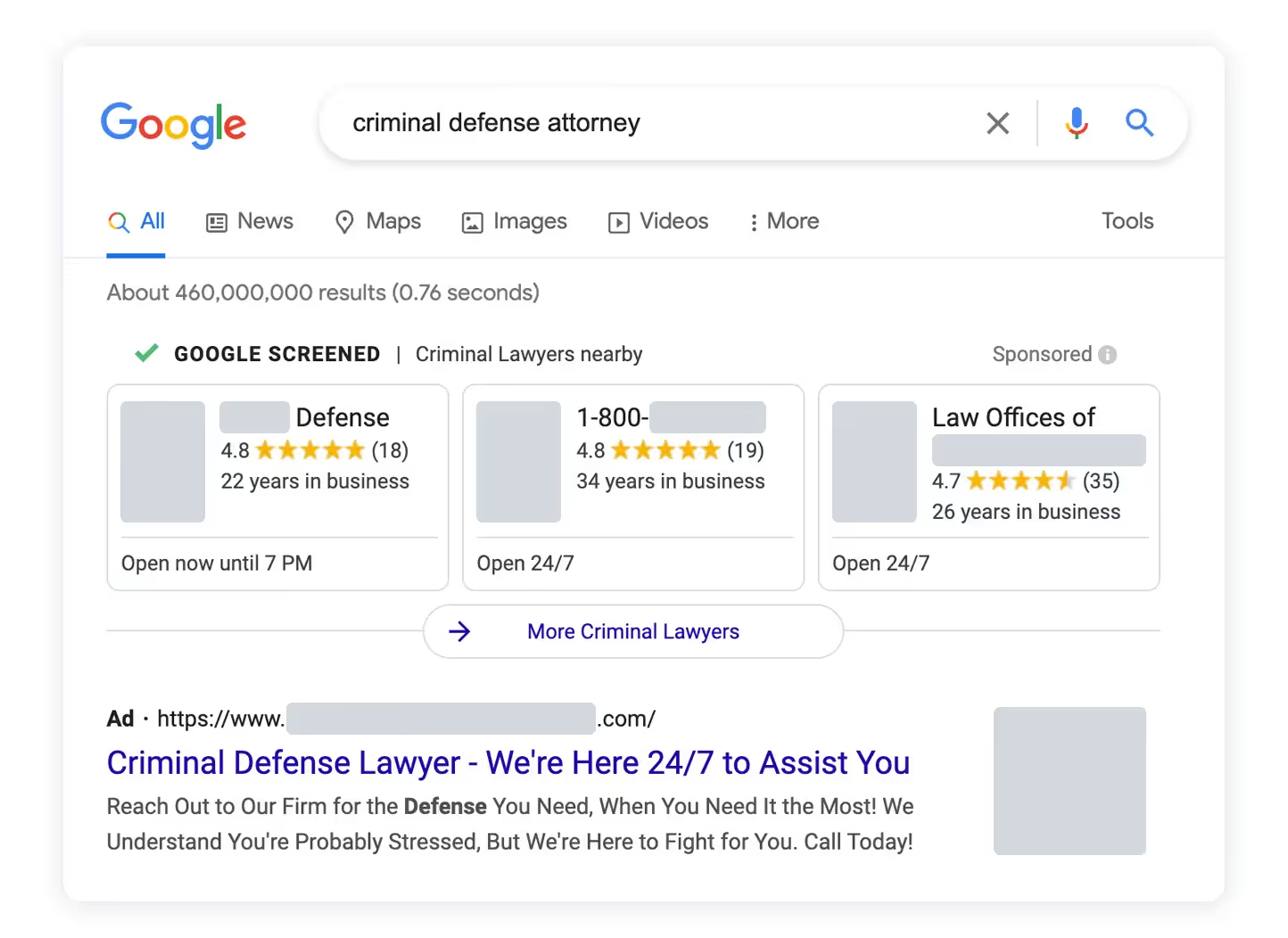
Special promotions
Some criminal defense firms will look down on this tactic, but a way to get your firm's name out in the community is to run special promotions. It's not uncommon to see DUI Defense Attorneys giving away up to $500 of free uber rides on big drinking holidays like St. Patricks Day or Independence Day. The added perk of these promotions is to gain some press and, ideally, backlinks to your website.
Sponsoring local teams or 5ks with good causes
Another way to get involved in the community and generate brand goodwill is to sponsor a local team or run a 5k race with a good cause. This type of sponsorship allows you to put your name and logo on event marketing materials, T-shirts, and websites. Sponsorships like this show that you're an active member of the community, which can make a difference if someone is looking to hire you.
Get (and convert) more leads with Lawmatics
Some of the most effective marketing strategies for a criminal defense practice include creating short videos to address FAQs, sponsoring local teams or events, and getting customer reviews. It’s important to keep up with marketing law firm trends whether that’s criminal defense or family law marketing. As a lawyer, these strategies can help you reach potential clients and show them that you are an active community member. Utilizing these strategies, like marketing automation for lawyers, can help grow your criminal defense practice.Lawmatics can help criminal defense attorneys with automating intake and communications. Automated intake enables you to collect the necessary information from potential clients as quickly and efficiently. By using a law firm CRM, you can generate personalized communication templates, which will help you stay in touch with potential clients and keep them updated on the status of their cases. Lawmatics also offers a case management system that can help you keep track of all aspects of your practice, from client contact information to court dates and deadlines.
FAQs
?What are the best lawyer directories?
Getting your firm listed on a legal directory is a worthwhile strategy for increasing your law practice's visibility and backlinks and growing your client base. An online directory is where people can find information about law firms. A lawyer must create an account and list their firm to be found. Lawyers can list their website, contact information, and practice areas in their profile.The top directories for law firms are:
- Avvo
- FindLaw
- Martindale-Hubbell
- SuperLawyers
- Lawyers.com
- LegalZoom
- Yelp
By listing your law practice in an online directory, you make it easy for potential clients to find information about your firm. Additionally, adding reviews to your legal directory listing can help you build trust with potential clients.
?What is an effective way to respond to negative reviews?
There's no one-size-fits-all answer to this question, as the best way to respond to a negative online review will vary depending on the situation. However, some tips on how to handle a negative online review include:
- Respond quickly and politely, thanking the reviewer for their feedback.
- Address any issues brought up in the review.
- Do not attack or respond defensively to the reviewer.
- Offer a solution if possible.
If you follow these tips, you can help mitigate any damage done by a negative online review and show potential clients that you are willing to address and resolve any issues they may have.
?How should criminal defense lawyers use video to market their firm?
Video can be an effective way to market a criminal defense law firm. Creating short videos that address FAQs can help potential clients learn more about your practice. Videos do not need to be perfect production quality to be practical marketing tools. Many potential clients may prefer videos that are more informal and less polished.Creating short, informative videos that address some of the most common questions potential clients have about criminal defense law can help potential clients learn more about your practice and feel more comfortable hiring you. Additionally, videos can show potential clients that you are an active member of the community.Sources CitedRegina Edwards, Smith.ai. Master Class: How to Improve Your Law Firm Intake. https://smith.ai/blog/master-class-how-to-improve-your-law-firm-intakeHager & Schwartz, P.A. The Qualities to Look for in a Criminal Lawyer. https://www.defendyourcase.com/criminal-defense-blog/2020/september/the-qualities-to-look-for-in-a-criminal-lawyer/ September 04, 2020Adam Gingery, CallRail. How to localize your content strategy in 2022. https://www.callrail.com/blog/how-to-localize-your-content-strategy-in-2022/February 16, 2022.Jonathan M. Pyzer, Clio. Guide to Marketing for Criminal Defense Lawyers. https://www.clio.com/blog/marketing-for-criminal-defense-lawyers/Owen Jones, Grade.us. How To Deal With Negative Reviews On Google. https://blog.grade.us/negative-reviews-on-google/ May 2020

Although some might describe legal project management as a fad, more and more law firms are starting to recognize it asan indispensable business function for increasing your law firm’s all-around performance.So what is it? Legal project management, also known as LPM, defines the framework of a matter early on, solidifying whateveryone can expect throughout the client journey. It involves planning out the entire legal matter using anyinformation initially on hand with the goal of staying on schedule, staying within your budget, and ultimatelyevaluating how well the plan was carried out from both the lawyer’s perspective and that of the client.
The 4 elements of legal project management
1.Define your plan
The first step to managing a new project — or an end-to-end process for your matters in this instance — is defining whatyou’ve set out to do. All projects require a beginning, a middle and an end. So it helps to envision and define exactlywhat it is that you hope to achieve. Be as specific as you can so that you know exactly what it is you want to do, whyyou want to do it, how you plan on executing, and any challenges that may arise along the way.
2.Identify project requirements
In the legal world, efficiency is paramount to staying competitive. Once you’ve defined your project, answer thefollowing questions to help keep everything on track and members of your staff accountable:
– What action items are involved in getting this done?
– What are the deliverables for each action item?
– What are the deadlines for each deliverable?
– What is the order of priority of all action items?
– What is the total allocated budget for expenses?
– What are the possible outcomes for each action item and the project as a whole?
Doing this will help you nail down the project scope and inform who to charge with managing everything from start tofinish.
3.Appointing a project manager
Although it's not necessarily a must, it's certainly a plus to appoint someone on your staff as your law firm’s legalproject manager. Qualifications for said project manager should be a thorough understanding of your legal team’sdynamics in that that appointee is capable of delegating the right projects to the right people per their bandwidth andskills. This ensures that your project isn't merely completed on time but executed as efficiently as possible. Onceappointed, your project manager will keep your team more disciplined and encourage a unified, systematic execution ofmatter management, while allowing for process improvement. They should not only act as a point of contact for members ofthe team, but also keep track of deliverables, manage the allocated budget, and prioritize task importance foroperations.
4.Evaluation
Once you've mapped out your process of handling matters/projects from beginning to end, it's time to execute. Followingcompletion, project management principles encourage an assessment of how the process went compared to expectations.Gather your team and ask the following questions:
- What could go smoother next time?
- Where do you see room for continuous improvement in your execution or project management skills?
- How can you make the process go even faster in the future?
Feedback collected based on these questions will help you improve your internal workflows, client experiences and giveyou a better sense of what to anticipate the next time.
Tips for legal project management
>Prioritize time management in your matters
Time is money yadda yadda yadda… you know the saying. Whether it's your onboarding process or generating documents, it'simportant that you stay accountable for every minute that passes throughout the course of a matter. Stay on top of yourtime, and manage it wisely; the foundation of legal project management is greater efficiency. Create a roadmap of howmuch time you think that each action item and workflow in the matter should take. Prioritizing your timeline upfrontwill eliminate common bottlenecks, and help you avoid rework and delays.
>Use the right tools
Using a cloud-based solution is the best way to manage all projects (or matters) of your firm in one single location.Whether you need to access case details,manage your contacts,send/receive important documents, or communicate and collaborate with clients, a software solution with anywhere,anytime access may be the answer.The latest trends report shows that growing firms are 46%more likely to use client intake andCRM solutions, so if growth is a priority, the right tools for legal project/matter management are a must.
>Effectively communicate with fellow staff
In the absence of effective communication, your staff has no idea who should be working on which task, you find yourselfwith scattered documents, delayed follow-ups, mixed-up dates, and missed deadlines. When you have multiple peopleaccessing a case in your law firm, from lawyers to paralegals tolegal assistants to officemanagers, it's critical that everyone is on the same page about what steps need to be taken next on a matter. Effectivecommunication principles include:
- Concise language
- Positive interactions
- Timely responses
- Effective tools for sharing important dates and client details
A CRM is your all-in-one storehouse with all the information everyone on your team requires for matter details. From allclient communications to important documents, to upcoming dates, a CRM is a centralized platform that ticks off each boxas you go.
>Know your strengths and weaknesses
The overall success of any legal work project plan ultimately relies on the success of your team as a whole. Yourproject manager should have a clear understanding of all of your team's strengths and weaknesses so they can delegate asneeded. From attention to detail, to IT skills, to a flair for personal interaction, assigning the right element to theright team member will significantly affect your overall delivery during a matter. For instance, attorneys andparalegals shouldn’t be touching anythingmarketing related when on a deadline,whereas office assistants shouldn’t be dedicating time to tasks that can be easily automated in a pinch. If you canmanage to tap into the strengths of every one of your staff members then you’ll not only see your efficiency skyrocket,but you’ll find your overall team morale will increase.
>Assess and make improvements wherever necessary
Setting goals alone isn’t enough to ensure that you’ll reach them. Data can help you pinpoint which activities areyielding the results you want, and where you need more work. Tracking your goals is made simple by running reports withlaw firm reporting software. Law reporting software can track KPIs like:
- Number of billable hours
- Number of open matters
- Monthly revenue billed, vs collected
- Individual staff productivity and more
Knowing internal analytics such as these make it simple to reach your objectives. Lawmatics CRM and client intakesoftware comes with powerful reporting software built in, so you don’t have to use multiple programs to get theinformation you need. The data is presented in an easy to read format with personalized insights into how well yourcurrent strategies are working, giving you a better understanding of your performance as a whole. Visual reporting runsreports on key metrics to help measure how close your law firm is to where it wants to be in a way that’s easy todigest.
Benefits of effective project management
>Better planning
When you can manage to map out an execution plan, it makes it much easier to accomplish. With a plan set in place, youhave greater predictability overall of what to expect, and how long each process will take to achieve. Above all, youcan plan for and anticipate any risks and issues that could come up along the way.
>Smoother processes
Planning things out, and monitoring each step as you go means a smoother process overall. Standardizing how you runthings in your law firm is the best way to ensure that nothing slips through the cracks, and no important steps getmissed.
>Less time wasted
Setting deadlines, goals, and planning for the future means less time squandered spreading your energy out in multipleplaces. When you start valuing time the same as you value revenue, you realize how important it is to stay accountablefor each minute of your day. Planning, anticipating, and implementing new initiatives means making the most out of everysecond.
>Happier clients
When you implement legal technology like Lawmatics that tracks every stage of the client process, ensures you stay ontop of your most important deadlines, dates, and communications, and better anticipates your costs, you increase youroverall client satisfaction. By delivering a consistent, effortless, and modern approach to delivering legal services,your clients will give you raving reviews, and refer you to their friends and family.
>Accountability
Staying on top of your most important tasks means remaining accountable for what's working and what's not to becomecloser to your goals. When each member of your project has their duties clearly defined, it becomes easy to measure whocompleted their assigned tasks and who did not. Accountability ultimately differs from responsibility since thecompletion of tasks aren’t just reliant on staff members— they additionally ultimately bear any consequences of failingto carry out tasks. In short, by assuming accountability, you reduce your chances of missing important deadlines andgoals and as such boost your overall performance.
>Money saved
Lawyers who standardize their processes are able to budget more effectively — plain and simple. The end result is morebudget that you can apply to your payroll and overhead. The more efficient your processes, the less time is spentspinning your wheels, and more time taking on more clients and increasing your revenue.
Grow your law firm with Lawmatics
Recent studies showthat implementing law project management into their law firms improves client communication, reduces the chance ofunpleasant surprises, and promises delivering more matters on time and within their budgets. Ultimately, you keep yourlaw firm on track, and exceed your client expectations by standardizing your operations in the most efficient waypossible If you're ready to start introducing legal project management into your law firm, thenLawmatics all in one legal CRM,legal client intake software, andmarketing automation solution can help. Sign up for a freeproduct demo today!
Sources Cited
Clio, 2021 Legal Trends Report, 2021Susan Lambreth, The Latest Trends and Data Points on Legal Project Management, March 2, 2022

In the legal industry, your contacts are one of your most precious assets since they are fundamental for creating a steady stream of business, and referrals. You would never throw your diamonds in a junk drawer and forget about them would you? So why would you treat your prized legal contacts any differently? Because contacts are key to your law firm’s business development, organizing them is a must.Read on for practical law firm management advice for managing and tracking your contacts and eliminating “contact chaos” in your law office.
1 Start things off on the right foot
Whether you’re organizing legal contacts or putting together a 1,000-piece puzzle, the logic remains the same: it’s much easier if you have a systematic organizational process from the start. Going back and trying to put the pieces together later with no system in place doesn’t just take longer, it will test your sanity.The minute someone contacts your law firm or submits their contact information through your website, collect as much information as you can. Even if they’re not hiring you at this very moment, they’re still a future prospect — hang on to their information!This is where a legal CRM is an indispensable resource for storing your contacts' details.Enter your contacts’ names, phone numbers, emails, and any other important details like their job title. The more specifics you can gather, the better. From that point on, a law firm CRM will store any important notes and contact details that you can refer back to later. Once a contact decides to hire your firm, your CRM can seamlessly populate their existing information directly into important contracts, eliminating the risk of errors, and boosting your efficiency.
2 Ditch spreadsheets and redundant systems
One of the biggest culprits of chaos in a law firm is spreading out your processes in multiple locations. Your law firm should have one single database to work with, that doesn't require digging through your email inbox, or scrolling through a long spreadsheet. Store your contacts in one single cloud-based location, in a CRM.That way, you can access your contact details no matter where you are, as long you have an Internet connection. This makes it much easier for everyone in your staff to stay on the same page, and eliminate the risk of confusion and errors. Not to mention the additional costs and logins associated with managing multiple systems at once.
3 Make it easy to send and receive important documents
Gathering important documentation is a routine process for onboarding new clients. Real estate clients may need to send you property contracts, criminal defense clients may have to send you waivers of appearances, and so on. It's easy for everything to become chaotic when gathering these essential documents from your clients requires them to jump through hoops.Instead of asking your clients to print, scan, and sign important documents — or worse, go to the post office, allow them to directly upload using a digital file request builder.Attorneys can find and receive files within a matter of seconds while also collecting an electronic signature, implementing a much more streamlined workflow into their practice. The end result doesn’t just make things easier for your clients, but also for everyone on your team. With everything all in one place, you can save yourself hours of tracking down the files that you need. Centralized storage will modernize your practice, and take on the labor of keeping your contacts' and important documents organized neatly.[oxygen-template id="6130"]
4 Make automation your friend
Automation accelerates your data collection and makes managing and nurturing your prospective and paying clients painless. No more manually analyzing your leads and scrambling to figure out who needs to take what action when. A pipeline management tool organizes your contacts into segmented lists so you can categorize and add tags in a way that makes the most sense for your practice. From case type to former clients, to current clients, your pipeline allows you to effortlessly analyze how each contact is progressing through your workflow and what needs to be done next.Automation tools make sure that the right email goes out at the right time, guaranteeing that your contacts receive personalized attention throughout each phase of the client journey, from client intake to billing.Whether it’s an email welcoming them as a new client, or a drip marketing email to a lead keeping them engaged and one step closer to becoming a paying client, automation takes care of it for you.
5 Integrate your tools
Running your practice across multiple platforms can quickly start to become chaotic. When workflows across softwares begin to overlap, your processes have become inefficient, and you can easily make mistakes. The best way to organize your contacts is to sync everything across all of your different programs. A law firm CRM and client intake software like Lawmatics easily integrates with a wide variety of apps that you likely use in your law practice every day.Integrations allow you to automate your tasks, and build a tech stack that will modernize and streamline your practice. You can integrate your CRM with your legal practice management software, your billing software, Zoom, and more.
There's no such thing as organized chaos when it comes to your contacts
26% of legal professionals fail to track their leads in any capacity. This is a huge missed opportunity for organizing leads and retaining clients. And while a spreadsheet of potential clients is certainly a start, it’s hardly the most efficient way to ensure that your marketing methods are getting you the kinds of results you need.If you want your law office to be a success, then organizing your contacts and tracking them throughout the client journey is essential. Implementing a CRM for lawyers into your law practice will accelerate your growth by meticulously tracking and labeling each of your contacts in the best way that works for your law practice. The end result isn't just a smarter and more flexible solution for you, you'll wow your clients with your modern and organized approach. Are you ready to see how Lawmatics, the number one client management and marketing automation for lawyers to help you manage the client journey step by step? Sign up for a free product demo today!Sources CitedMartindale, The State of Online Marketing in the Legal Industry, 2014, http://www.martindalenolo.com/sites/default/files/MHN%20Whitepaper.pdf

Billing can be a time-consuming and frustrating process, but it is necessary for your firm's success. To control your billing workflow, you need to step back and consider the whole billing cycle from an organizational standpoint. Review your billing cycle for opportunities to increase efficiencies, identify roadblocks or obstacles, and strategize how to simplify your legal time and billing system.
The typical law firm billing systems
Logging billable time and expenses, creating a draft bill, and sending the final bill to clients are the three main elements of a profitable billing process for a law firm. Usually, law firms will bill clients at the end of each month or even bi-weekly, but this may vary depending on the type of case and the amount of time involved.When a new client onboards, attorneys will track and log their billable time throughout the case matter. The attorney's activities are compiled into a draft bill at the end of the billing period. Attorneys, or additional stakeholders, will review the invoices, add notes and adjust costs as needed before approving the invoice. Once approved internally, the bill's final version is sent to the client for payment.Most law firms offer multiple payment methods (e.g., check, credit card, or wire transfer). Clients may set up a payment plan in some cases, but that is at your firm's discretion. Once payments are received, the accounting team will send out follow-up reminders regarding any late payments.While this legal billing process is relatively succinct, there's plenty of room for bottlenecks on implementation. Let's walk through how to streamline your billing processes.
Write a billing policy that works for your law firm
The goals of a billing process are to provide a system for tracking time and expenses, ensure that bills are accurate and timely, and provide a clear and concise explanation of services offered to clients. Having a standardized billing policy in place helps to achieve these goals.
Visualize the entire billing workflow
Write out all of the steps that need to happen during your billing process. Be as detailed as possible. When you write out the entire flow of your billing cycle, it becomes much easier to identify any bottlenecks or areas where time is wasted. You can also see which steps can be streamlined or automated. Having a standardized billing policy in place will also help to ensure that bills are accurate and sent out on time.
Include templates & guides for your staff
There's no need to reinvent the wheel each time. Your billing policy should include templates and billing guidelines to make the process easier to automate — bonus points if your legal billing software automates and formats your invoice templates.There are a few reasons why it's important to have a standard invoice format:
- It makes it easier for your clients to get familiar with your time entries, legal fees, and outstanding payment. They know what to expect using the same format every time and can easily compare invoices.
- It helps you keep track of your expenses. When all your invoices are in the same format, it's easier to see where you're spending your money and identify any patterns.
- It helps ensure that your invoices are accurate.
Invoice elements
All invoices should include a few key elements to make them as straightforward as possible:
- Include the name and contact information of both the law firm and the client for easy reference if any questions or concerns.
- Include a detailed description of the services rendered to help avoid any misunderstandings about what was billed for and why.
- Make sure to include the total amount due, as well as the date by which it should be paid.
By having all of this information, you can ensure that your invoices are clear and concise, making them easy to understand and pay.
Invoice review guidelines
When thinking about invoice review, you can create billing guidelines or a checklist for the attorneys who need to review the invoices before sending them to clients. This way, every person is checking and assessing the invoices is referencing the same rubric.
Set standard rates & billing structure
When setting rates and fees for your law firm, there are many things to think about, like the type of legal practice, what other lawyers are charging for similar services, the overhead costs of your firm, and the experience and qualifications of your lawyers.The most common fee structures are:
- Hourly billing — This fee structure is the most common for lawyers who typically bill in increments of one tenth of the hour.
- Flat rate billing — This fee structure charges clients a set price for every case, regardless of how much work is involved, which can be an excellent option for clients who want absolute certainty about how much they will owe.
- Contingency fee — A contingency fee is a fee that you only have to pay if you win your case. This fee is often used in personal injury and medical malpractice cases where there is high risk and a high potential payoff.
One of the most important aspects of billing is consistency with your rates. A good invoicing solution will have the option to set rates per attorney.
Implementing an efficient legal billing practice
A plan is only so good without implementation. There are a few low-hanging practices that can make your office run smoother than before.
Bill for all the time you spend on a case
When you're billing for your time, make sure to bill for all the time you spend on a case. This includes meeting with clients, researching, drafting documents, and appearing in court. Keep track of your time contemporaneously whenever possible, and bill your clients accordingly. This will help ensure that you're getting paid for all the work you're doing and significantly improve your bottom line.
Providing multiple ways of payment
To make it as easy as possible for your clients to pay their bills, you should offer multiple ways of payment. This could include online payment options, such as PayPal or credit card processing, and offline payment methods, such as checks or money orders.Offering little to no flexibility when it comes to method of payment can be bad for your business because it makes it harder for your customers to pay you. If you only accept cash or check, for example, odds are slim that each of your clients has access to those. The less you limit the ways in which you can be compensated, the less likely clients are to default on payment.
The importance of being consistent with invoicing
Sending invoices out at regular intervals and using the same format for each invoice will help ensure that there is no confusion about what is being billed for, and it will make it easier for your clients to keep track of the balance they’ve paid and the balance they still owe.
Explain your billing process in your fee agreement
When drafting a fee agreement, you should clearly outline two things: your payment procedures and the payment requirements. Make sure the client knows your billing procedures & payment conditions. Be straightforward about your rates and explain when they can expect to receive the bill.The agreement will also contain other important information, such as the scope of work. This is an excellent opportunity to set expectations for the case matter.Be sure to explain how you will bill them, what type of billing system you will use, and how often they can expect to receive invoices. You should also let them know what your policy is for late payments.As you proceed with a case, it's essential to keep clients updated on the status of their bills. If there are any changes to the amount they owe, be sure to let them know as soon as possible. The last thing you want is for a client to be surprised by a large bill at the end of the month. By communicating with your clients about billing from the start, you can avoid any misunderstandings or conflicts down the road.
The importance of communication in billing
It's vital to maintain clear and open communication with your clients about outstanding payments.Here are some tips for effective communication during the billing cycle:
- Be clear and concise — When sending an invoice to a client, be sure to include all the pertinent information, including the amount due, date due, and any applicable late fees or penalties. Be sure to use clear and concise language to avoid confusion about what is being requested.
- Be prompt — Invoices should be sent out in a timely manner so that clients are not surprised by a large bill at the end of the month. If you are running behind on invoicing, be sure to communicate this to your clients so they can budget accordingly.
- Keep records — Be sure to keep accurate, meticulous records of all communications with clients, including invoices sent and payments received. This will come in handy if there are any disputes later on.
Reducing friction for your clients is a great way to provide high-quality service. A straightforward billing system makes it easier for clients to understand what they owe and more likely to pay on time. This focus on quality and convenience makes the law firm appear more professional and capable, building trust and strengthening relationships.
Using financial reporting to identify opportunities
Having accounting knowledge that is relevant for your business will help you determine the growth potential for your organization. Byproducts of good law office accounts provide valuable insights into firm performance. The data you collect can help you make better business decisions.Businesses need to review their financials to understand how well they are doing. This information can help businesses decide where to invest their money and how to improve their operations.Keep a close eye on outstanding debts, payments, and profits to keep your billing procedure on track. The following reports might assist you in maintaining the financial health of your legal practice and keeping your billing procedure running smoothly:
- The Accounts Receivable Report gives an overview of open and past due invoices on a per-user, per-client, and per-matter basis. You can see amounts owed for approved outstanding invoices and partial payments made towards those balances.
- The Accounts Receivable Aging Report classifies past due accounts receivables by age (e.g., bills that are unpaid more than 30 days old, less than 31 days old, and so on).
- The Billing History Report provides a comprehensive record of your clients' billings: open invoices, past-due invoices, and paid bills.
- The Matter Balance Summary Report is a report that displays outstanding debts, as well as how much work in progress and continuing expenses there are on a per-matter or per-client basis.
- The Trust Applied or Trust Transfer Reports the money that has to be physically transferred from trust to operating account. The Trust Transfer report can also act as an audit log, or backup, of the trust history and dollar amounts that have been transferred at the bank.
- Trust Replenishment Report shows the current trust account balance, amount of minimum required, and how much a client is below their minimum requirement.
- The Invoice Payments Report shows payments on individual cases for particular service and item expenses. It also identifies the people who are responsible for those line items.
- The Revenue Report is a tool that allows your company to see and measure key performance indicators for each user, client, and matter on a per-user, per-client, and per-matters basis. The report details unbilled, billed, and collected amounts in terms of hours, expenses, and taxes.
These reports can help you keep track of your law firm's billing procedure and identify any areas where improvement might be needed. By monitoring your accounts receivable, payments received, and profits, you can stay on top of your finances and ensure that your billing process is running smoothly.
5 things to look for in billing software
Using billing software is one of the best ways to keep your law firm organized and efficient. Good billing software will allow you to track your expenses, bill clients for those expenses, and keep track of payments received. It can also help you generate reports that give you a better understanding of your firm's finances.When it comes to finding the best legal billing software for your law firm, it's important to keep in mind the specific needs of your business. Here are 5 things to look for when choosing a billing solution:
- Ease of use — The software should be easy to learn and use, with a user-friendly interface.
- Flexibility — The software should be customizable to meet the unique needs of your law firm and those of your clients.
- Scalability — The software should grow with your business, as your needs change over time.
- Security — The software should be secure, with features that protect your data from theft or unauthorized access.
- Reporting — The software should include robust reporting capabilities so that you can track billing and payments activity.
An efficient billing cycle will help increase law firm profitability and build successful relationships with your clients. Good billing practices include communication, consistency, providing multiple ways of payment, and keeping accurate billing records. By evaluating any billing software using the aforementioned criteria, you can facilitate the best possible billing experience for you and your clients.
Make your billing process work for your staff & your clients
If you're struggling with invoicing, billing, and collecting payments from your clients, it might be time to invest in a cost-effective solution. Lawmatics' billing software is an excellent way for law firms to simplify their billing process and increase profitability. The software is easy to use and customizable for your billing rates to meet the unique needs of any law firm. Additionally, the software includes robust reporting capabilities to track billing and payments activity. This information can help firms improve their billing practices and better serve their clients.Finally, automated workflows in the software mean that lawyers can spend less time on administrative tasks and more time practicing law. If you're struggling with invoicing, billing, and collecting payments from your clients, Lawmatics' software is a cost-effective solution that can help your business grow.
Frequently asked questions
What forms of payment do law firms accept?
Most law firms accept major credit cards, checks, and wire transfers. Some law firms also offer financing options for their clients. This can be a great way to help them pay for your services. You should always be willing to work with your clients to find a payment option that works for them.
What to look for in legal billing software?
The best invoicing software options for law firms are those built with legal compliance in mind. Legal billing software will be able to help you track your time to a matter, automate and batch invoicing and keep track of payments.When it comes time to find legal billing software, there are a few key features to look for: ease of use, flexibility, scalability, security, and reporting capabilities. The software should be easy to adopt and implement user-friendly. It should be customizable to meet the unique needs of your law firm and able to grow with your business as your needs change over time.Billing software should also be secure, with features that protect your data from theft or unauthorized access. Finally, it should include robust reporting capabilities so that you can track billing and payments activity. By keeping these features in mind, you can be sure to find the best billing software for your law firm.
What are some common mistakes law firms make when billing?
One of the most common mistakes law firms makes when billing clients is not being clear or transparent about what they are charging for in their time entries. This can lead to confusion and frustration, and even stall the case..Another common mistake is not being consistent with invoices. The top way to keep yourself from getting paid is by surprising your clients. The final mistake that is all too common is not keeping track of expenses, which leads to inaccurate invoices and overcharging. Be sure to track all of your expenses to avoid any potential billing conflicts.
What does a legal billing specialist do in a law firm?
Legal billing specialists control billing activities within an organization. It can include billing, collecting payments, or preparing and presenting financial reporting for scrutiny.A billing specialist typically does the following in a law firm: billing, collecting payments and preparing/presenting financial reports for scrutiny. They are responsible for maintaining an orderly system of accounts and ensuring that all financial obligations are met on time. In addition, billing specialists may be involved in contract negotiations with clients or other legal professionals.Sources CitedBowman, D. (2021, January 16). Law Firm Billing: Five Ways To Ensure Your Clients Pay On Time. The National Law Review.https://www.natlawreview.com/article/law-firm-billing-five-ways-to-ensure-your-clients-paytime#:~:text=Many%20attorneys%20prefer%20to%20bill,your%20bill%20in%20one%20paymentMedice, M. (2022, February 16). 2022 Profitability Strategy Checklist. JD Suprahttps://www.jdsupra.com/legalnews/2022-profitability-strategy-checklist-2115538/Mann, A. (2021, February 11). Why Modern Law Firms Must Use Electronic Payment Solutions. LawPayhttps://www.lawpay.com/about/blog/electronic-payment-solutions-law-firms/Uniform Task-Based Management System. American Bar Association https://www.americanbar.org/groups/litigation/resources/uniform_task_based_management_system/2021 Report on the State of the Midsize Legal Market. Thomas Reuters https://legal.thomsonreuters.com/en/insights/reports/2021-state-of-the-midsize-legal-market-report/thank-you

As a new lawyer, law firm billing can be daunting. You want to make sure you're billing correctly and ethically, but you also don't want to spend too much time on billing (which is non-billable). If you're a summer associate or a new lawyer trying to navigate the challenges of billing, stay tuned to find tips for billing that will help you navigate the waters of legal billing.In this article, I'll discuss the most common billing methods for lawyers and the ethical duties when it comes to billing. I'll give tips on how to track your time efficiently, how to bill for various legal services, and how to handle client invoices.
MRPC 1.5. overview
Before we dive in, it's important to note (despite being obvious) that we'll discuss the Model Rules of Professional Conduct (MRPC) 1.5. Still, you will need to follow your state's Rules of Professional Conduct to ensure that you are compliant in your state.
What is a reasonable fee?
MRPC 1.5 discusses client agreements, attorneys' fees, and contingency fees. The main discussion in Model Rule 1.5 is what factors make a fee considered reasonable. The rule explicitly lists eight factors among those that determine if a fee is reasonable:
- Time and labor required, novelty & difficulty of issues, a skill required
- The likelihood that would preclude other employment
- The fee customarily charged for similar services and in similar areas
- The amount involved and results obtained
- Time limitations under which operating
- Nature and length of the relationship
- Experience, reputation & ability of the lawyer
- Whether the fee is fixed or contingent
While the eight factors listed in Model Rule 1.5 are not exhaustive, they provide a good starting point for determining what is considered a reasonable fee. Keep in mind that each state's Rules of Professional Conduct may have additional factors to consider when determining reasonableness.When billing your clients and ensuring law firm profitability, be sure to take into account the time and labor required, the difficulty of the issues involved, as well as your skill level and experience. And always remember to be transparent with your clients about what you're charging them.
Put the fee agreement in writing
When it comes to legal billing, it's essential to put the fee in writing. A fee agreement, sometimes known as a retainer agreement or a representation agreement, is a legal contract that describes the terms of the attorney-client relationship. The agreement should specify your legal fees and who will work on the issue.A written fee agreement will ensure that both you and your client are on the same page, and it will help prevent any misunderstandings; your client can refer to it later if there are any questions or disputes about the bill.The fee agreement should state:
- How much money you will charge
- The lawyer's hourly rates
- A mention of anyone else in the lawyer's office who works on the case
- How often you will invoice
- A description of expected expenses
Considerations for contingency fees
A contingent fee agreement needs to be in writing and signed by the client. That fee agreement needs to explain the basis of the fee, including the percentage, and detail any specifics like percentage to the law firm in the event of settlement, trial, and appeal.If you take a case on a contingent fee basis, you agree to assume financial risk. So, if the case is a loss, you will not recover any fees. It's imperative to detail all expenses the client may be liable for in case of a loss at the start of the matter.If applicable, the client fee agreement should detail expenses that will be deducted from the recovery. Note if the costs will be deducted before or after calculating the contingent fee. Finally, the agreement must notify the client of any expenses for which the client might be liable.
7 Common issues with billing practices
Model Rules 8.4 and its state counterparts restrict behavior that includes deception, fraud, and misrepresentation. Below are some of the common pitfalls that include misrepresented fees and services.
1Double billing
At its most basic definition, double billing is when you invoice two clients for work done during the same time period. If you end up doing an hour of research that can apply to two matters, split the difference and invoice each client .50 (30 minutes).Double billing becomes more of an issue if you are traveling for a client matter but end up doing work for a second client during the travel downtime. It's great to be proactive, but you might be better off single-tasking on the primary matter at hand.
2Block billing
Lumping together many distinct tasks into a single billing entry is block billing. This billing practice is dubious because you fail to accurately report the time it took for each task individually. Timesheets need to be clear and easily interpreted by someone reviewing them.There may be instances where block billing is appropriate, like during travel. But generally, avoiding block billing is a best practice that benefits the client, and if a fee dispute later arises, you'll be thankful you took the time to have accurate timesheets.
3Marking up your time
Inflating your time spent working is the same as marking up your time. Only invoice for your time working on a matter to ensure that you are not overcharging your clients and help maintain a good relationship with them.
4Excessive billing and "value" billing
This one might be a bit obvious, but be sure that you only bill for services provided when you bill your client. Some attorneys have claimed that the value of their services is enough to charge additional fees and high rates.Many fee disputes occur when a client perceives that an attorney has billed an unreasonable or excessive time on specific tasks. Unlike marking up timesheets, if there are legitimate reasons tasks took longer than anticipated, you can talk to your client and give them precise, descriptive time entries. You can use this dispute to educate a client about your work and potentially avoid a fee dispute down the road.
5Charging for unnecessary processes
Generally speaking, you will want to avoid wasteful, unnecessary, or redundant processes. There are instances of lawyers charging for unnecessary travel (think: this trip could have been an email).Of course, those are egregious circumstances. Start small in your work routine. As you get comfortable in your work processes, start seeing where you can trim down any inefficient processes. Pro tip: there is a lot of fat that can be trimmed when it comes to streamlining client intake.
6Maximizing your minimum time increments
Don't be the attorney who bills in half-hour or hour increments (yes, it's happened). The issue with billing at a slightly higher rate, even at .25 hours (15 minutes), is that there might be too much padding for the billable tasks. Billing at .25 hours might inflate the invoice. If there were to be a fee dispute, a higher time increment would be examined thoroughly.There will be a standardized rate at your law firm that you must follow. The standard increments, which are more about convenience, used by most firms are as follows.
- 1/10 of an hour (6 min)
- 1/6 of an hour (10 min)
- 1/4 of an hour (15 min)
Take a reasonable and balanced approach and choose the billing increment that is acceptable for your practice area.
7Charging clients for law office overhead
More simply put, do you bill a client for creating a bill? Clients do not expect to pay for your administrative tasks. It's best to remit tasks like accounting services to general services done by the law firm.The ABA has declared this unethical, but many states handle this differently. Some states say it's permissible to include overhead as long as you clearly state those fees in the client fee agreement. You can always reach out to your state's Ethics or Grievance department to talk through the appropriate billing practices for your firm.
11 Tips to get you from billing novice to invoicing all-star
When starting out as a young lawyer, it's essential to track your time efficiently, bill for various services, and handle client invoices. Practice makes perfect, and it is possible that introducing these methods can make you more efficient and effective.Billing clients is a highly challenging aspect of any practice. However, the company must develop a good timekeeping and billing process. Technology has helped with many complex tasks and considerably reduced the time involved.
1Know your law firm billing processes
Your law firm must establish a clear, documented billing policy that will give you a reference point and create a standardized process. But you'll find that billing processes vary between law firms. For example, some clients do not pay for meetings with other lawyers in the office, lawyer travel time, and time spent doing administrative tasks.
2Invoice requirements
There may be specific invoice requirements and formats at your firm. Typically, invoices require the matter name and unique identifier (usually a case number), a description of the work completed, and the timekeeping information (name, title, rate). Standardizing your invoices helps maintain consistent customer service, ensuring smooth billing processes.
3Explain the legal fees in the agreement
As it's one of the tenants of MRPC 1.5, it is critical to get everything in writing when it comes to legal billing. A representation agreement is a legal contract that gives a clear overview of the attorney-client relationship. You will specify the terms of your fees, your colleagues who will handle the problem, and the period you will work together.The attorney-client agreement can serve as a resource; in case there are any concerns or disputes regarding the bill, they can refer to it again. Ultimately, an agreement will guarantee that both you and your client are on the same page.
4Be a better time keeper
You can keep track of your time in different ways. It is essential to record the time you spend on work tasks as soon as you do them. You can use a legal pad, a billing program, or even your smartphone to do this.Additionally, you can estimate the amount of time a task will take before starting it. Knowing how long you expect to take on a task will help you stay on track and avoid underestimating or overestimating the amount of time a particular task will take.The most important thing is to be consistent in keeping track of your time. This way, your records will be accurate.
5Start using minimum time increments
Instead of jotting down something as short as two minutes and 38 seconds for email or 46 seconds for document submission to the customer and putting it all up, use the 10-tenth hour minimum time increment. Any task, or set of tasks, that is one to six minutes denotes 0.1, or a tenth of an hour. From there - you scale up, so between 8 - 12 minutes is 0.2, 13 - 18 minutes becomes 0.3, etc.Experienced senior lawyers utilize this billing best practice to ensure their time is never under-reported, as it helps to add more value to the minutes. Check with your law firm to see their standard minimum time increment.
6Enter time daily
From here, I think you're getting the hint that the more frequently you track your time, the better odds of capturing an accurate picture of your work daily.One way to ensure that you track your time daily is to make it a habit. You can do this by setting aside a specific time each day to review your time entries and update your timesheet, which will help you stay on top of your work and ensure that your billing records are accurate. Time and billing software makes this as seamless as possible. Read our post on legal process outsourcing for more information.
7Single task
Single-tasking means that you do one thing at a time. So, when you are editing a brief for a matter, you aren't also answering phone calls or checking email. To be better at single-tasking, you need to create an environment conducive to it. So, turn off notifications on your phone and computer, close any unnecessary tabs in your internet browser, and keep your workspace organized. You may also want to set time limits for how long you work on certain tasks so that you're not distracted by other things.
8Don't underestimate your time
Underestimating your time can happen for two reasons. First, if you are not keeping consistent records of your tasks, you may forget tasks, like phone calls, you've completed. This omission will make it appear you spent less time on a matter than you did.The other reason for underestimating time is that sometimes new lawyers think they should be faster as a task than they are. Talk to your manager instead of getting in your head about your speed and pace. Ask them what amount of time they expect tasks to take. In the meantime, those tasks to you the time you tracked- so write it down.
9Break down your entries
As for the billing entries, divide the tasks into separate entries to make sense of the cost of the time. For example, a review of medical records does not require time if it is voluminous. The bill is for "Review and preparation of draft medical documentation ." Give the customer several pages and why this project is beneficial.
10Itemize your bills
Start noting the timed breakdown of your tasks and activities on your bills. Itemizing your bills will help you avoid block billing. Below is an example of a detailed time-tracked list.02/22/2022: Zoom conf. with expert witness Wardle (1.0); reviewing documents for cross prep (.3); sent comms to and from client re: files(.3); reviewed new eDiscovery files (2.4); prepared exhibits for defendant (1.5); Zoom conf. with court for motions (.5).Total: 6.0 hours
11Master your billable time
Tracking your time diligently and detailed with a law firm CRM will add administrative time to your workday. But the lasting value is that you won't have to go back to recreate a day or weeks' worth of billable time-- which would be nearly impossible to do accurately.You have a responsibility to your clients, which is why billing ethics are so important. The tips we've outlined today should help bill with ease and efficiency. Remember, following these steps will ensure you maintain professionalism in all aspects of your practice. It not only helps you stay out of trouble but also creates transparency with your clients.At Lawmatics, we understand the importance of proper attorney billing and invoicing procedures. That's why we offer software that helps attorneys stay compliant with ethical standards while also getting paid on time. Our team is passionate about assisting lawyers in succeeding, and we're here to answer any questions you may have about our products. Contact us today to learn more about how Lawmatics can help your firm streamline its billing process and increase collections.
Frequently asked questions
?How do new lawyers get better at billing?
New lawyers can do a few things to get better at billing. First, they should track their time accurately and break down their tasks into separate entries. This will help them to understand the cost of the time they are spending on each activity. Second, new lawyers can itemize their bills using detailed timesheets to avoid block billing.Finally, they should master their billable time to bill clients for the work they have completed accurately. By following these tips, new lawyers can bill easier and ensure that they are getting paid for their work.
?How do you calculate billable hours for a lawyer?
To start calculating billable hours, you need to know your minimum time increment for work. Most attorneys invoice in increments of six minutes, but some law firms choose to bill in 10-minute or 15-minute increments.Lawyers need to track their time and break it down into specific tasks to calculate billable hours. Itemizing an invoice gives transparency into how much each service or activity costs.When billing by the hour, it's important to keep track of the time you're spending on each task. This will help you stay organized and ensure that you're billing accurately. You should also break down your tasks into separate entries to understand the cost of each activity.
?Do lawyers double bill?
Double billing is when a lawyer bills a client for the same work twice. This can be an ethical issue, as it can misrepresent the lawyer's time and services to the client.Double billing can also be illegal in some cases, leading to overbilling of clients. Lawyers who double bill may be subject to disciplinary action from their state bar association.Lawyers need to avoid double billing to maintain transparency with their clients. By billing accurately and honestly, lawyers can build trust with their clients and avoid potential issues.
?What are the most common types of billing methods for lawyers?
There are three common types of billing methods for attorneys. The type of practice typically dictates which method a law firm will use.Hourly rates are the most common type of billing method for lawyers. The hourly billing method uses a fixed rate, and the lawyer charges for the amount of time spent on a matter.Fixed rates are a common billing method for lawyers. With a fixed rate, the lawyer charges a set price for the scope of their work. Both parties are aware of the cost of the work ahead of time.Contingency fees are a fee arrangement in which the lawyer receives a percentage of the damages awarded to the client. Alternatively, the lawyer can receive a set amount regardless of the case's outcome. This fee arrangement is common in personal injury cases and is beneficial to both the lawyer and the client.
?What are the ethical duties of a lawyer when it comes to billing?
There are several ethical duties that lawyers must adhere to when billing. First, they must be accurate and truthful in their billing statements. Lawyers should not misrepresent the time they spend on a task or the services they provide. Second, lawyers must charge a fair and reasonable fee for their services, so they cannot overcharge or bill for work not completed. Third, lawyers should avoid double billing to maintain transparency with their clients. By billing accurately and honestly, lawyers can build trust with their clients and avoid potential issues.
Sources Cited
American Bar Association, Rule 1.5: Fees, April 14, 2020 https://www.americanbar.org/groups/professional_responsibility/publications/model_rules_of_professional_conduct/rule_1_5_fees/American Bar Association, Rule 1.5: Fees — Comment, August 16, 2018 https://www.americanbar.org/groups/professional_responsibility/publications/model_rules_of_professional_conduct/rule_1_5_fees/comment_on_rule_1_5/American Bar Association, Ethical Considerations for the Future of the Billable Hour, Scott Groverhttps://www.americanbar.org/groups/young_lawyers/publications/tyl/topics/ethics/ethical_considerations_the_future_the_billable_hourAmerican Bar Association, Tasty Solutions to Timekeeping, Billing, and Accounting, Ann M. Guinn, February 17, 2021 https://www.americanbar.org/groups/gpsolo/publications/gp_solo/2014/july-august-2014/tasty_solutions_timekeeping_billing_and_accounting/State Bar of Wisconsin, Ethical Dilemma: Can You Bill a Client for Creating the Bill?, APRIL 04, 2018 https://www.wisbar.org/newspublications/insidetrack/pages/article.aspx?Volume=10&Issue=6&ArticleID=26264Billing Pitfalls and Pratfalls: Avoiding the Ethical Issues that Snag Attorneys https://www.manhattan-law.com/wp-content/uploads/2019/08/Billing-Pitfalls.pdfLexology, Good billing practices is an ethical duty, Randy (J. Randolph) Evans, Shari L. Klevens and Alanna Clair, November 21 2016 https://www.lexology.com/library/detail.aspx?g=aee19c1c-451c-401b-b954-36ddd3f3a55fHGexperts.com, The Client's Guide to Law Firm Overbilling, https://www.hgexperts.com/expert-witness-articles/the-client-s-guide-to-law-firm-overbilling-25863

Running a law firm requires an extraordinary amount of labor. Regardless of your productivity or the size of your team, at some point, you have to accept that there is a ceiling on your output. There is a way, however, to take on a greater workload, cross action items off your list faster, and grow your business without bringing on full-time staff.
What is legal process outsourcing?
Legal process outsourcing refers to the process of transferring routine tasks from your workload to external sources including AI and automation, e-discovery companies, stand-ins for your court appearances, freelance lawyers for extra help on a case, will and trust preparers, content writers for legal articles and more.With so much going on in a law firm, it can quickly start to spread your attention in 10,000 directions. As such, it can be difficult to devote your attention where it matters most in your law firm. The goal of outsourcing is to gain more time and keep your costs low, thereby maximizing output and profitability. In doing so you’re able to focus your energy on new and existing clients while an LPO service handles the rest.
Outsourcing Vs. offshoring
Though outsourcing and offshoring sound similar — even interchangeable — there is a clear distinction between the two. Whereas legal process outsourcing refers to delegation of tasks outside the firm, legal services offshoring entails outsourcing departments of your firm, such as customer support and marketing, to other countries. Offshoring boasts a lower overhead as labor costs in other countries are lower for greater output.On the whole, the main differentiator between the two terms is location and benefits.
Areas for legal process outsourcing
1Legal client intake
The client intake process is one of the most laborious and time-consuming parts of running a practice. Lawyers looking to streamline their client intake, and tedious manual data entry can turn towards AI and automation to do it for them. Automation itself is not a new concept, although it may seem relatively new for lawyers since it's still relatively in its infancy. However, lawyers looking to spend more time on billable work, and less time on time-draining manual processes should not dismiss the benefits that outsourcing to AI and automation can offer.A recent 2020 report showed that lawyers using legal technology like a CRM and client intake software collected 40% more revenue per lawyer compared to four firms that weren't utilizing these technologiesOutsourcing legal services to AI can not only help lighten busy lawyers' loads, but it can also significantly elevate the client experience. Statistics show that nearly half of all law firms fail to reply to their prospects within three days. Legal software like client intake software can be programmed to reply instantly, creating a great first impression that is more likely to result in client conversion. From that point on, clients are tracked every step of the client journey, ensuring that no balls are dropped on communication or scheduling.
2Court appearances
Although the common perception of a day in the life of a legal professional may be passionately defending their clients in court, the truth is that court appearances are often quite short, sometimes as little as several minutes in front of the judge — if any. Lawyers may be required to wait around for hours before their matter is called by the judge. When you also factor in travel time, that’s a lot of time lost. While this may be obvious to you, it’s likely not obvious to a non legal professional, like your clients.As such, billing disputes can arise. Clients may not agree with having to pay for the travel and waiting time when in reality, only moments were spent interfacing with a judge.This is where legal outsourcing services can help your law firm. You can, in fact, hire a company that makes court appearances for you for a flat fee, sparing you the commute hours as well as those spent idle in the courthouse.There are a number of different court appearance services to choose from, the highest-rated of which are:
- Appear Anywhere
- Attorneys on Demand
- Appear Me
3Staffing
If your law firm needs litigation support on a particular case with an extra pair of hands, legal outsourcing companies can provide extra staff. They assist you in finding a qualified and skilled lawyer to aid you in your project, either remotely, or in your office for the duration of your choice.With business process outsourcing companies like Hire an Esquire, you’ll receive recommendations on the best on-demand candidates for your needs. Once you find the right fit, make it easy to bring them on board, by keeping everything organized in a legal CRM like Lawmatics. Detailed and highly visual dashboards make it easy to keep all your leads and clients' details in one centralized location. With everything in one place, you never have to worry about everyone being on the same page. Quickly find the information you need, by organizing your clients' records with customized categories and tags, ensuring that any extra staff you bring on will hit the ground running.
4Document review
Document and contract review can be one of the most expensive and time-consuming parts of e-discovery costs. Lawyers can find themselves overwhelmed with piles of documents relevant to their case. Many of them are online files and emails that are extremely disorganized which can be a problem, particularly when there are large sums of data to review.The data has to not only be collected, but also processed, filtered, and produced, which requires a considerable amount of time and effort to analyze and organize. With the voluminous quantities of records and documents, many lawyers with limited staff don’t have the means to review it all themselves.Outsourcing document review makes it possible to review it all without bringing your workflow to a halt. In turn, your law firm saves valuable time, and is a more cost-effective solution than doing it yourself.
5Virtual assistants
Outsourcing a virtual legal assistant for your law firm can provide extra support for time-draining tasks like document management, marketing automation, and research. Virtual legal assistants are a simple way for legal experts to save more time, and increase their profits . Virtual legal assistants are not to be confused with virtual assistants which are software applications.Each of these versions of a virtual assistant has its individual pros and cons. Virtual assistant software can provide assistance 24 hours out of the day. However, any technology may lack core features that only a human could carry out. Making the choice between outsourcing to a human virtual assistant or virtual assistant software for your law firm will depend on the type of tasks you're looking to outsource as well as your priorities. If you manage to find the right fit for your law firm, you won't just find a reduction in your costs, and spend less time on administrative tasks, but you can also significantly improve your client experience.[oxygen-template id="6136"]
Benefits of outsourcing
Lawyers easily work more than 50 hours a week on average. Between juggling the incoming calls, advising their existing clients, attending court hearings, and trying to bring in new clients, an extra set of hands would work wonders at any practice. The pressure to get it all done can be overwhelming, so law firms inundated with work can significantly benefit from outsourcing their routine tasks.And although the specific tasks may vary depending on their practice area, the following tasks are typically universal:
- Document preparation
- Phone calls
- Client meetings
- Onboarding clients
- Consultations
- Email marketing
- Billing-related tasks
- Following up with leads
A recent study shows that the average lawyer spends less than three hours a day on work they can actually bill for. So, lawyers looking to expand their practice and elevate the client experience can rely on outsourcing to help lighten their load. Here are some benefits of legal process outsourcing:
Cost-effective
One of the greatest benefits of legal process outsourcing is that it's more cost-effective than doing everything yourself. The more hands that you have on deck, the more work you can take on, and the more revenue you'll generate. Although outsourcing requires a fee, the return on your investment is well worth it and more cost-effective in the long run. The result is less pressure without the full price tag attached to a full-time associate.
Simplified processes
Instead of allowing yourself to drown in everything that goes into a law practice, outsourcing paired with harnessing the power of legal technology will restore your sanity, and elevate your client's experience with your law firm. You can streamline your processes, such as your legal billing process, and simplify the way you run your law firm. Delegate those day-to-day tasks to law firm CRM and client intake software to automate your day-to-day follow-ups and administrative tasks while outsourcing the additional legal work to external talent. In doing so, you will eliminate the chaos in your practice, and impress your leads and clients with a transparent and painless client experience.
Saved time
Attorneys without the luxury of a front desk staff find themselves having to follow up with lead inquiries personally, on top of all of their administrative action items, all while handling their existing clients' cases. As a result, burnout is an ever-looming threat. By outsourcing, you’ll not only give yourself the opportunity of a better work-life balance but also deliver consistent and high-quality legal services that make each client feel valued and attended to.
Fewer errors
A huge area of concern for lawyers is human error. According to Lawyers Mutual, in 2021, litigation errors made up for one-third of all the claims reported. Outsourcing reduces the amount of work that you have to take on and puts an extra pair of eyes on potential errors like incorrect client information, missed statutes of limitations, lapsed alias and pluries summons, and missed discovery deadlines. When combined with CRM features like document automation which takes your clients' information directly from your database and plugs it into your PDF, and scheduling software that keeps you on track of your most important dates, you can ensure that you avoid costly errors that can set you back.
Better client experience
You can't be an expert at everything. Outsourcing makes it easy to find someone qualified for specific law services that fall outside of your practice area.Having more help with all of your to-do's means you'll be able to focus on other aspects of your business that can enhance the customer experience. Combine a systematic intake process with outsourced services and you'll be able to fine-tune the client journey, and make your customers feel valued and followed up with at every stage. When you're bogged down with too much work, it's hard to find time for your clients. Yet when you can comfortably run your law practice and catch your breath, your clients can sense it. In the absence of chaos, you'll deliver a better overall client experience.
How to get the most out of legal process outsourcing
Identify where you could use help
There are all sorts of tasks that your law firm could outsource. To determine what services you could most benefit from, it helps to ask yourself where the problem areas are. Legal custom reporting software makes it possible to gain valuable insight as to where your law firm has to grow. Follow key metrics such as:
Number of billable hours
This is one of the most straightforward ways to track your law firm’s productivity. If you're spending over 60 hours a week in the office and only a small portion of it is dedicated to work you can bill for, then you may benefit from outsourcing.
Number of matters opened
Keeping track of how current matters are open can help you identify how close you are to reaching your goals.
Number of tasks completed
Running reports on your firm's total number of tasks compared to how many have actually been completed, will paint a clearer picture of what areas you could outsource.
Average work rate
Individual performance is equally as important to overall law firm performance. Law firm performance management is essential; measuring the average work of each member of your team can help you calculate whether you need backup for your current workload.
Outsource your law firm’s most time-consuming legal work and boost your profits
The most profitable law firms know that time is money. If you're looking for ways to build a more profitable law firm then look no further than legal process outsourcing. To get the most out of your time, cut your costs, and ultimately lighten your workload, legal process outsourcing should be paired with the right legal technology.Sources CitedClio, Legal Trends Report, Clio.com https://www.clio.com/resources/legal-trends/Lawyers Mutual, Common Errors in Litigation Claims, January 18, 2022 https://myemail.constantcontact.com/Lawyers-Mutual-ALERT.html?soid=1118263556714&aid=66LxvoBVR88Grand View Research, Legal Process Outsourcing Market Worth $35.9 Billion By 2025, May 2019 https://www.grandviewresearch.com/press-release/global-legal-process-outsourcing-lpo-market